Key Points
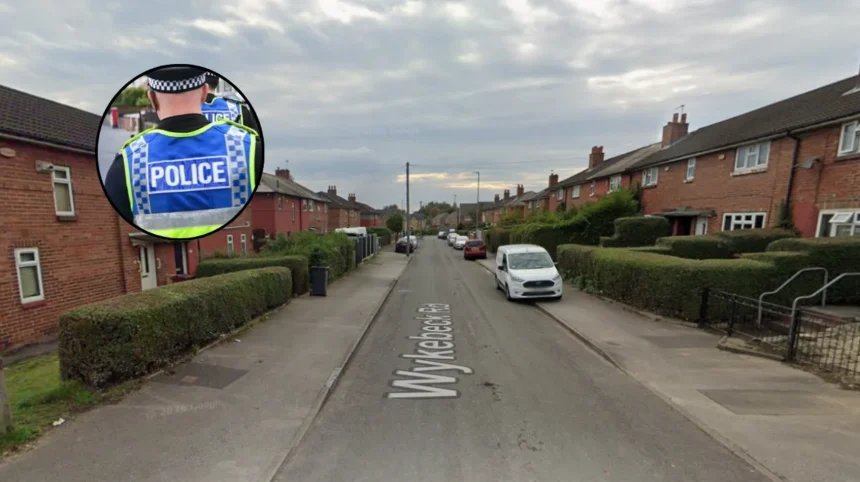
- Court Closure Order Issued: A residential property on Wykebeck Road in Halton Moor, east Leeds, has been legally shut down following a successful application at Leeds Magistrates’ Court.
- Persistent Criminal Activity: West Yorkshire Police and Leeds City Council documentation linked the specific house to ongoing drug-related activity, weapon possession, and severe anti-social behaviour.
- Three-Month Ban on Entry: The closure order strictly prohibits anyone—including the tenants—from entering the premises for a baseline period of three months to grant immediate respite to the local community.
- Multi-Agency Response: The legal action was executed as a joint operation between the Leeds East Outer Neighbourhood Policing Team (NPT) and Leeds City Council’s anti-social behaviour teams.
Halton Moor (The Leeds Times) July 11, 2026 — A residential property in east Leeds has been officially closed by judicial mandate following months of escalating community distress, multi-agency surveillance, and documented criminal activity. Leeds Magistrates’ Court formally granted a closure order for the premises situated on Wykebeck Road in the Halton Moor district. The intervention comes as a direct response to comprehensive evidence compiled by West Yorkshire Police and Leeds City Council, establishing that the house had become a primary hub for systemic illicit operations. Authority figures confirmed that the location was explicitly tied to localized drug distribution networks, the storage of dangerous weapons, and a continuous pattern of severe anti-social behaviour that compromised public safety.
- Key Points
- What Led to the Closure Order of the Wykebeck Road Property?
- How Do West Yorkshire Police and Leeds City Council Coordinate Closures?
- What Are the Immediate Legal Consequences of This Court Closure?
- Background of This Particular Development
- The Prediction: How This Development Can Affect the Local Community
The legal mechanism, executed under the Anti-social Behaviour, Crime and Policing Act 2014, effectively seals the property, barring any individuals—including the current occupants or leaseholders—from crossing the threshold. Under British law, anyone found entering the boarded-up premises faces immediate arrest, potential imprisonment, or substantial financial penalties.
The multi-agency crackdown represents a localized surge against urban blight in the outer east area of the city, aiming to disrupt deep-seated criminality that has historically plagued specific blocks within the estate.
What Led to the Closure Order of the Wykebeck Road Property?
The escalation toward a full closure order at Leeds Magistrates’ Court was precipitated by a compounding volume of evidence detailing a breakdown of public order emanating from the Wykebeck Road address. According to statements filed by the Leeds East Outer Neighbourhood Policing Team (NPT), the property had transitioned from a standard residential tenancy into a heavily fortified base for anti-social elements. Neighbors and community members had routinely flagged the address to local authorities, though fear of retributive violence initially suppressed public reporting.
A spokesperson for West Yorkshire Police detailed that investigative teams gathered actionable intelligence concerning the frequent movement of known offenders at the site.
Subsequent searches and localized interventions uncovered physical evidence of drug-related activities, ranging from standard Class A and Class B substance consumption to localized distribution infrastructure.
Furthermore, the presence of weapons on the premises heightened the threat profile of the property, elevating the case from a standard municipal tenancy dispute to a high-priority criminal enforcement action.
The persistent noise, traffic, and threatening counter-actions by individuals frequenting the house ultimately led the joint legal teams of the police and Leeds City Council to bypass standard warnings and pursue an absolute closure.
How Do West Yorkshire Police and Leeds City Council Coordinate Closures?
The successful acquisition of a closure order requires a rigid legal process managed collaboratively by municipal authorities and law enforcement.
As outlined in standard operating protocols by the West Yorkshire Police authority, the Outer East NPT worked alongside Leeds City Council’s dedicated Anti-Social Behaviour Team (LASBT) to construct a comprehensive case file for the magistrates.
The process demands definitive proof that the use of the premises has resulted, or is highly likely to result, in serious nuisance or disorder to members of the public.
Investigators spent weeks documenting log entries, statements from attending officers, and physical evidence recovered during localized sweeps. Once the threshold of “persistent criminality” was reached, legal representatives for the council presented the formal application to the bench at Leeds Magistrates’ Court.
The court’s approval validates the joint agency assertion that standard policing methods alone were insufficient to quell the disruptions, thereby necessitating the total eviction of occupants and the physical sealing of the building structure.
What Are the Immediate Legal Consequences of This Court Closure?
The immediate impact of the order issued by Leeds Magistrates’ Court is the absolute restriction of access to the Wykebeck Road site. Effective immediately from the date of the court hearing, the property has been physically secured, with specialized contractors boarding up windows and reinforcing entry points to prevent unauthorized breaches.
The closure order remains active for a mandatory period of three months. Under the statutory guidelines governing these orders, any person who enters or remains on the premises without reasonable excuse or written permission from the police commits a criminal offense.
Law enforcement officials have confirmed that regular patrols will be routed past the address to monitor compliance. If local residents observe any individuals attempting to bypass the physical barriers, police retain the power to execute immediate arrests under summary jurisdiction, which can carry a penalty of up to 51 weeks in prison, a fine, or both.
Background of This Particular Development
To understand the context of the Wykebeck Road closure, one must examine the operational history of the Halton Moor estate in east Leeds.
Over the past decade, the area has frequently appeared in regional crime statistics as a hotspot for localized anti-social behaviour, youth disorder, and friction between pockets of the community and law enforcement.
High-profile incidents in previous years—including vehicular arsons and targeted attacks on public transport—have historically forced West Yorkshire Police to implement specialized Public Order Act measures, such as Section 60 stop-and-search zones, across the estate.
The utilization of a closure order reflects a tactical pivot by Leeds authorities. Rather than relying solely on reactive arrests of individuals, agencies are increasingly targeting the physical infrastructure of crime—specifically, the “trap houses” or safe havens used by loose criminal networks to store contraband and evade surveillance.
This development aligns with a broader municipal strategy implemented across Leeds to reclaim neighborhoods block-by-block.
By utilizing civil-criminal crossover legislation like the Anti-social Behaviour, Crime and Policing Act, authorities can swiftly remove the physical anchor of criminality from a street, offering immediate relief to adjacent households while longer-term criminal prosecutions against the individuals wind through the crown courts.
The Prediction: How This Development Can Affect the Local Community
This judicial development is projected to cause distinct ripple effects across the immediate Halton Moor community and the wider Leeds population.
For the immediate neighbors residing on Wykebeck Road and adjacent avenues, the three-month closure will likely result in a sharp, measurable decrease in localized foot traffic, public disturbances, and associated low-level crime.
The physical presence of a boarded-up property serves as a visible deterrent, signalling to law enforcement’s commitment to territorial control and reassuring vulnerable or elderly residents that municipal mechanisms can successfully remove chronic offenders.
However, displacement remains a critical secondary effect predicted by urban criminologists. When a primary criminal hub is closed down, the illicit activities—specifically drug distribution and anti-social gathering—frequently migrate to neighboring streets or adjacent estates within east Leeds, such as Seacroft or Gipton.
Consequently, local residents in surrounding areas may see a temporary uptick in suspicious activity as these displaced networks attempt to establish alternative base operations.
Long-term stability for the audience of east Leeds hinges entirely on whether Leeds City Council uses this three-month window to permanently repossess the property and reallocate it to vetted tenants, or if the underlying criminal elements re-emerge once the temporary legal restriction lapses.