
Key Points
- Council Approval: Leeds City Council has officially agreed to plans allowing the creation of seven new residential flats within a historic city centre building.
- Location and Landmark: The development is situated on The Headrow, a prominent prime location directly opposite the well-known Three Legs pub.
- Building Status: The target property is part of a designated Grade II-listed building.
- Retail Context: The upcoming apartments will occupy upper floors directly above the popular science fiction and comic shop, Forbidden Planet.
- Apartment Breakdown: The approved scheme outlines the construction of six one-bedroom flats and a single two-bedroom apartment.
- Change of Use: The development project will successfully transform vacant or underutilised office and upper-floor spaces into much-needed inner-city residential dwellings.
Leeds City Council (The Leeds Times) 2026 —As reported by Rahmah Ghazali, Content Editor and Local Democracy Reporter, seven new flats are officially cleared to be built in a historic Leeds city centre building after proposals were successfully agreed upon with the local authority.
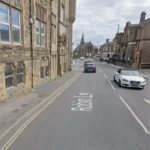
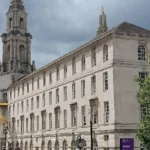
The development project focuses on redeveloping a section of a designated Grade II-listed property located on The Headrow, sitting directly opposite the landmark Three Legs pub.
According to planning documentation and local reporting, the scheme will yield a mix of compact urban living quarters tailored for professionals or single occupants. Specifically, the conversion will introduce six one-bedroom apartments alongside a single two-bedroom flat.
These residential units will occupy the upper levels sitting directly above the popular science fiction, comic, and pop-culture retailer Forbidden Planet.
How will the historic building on The Headrow be transformed?
The property, which features distinct architectural heritage as a Grade II-listed structure, has long held vacant or underused spaces on its upper floors while bustling commercial activity continued on the ground level.
Local planning authorities evaluated the blueprints to ensure that the introduction of residential units would not compromise the structural and aesthetic integrity of the heritage asset.
Urban regeneration specialists have frequently pointed out that breathing new life into empty upper floors above high street shops is an effective method of boosting inner-city populations without expanding outward into greenbelt land.
The conversion will see internal layouts reconfigured to modern residential standards while preserving the external facade that contributes to the historic streetscape of The Headrow.
Why is this city centre location significant for Leeds property development?
The Headrow serves as one of the primary cultural and commercial axes of Leeds city centre, making any real estate development along the corridor a matter of significant local interest. Being positioned squarely in the heart of LS1, future residents of the seven new flats will find themselves within immediate walking distance of major retail hubs, financial districts, entertainment venues, and public transport links such as Leeds railway station.
Furthermore, the proximity to established commercial anchors like Forbidden Planet and traditional landmarks like the Three Legs pub underscores the dense, mixed-use nature of the immediate environment. Urban planners have consistently encouraged developments that blend retail accessibility with residential density to create vibrant, twenty-four-hour city centres.
Explore More Leeds City Council
Council Blocks Padel Courts at Garforth Garden Centre Leeds 2026
Garforth Garden Centre Padel Courts Blocked in Leeds 2026
Background of the particular development
The broader trend of converting upper-floor commercial and office spaces into residential apartments has accelerated across major UK core cities over the past decade. Driven by shifts in retail habits, the rise of remote and hybrid working models, and a persistent national housing shortage, local authorities have increasingly looked favourably upon adaptive reuse projects.
Leeds City Council has actively reviewed numerous applications aimed at repurposing heritage buildings in the city core, balancing the strict conservation requirements of Grade II-listed structures with the urgent demand for urban housing stock. Properties along major arterial routes like The Headrow have historically served varied commercial purposes, but changing economic pressures mean that multi-use models—combining ground-floor retail with upper-floor residential living—are becoming essential for maintaining high street vitality.
The Prediction: How this development affects urban renters and local commerce
The addition of seven new flats above Forbidden Planet is unlikely to radically shift city-wide housing supply on its own, but it serves as a micro-indicator of how central Leeds will continue to evolve to meet housing demands. For young professionals, key workers, and students seeking urban lifestyles, the creation of six one-bedroom apartments and a single two-bedroom flat adds valuable inventory to the competitive city centre rental market.
This influx of residents directly above high street retail also provides a subtle, built-in customer base for surrounding businesses, cafes, and entertainment venues on The Headrow, helping sustain local footfall amidst changing economic conditions.