

Key Points
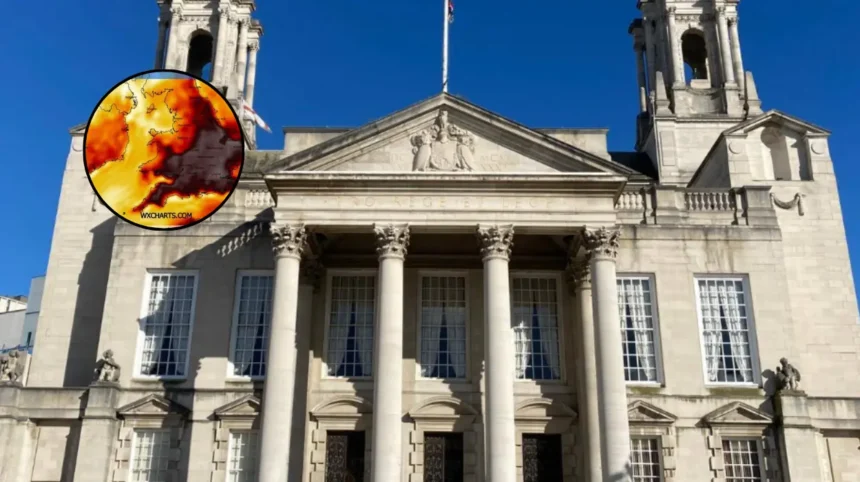
- Record-Breaking Heat: The UK has officially recorded its hottest-ever day in May, prompting Leeds City Council to issue urgent summer and heatwave preparation advice.
- Cool Spaces Pilot Launching: Following recommendations from a 2025 public health report, Leeds is launching a “cool spaces” pilot from 1 June to 30 September across libraries, community hubs, leisure centres, and neighbourhood networks.
- Services Provided: These designated indoor venues will offer free drinking water and areas to rest and cool down to mitigate health risks, though they do not provide medical or specialist care.
- Vulnerable Groups Identified: Health officials emphasize that while hot weather impacts everyone, older adults, young children, pregnant women, and individuals with long-term medical conditions face the highest risks.
- Home and Travel Safety Advice: Residents are urged to stay shaded between 11:00 am and 3:00 pm, carry water, and manage home temperatures by shading windows and opening them only when the outdoor air is cooler than inside.
- Tick-Borne Disease Warning: Alongside heat advice, the council warned of rising tick activity in spring and summer, advising residents to stay on designated paths, wear protective clothing, and use tick-removal tools to prevent Lyme disease.
Leeds City Council (The Leeds Times) June 2, 2026 – This news report prioritises the immediate public health measures and record temperatures affecting Leeds residents, followed by direct executive statements, operational details of the cool spaces initiative, secondary seasonal health warnings regarding tick-borne illnesses, and concluding with historical context and forward-looking projections.
- Key Points
- What Measures Is Leeds City Council Taking After The UK’s Hottest May On Record?
- How Will The New Cool Spaces Pilot Project Operate Across Leeds?
- Who is most at risk during these rising temperatures?
- What Advice Have Leeds City Council Executives Issued To Residents?
- What Practical Steps Can Citizens Take To Protect Themselves From Extreme Heat?
- How can the public stay informed about sudden weather changes?
- Why Is Leeds Warning Residents About Ticks and Lyme Disease This Summer?
- What is the correct procedure for removing an attached tick?
- Background of the Particular Development
- Prediction
What Measures Is Leeds City Council Taking After The UK’s Hottest May On Record?
Following an unprecedented meteorological milestone where the United Kingdom recorded its hottest-ever day in the month of May, Leeds City Council has officially mobilized a comprehensive public health campaign. Local authority officials are actively encouraging residents across the region to prepare extensively for the upcoming summer months and anticipated heatwaves.
The announcement comes as municipal leaders attempt to get ahead of shifting climate patterns that have increasingly exposed urban areas to extreme thermal stress.
As documented in the official communications published by the Leeds City Council media team, the city has witnessed severe, record-breaking temperatures in recent consecutive years.
This includes the paradigm-shifting summer of 2022, a period during which Leeds officially hit the 40°C threshold for the first time in its recorded history.
That specific event triggered an unprecedented level of emergency response, necessitating a red heat-health warning issued by the UK Health Security Agency (UKHSA).
In direct response to these compounding environmental pressures, local authorities are implementing structural interventions. As detailed by council reporters, a major pilot scheme is launching across the city to establish dedicated “cool spaces.”
These spaces are strategically designed indoor venues curated to help citizens stay comfortable, regulated, and physically well during periods of intense atmospheric heat. Operating from 1 June through to 30 September, the initiative utilizes existing public infrastructure, including a select network of community hubs, public libraries, local leisure centres, and established neighbourhood networks.
How Will The New Cool Spaces Pilot Project Operate Across Leeds?
According to operational guidelines released by municipal coordinators, the cool spaces are explicitly designated as non-clinical environments. Their primary function is to drastically reduce acute health risks associated with heat exhaustion by offering local citizens a accessible place to rest, lower their core body temperature, and rehydrate.
The council has explicitly clarified that these venues are not intended to provide medical care or specialist clinical support; instead, they operate as a preventative community shield, offering free drinking water alongside shaded seating areas.
Who is most at risk during these rising temperatures?
Public health data integrated into the council’s briefing indicates that while elevated ambient temperatures pose a universal health risk to the general populace, specific demographics remain disproportionately vulnerable.
As outlined by regional medical officers, the primary high-risk groups include older adults, infants and young children, pregnant women, and individuals managing long-term health conditions or chronic illnesses.
What Advice Have Leeds City Council Executives Issued To Residents?
To ensure maximum public adherence to safety protocols, key political and health figures within the local government have issued direct statements detailing the necessity of the scheme.
As reported by the Leeds City Council communications division, Victoria Eaton, Leeds City Council’s Director of Public Health, stated that:
“Some people face greater risk than others in the heat, including people living in densely-populated areas – especially older adults, young children, pregnant women and those with long-term conditions. There is great work being done across the city towards this, and we’re pleased to now also provide more cool spaces that people can access during hot weather.”
Reinforcing the civic importance of the rollout, Councillor Mary Harland, Leeds City Council’s Deputy Leader and Executive Member for Communities and Community Safety, stated that:
“Providing spaces for people across Leeds to be able to cool down and have access to water is vital in helping everyone stay safe over summer. It’s very important that you know how to keep cool and hydrated if and when we experience hot weather.”
Furthermore, highlighting the socio-economic and structural equity elements of the council’s strategy, Councillor Emma Flint, Leeds City Council’s Executive Member for Equality, Adults and Health, stated that:
“Rising temperatures is affecting everyone, but we know that some people are more vulnerable than others. As a council we want to make sure that people in Leeds are aware of how to keep themselves and others safe in the heat by adhering to expert guidance and being prepared for heatwaves.”
What Practical Steps Can Citizens Take To Protect Themselves From Extreme Heat?
In addition to the physical cool spaces pilot, public health authorities have disseminated specific behavioral guidance to help residents manage domestic environments.
The council advises everyone to avoid direct sun exposure during peak radiation hours, specifically between 11:00 am and 3:00 pm. When traveling or navigating the city, individuals are strongly urged to remain in shaded areas wherever possible and to carry fluids continuously to prevent dehydration.
For domestic property management, the guidance suggests covering or shading windows that are directly exposed to sunlight to prevent greenhouse-effect overheating inside living quarters. Additionally, residents are instructed to open windows strategically—only doing so when the external ambient air temperature has dropped lower than the internal indoor air temperature, typically during late evening or early morning hours.
How can the public stay informed about sudden weather changes?
To ensure real-time awareness, the local authority is directing residents to subscribe to the national heat-health alert service. This early-warning infrastructure is operated jointly by the UK Health Security Agency (UKHSA) in partnership with the Met Office, providing localized text and email alerts ahead of incoming thermal anomalies.
Why Is Leeds Warning Residents About Ticks and Lyme Disease This Summer?
Ancillary to the high-temperature warnings, public health officials have concurrently raised awareness regarding seasonal biological hazards.
Council data indicates that tick activity rises sharply over the spring and summer months, corresponding with a statistically significant increase in the risk of human exposure and bites. In a minority of instances, these arachnids can transmit debilitating bacterial infections, most notably Lyme disease.
Because ticks thrive predominantly in tall grassy fields, heathlands, and densely wooded areas, the council’s health team advises walkers to remain strictly within clearly defined paths and trails. Wearing protective clothing that completely covers exposed skin—such as long-sleeved shirts and trousers tucked into socks—serves as a primary physical barrier against infestation.
What is the correct procedure for removing an attached tick?
Citizens are advised to conduct regular, thorough checks of their clothing and exposed skin to identify any crawling ticks before they embed. If a tick is found to have attached itself to the skin, public health guidelines dictate it must be removed immediately.
The council stresses that removal must be executed using a dedicated, specialized tick-removal tool or fine-tipped tweezers, pulling firmly and evenly upward without twisting or squeezing the body of the tick, thereby minimizing the transmission risk of vector-borne pathogens.
Explore More Leeds City Council
Leeds Council Approves Major Roadway Safety Infrastructure Grant Leeds 2026
Leeds MDZ Unveiled to Drive South Bank Regeneration: Leeds 2026
Background of the Particular Development
The implementation of the cool spaces pilot project in Leeds is the direct operational manifestation of policy adjustments initiated over twelve months ago.
In a comprehensive public health report delivered in 2025, the Leeds City Council’s Director of Public Health formally codified a series of strategic recommendations designed to build systemic urban resilience against climate acceleration. A central pillar of that legislative document was the mandatory provision of community-level cool spaces.
This policy shift was heavily informed by the socio-environmental crisis of July 2022, when an unprecedented European heatwave caused UK temperatures to exceed 40°C for the first time on record. In Leeds, the extreme heat severely strained local transport infrastructure, melted road surfaces, caused localized power outages, and led to a spike in emergency admissions across West Yorkshire hospitals.
Subsequent epidemiological assessments conducted by local health boards revealed that dense, low-income urban zones within Leeds suffered higher rates of heat-related morbidity due to the “urban heat island” effect, where brick, concrete, and asphalt retain heat far longer than rural settings.
The 2025 report sought to address this disparity, transitioning the city from a reactive emergency footing to a proactive, structured summer framework.
Prediction
The institutionalisation of the cool spaces framework and the concurrent issuance of early-season health directives are projected to fundamentally alter how Leeds residents navigate the summer months. For vulnerable demographics—particularly elderly individuals living alone in high-density housing estates, families with young children in urban apartments, and those with pre-existing cardiovascular or respiratory conditions—this development is predicted to provide a critical safety net, likely reducing local heat-induced medical emergencies and easing seasonal pressure on regional National Health Service (NHS) urgent care facilities.