Key Points
- A change of use planning application has been submitted to Leeds City Council to convert the ground floor of 9 East Parade from a nightclub into a health, spa, and wellness centre.
- The property is a Grade II-listed structure situated within a central conservation area surrounded by commercial, leisure, and hospitality establishments.
- Design consultancy E3 Architecture prepared the planning report, highlighting that the change will eliminate late-night venue noise and remove the existing dance floor.
- The site benefits from substantial transport links, positioned near Leeds railway station, local bus routes, and pedestrian paths.
- Supporters suggest the redevelopment offers a long-term, compatible evolution for the historic premises while contributing to the diversification of the city centre economy.
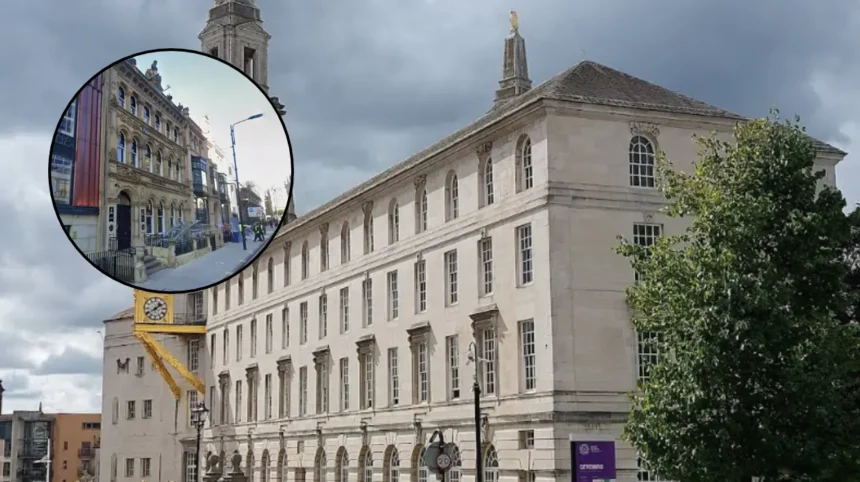
Leeds (The Leeds Times) November 5, 2026 –A landmark Grade II-listed building in the heart of Leeds city centre could soon be transformed into a modern spa and wellness facility under new plans formally submitted to local planning officers. The change of use application, which focuses on the ground floor premises of 9 East Parade, seeks permission to permanently replace the site’s current function as a late-night drinking and entertainment establishment. If approved by Leeds City Council, the development will see the removal of nightclub infrastructure—including the main dance floor—to make way for health, relaxation, and personal care facilities aimed at daytime and early evening visitors.
Will the Proposed Conversion Benefit the Historic Character of 9 East Parade?
According to detailed planning documentation compiled by design practice E3 Architecture, the scheme represents a sympathetic adaptation of a heritage asset. As highlighted by the architectural team at E3 Architecture, the building was previously operated as a high-capacity licensed venue. In their design submission to the council, representatives from E3 Architecture noted that
“the current proposal seeks to replace that nightclub use with a spa and wellness facility,”
adding that the redevelopment would actively support the long-term structural and economic preservation of the Grade II-listed site.
The architectural report further details that the removal of the late-night venue layout, specifically the dance floor area, will significantly reduce late-night noise emissions and foot traffic disturbance in the immediate vicinity. As detailed by the authors of the E3 Architecture submission,
“the proposed spa and wellness facility represents an appropriate evolution of this established use.”
The design team stated that
“the development will therefore provide a more compatible long-term use of the lower ground floor whilst continuing to support the vitality and diversification of Leeds city centre”.
Is the East Parade Site Suitable for a High-End Health and Wellness Facility?
The surrounding urban area accommodates a wide blend of commercial, leisure, and professional activities. As outlined in the planning documentation provided by E3 Architecture, the site sits directly adjacent to established commercial quarters as well as active nightlife hubs. The report states:
“The surrounding area accommodates a broad mix of uses including offices, restaurants, bars, hotels and other commercial and leisure premises”.
Elaborating on the strategic placement within the urban footprint, the report from E3 Architecture highlights:
“Greek Street and the wider city-centre leisure district are located immediately to the east and south-east of the site, while Park Square and the established commercial quarter lie to the west”.
Consequently, the planning agents emphasized the accessibility of the plot for prospective wellness patrons, noting:
“The site is therefore located within a highly accessible and sustainable part of Leeds city centre, with excellent pedestrian connections and convenient access to local bus services and Leeds railway station”.
Explore More Local Leeds News
Iraq War Veteran Delivers Downing Street Support Petition Morley 2026
Leeds City College Opens Health Campus at Leeds Dock 2026
Background of the Development
The property at 9 East Parade occupies a prominent position within the Leeds City Centre Conservation Area, a historic quadrant characterized by 19th-century and early 20th-century civic, financial, and commercial architecture. Over recent decades, the address has undergone various alterations to accommodate changing commercial demands, transitioning from traditional office and commercial uses into hospitality and late-night entertainment venues.
In recent years, local planning authorities across the United Kingdom have faced increasing calls to balance the demands of the nighttime economy against noise management, heritage protection, and urban residential expansion. The area surrounding East Parade, Park Square, and Greek Street represents a intersection where major corporate offices directly adjoin food, drink, and evening entertainment outlets.
Converting former late-night drinking establishments into health, medical, or leisure spaces reflects a broader shift across regional UK cities.
Planning policies increasingly prioritize scheme proposals that maintain the structural integrity of listed assets while repurposing space for daytime and early evening uses. The latest submission to Leeds City Council follows similar heritage-led regeneration efforts aimed at securing viable commercial tenants for complex, historic buildings without necessitating invasive structural alterations.
Predictions: How Will This Development Affect the Local Community and Business Landscape?
If Leeds City Council grants planning consent for the change of use at 9 East Parade, the decision is expected to have several direct impacts on local stakeholders, business operators, and residents.
The conversion from a late-night venue to a health and wellness centre will bring a noticeable reduction in evening ambient noise levels, ambient street clutter, and late-night pedestrian gathering. Residents living in surrounding city centre apartments and guests staying at neighbouring hotels along East Parade and Greek Street are likely to experience improved nighttime amenity, lower disturbance during peak weekend hours, and diminished pressures on local street management.
For workers and businesses in the nearby financial and commercial quarter around Park Square, the introduction of a central spa and wellness facility provides convenient access to health, personal care, and stress-management services immediately adjacent to their workplaces.
This addition supports broader municipal efforts to diversify city centre offerings beyond traditional retail and food-and-beverage establishments, encouraging daytime footfall and attracting corporate professionals during business hours.
While the loss of a nightclub venue slightly reduces the overall floor space dedicated purely to the late-night music and drinking sector, the transition ensures that a high-profile Grade II-listed structure remains continuously occupied and financially viable.
Secured commercial occupancy reduces the risk of heritage buildings falling into disrepair. Furthermore, the shift towards wellness tourism and leisure services aligns with evolving consumer habits across major UK urban centres, helping Leeds maintain a balanced, multi-functional city core that operates effectively throughout both daytime and evening hours.