Key Points
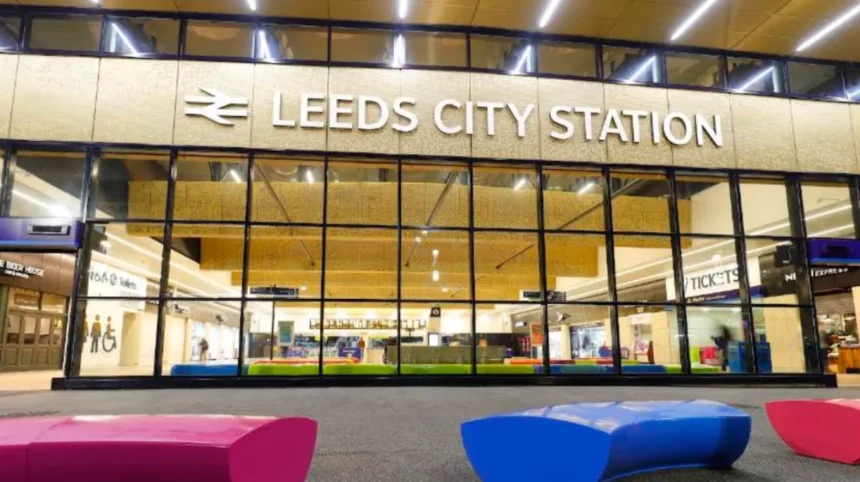
- Project Completion: The £46.1m redevelopment of the Leeds railway station main entrance and surrounding precinct has officially opened to the public after four years of construction work.
- Core Enhancements: The scheme features the pedestrianisation of surrounding roads, a relocated taxi rank, new passenger lifts, and new connecting steps between New Station Street and Bishopgate Street.
- Infrastructure Upgrades: Essential structural maintenance was carried out on the underground support network beneath the station as part of the joint initiative.
- Multi-Agency Project: The infrastructure overhaul was delivered through a partnership between Leeds City Council, Network Rail, and the West Yorkshire Combined Authority.
- Project Delays: Originally scheduled for completion in autumn 2025, the project encountered multiple timeline shifts, moving to summer 2026, then September 2026, before its formal opening.
Leeds (The Leeds Times) November 9, 2026 – The long-awaited remodelled entrance to Leeds railway station has officially opened to passengers, bringing to an end four years of complex engineering works and multiple operational delays across the key transport hub.
- Key Points
- What Are the Key Changes Included in the £46.1m Leeds Station Gateway Project?
- Who Delivered the Project and How Did Leaders Respond to its Completion?
- Why Was the Leeds Station Upgrade Delayed Multiple Times?
- Background of the Leeds Gateway Development
- Future Impact: How Will This Development Affect Passengers, Local Businesses, and Regional Transport Networks?
What Are the Key Changes Included in the £46.1m Leeds Station Gateway Project?
The £46.1m transformation scheme, which officially commenced construction in 2022, was designed to overhaul passenger accessibility and improve pedestrian flow around one of the United Kingdom’s busiest transport hubs. The comprehensive redevelopment has altered the physical layout connecting the station’s main concourse to the surrounding city centre streets.
Central to the project is the pedestrianisation of major thoroughfares surrounding the hub, most notably New Station Street, which previously accommodated dense vehicular traffic and bus routes. To separate public pedestrian movement from vehicular transit, project partners constructed a dedicated, relocated taxi rank designed to streamline pick-up and drop-off operations while reducing congestion on the main approach roads.
Accessibility infrastructure forms another major component of the physical build. The site now features newly installed passenger lifts alongside a broad set of connecting steps built between New Station Street and Bishopgate Street, creating direct pedestrian links between the elevated station level and the street grid below.
Beyond the visible surface upgrades, the multi-million-pound budget financed extensive subsurface engineering works. Contractors carried out essential structural maintenance on the station’s underground support framework, reinforcing the foundational arches and substructure that uphold the main station building and platform areas.
Who Delivered the Project and How Did Leaders Respond to its Completion?
The overhaul was commissioned and executed as a multi-agency partnership involving Leeds City Council, Network Rail, and the West Yorkshire Combined Authority (WYCA). The joint venture aimed to modernise Leeds station to accommodate expanding regional passenger volumes and support broader economic regeneration across West Yorkshire.
Addressing the completion of the physical works, Mayor of West Yorkshire Tracy Brabin formally acknowledged the public impact of the multi-year construction schedule while highlighting the operational importance of the completed site.
“After years of complex engineering works, it’s fantastic to see this project open to the public,”
stated Mayor Brabin.
“Leeds Station is the front door to West Yorkshire and we thank people for their patience throughout this transformation, which creates a more welcoming and accessible gateway for residents, commuters and visitors.”
Why Was the Leeds Station Upgrade Delayed Multiple Times?
While the finished gateway is now fully operational, the project encountered repeated schedule adjustments over its four-year delivery window. Initial project specifications targets slated the final completion date for autumn 2025.
Engineering complexities associated with working above and beneath an active, high-volume operational railway station contributed to initial timeline slippages. Consequently, project leads pushed the targeted opening back from autumn 2025 to summer 2026.
Subsequent operational assessments forced a further postponement from the summer target to September 2026, as structural maintenance on the subterranean support elements required additional safety clearances and phased construction interventions to avoid disrupting daily train movements. Final finishing works and safety certifications concluded in late autumn 2026, enabling the full public opening of the concourse entrances, lifts, and street-level steps.
Background of the Leeds Gateway Development
Leeds railway station serves as the principal transport hub for West Yorkshire and stands as one of the busiest rail interchanges in the United Kingdom outside London, carrying tens of millions of passenger journeys annually. The station’s previous main entrance layout, constructed and modified in fragments across the late 20th century, frequently suffered from severe pedestrian bottlenecking, poor disabled access, and unsafe interactions between foot traffic, buses, and private taxis along New Station Street.
In response to long-term projections showing sustained growth in regional rail travel, Leeds City Council and the West Yorkshire Combined Authority formulated the Leeds Station Sustainable Travel Gateway scheme. Financed through a combination of national transport funds, regional investment budgets, and Network Rail infrastructure allocations, the project was planned to integrate rail services directly with active travel routes, including improved cycling paths and pedestrianised urban zones.
Preliminary site investigations and utility diversions began in 2022, kicking off a four-year period of phased street closures, pedestrian diversions, and heavy civil engineering focused on both visible concourse architecture and invisible subterranean load-bearing structures beneath Bishopgate Street.
Future Impact: How Will This Development Affect Passengers, Local Businesses, and Regional Transport Networks?
Commuters and Rail Passengers
For daily commuters and visitors navigating Leeds station, the opening of the redeveloped gateway directly resolves long-standing accessibility barriers. The addition of high-capacity passenger lifts and modernized step connections eliminates steps-only pathways between New Station Street and Bishopgate Street, easing transit for passengers with mobility impairments, heavy luggage, or pushchairs. Furthermore, the complete pedestrianisation of New Station Street removes vehicular traffic from immediate pedestrian pathways, reducing collision risks and improving walking times to and from the city centre.
Local Businesses and the Retail Economy
The upgraded entrance alters footfall dynamics for businesses situated around the station approach and the broader Leeds city centre. By creating an attractive, unobstructed pedestrian gateway, the scheme enhances connectivity between the station concourse and key retail zones, including Trinity Leeds and the financial district along Bishopgate Street. Local retail and hospitality businesses stand to gain from increased, smoothly routed pedestrian traffic, while the dedicated, relocated taxi rank offers clearer logistics for transport providers operating in the central zone.
Regional Transport Operators and Planners
For Network Rail, Leeds City Council, and regional transit operators, the completed infrastructure provides a durable platform capable of handling projected increases in rail passenger volume over the coming decades. The completion of critical maintenance to the station’s underground support structures secures structural integrity without requiring further major subterranean interventions in the immediate future. Additionally, the separation of pedestrian corridors from taxi and bus traffic improves overall vehicular flow around the city’s inner ring road connections, contributing to more reliable suburban bus and taxi transit times across central Leeds.