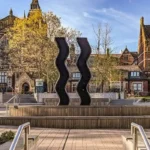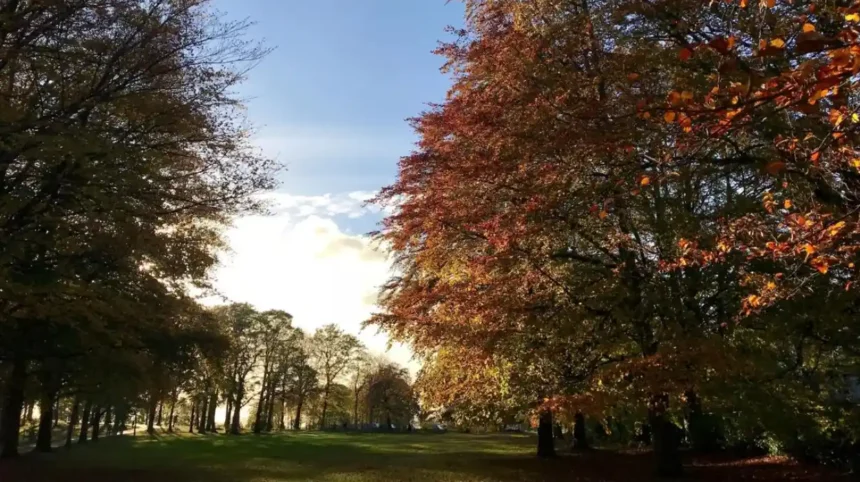
Headingley contains a varied historic landscape shaped by private estates, public parks, institutional grounds and surviving mature trees. Its gardens and designed landscapes reveal how landowners, planners, universities and local communities transformed the wider neighbourhood from the eighteenth century onwards.
- What are Headingley’s historic gardens and designed landscapes?
- How did Headingley’s historic landscapes develop?
- Which historic parks and green spaces are important near Headingley?
- What remains of Headingley’s former estates and private gardens?
- How do mature trees and planting reveal landscape history?
- How are historic gardens and landscapes connected to Leeds’ architecture?
- How can visitors explore Headingley’s historic landscapes responsibly?
- Why do historic gardens matter for Headingley’s future?
- What makes Headingley’s designed landscapes distinctive?
For visitors, historic gardens provide a different way to understand Headingley. The area is widely associated with Victorian and Edwardian housing, major sporting venues and the University of Leeds, but its green spaces also preserve evidence of earlier landownership and deliberate landscape design.
A designed landscape is land deliberately arranged to achieve practical, aesthetic, recreational or social purposes. It can include gardens, parkland, tree avenues, lawns, boundaries, water features and carefully positioned buildings. Historic landscapes often survive in fragments because roads, housing and institutional development have altered their original boundaries.
Headingley’s historic landscape therefore extends beyond formally enclosed gardens. Mature trees, former estate boundaries, public parks and landscaped institutional grounds all form part of the area’s environmental and historical fabric. Understanding these places helps visitors recognise connections between the modern neighbourhood and the land that existed before suburban expansion.
What are Headingley’s historic gardens and designed landscapes?
Headingley’s historic gardens and designed landscapes include former estate grounds, public parks, institutional gardens, mature tree-lined spaces and surviving landscape features created through centuries of planned development across the wider neighbourhood and adjoining areas of north-west Leeds.
The term historic garden describes land with a significant history of deliberate planting, layout or management. A designed landscape has a wider meaning. It includes gardens but also parkland, avenues, pleasure grounds and other spaces shaped through planned design.
Headingley developed from an older rural settlement into a major suburb of Leeds during the nineteenth century. This transformation changed agricultural land and private estates into residential districts, public amenities and institutional sites. Some historic landscape features disappeared, while others became embedded within the modern urban environment.
The wider neighbourhood contains several types of designed landscape. These include former estate grounds, such as the landscaped land associated with large historic houses; public parks, including civic recreation spaces; and institutional grounds, such as landscaped university and educational sites.
A historic landscape does not need to remain unchanged to retain significance. A surviving avenue of mature trees can indicate the route of an earlier drive. A curved boundary can reflect the edge of a former estate. Open lawns and mature planting can preserve the character of land that has been redeveloped for a new purpose.
Visitors should therefore look beyond ornamental flower beds when exploring historic gardens. The overall layout matters. Paths, slopes, trees, walls and views can all provide evidence of earlier design.
Headingley’s location on elevated ground north-west of Leeds also influenced landscape development. The area’s changing topography created opportunities for prominent houses, landscaped grounds and views across parts of the city. Landowners and developers used these physical characteristics when planning estates and residential districts.
Historic gardens also record changing attitudes towards leisure and urban life. Private gardens reflected wealth and domestic status. Public parks provided organised recreational space. Institutional landscapes created formal settings for education and other public functions.
Together, these places form a record of how Headingley moved from a rural and semi-rural landscape towards a densely developed urban neighbourhood.
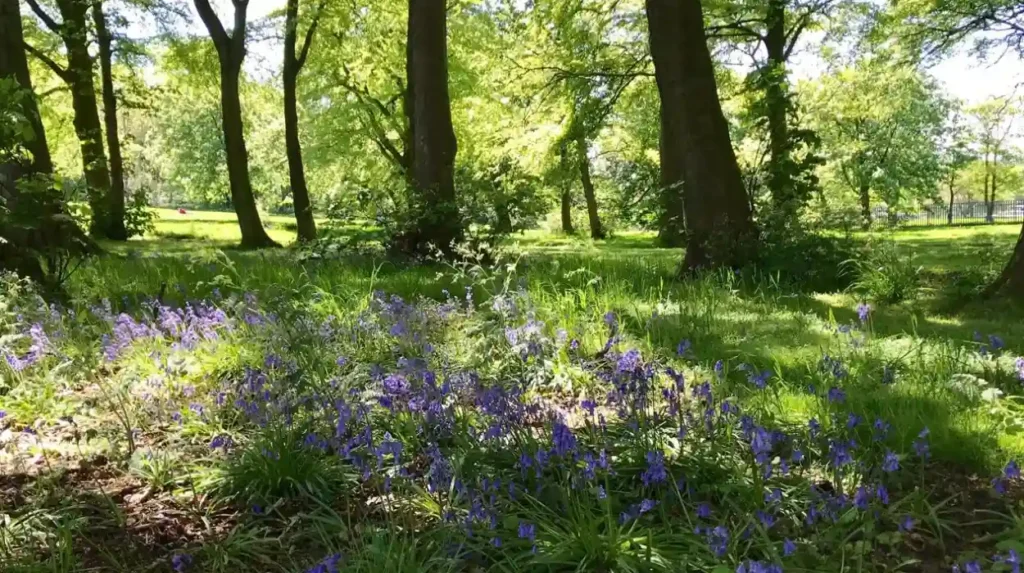
How did Headingley’s historic landscapes develop?
Headingley’s designed landscapes developed from rural land, private estates and country houses before nineteenth-century suburban expansion introduced villas, public recreation spaces, institutional grounds and planned streets, leaving fragments of earlier landscape design within the modern neighbourhood.
Before large-scale suburban growth, the land around Headingley consisted of settlements, agricultural holdings and estates. Landownership played a central role in determining where buildings, roads and gardens developed.
During the nineteenth century, Leeds expanded rapidly as population and industry grew. Headingley became an important residential area outside the historic urban core. Wealthier households built substantial houses and villas with gardens, while developers created new streets and housing.
This process changed the physical landscape. Fields were divided into building plots. Private grounds were reduced or incorporated into later development. New roads established permanent routes through former agricultural and estate land.
The Victorian period also increased interest in planned urban green space. Public health, recreation and civic improvement became important themes in British town planning. Parks provided space for walking, organised recreation and contact with landscaped surroundings.
Some of the most important historic landscapes in the wider Headingley area therefore combine different periods of development. An older estate boundary can sit beside Victorian housing. Mature trees planted for a private garden can survive within a later public or institutional setting.
As you explore the modern site, you are crossing land with a deep heritage. Read about the full [Headingley History and Local Heritage Guide] to understand its origins.
Twentieth-century development introduced further changes. Educational expansion, road construction and new housing altered the relationship between buildings and open land. At the same time, mature trees and established planting became increasingly important as visible links with the area’s earlier landscape.
The history of a designed landscape is therefore often layered rather than fixed. Different generations added new features, removed older structures and changed the use of the land.
This historical process explains why Headingley’s landscape heritage is best understood through both surviving gardens and the wider pattern of green infrastructure.
Which historic parks and green spaces are important near Headingley?
Important green spaces near Headingley include formal and informal parks, historic recreational grounds, mature institutional landscapes and surviving estate-related spaces, each contributing evidence of changing approaches to public recreation, urban planning and landscape management in Leeds.
The wider Headingley area provides access to several significant green spaces. These places serve practical recreational functions, but their layouts and planting also reflect the historical development of Leeds.
Beckett Park is an important example of a large landscaped public space in north-west Leeds. The park combines open grassland, mature trees, paths and recreational facilities. Its setting demonstrates how substantial areas of open land were retained within a growing urban district.
The park is also associated with the wider institutional history of the area. Educational development has shaped the surrounding landscape, creating a relationship between public open space, buildings and established planting.
Woodhouse Moor lies south-east of Headingley and provides another major historic green space within easy reach of the neighbourhood. The Moor has long served as open land for recreation and public use. Its broad, open character differs from the enclosed form of a private historic garden.
Public green spaces such as Woodhouse Moor illustrate an important principle of designed landscape history: landscape value does not depend solely on ornamental planting. The arrangement of open ground, routes, trees and recreational areas also represents deliberate management.
The nearby Meanwood Valley provides a contrasting landscape experience. Its wider corridor retains elements of a more natural and semi-rural setting, shaped by watercourses, woodland and changing land use. The valley demonstrates the continuing importance of landscape connections beyond formal parks.
Visitors exploring these spaces should consider how each landscape performs a different historical function. Public parks provide organised recreation, open moorland preserves common space, and valley landscapes connect woodland and water corridors.
These distinctions help explain why Headingley’s landscape heritage cannot be reduced to one style of garden. The neighbourhood sits within a broader network of planned and inherited green spaces.
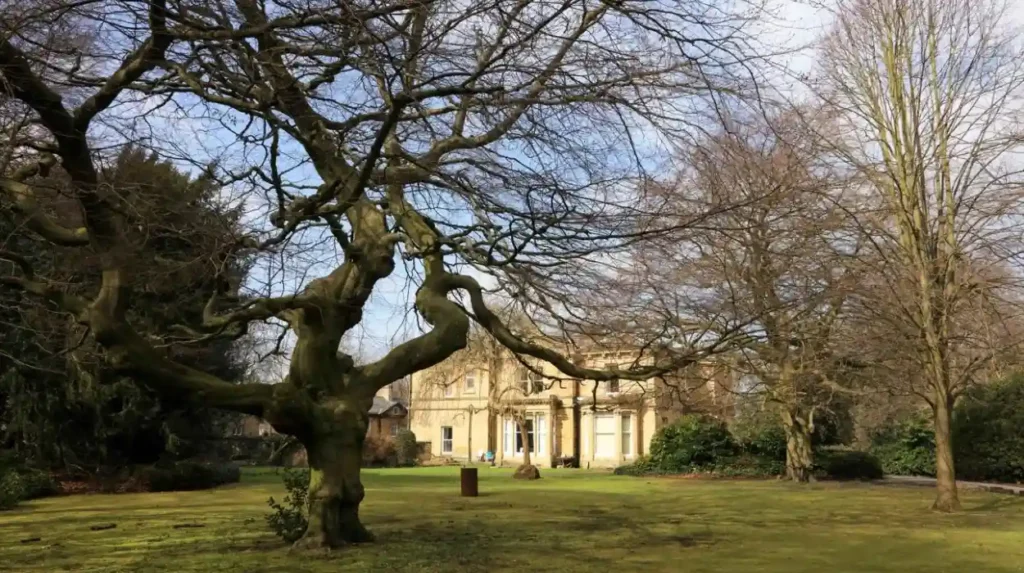
What remains of Headingley’s former estates and private gardens?
Fragments of former estates and private gardens survive through mature trees, boundary walls, road patterns, open grounds and landscaped institutional sites, although nineteenth-century and twentieth-century development substantially altered the original scale and appearance of many properties.
Large houses and private estates once occupied more land around Headingley than their modern appearance suggests. As Leeds expanded, many estates were divided, sold or redeveloped.
The physical evidence of these landscapes is often incomplete. A historic house can disappear while part of its grounds survives as open land. A garden can be replaced by housing while mature trees remain along a former boundary.
Mature trees are particularly valuable landscape indicators. Large specimens often take many decades to develop and can outlast buildings, paths and ornamental planting. Their location can reveal the former structure of an estate.
Boundary features also provide evidence. Stone walls, hedges and changes in street alignment can mark historic divisions in the landscape. These features help researchers compare the modern urban pattern with historic maps.
Former private gardens often reflected the social status of their owners. Large properties used grounds to create separation from neighbouring buildings. Lawns, trees and planted borders formed part of the setting of the house.
Smaller Victorian and Edwardian homes also contributed to Headingley’s green character. Front gardens and rear gardens created planted corridors between buildings. Although these spaces were private, their cumulative effect influenced the appearance and biodiversity of the neighbourhood.
The survival of former estate landscapes has implications for conservation. Redevelopment decisions can affect mature trees and historic boundaries that provide the last visible evidence of earlier land use.
Visitors can recognise these surviving fragments by examining the relationship between landscape and buildings. An unusually large tree, broad setback or curved route often has a historical explanation.
How do mature trees and planting reveal landscape history?
Mature trees and long-established planting reveal historic landscape patterns by marking former boundaries, drives, gardens and open spaces, while also providing environmental benefits including habitat, shade, carbon storage and improved connections between urban green areas.
Trees are living historical features. Unlike stone buildings, they change continuously, but long-lived trees can survive for generations.
A mature avenue often indicates deliberate planting. Trees arranged along a route can identify an approach road, drive or important boundary. Individual specimen trees can also reflect the design of a former garden.
Historic planting choices were influenced by changing fashions. Estate owners often selected species for appearance, scale and seasonal interest. Public authorities later used planting to shape parks and streets.
The age and condition of trees require professional assessment. Tree size alone does not provide an exact planting date because growth rates differ between species and sites. Historical maps, photographs and records provide stronger evidence when combined with physical inspection.
Tree preservation has become an important part of urban landscape management. Local planning policies and tree protection mechanisms can help retain significant specimens and established groups.
The environmental role of mature planting adds modern importance to historic landscapes. Urban trees provide habitat for wildlife, shade for pedestrians and connections between green spaces, while also retaining visual evidence of earlier landscape design.
This dual function creates a strong case for understanding historic planting before redevelopment occurs. Removing a mature tree can affect heritage character and environmental quality at the same time.
For visitors, mature trees also provide an accessible way to read landscape history. Looking at their position, grouping and relationship to paths often reveals patterns that are not immediately visible from buildings alone.
How are historic gardens and landscapes connected to Leeds’ architecture?
Historic gardens and designed landscapes are closely connected to Leeds architecture because houses, institutions and public buildings were planned with grounds, views, boundaries and planting that shaped their setting and reinforced their social and visual importance.
Architecture and landscape should be considered together. A historic building was often designed as part of a larger setting rather than as an isolated structure.
Large nineteenth-century houses in areas such as Headingley commonly stood within gardens or substantial grounds. The landscape created privacy and established a visual transition between the house and the street.
Institutional buildings also depend on their surroundings. Paths, lawns, trees and open spaces organise movement and create a distinctive setting. Changes to these features can alter how historic buildings are experienced.
The relationship between buildings and gardens changed as suburban development intensified. Large plots were divided into smaller properties. New streets introduced denser patterns of housing. Private gardens became more important as small areas of open space within built-up districts.
Landscape features can therefore help explain architectural development. Boundary walls define property edges, mature trees indicate older plots and garden setbacks reveal the planned relationship between homes and streets.
This connection is especially useful for heritage research. Historic maps can show buildings and gardens together, allowing researchers to identify changes in plot size and land use.
For tourists and leisure visitors, combining architecture with landscape exploration provides a fuller understanding of Headingley. A walking route that includes historic streets, mature planting and public green spaces reveals how the built and natural environments developed together.
How can visitors explore Headingley’s historic landscapes responsibly?
Visitors can explore Headingley’s historic landscapes responsibly by using public paths, respecting private property, protecting plants and wildlife, checking access arrangements and using maps and heritage information to understand the historical context of each location.
Many historic gardens are private or form part of working educational, residential or institutional sites. Public access should never be assumed.
Visitors should remain on designated routes where these are provided. Paths protect planted areas and reduce soil compaction around tree roots. Sensitive historic features can also be damaged by repeated informal access.
Planning an exploration around public spaces provides a practical approach. Parks, public paths and open green areas allow visitors to study landscape history without entering private land.
Historic maps are valuable research tools. Comparing older maps with modern mapping can reveal former buildings, field boundaries and changes in road layouts. Local archives and libraries also hold photographs, documents and other records.
Walking is particularly effective for studying designed landscapes because landscape features are often spatial. A route allows visitors to observe changes in elevation, planting and street patterns.
Digital nomads and business travellers can also incorporate historic green spaces into shorter periods of downtime. Public parks and accessible walking routes provide a contrast to commercial and transport-focused parts of the city.
Responsible exploration also supports the long-term protection of historic landscapes. Visitors should avoid removing plants or materials and should follow site-specific rules.
Seasonal change provides another reason to revisit a landscape. Spring reveals flowering and new growth, summer emphasises tree canopies and autumn exposes changes in leaf colour and planting structure. The underlying historic layout remains, but different seasons make different features visible.
Explore More Area Guide
Headingley Traditional Building Materials and Historic Architecture Guide
Headingley Industrial History: Former Sites and Economic Change
Why do historic gardens matter for Headingley’s future?
Historic gardens and designed landscapes matter for Headingley’s future because they preserve local identity, support biodiversity, improve urban environmental quality and provide evidence that helps planners and communities manage development while retaining distinctive landscape character.
Historic landscapes are part of local infrastructure as well as heritage. They provide space for recreation, support trees and wildlife, and contribute to the appearance of streets and neighbourhoods.
Urban development places continuing pressure on open land. Understanding the historical significance of a site helps identify which features deserve particular attention.
Conservation does not require freezing every landscape in one historical period. Gardens are living places that require management and change. The objective is to understand significant features and ensure that future alterations respect their value.
Climate resilience also increases the importance of urban green space. Established trees and planted areas contribute to shade and help create more comfortable public environments during periods of high temperature.
Biodiversity is another major consideration. Mature trees, hedges and connected green spaces provide habitat and movement routes for wildlife. Historic planting patterns can therefore contribute to modern ecological networks.
The future of Headingley’s designed landscapes depends on informed management. Planning authorities, landowners and local communities each influence how trees, gardens and open spaces are maintained.
For the wider visitor economy, landscape heritage strengthens the range of experiences available in Headingley. The neighbourhood offers more than individual landmarks. Its streets, parks and mature planting create a connected historic environment.
This broader perspective supports sustainable tourism. Walking between historic sites and green spaces encourages visitors to spend time within the neighbourhood while understanding its development.
Historic gardens also provide an educational resource. They allow researchers, students and residents to investigate changing ideas about landownership, architecture, recreation and environmental management.
What makes Headingley’s designed landscapes distinctive?
Headingley’s designed landscapes are distinctive because urban development overlays traces of rural land, private estates, Victorian suburban gardens, public recreation and institutional grounds, creating a layered landscape where historical evidence survives within a busy modern neighbourhood.
The defining feature of Headingley’s landscape heritage is its complexity. There is no single formal garden that explains the entire area’s development.
Instead, the wider neighbourhood contains layers of landscape history. Rural land preceded suburban expansion. Private gardens accompanied large houses and villas. Public and institutional spaces introduced new forms of planned greenery.
This combination makes landscape exploration particularly rewarding for visitors who look beyond individual attractions. The evidence is distributed across the neighbourhood.
A complete understanding requires attention to both large and small features. Parks provide broad historical settings, mature trees preserve long-term planting and boundary walls record earlier patterns of land ownership.
Headingley’s position within north-west Leeds also creates connections with surrounding districts and green corridors. Historic landscapes do not stop at modern administrative or neighbourhood boundaries.
For this reason, visitors should view Headingley’s gardens and designed landscapes as part of a wider urban landscape system. Parks, institutional grounds, streets and surviving estate features all contribute to that system.
The future value of these places depends on continued research, appropriate maintenance and public understanding. Historic landscapes are easier to protect when their significance is recognised.
For tourists, residents and other visitors, exploring these spaces provides a practical route into local history. A tree-lined path, an open park or a surviving garden boundary can reveal how the modern neighbourhood developed from earlier patterns of land and settlement.
Headingley’s historic gardens and designed landscapes therefore remain important records of change. They connect natural features with architecture, recreation and community life. Their value lies in the surviving details and in the wider pattern those details create across the neighbourhood.
What are historic gardens and designed landscapes?
Historic gardens and designed landscapes are outdoor spaces deliberately shaped for aesthetic, recreational, practical or social purposes. They include formal gardens, estate grounds, public parks, tree avenues, pleasure grounds and landscaped institutional sites.