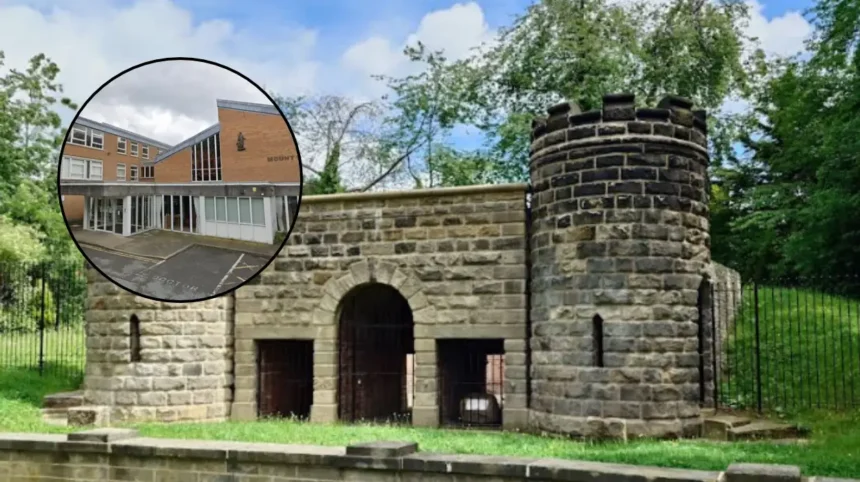
Key Points
- Little Sisters of the Poor, an order of nuns providing care in Leeds for 160 years, has applied to demolish the Mount St Joseph’s site on Shire Oak Road, Headingley.
- Structural surveys revealed the presence of reinforced autoclaved aerated concrete (RAAC) in the roof, showing signs of significant defects and potential structural instability.
- The proposed scheme involves constructing an L-shaped building up to four storeys high, containing 37 apartments along with associated parking and landscaping.
- Leeds City Council’s West Plans Panel has been recommended to approve the application, with final permission delegated to the city’s chief planning officer subject to legal agreements.
- Public response to the application includes 57 letters of support and 19 objections, with concerns raised by Leeds Civic Trust regarding a lack of family housing.
HEADINGLEY (The Leeds Times) October 22, 2026 – Plans to demolish a long-standing Catholic care home in Headingley and replace it with 37 new apartments are set to be considered by local councillors, following structural findings that rendered the current building unsafe. The application regarding the Mount St Joseph’s site on Shire Oak Road will go before a Leeds City Council plans panel, with council officers recommending that the redevelopment project be approved subject to legal conditions.
Why is Mount St Joseph’s Facing Demolition?
The decision to seek demolition comes after structural inspections identified the presence of reinforced autoclaved aerated concrete (RAAC) within the roof construction of the building. The Little Sisters of the Poor, the religious order of nuns operating the facility, submitted the planning application for total demolition of the existing premises after technical assessments confirmed safety risks.
As stated in the official report prepared for the committee meeting,
“The existing building is to be demolished due to the recent discovery of RAAC within the roof.”
The report further detailed that
“structural surveys have indicated signs of significant defects and potential structural instability within the building.”
What Do the Redevelopment Plans Entail?
The proposed development involves clearance of the existing structures to facilitate the construction of a purpose-built residential scheme. Plans submitted to Leeds City Council outline an L-shaped block rising to a maximum height of four storeys.
As detailed in the council report,
“The application relates to a full planning application for the demolition of existing buildings and construction of new building containing 37 apartments, with associated parking and landscaping.”
If approved, the final grant of planning permission would be delegated to the city’s chief planning officer, subject to the completion of necessary legal agreements. Assessing the overall viability and design of the proposal, the council report concluded:
“The development gives rises to no significant concerns in relation to its impact on design and character, impact on heritage assets, residential amenity for both existing and future residents, accessibility, highways safety, ecology or existing protected trees.”
How Has the Local Community Responded to the Proposal?
The planning submission has generated substantial community feedback, resulting in a total of 57 letters of support and 19 formal objections submitted to Leeds City Council.
Supporters of the scheme highlighted the continued need for dedicated accommodation within the area. As noted in representations submitted to the panel, one supporter stated:
“The development will create essential housing and care for older people in need.”
Conversely, objections were raised by local heritage and civic groups. Objectors, including representatives from Leeds Civic Trust, expressed specific concerns regarding the composition of the proposed accommodation, particularly highlighting a lack of family housing provided as part of the overall scheme.
Explore More Local Leeds News
Why UK Buildings Are Lit Up Red for Durga Puja Leeds 2026
Police Seize E-Bikes in Immigration Crackdown Leeds 2026
Background of the Particular Development
The Little Sisters of the Poor is a Roman Catholic religious congregation that has maintained an active presence in Leeds for 160 years, delivering residential care and support to elderly residents in the city. The Mount St Joseph’s site on Shire Oak Road in Headingley has long served as a center for their charitable care operations.
The imperative for major structural intervention arose following nationwide inspections of public and institutional buildings for reinforced autoclaved aerated concrete (RAAC). RAAC is a lightweight form of precast concrete used frequently in roof and wall construction from the mid-1950s through to the 1990s.
In recent years, structural engineering assessments across the United Kingdom have identified that the material is susceptible to sudden structural degradation and failure over time, particularly when exposed to moisture or poor maintenance.
Following structural surveys at Mount St Joseph’s that identified significant material defects and structural instability linked to RAAC in the roof, the order determined that retaining or repairing the existing building was unviable, leading to the formal submission for complete demolition and redevelopment.
Prediction: How This Development Can Affect the Local Community and Older Residents
The approval and subsequent execution of this planning proposal will bring distinct consequences for different segments of the local Headingley and wider Leeds community.
For elderly citizens requiring specialized accommodation, the transition from a traditional care facility to 37 modern apartments will alter the type of care infrastructure available on Shire Oak Road. While the new development provides updated, modern residential spaces built to contemporary safety standards, the loss of the original care home structure marks a transition in how support is delivered on the site.
For the broader Headingley community, replacing the existing facility with an L-shaped four-storey apartment building will increase high-density residential accommodation in the suburb. While this helps address specific housing demands, the decision not to include multi-bedroom family housing—as highlighted by Leeds Civic Trust—means the development will primarily serve single occupants or couples rather than families seeking homes in the area. Additionally, the complete demolition of a site associated with 160 years of charitable history will permanently alter the physical heritage character of Shire Oak Road.