

Key Points
- Chris Rhodes, a 47-year-old self-employed carpenter, purchased half of a semi-detached property in Pudsey, Leeds, in July 2022 for £280,000.
- He obtained planning permission for two extensions in the summer of 2022, with construction work commencing in October 2022.
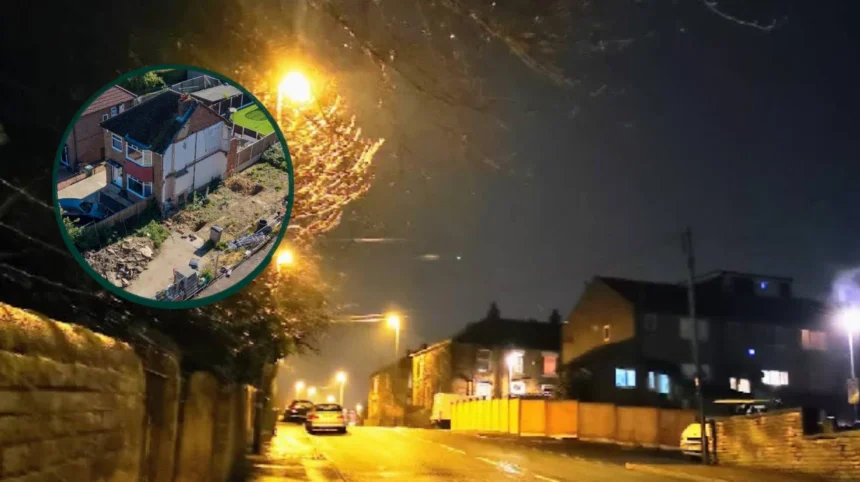
- The property was subsequently demolished, leaving his neighbour, 44-year-old Shivarna Mitra, living beside a pile of rubble and exposed to severe weather and damp.
- Ms Mitra alerted Leeds City Council in January 2023, claiming the demolition violated planning consent, leading the local authority to issue a stop notice.
- Mr Rhodes defended the demolition, stating that a storm compromised the shared gable wall and that pulling it down was an unavoidable safety measure.
- Following a protracted planning dispute and the refusal of his initial application, a revised five-bedroom house design was approved in May 2024, though it was never built.
- Mr Rhodes ultimately sold the plot with planning permission for £115,000 earlier this year and moved abroad, stating he wanted to protect his family from the ongoing conflict.
- Ms Mitra claims she has been left battling cancer alongside living conditions involving severe damp, high heating bills, and pest infestations, while her insurers pursue a legal claim.
Pudsey, Leeds (The Leeds Times) October 5, 2026 —A father-of-four who dismantled his side of a semi-detached residential building in West Yorkshire, triggering a multi-year property feud and extensive media attention, has strongly rejected labels depicting him as a hostile neighbour. Chris Rhodes, a 47-year-old carpenter, maintained that the dramatic decision to level the structure was an essential safety precaution rather than a malicious act.
- Key Points
- How did a routine home extension project escalate into a partial house demolition?
- Why did Chris Rhodes claim the demolition was an absolute safety requirement?
- What were the living conditions endured by neighbour Shivarna Mitra?
- Why did the owner ultimately sell the land and move abroad?
- Background of the Development
- Prediction on Future Impacts for Property Owners and Local Residents
How did a routine home extension project escalate into a partial house demolition?
As reported by Shannon Miller of The Mirror, the dispute began after Mr Rhodes acquired the adjoining property in Pudsey in July 2022 for £280,000. Having secured planning permission for two domestic extensions during the summer months, construction activities formally started in October 2022. However, tensions mounted rapidly between the properties.
As detailed by Simon Green and Rahmah Ghazali of Lincolnshire Live, neighbour Shivarna Mitra alleged that the initial planning approvals were systematically exploited as a pretext to tear down the physical dwelling, an accusation that Mr Rhodes has firmly denied. Ms Mitra raised formal concerns with local government officials in January 2023, asserting that the engineering works deviated significantly from authorized permissions.
Mr Rhodes stated regarding the unfolding situation: “The circumstances created a bad situation of which I tried to work with all parties concerned at every point to resolve.” He further added: “Sadly, I cannot say the same about Shivarna.”
Why did Chris Rhodes claim the demolition was an absolute safety requirement?
Addressing the core controversy surrounding the sudden destruction of the building, Mr Rhodes explained that severe weather conditions played a decisive role. According to reporting by regional news outlets, he stated that a storm rendered the internal gable wall shared by both households structurally precarious.
As noted in coverage by the Liverpool Echo, Mr Rhodes defended his actions by stating:
“I accepted that there would be planning ramifications at this point but the number one priority is safety.”
He further argued that his construction team took preventative structural steps, noting:
“We did not touch her roof as is shown in the videos and images. We left approximately two feet of our roof so as to protect the top of the wall from direct weather.”
Official statements from Leeds City Council clarified the administrative position regarding the site. A local authority spokesperson stated:
“The building was subsequently taken down by the owner without the necessary Council permissions being in place. The owner was advised by Leeds City Council to submit a Section 80 Demolition Notice but did not do so.”
Building control officers subsequently inspected the adjacent standing property and confirmed it remained structurally sound, advising the affected resident to pursue private insurance and legal pathways. Additionally, the Health and Safety Executive (HSE) confirmed they visited the site post-demolition, offering verbal guidance on scaffolding and security without issuing formal enforcement notices for legal breaches.
What were the living conditions endured by neighbour Shivarna Mitra?
The fallout from the partial demolition left Ms Mitra residing next to an exposed site and a pile of rubble. As highlighted across multiple publications, including Wales Online, Ms Mitra navigated this period while concurrently battling cancer.
Reporting by The Mirror outlined the severe domestic toll on Ms Mitra, who described maintaining maximum heating levels alongside portable heaters resulting in monthly energy costs reaching approximately £630. Furthermore, she reported structural dampness, alongside secondary issues involving pests including rats, squirrels, and wasps infiltrating the living space.
Mr Rhodes rejected allegations that his building team caused direct property damage or left the home vulnerable, instead alleging friction on-site. He claimed that Ms Mitra was aggressive toward contractors and contacted emergency services regarding fires that did not take place. Ms Mitra strongly denied allegations of aggressive behavior toward workers.
Why did the owner ultimately sell the land and move abroad?
Following the issuance of a council stop notice in May 2023, Mr Rhodes engaged in a protracted administrative battle to secure permissions for a replacement five-bedroom dwelling. Although an initial proposal faced rejection, a revised design received formal approval in May 2024.
Despite securing planning clearance, the home was never constructed. Mr Rhodes confirmed that he opted to sell the vacant plot earlier in the year for £115,000 and relocated overseas. Explaining the rationale behind this departure, he stated that he chose to exit the situation because he
“did not want my wife and children exposed to all the nastiness”
and alleged that his neighbour consistently obstructed development proposals. Meanwhile, legal proceedings initiated by Ms Mitra’s home insurance provider remain ongoing, with court dates anticipated in the future.
Explore More Pudsey News
Pudsey Police Appeal After Residential Robbery in Pudsey 2026
Pudsey Car Dealership Tackles Pyrenees Charity Drive, Pudsey 2026
Background of the Development
The regulatory landscape governing semi-detached and terraced properties in the United Kingdom relies heavily on strict party wall legislation, local authority planning consent, and formal demolition protocols under building control regulations.
When structural alterations or extensions are undertaken on residential assets sharing a common boundary or party wall, property owners are legally required to serve appropriate notices and obtain designated local council approvals before executing major structural changes.
Historically, residential disputes involving structural boundaries often escalate when communication between neighbours breaks down, leading to local council intervention, involvement from private insurers, and potential civil litigation regarding nuisance or property devaluation.
Prediction on Future Impacts for Property Owners and Local Residents
This high-profile case highlights potential friction points in residential property development, likely resulting in heightened scrutiny from local planning authorities across the United Kingdom regarding domestic extension applications and unnotified structural interventions. For local homeowners and prospective property developers, tighter oversight and slower approval timelines may emerge as councils seek to prevent similar neighbour disputes.
Furthermore, prospective buyers of land plots with historical planning controversies or party wall complications may face increased caution from mortgage lenders and insurers, emphasizing the critical need for strict adherence to statutory consultation frameworks before undertaking significant structural modifications.