
Key Points
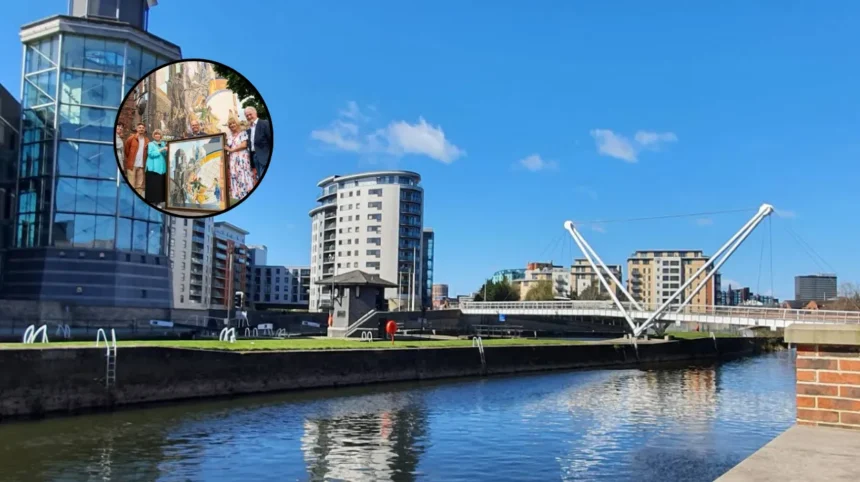
- Complete Restoration: The historic 32-foot-high ‘Cornucopia’ public mural in Leeds city centre has been fully restored to its original 1990 appearance.
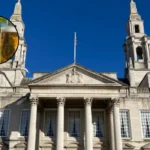
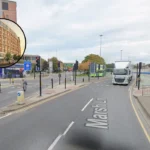
- Strategic Location: Situated directly opposite the iconic Grade I listed Leeds Corn Exchange, the landmark serves as a prominent visual gateway to the Kirkgate area.
- Symbolic Imagery: Commissioned originally in 1989 and completed in 1990 by the late fine artist Graeme Willson, the artwork depicts Cornucopia, the classical goddess of abundance and prosperity.
- Collaborative Funding and Support: The restoration initiative was funded by Yorkshire-based property developer and investor Rushbond in partnership with Leeds Civic Trust, with structural and administrative support from Leeds City Council.
- Specialist Execution: Local contemporary artist Ralph Replete completed the physical rejuvenation, employing meticulous hand-cleaning techniques and authentic mineral silicate paints.
- Community Access: Local independent clothing retailer Blue Rinse accommodated the conservation team by granting essential physical access to the building’s exterior wall.
Leeds (The Leeds Times) June 23, 2026 – A historic piece of West Yorkshire’s urban fabric has been successfully secured for future generations following the comprehensive physical restoration of the iconic ‘Cornucopia’ mural in Leeds city centre. Standing at an impressive 32 feet high directly opposite the landmark Leeds Corn Exchange, the colossal public artwork has undergone a meticulous conservation process to reverse decades of environmental weathering and atmospheric degradation. The initiative, delivered through a collaborative partnership between private heritage investors, civic preservationists, local businesses, and municipal authorities, ensures that one of the city’s most significant post-modern cultural landmarks retains its position as a visual anchor within the historic Kirkgate quarter.
- Key Points
- Why Is the ‘Cornucopia’ Mural Culturally Significant to Leeds?
- What Specialized Conservation Methods Were Used to Restore the Artwork?
- How Have Project Leaders and Civic Partners Responded to the Project’s Completion?
- Background of Public Mural Preservation in West Yorkshire
- Prediction: How This Development Will Affect Local Businesses, Residents, and the Tourism Sector
As reported by Clementine Hall of The Hoot Leeds, the extensive restoration project received critical funding from Rushbond—a Yorkshire-based property development and investment firm that holds the neighbouring Grade I listed Leeds Corn Exchange within its portfolio.
The preservation effort was executed in direct partnership with the Leeds Civic Trust and received formal backing from Leeds City Council.
To achieve an authentic conservation standard, the project partners appointed local contemporary artist Ralph Replete to undertake the delicate physical task of refreshing the wall, utilizing specialized materials designed to match the original artistic medium deployed more than three decades ago.
Operational logistics for the high-altitude conservation work required close cooperation with the local business community. In her coverage for The Hoot Leeds, Clementine Hall noted that the project partners extended specific gratitude to the team at Blue Rinse, a prominent independent vintage clothing retailer occupying the premises, who were highly accommodating in granting the conservation team continuous physical access to the upper exterior wall throughout the scaffolding and painting phases.
Why Is the ‘Cornucopia’ Mural Culturally Significant to Leeds?
The ‘Cornucopia’ mural represents a pivotal era in the architectural and cultural reimagining of Leeds city centre during the late 20th century. Commissioned in 1989 by Speciality Shops, the corporate entities overseeing the comprehensive renovation of the adjacent Leeds Corn Exchange at the time, the artwork was designed specifically to brighten and elevate an area undergoing substantial economic transition.
Upon its public unveiling in the autumn of 1990 by the architectural writer and broadcaster Patrick Nuttgens, the mural achieved immediate critical acclaim, securing the prestigious Leeds Award for Architecture and the Environment.
The scale and thematic composition of the piece distinguish it from standard municipal decorations. Reaching 32 feet in height and 30 feet in width, the composition intentionally pairs classical Roman mythology with the commercial reality of its surroundings.
By depicting the goddess Cornucopia—the traditional horn of plenty overflowing with produce, wealth, and nourishment—the late artist Graeme Willson sought to create a visual metaphor for the independent commerce, creativity, and structural abundance defining the adjacent market exchanges and the broader identity of Leeds.
What Specialized Conservation Methods Were Used to Restore the Artwork?
Preserving an outdoor painting exposed to northern English weather conditions for 36 years required strict adherence to historical authenticity and modern chemical conservation standards. According to archival documentation from the artist’s estate, Graeme Willson executed the original 1990 commission using the specialized ‘Keim’ system of mineral silicate paints.
Unlike standard oil or acrylic paints that form a surface film prone to cracking and peeling, silicate paints chemically bond directly to the stone or brick substratum via a process known as silicification, offering exceptional durability and vapor permeability.
To respect this original chemical framework, Ralph Replete initiated the 2026 restoration by carefully hand-cleaning the entire 32-foot surface to remove accumulated urban soot, carbon deposits, and organic matter without damaging the underlying historic plaster. Following the cleaning phase, the artwork was systematically retouched.
The conservation team sourced the exact same specialized mineral silicate paints originally utilized by Willson, ensuring that the newly applied pigments integrated seamlessly with the surviving historical layers without altering the texture or light-reflective properties of the wall.
How Have Project Leaders and Civic Partners Responded to the Project’s Completion?
The completion of the restoration has drawn strong praise from the corporate and civic leaders responsible for maintaining the architectural integrity of the Corn Exchange district. The preservation of public art is increasingly viewed by regional stakeholders as an essential component of urban regeneration and identity maintenance.
In an official corporate statement, Jonathan Maud, Chairman of Rushbond, emphasized the historical obligation associated with the site:
“‘Cornucopia’ was a wonderful gift to the city from the former owners of Leeds Corn Exchange, and it deserved to be given a respectful refresh. Thanks to our incredible partners, including the team at Blue Rinse who were most accommodating in giving us access to the mural, and the meticulous work of Ralph Replete, everyone can once again enjoy this beautiful work of public art.”
Mr Maud further contextualized the wider impact of the project on the city’s tourism and commercial sectors, stating:
“‘Cornucopia’ is an important part of Leeds’s cultural heritage and I’m delighted that the many thousands of people who come to Leeds Corn Exchange and Kirkgate every year will once again be greeted by a cultural landmark that reflects both the area’s independent, commercial, creative identity and the true spirit of the city.”
Background of Public Mural Preservation in West Yorkshire
The restoration of ‘Cornucopia’ arrives at a time of heightened regional awareness regarding the vulnerability and value of post-war public art. Historically, outdoor murals across West Yorkshire have faced severe threats from real estate developments, corporate advertising buyouts, and structural neglect.
As documented in historical records compiled by the academic research collective For Walls With Tongues, Leeds became a hotbed for pioneering public art in 1978 with the formation of the Yorkshire Artists Mural Group, co-founded by Graeme Willson and Ramsay Burt to bring large-scale, high-quality fine art out of traditional galleries and onto the walls of working-class communities undergoing urban clearance.
While early plywood and enamel pieces like Willson’s 1978 Inner City Redevelopment mural eventually succumbed to physical decay after two decades, his final outdoor masterpiece, ‘Cornucopia’, was structurally built into the brickwork to endure.
The vulnerability of such works remains a point of local concern; a separate historical installation by Willson at Surbiton Station in London was unceremoniously destroyed by rail authorities during a 1990s refurbishment, sparking public outrage.
By formally intervening in 2026 to protect ‘Cornucopia’ through private funding and civic oversight, the city of Leeds has established a conservation-first precedent, treating street-facing frescos with the same museological respect afforded to interior historic assets.
Explore More Local Leeds News
Hargreaves Drug Gang Jailed — Halton Moor 2026
Greencore 40,000 sq ft at Broad Gate — Leeds 2026
Prediction: How This Development Will Affect Local Businesses, Residents, and the Tourism Sector
The successful restoration of the ‘Cornucopia’ mural is expected to generate distinct, measurable benefits for several key segments of the Leeds population:
- Independent Retailers and Hospitality Operators: For the independent shop owners inside the Leeds Corn Exchange and along Kirkgate, the pristine restoration of a major visual landmark acts as a permanent, non-commercial anchor that drives foot traffic. High-quality public environments are statistically linked to increased dwelling time among consumers, directly benefitting nearby cafes, boutiques, and vintage retailers like Blue Rinse.
- The Regional Tourism and Cultural Sector: The refreshed mural solidifies the standing of the Leeds Street Art Trail, an interactive cultural tourism initiative designed to guide domestic and international visitors through the city’s open-air masterpieces. Maintaining ‘Cornucopia’ in peak aesthetic condition prevents the degradation of the trail’s value, keeping Leeds competitive as a northern cultural destination alongside cities like Manchester and Sheffield.
- Local Residents and Commuters: For the thousands of everyday citizens who traverse the transport and commercial hub outside the Corn Exchange daily, the removal of decades of grime from a symbol of “abundance and prosperity” provides a psychological lift. It reinforces civic pride and communicates a clear message that the municipal and private sectors are actively investing in the care, beauty, and safety of the shared urban environment.