Key Points
- Widespread Service Alterations: Rail operator Northern has issued multiple “major delay” and cancellation warnings across key Yorkshire routes, heavily impacting services operating to and from Leeds station.
- Affected Key Routes: Specific disrupted lines include Leeds-Knottingley, Leeds-Doncaster, Leeds-Sheffield, Leeds-Nottingham, Leeds-York via Harrogate, Leeds-Chester, and Hull-Halifax.
- Network-Wide Impact: TransPennine Express has reported network-wide disruptions due to severe weather, advising that service delays and cancellations are expected to continue throughout the day.
- Infrastructure Damage & Theft: Overarching weather disruptions include damage to overhead line wiring between Preston and Bolton, while secondary disruptions near Sheffield and Doncaster were compounded by signalling cable theft.
- Passenger Travel Guidance: Operators have issued “do not travel” warnings on affected routes, permitting ticket flexibility across alternative operators and offering full ticket refunds for cancelled journeys.
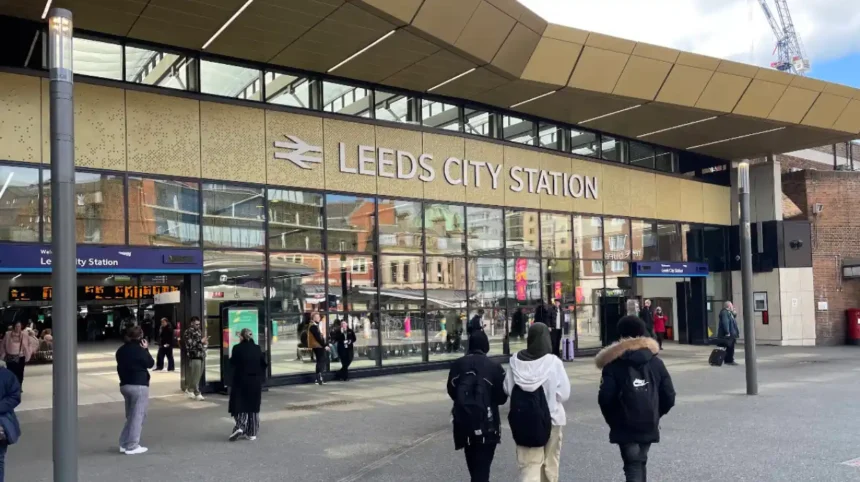
Leeds (The Leeds Times) October 26, 2026 – Widespread train service delays and cancellations have struck public transport networks across Yorkshire, following severe weather conditions caused by Storm Boelo. Rail operator Northern has issued a series of “major delay” notifications and travel advisories, severely restricting movement through regional transport hubs, particularly at Leeds station. High winds, heavy rainfall, and physical infrastructure damage have combined to disrupt primary lines connecting West Yorkshire with surrounding economic centers, prompting operators to urge passengers to verify their travel arrangements before venturing to stations.
What Is the Full Extent of Disruption Across Yorkshire Train Lines?
As reported by Daryl Ames of The Telegraph & Argus, severe weather conditions brought on by Storm Boelo have led rail operator Northern to advise customers against traveling across heavily impacted parts of the network. In a statement published by The Telegraph & Argus, Northern confirmed that the storm has caused widespread operational disruption, while TransPennine Express cautioned that its entire network has been affected.
According to official updates from Northern Railway, numerous services running into and out of Leeds station have been directly affected, cancelled, or subjected to altered stopping patterns. The list of affected key regional routes includes:
- Leeds to Knottingley
- Leeds to Doncaster
- Leeds to Sheffield
- Leeds to Nottingham
- Leeds to York via Harrogate: Select train services in both directions will bypass stations at Weeton or Headingley.
- Leeds to Chester: Services travelling towards Chester will omit stops at Bramley station, although trains running inbound towards Leeds will maintain regular stops.
- Hull to Halifax: All train services will start and terminate at Bradford Interchange, with Halifax being served via alternative regional routes.
- York to Blackpool North: Selected services will bypass New Pudsey in both directions.
- Blackburn to Headbolt Lane: Selected trains will not call at Smithy Bridge; passengers have been redirected to the Wigan Wallgate to Leeds service to reach Smithy Bridge.
As detailed by transport reports in The Star, additional disruptions compounding the regional transport pressure included damage to overhead electric wiring and an incident involving signalling cable theft affecting services between Sheffield and Adwick, as well as routes between Doncaster and Leeds.
What Are Official Sources and Operators Advising Passengers?
As reported by Daryl Ames of The Telegraph & Argus, TransPennine Express released a public statement on X confirming:
“Due to severe weather all lines are disrupted. Train services running across the whole TransPennine Express network may be cancelled or delayed. Disruption is expected until the end of the day.”
Furthermore, as covered by The Telegraph & Argus and official bulletins from Northern Railway, passenger guidance details ticket flexibility and refund options for those affected:
“You do not need to buy a new ticket. Passengers whose trains are cancelled or who cannot complete their journeys can apply for refunds from the ticket retailer.”
Northern Railway added that ticket flexibility rules allow passengers with tickets for cancelled services to travel on alternative services operated by participating train companies within two hours before or after their original scheduled departure time.
The Met Office had previously issued forecasts anticipating wind gusts reaching 70 mph to 80 mph across exposed coastal locations and elevated areas, alongside widespread gusts of 50 mph to 60 mph across northern England, causing significant environmental hazards across rail corridors.
Background of the Storm Boelo Rail Disruption
Storm Boelo represents one of the significant Autumn storm systems impacting the United Kingdom’s transportation infrastructure during the late October 2026 weather cycle. Following closely on the heels of earlier seasonal systems such as Storm Austen, Storm Boelo was named by the Met Office, triggering widespread yellow weather warnings across Northern England.
The rail corridors in Yorkshire, particularly around major interchange hubs like Leeds, Sheffield, and Bradford, operate under high capacity during weekday peak hours. The infrastructure in these regions consists of a mixture of electrified mainlines and diesel-operated regional routes. High-velocity winds frequently cause overhead line entanglements, debris accumulation, and fallen trees on tracks, requiring extensive visual inspections and structural repairs by Network Rail engineers before lines can be safely reopened.
Prediction: How This Development Will Affect Passengers and Regional Commuters
The ongoing service cancellations and structural delays caused by Storm Boelo are expected to create multi-day knock-on effects for passengers, daily commuters, and local business operations throughout West and South Yorkshire.
1. Daily Commuters and Workforce Productivity
Regional commuters relying on primary routes into Leeds, Sheffield, and York face immediate travel delays, overcrowding on surviving services, and prolonged journey times. Short-notice station bypasses—such as those implemented at Bramley, Headingley, and Weeton—force local travelers to rely on road replacement transport or alternative secondary travel options, leading to increased localized road congestion.
2. Operational Recovery and Rolling Stock Displacement
Even after severe weather warnings expire, rail operators face significant operational challenges in returning to scheduled timetables. Train crews and rolling stock units displaced by route terminations (such as services starting and finishing at Bradford Interchange rather than Hull or Halifax) require repositioning across the network. Consequently, minor timetable alterations and reduced service capacity are likely to persist into subsequent travel days.
3. Financial Impact and Claims Processing
Passengers who face delays or non-viable travel conditions will likely initiate a high volume of Delay Repay compensation claims and ticket refund requests. Transport operators and ticket retailers will need to process an elevated influx of administrative requests, while commercial businesses in major urban centers may experience temporary drops in footfall and workplace attendance.