Key Points
- Noise-Based Quota System: Leeds Bradford Airport (LBA) has formally submitted proposals to Leeds City Council to replace its existing movement-based night flight restrictions with a modern, noise-based Quota Count System (QCS).
- Night Noise Insulation Scheme: As part of the planning application, LBA is introducing a targeted insulation scheme offering nearby residents funding for double glazing, enhanced ventilation, and bedroom air conditioning—a first for a UK airport.
- Shift in Night Operational Hours: The airport plans to redefine and condense its official night-time operational window to between 23:30 and 05:59 to match standard UK and European flight schedules.
- Campaigner Opposition: Environmental groups and local community campaigners maintain that abandoning the fixed numerical cap of approximately 5,000 movements will dramatically increase the volume of late-night flights over residential areas.
- Commercial and Environmental Strategy: LBA management argues that the shift retains overall noise footprints while incentivising airlines to deploy quieter, more fuel-efficient, next-generation aircraft.
Yeadon (The Leeds Times) August 24, 2026 — Leeds Bradford Airport has submitted formal plans to Leeds City Council seeking to overhaul decades-old planning conditions governing its night-time operations. The proposals include a public compensation package that would offer local residents grants for double glazing, property insulation, and bedroom air conditioning units. The airport is seeking to transition from its current movement-based cap—which limits night flights to roughly 5,000 flights per year—to a noise-linked Quota Count System. While airport executives maintain the move aligns the hub with broader UK regional standards and encourages the use of quieter aircraft, local environmental campaigners argue the change serves as a loophole to significantly increase overall late-night flight volumes.
- Key Points
- What Are the Main Features of the New Proposal?
- How Will the Night Noise Insulation Scheme Work for Nearby Residents?
- What Position Have Airport Executives and Industry Leaders Taken?
- Why Are Local Campaigners Opposing the Changes?
- Background of the Leeds Bradford Airport Night Flight Framework
- Prediction: How This Development Will Affect Surrounding Communities and Regional Travelers
What Are the Main Features of the New Proposal?
Under the application submitted to local planning authorities, Leeds Bradford Airport intends to vary three core operational conditions that have regulated night movements since the early 1990s. The central element involves replacing numerical Air Traffic Movement (ATM) limits with a Quota Count System (QCS). A QCS assigns noise points to individual aircraft based on their certified acoustic profiles during take-off and landing. Under this framework, quieter modern aircraft consume fewer points, allowing operators greater operational flexibility within an overarching seasonal noise budget.
Additionally, the airport plans to adjust its defined night-time hours to 23:30 through 05:59. According to operational statements, condensing this period modernises flight schedules, aligning Yeadon operations with standard European flight patterns and established practices at other major UK regional facilities. LBA remains one of the final regional transport hubs in the United Kingdom operating under a legacy movement-cap model.
How Will the Night Noise Insulation Scheme Work for Nearby Residents?
To mitigate the acoustic impact on surrounding communities, the airport has outlined a dedicated Night Noise Insulation Scheme (NNIS). Eligible households situated within designated noise contours around the airfield will be able to apply for direct financial assistance.
The mitigation package incorporates standard physical acoustic interventions, including upgraded high-specification double glazing and specialized property ventilation improvements. Notably, the scheme also introduces financial support for bedroom air conditioning installation. Airport representatives highlighted that providing bedroom cooling grants represents an unprecedented measure for a UK airport, designed to allow residents to keep windows fully sealed against aviation noise during summer months without compromising thermal comfort.
What Position Have Airport Executives and Industry Leaders Taken?
Chief Executive Officer of Leeds Bradford Airport, Vincent Hodder, stated that the organization currently supports thousands of regional jobs and generates hundreds of millions of pounds for the local economy. Hodder emphasized that as part of the broader LBA:REGEN regeneration investment strategy—following the completion of the £200 million terminal extension—modernising thirty-year-old operating framework conditions is a necessary evolution.
Hodder explicitly addressed public concerns regarding potential traffic surges, asserting that the application is designed to match the existing noise footprint by applying identical noise limits through a different allocation method rather than facilitating thousands of additional night flights. He noted that the noise-based framework creates direct financial incentives for airline carriers to deploy cleaner, newer, and quieter aircraft fleets.
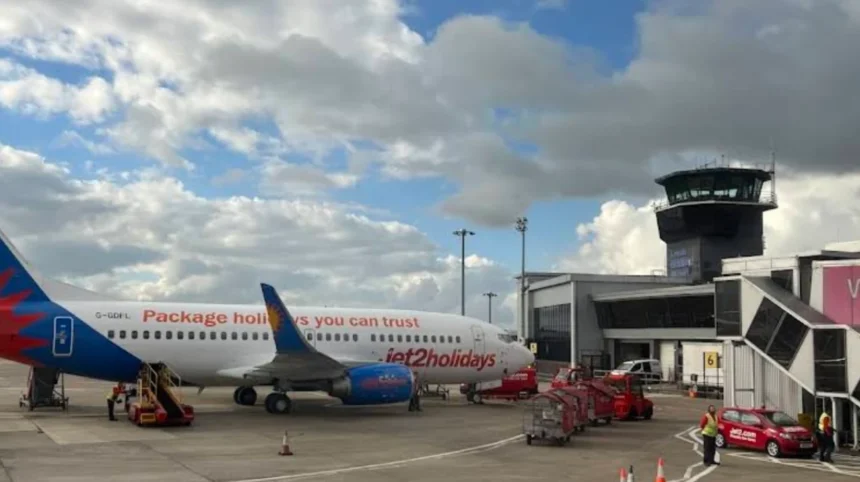
Regional business representatives and commercial airline partners have voiced support for the planning variations. Steve Heapy, Chief Executive Officer of Jet2, welcomed the proposed modernisation, observing that updated operational structures provide essential stability for regional tour operators and holidaymakers while promoting fleet decarbonisation.
Why Are Local Campaigners Opposing the Changes?
Community action groups and local environmental campaigners have strongly criticised the application to abandon numerical flight limits. Opponents contend that moving to a Quota Count System effectively removes the hard ceiling on aircraft movements, enabling airlines to schedule significantly higher numbers of late-night and early-morning flights under the premise of utilizing quieter engine technologies.
Campaign groups maintain that night-time sleep disruption remains a primary health concern for householders in Yeadon, Horsforth, Northwest Leeds, and surrounding Wharfedale communities. Critics assert that providing grants for air conditioning and secondary glazing is an inadequate substitute for strict caps on flight numbers, arguing that continuous background aviation activity during night hours harms local quality of life regardless of incremental reductions in individual aircraft noise.
Background of the Leeds Bradford Airport Night Flight Framework
The operational guidelines governing night-time arrivals and departures at Leeds Bradford Airport were initially established by Leeds City Council during planning approvals in 1993 and subsequently incorporated into later consents. Under these legacy conditions, strict seasonal caps were set on aircraft movements between designated night hours, alongside specific restrictions on older, noisier aircraft types.
In recent years, friction between the airport and local residents has intensified as passenger demand expanded across Yorkshire. LBA previously pursued major infrastructure developments alongside ongoing efforts to resolve regulatory discrepancies regarding how night movements are counted and logged. The airport’s ongoing “Vision 2030” and “LBA:REGEN” master plans seek to transform the site into a modern transport hub, featuring decarbonised ground operations and expanded terminal capacity. However, the management of night flight volumes remains one of the most contested environmental planning issues in West Yorkshire, balancing regional economic growth targets against local residential amenity considerations.
Prediction: How This Development Will Affect Surrounding Communities and Regional Travelers
If Leeds City Council approves the proposed operational changes, the impacts will manifest distinctly across two primary stakeholder groups: local residents and regional air passengers.
For nearby residents in West Yorkshire, the immediate physical outcome will be access to direct home-improvement funding through the Night Noise Insulation Scheme. Homeowners within the designated noise boundaries will be able to retrofit properties with acoustic double glazing and bedroom air conditioning, potentially mitigating internal disturbance during sleep hours. However, the broader community may experience a higher overall frequency of late-night and early-morning aircraft movements. Even if individual flights emit lower decibel levels due to modern engine standards, the total volume of overhead traffic between 23:30 and 05:59 could increase, altering the acoustic environment of local neighborhoods.
For regional travelers and the wider Yorkshire economy, the implementation of a Quota Count System is likely to enhance flight scheduling flexibility. Airlines operating out of LBA will be able to optimize fleet utilization, potentially leading to increased short-haul European destinations, improved scheduling reliability for delayed evening return flights, and stronger commercial backing for carriers investing in modern, fuel-efficient aircraft fleets.