
Key Points
- Leeds United icon Eddie Gray reflects on his extensive 18-year playing career, featuring 579 appearances and multiple major honors under manager Don Revie.
- Gray discusses the influence of Don Revie in shaping the culture, resilience, and success of Leeds United during their golden era.
- The conversation explores Gray’s deep-rooted footballing family background and how it shaped his path in professional sport.
- Gray addresses the infamous “Dirty Leeds” moniker, shedding light on the reality behind the tough reputation of Revie’s legendary squad.
- The interview examines why United are back in the broader footballing consciousness and what it means for the club’s future identity.
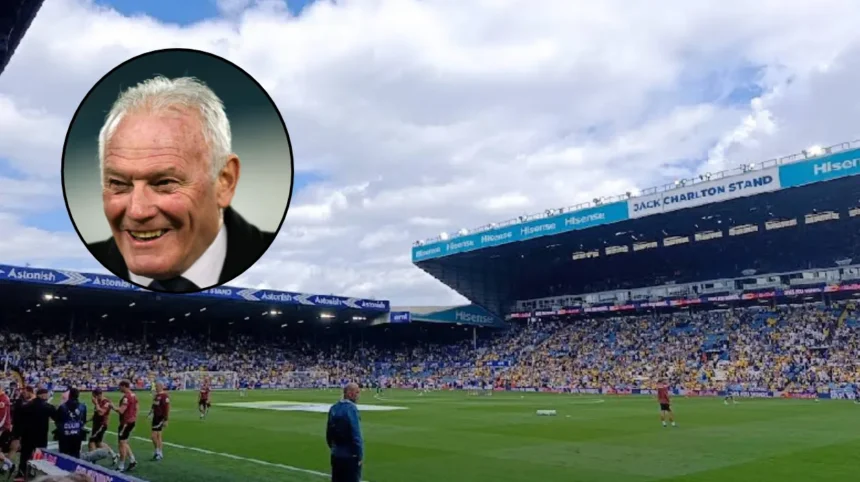
Leeds (The Leeds Times) September 26, 2026 — Leeds United legend Eddie Gray has opened up on the defining chapters of his life in football, offering a rare and comprehensive insight into the Don Revie era, his famous footballing family, the reality behind the “Dirty Leeds” tag, and why the Yorkshire club commands such an enduring stature in the English game.
- How Did Don Revie Shape the Identity of Leeds United?
- What Role Did Gray’s Footballing Family Play in His Career?
- Where Does the “Dirty Leeds” Monolith Come From?
- Why Does Eddie Gray Believe United Are Back Where They Belong?
- Background of the Particular Development
- Prediction on How This Development Can Affect Leeds United Supporters
Gray, whose association with Elland Road spans decades as a record-breaking winger, manager, youth coach, and club ambassador, sat down to discuss the values and history that forged one of English football’s most unique institutions. His journey from a precocious teenage talent arriving from Scotland to a revered figure in West Yorkshire encapsulates the very soul of Leeds United.
How Did Don Revie Shape the Identity of Leeds United?
When discussing the architectural mastermind behind Leeds United’s golden generation, Eddie Gray points directly to Don Revie as the singular force who changed the club’s destiny. Revie took charge in 1961 when Leeds were languishing in the Second Division, transforming them into domestic and European heavyweights through meticulous preparation, psychological astuteness, and an uncompromising demand for high standards.
As reported by Nathan Murphy of Off The Ball, Gray highlighted how Revie’s management style was years ahead of its time, uniting a squad built on loyalty, discipline, and exceptional technical ability. Under Revie, Leeds captured the First Division titles in 1969 and 1974, the League Cup in 1968, the FA Cup in 1972, two Inter-Cities Fairs Cups, and reached the 1975 European Cup final. Gray emphasized that Revie’s influence extended far beyond tactical setups; he created a family environment where players felt protected and driven to succeed together.
What Role Did Gray’s Footballing Family Play in His Career?
Football was more than just a profession for the Gray household; it was a way of life. Eddie Gray’s footballing pedigree runs deep, with family members carving out significant reputations within the professional game, most notably his brother Frank Gray, who also starred for Leeds United and won major honors at club and international level.
Growing up in Glasgow, the Gray brothers were immersed in a culture that demanded technical excellence and mental toughness. Eddie Gray frequently recalls how his upbringing fostered a profound understanding of the game, instilling values of hard work and resilience that allowed him to thrive in the high-pressure environment of top-flight English football under Revie’s rigorous regime.
Where Does the “Dirty Leeds” Monolith Come From?
Few club nicknames carry as much historical weight or controversy as “Dirty Leeds,” a label pinned on Revie’s side during the 1960s and 1970s by opposition pundits, media outlets, and rival fans. Gray addresses this perception by separating the physical, uncompromising competitiveness of the team from the unfair caricature painted by external critics.
While players like Billy Bremner, Norman Hunter, and Johnny Giles never backed down from a physical challenge, Gray stresses that the team’s success was fundamentally built on extraordinary footballing ability, passing rhythm, and tactical sophistication. As noted by Eddie Gray regarding the team’s capabilities,
“If we had to go forward to score goals, we could do that; if we had to keep a clean sheet away in a European game we could do that”.
The aggressive reputation, according to Gray, was often magnified by a media hostile to a northern club disrupting the traditional establishment of English football.
Why Does Eddie Gray Believe United Are Back Where They Belong?
The conversation naturally shifts toward the modern era and why Leeds United continues to resonate so deeply across the football landscape. Gray reflects on the club’s turbulent modern history—traversing the highs of Champions League nights to the depths of League One and subsequent rebuilding phases—and notes that the club’s core DNA remains entirely intact.
As a club ambassador attending every home and away fixture, Gray observes firsthand the unwavering passion of the fanbase.
He articulates that when Leeds United are competitive and playing with intensity, energy, and ambition, it adds an essential dynamic to the Premier League and English football as a whole.
Explore More Leeds United News
Harry Gray Joins Max Dowman in England Youth Step Leeds 2026
Harry Wilson Injury Update: Why His Leeds Start Isn’t So Bad, Leeds 2026
Background of the Particular Development
The reflections shared by Eddie Gray arrive at a time when historical context and heritage are increasingly valued by supporters navigating modern football’s corporate landscape. Over recent seasons, Leeds United has undergone significant ownership and structural shifts aimed at establishing long-term stability in the upper tiers of English football.
Understanding the foundational ethos built by Don Revie and personified by legends like Eddie Gray provides vital perspective for supporters and observers tracking the club’s institutional evolution, cultural continuity, and efforts to blend past glory with future ambitions.
Prediction on How This Development Can Affect Leeds United Supporters
Preserving and communicating the authentic history of figures like Eddie Gray directly impacts the psychological connection between the club and its global fanbase. For Leeds United supporters, engaging with these narratives reinforces a shared sense of identity, resilience, and community belonging.
As the club strives for sustainable success on the pitch, this deep-rooted historical awareness ensures that supporters remain grounded in the traditional values of hard work and loyalty, helping galvanize morale through both triumphs and challenges.