
Key Points:
- Official Partnership Renewed: Leeds United Football Club has officially renewed its sponsorship of Leeds Pride 2026, maintaining its prominent role as an official event sponsor alongside its LGBTQ+ supporter group, Marching Out Together.
- Historic Parade Leadership: For the first time in Leeds Pride history, Leeds United has been selected to lead the annual pride parade through the city centre.
- Milestone Anniversaries: The 2026 celebrations mark a historic double milestone, celebrating both the 30th anniversary of the overall event and the 20th anniversary of its structured festival format in Leeds, which has now expanded into a full two-day weekend schedule.
- Club Legends Participating: Former Leeds United stars Jermaine Beckford, Tony Dorigo, Noel Whelan, and Bridie Hannon will join the walking group alongside the club’s mascot, Lucas the Kop Cat, to demonstrate active allyship.
- Active Community Collaboration: The club is co-ordinating its appearance with key advocacy groups, including Marching Out Together and Football v Homophobia, highlighting ongoing, year-round educational efforts in professional football.
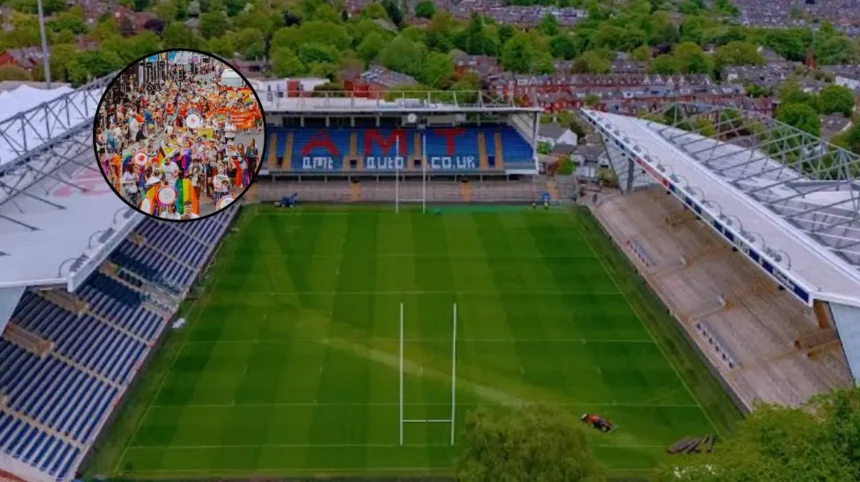
Leeds United (The Leeds Times) July 14, 2026 – Leeds United Football Club and its official LGBTQ+ supporters group, Marching Out Together, have officially renewed their partnership to serve as headline sponsors for Leeds Pride 2026. The landmark sponsorship of this year’s Pride event is particularly significant, as organisers have selected Leeds United to lead off the iconic Leeds Pride Parade for the very first time in the club’s history. The milestone event is set to take place across the weekend of Saturday 18th July and Sunday 19th July, taking over Leeds city centre for what organizers anticipate will be the largest regional iteration of the festival to date.
- Key Points:
- Why is Leeds United leading the Leeds Pride 2026 parade?
- How does the 2026 festival celebrate historic milestones?
- What role do Marching Out Together and Football v Homophobia play?
- Background of the particular development
- Prediction: How this development can affect Leeds United supporters and the local community
Why is Leeds United leading the Leeds Pride 2026 parade?
As reported by administrative representatives writing for the official Leeds United media team, the decision to give the Elland Road club the honour of leading the parade recognises Leeds United’s “continued commitment to equality and inclusion”.
Crucially, it highlights the club’s deep-rooted, structural relationship with Marching Out Together, an organisation representing LGBTQ+ Leeds United fans. The club’s visual and physical presence at the head of the Sunday parade is intended to project a clear message of allyship directly from the highest tiers of English football to the local community.
The physical walking group representing the club will feature a mix of staff, fans, and high-profile club ambassadors. In a statement published on the club’s official media channels, Leeds United confirmed that legendary former players Jermaine Beckford, Tony Dorigo, Noel Whelan, and Bridie Hannon will walk in the parade alongside the club’s official mascot, Lucas the Kop Cat.
Club organizers have publicly urged as many supporters as possible to join the walking group on Sunday, 19th July, to demonstrate their support for the city’s diverse populations.
How does the 2026 festival celebrate historic milestones?
According to a report published by the local culture and tourism portal, Welcome to Leeds, Leeds Pride 2026 marks a dual anniversary of significant local importance.
The upcoming weekend marks the 30th anniversary of pride celebrations within the city of Leeds, whilst also representing the 20th anniversary of Leeds Pride’s transition into a major, formalized free public festival.
To celebrate these milestones, organizers have expanded the schedule into a full two-day event for the first time. Events will kick off on Saturday, 18th July, featuring localized community acts, before culminating in the main celebration and the central parade on Sunday, 19th July.
The festival remains free to the public and is widely regarded as one of the largest free Pride celebrations in the North of England, routinely attracting upwards of 70,000 attendees to the city centre.
What role do Marching Out Together and Football v Homophobia play?
As detailed in an official event briefing by the leadership of Marching Out Together, the group will not only co-lead the parade but will also host a prominent community hub on Leeds Bridge throughout Sunday.
Fans visiting the stall will have opportunities to participate in charity raffles—with prizes including signed Leeds United first-team shirts—and engage directly with campaigners.
Representatives from Football v Homophobia, an international initiative fighting discrimination in soccer, will also walk alongside Leeds United’s official contingent.
The joint presence of these groups is a deliberate display of their ongoing collaboration. According to the club’s official press release, Leeds United works on numerous educational and community projects with both organizations throughout the traditional football calendar, moving well beyond symbolic visibility during the summer months.
In an official public brief on their platform, Marching Out Together leaders emphasized the duality of the event:
“The parade sets off at 12:30 pm on Sunday 19th July, and we aim to be loud, proud and colourful to show everybody how this fabulous city – and our club – really is for everyone… we are encouraging people to wear their LUFC shirts or colours!”
However, the group also noted that Pride is not merely celebratory but serves as an essential educational platform. In their club announcement, Leeds United noted that over the last 20 years, the festival has evolved to highlight the ongoing everyday challenges and systemic battles that LGBTQ+ individuals still face globally.
Background of the particular development
The deepening of Leeds United’s sponsorship and integration with Leeds Pride is the result of years of structural community work, but it also occurs against a backdrop of ongoing challenges regarding homophobia in British football culture.
Marching Out Together was founded in 2017 with the full backing of Leeds United, aiming to provide a safe space for LGBTQ+ supporters at Elland Road.
Over nearly a decade, the relationship has evolved from occasional matchday program mentions to fully integrated club operations.
Earlier in the 2025/2026 season, Leeds United played a highly visible role in the Premier League’s “Together With Pride” initiative during a home fixture against Nottingham Forest, featuring special scoreboard branding, touchline displays, and dedicated player features.
However, advocacy groups note that the need for active campaigning remains urgent. In May 2026, Marching Out Together issued a formal statement expressing anger and disappointment over incidents of homophobic chanting by a minority of supporters during a fixture against Brighton & Hove Albion. Leeds United quickly condemned the behaviour and committed to taking direct action and enforcing stadium bans against offenders.
This mix of progress and recurring stadium issues underscores why Leeds United’s executive team has opted for highly visible representation, such as leading the Leeds Pride parade, to reinforce their anti-discrimination policies.
Prediction: How this development can affect Leeds United supporters and the local community
This prominent development is expected to have a tangible, multi-layered impact on Leeds United supporters, the local LGBTQ+ community, and the broader culture of English football.
For the general fanbase, Leeds United’s history-making parade leadership will likely accelerate the cultural shift toward inclusivity at Elland Road. By utilizing highly respected club legends like Jermaine Beckford and Tony Dorigo, the club successfully bridges the gap between traditional football culture and modern diversity campaigns.
This visible endorsement from club icons helps normalise LGBTQ+ allyship among everyday match-going fans, potentially reducing the frequency of discriminatory chanting in the stands by establishing homophobia as explicitly “anti-Leeds United.”
For the LGBTQ+ supporter base and local residents, this sponsorship provides a powerful sense of validation and safety. Having a massive, historically working-class institution like Leeds United publicly fronting the parade sends a clear signal that queer fans are an integrated, valued part of the region’s identity.
In the wider football landscape, Leeds United’s decision to take a literal leading role in a major civic Pride event sets a new benchmark for professional clubs.
Other Premier League and EFL clubs are likely to face increased pressure from their own supporter trusts to match this level of active, executive-backed sponsorship.
In the long term, this development will likely strengthen the club’s connection to its local community, positioning Leeds United as a progressive, modern club that actively defends its core values of equality, both on and off the pitch.