Key Points
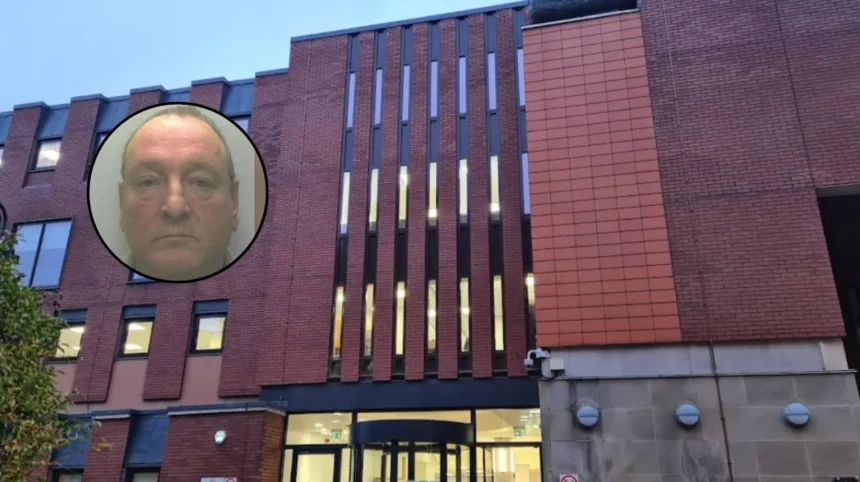
- David Sharp, 66, of Copland Meadows, Totnes, Devon, was jailed for six years at Leeds Crown Court for raping an 18-year-old woman on her first night in Leeds in 1977.
- Convicted of one count of rape and one count of indecent assault following a trial in March 2026.
- Victim impact statement read in court details lifelong trauma, loss of independence, and family distress.
- Case solved via the Major Investigation Review Team’s cold case review using DNA from 1977 evidence.
- DNA profile matched Sharp through a close family member’s profile on police systems.
- Sharp was added to the Sex Offenders Register for life and given a lifetime restraining order.
- Victim praises officers Haley Pedley and Linzie Holroyd for restoring faith in justice.
Leeds (The Leeds Times) April 23, 2026 – David Sharp, a 66-year-old man from Copland Meadows, Totnes, Devon, received a six-year prison sentence today after being found guilty of raping a woman in Leeds on 2 October 1977.
- Key Points
- What Impact Did the 1977 Rape Have on the Victim’s Life?
- How Was David Sharp Identified After Nearly 50 Years?
- What Happened During the Original 1977 Investigation?
- What Penalties Did David Sharp Receive?
- Background of the Development
- Prediction: How This Development Can Affect Victims of Historical Sexual Assaults
The victim, who was 18 years and three months old at the time, had just arrived in Leeds to begin her university degree course. In a powerful victim impact statement read to Leeds Crown Court, she described the profound and lasting effects of the attack.
What Impact Did the 1977 Rape Have on the Victim’s Life?
The woman’s statement, delivered during the sentencing hearing, outlined how the crime shattered her sense of hope and independence.
“On 2 October 1977, I was just 18 years and three months old when I arrived in Leeds to start my degree course. My heart aches for that young woman. It was to be the start of me being more independent, spreading my wings and exploring the city of Leeds and the world. I had such enormous hope, potential and the world to explore. This was all stolen away from me that night,”
she said.
She continued to reflect on the broader family toll.
“Years later, I reflect on that time in October 1977 and think of my poor parents who left me in Leeds that night, believing that I was safe from harm. Never could they have imagined that such a horrendous act would befall their youngest daughter. The events of that night massively affected them as well as my siblings.”
The statement emphasised the daily psychological burden.
“I have carried the events of that night in my head for almost 49 years; it has dominated my life. There is not a day that passes that it does not run through my mind like a horror film on continual repeat. The not knowing who was responsible for the rape and sexual assault has tormented me for all those years, causing great stress and anxiety.”
She addressed Sharp directly about the asymmetry of their knowledge post-attack.
“I had never seen a photograph of you David Sharp until the conclusion of the trial in March 2026, so I had no idea what you looked like. But you knew what I looked like and that has always been a source of great anxiety.”
In closing her statement, the victim condemned Sharp’s character and expressed relief at the outcome.
“Even when the police finally caught up with you, you continued to lie and deny the offences you committed against me. You must be a delusional, cowardly individual, who is cruel to the core. You have no regard for women. And for the first time in 49 years, you are no longer in control of this situation.”
How Was David Sharp Identified After Nearly 50 Years?
The offences occurred on 2 October 1977 and were reported to police at the time, but no suspect was identified despite an initial investigation.
As detailed in court proceedings reported across multiple outlets, the case lay dormant until the Major Investigation Review Team (MIRT) reopened it as part of their cold case reviews.
The team’s work focused on forensic opportunities from the original evidence. They developed a DNA profile of the offender, which did not initially match anyone on police databases. However, they identified a similar DNA profile linked to a close family member of Sharp, prompting further tests that confirmed Sharp as a full DNA match.
The victim thanked specific officers in her statement.
“When Haley Pedley and Linzie Holroyd got involved in 2023/4, they restored my faith in the process and have both supported me and guided me throughout. I am delighted for them and their team as well as for me that the case has finally been resolved successfully.”
Sharp, of Copland Meadows, Totnes, Devon, was found guilty of one count of rape and one count of indecent assault following a trial at Leeds Crown Court last month, in March 2026. In addition to the six-year sentence, Judge [name not specified in reports] ordered Sharp onto the Sex Offenders Register for life and imposed a lifetime restraining order.
What Happened During the Original 1977 Investigation?
Contemporary reports from the sentencing confirm the crimes were reported promptly in 1977, with police conducting an investigation at the time.
No viable suspect emerged, and the case was archived. This aligns with standard procedures for unsolved sexual assaults in that era, before advanced DNA techniques became routine.
The MIRT’s intervention in recent years reflects broader efforts by West Yorkshire Police to revisit cold cases, particularly those involving sexual violence. Their methodology—re-examining forensic samples for DNA profiling—proved pivotal here.
What Penalties Did David Sharp Receive?
Beyond the custodial term, Sharp faces lifelong registration on the Sex Offenders Register, restricting his movements and activities upon release. The lifetime restraining order further prohibits any contact with the victim. These measures, standard for such convictions under UK law, aim to protect the public.
The sentencing occurred today, 23 April 2026, at Leeds Crown Court, concluding a process that spanned nearly five decades.
Background of the Development
The 1977 offences took place amid limited forensic capabilities, with DNA profiling not yet available in criminal investigations. West Yorkshire Police’s Major Investigation Review Team, established to handle cold cases, prioritised sexual assault reviews following national pushes for justice in historical crimes.
Their work from 2023/2024 involved re-testing original exhibits, leveraging familial DNA searching—a technique permitted under UK law since 2011 for serious unsolved cases.
This matched a relative’s profile on the National DNA Database, leading to Sharp’s identification and arrest. The trial in March 2026 at Leeds Crown Court relied on this forensic evidence, as no eyewitness identifications were possible after so long.
Prediction: How This Development Can Affect Victims of Historical Sexual Assaults
This development can provide closure for victims of unsolved 1970s and 1980s sexual assaults in West Yorkshire by demonstrating the viability of DNA re-examination in cold cases.
It may encourage others to come forward, knowing investigations can yield results decades later through teams like the MIRT. For the local Leeds community, it reinforces trust in police persistence on historical crimes, potentially increasing reporting rates. Offenders who evaded justice initially face a heightened risk of detection via familial DNA matches, altering relocation strategies. Broader impacts include policy support for cold case funding, benefiting similar victims nationwide.