Key points
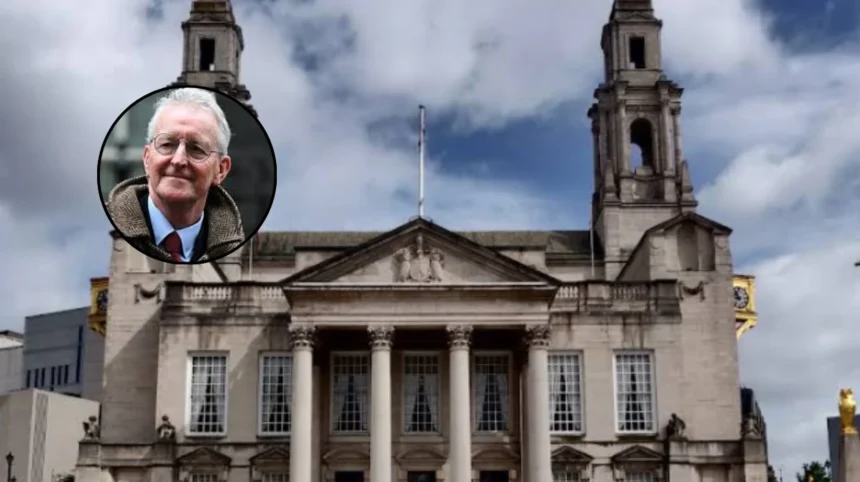
- Ahead of the 7 May 2026 local elections, Hilary Benn, Labour MP for Leeds South and Secretary of State for Northern Ireland, has urged Radio Leeds listeners to “look at what Leeds is doing” when judging local government performance.
- Speaking on BBC Radio Leeds, Benn praised Leeds City Council’s work and highlighted what he described as an effective partnership between the city and the national Labour government.
- As reported by BBC coverage of Labour MPs in the BBC local radio “hotseat” series, Benn cited social care funding among the areas where Leeds is benefiting from central government collaboration.
- The BBC’s Radio Leeds interview forms part of a wider pre‑election series in which Labour MPs across England are being questioned by BBC local radio stations ahead of the 7 May polls.
Leeds (The Leeds Times) May 2, 2026 Hilary Benn MP, Labour’s secretary of state for Northern Ireland and MP for Leeds South, has told BBC Radio Leeds listeners to “look at what Leeds is doing” as they decide how to vote in the upcoming local elections. In remarks widely summarised by BBC coverage of the interview, Benn framed the city council as a local government example that residents can point to when assessing the impact of Labour‑led administrations.
- Key points
- How does Benn describe the relationship between Leeds and the government?
- Why is Benn’s message focused on Leeds voters?
- How are media outlets presenting this interview?
- What is the political context for this intervention?
- Background of this development
- Prediction: How this message could affect Leeds voters
During the Radio Leeds conversation, Benn argued that voters should pay attention to what their council actually delivers, rather than relying solely on national‑level headlines or party‑political rhetoric. As reported by BBC’s coverage of the pre‑election “hotseat” series, he used Leeds to illustrate how city‑level governance can reflect broader Labour priorities, including investment in public services and social care.
How does Benn describe the relationship between Leeds and the government?
In the BBC Radio Leeds discussion, Benn emphasised that Leeds City Council is operating under a different fiscal environment than in previous years because of changes at the national level.
As relayed in BBC live‑updates on Labour MPs appearing across BBC local radio, he stated that, thanks to collaboration with the Labour government in London, the council for the first time this year can sustain its social‑care funding without needing to cut other services.
This point was cited by BBC’s coverage to underscore Benn’s argument that national government policy choices can have tangible effects on local budgets and service levels.
The Radio Leeds interview presentation also framed the comments as part of a broader pitch to reassure listeners that Labour at both the city and national levels is working together to protect frontline services.
Why is Benn’s message focused on Leeds voters?
As covered by BBC Radio Leeds promotion of the interview, Benn was invited to speak ahead of the 7 May 2026 local elections in a special series where Labour MPs face questions from local BBC audiences.
The station noted that the prime minister had been invited to take part but was unable to attend, leaving Benn to represent Labour’s national leadership in the Leeds segment.
In that context, Benn’s remarks were framed as an appeal directly to Leeds residents. According to the BBC’s description of the segment, he invited listeners to
“look at what their council does for them”
and to judge Labour’s record on the basis of local outcomes such as social‑care provision and other council‑run services.
The BBC’s coverage of the wider “Labour MPs in the hotseat” series also highlighted that Benn’s comments on Leeds were being used to show how Labour wants to rebuild trust with voters in key urban areas.
How are media outlets presenting this interview?
The BBC’s own summaries describe Benn’s appearance as part of a coordinated effort to put Labour MPs under local scrutiny before the 7 May polls. BBC Radio Leeds’ promotional posts and video clips highlight his line
“look at what Leeds is doing”
as a central message, positioning it as a call for voters to look beyond national‑level noise and focus on city‑level delivery.
BBC live‑coverage of the Labour‑MP hotseat series, meanwhile, treats Benn’s remarks on Leeds’s social‑care‑funding situation as a concrete example of how national‑government decisions can change local‑government options.
Other outlets repackaging or replaying clips of the interview, such as online radio aggregators and local‑radio‑style webpages, also foreground the phrase “look at what Leeds is doing” alongside references to the forthcoming local elections.
What is the political context for this intervention?
Benn’s appearance on BBC Radio Leeds comes at a time when Labour is seeking to defend and consolidate its position in major English cities ahead of the 7 May 2026 local elections.
Leeds City Council has remained under Labour control in recent years, with the party holding a majority of seats on the local authority, though the party has faced pressure from other groups over the cost‑of‑living crisis and service‑delivery issues.
By pointing to Leeds as a case study of Labour governance, Benn’s comments on social‑care funding and inter‑governmental cooperation are designed to shape how local voters interpret the city’s performance. BBC’s broader coverage of the Labour‑MP hotseat series suggests that the party is using these interviews to contrast its current record with the period of austerity and budget constraints that many councils experienced under previous Conservative‑led governments.
Background of this development
The “look at what Leeds is doing” intervention fits into a longer pattern of Hilary Benn positioning Leeds as a showcase for Labour’s approach to local and national government. Benn has represented constituencies in central and south Leeds since 1999, previously as MP for Leeds Central and since 2024 as MP for the redrawn Leeds South seat, and has long framed the city’s economy, services, and communities as central to Labour’s broader narrative on devolution and public investment.
In earlier articles and speeches, Benn has emphasised Leeds’s industrial heritage, its large public‑sector presence, and its system of universities and hospitals as assets that national government policy should support. The BBC Radio Leeds interview in May 2026, therefore, continues that focus, but with an explicit electoral edge: Benn is now urging voters to treat the city’s current service levels and financial position as evidence that Labour’s national government strategy is working on the ground.
Leeds City Council itself has repeatedly highlighted the pressure of social‑care demand and the need for additional funding, so Benn’s claim that the council can now sustain that funding without cutting other services represents a shift in tone from previous years.
Those earlier statements from local government and community‑care bodies in Leeds had warned that demographic change and rising costs would strain budgets unless central‑government support increased. The BBC‑widely‑reported observation that “for the first time this year” Leeds can maintain social‑care funding without extra cuts, therefore, marks a specific moment in that longer‑running debate.
Prediction: How this message could affect Leeds voters
Given that Hilary Benn’s comments are being delivered directly to BBC Radio Leeds listeners in the run‑up to the 7 May 2026 local elections, they are likely to shape how some Leeds residents evaluate the performance of Leeds City Council and the Labour Party locally. Voters who trust radio‑anchored overviews may pay closer attention to whether social‑care services and other council‑run services appear stable or improving, using that as a proxy for judging Labour’s record rather than relying only on national‑level headlines.
For voters who feel ambivalent about Labour but are dissatisfied with alternatives, Benn’s emphasis on collaboration between a Labour national government and a Labour‑run council could reinforce a sense that devolving power to local authorities is being matched with material support from London. Conversely, for those already sceptical of Labour, the same messaging may be perceived as a political pitch, prompting them to scrutinise council‑budget documents and local‑media reports more critically to test whether the claimed improvements in areas such as social care are matched by on‑the‑ground realities.