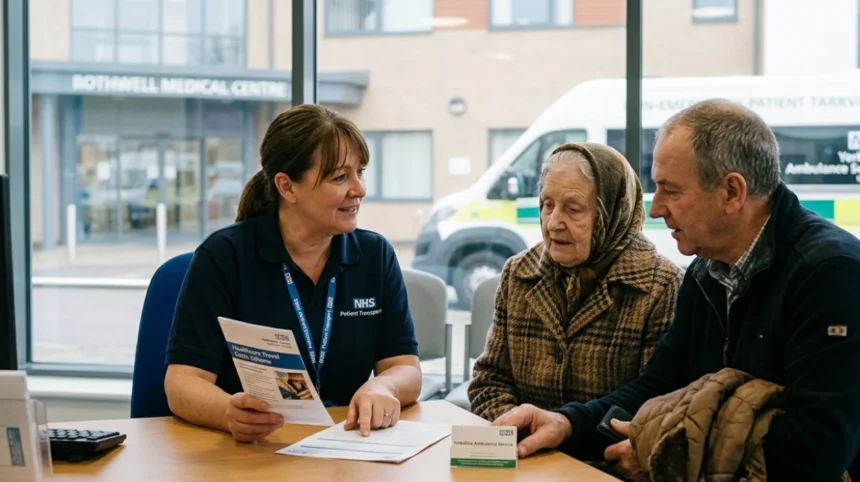
Free hospital travel in Rothwell is available through two NHS routes: the Healthcare Travel Costs Scheme for people on qualifying low-income benefits, and non-emergency patient transport for people whose health or mobility means they cannot travel independently. Residents in Rothwell usually book through Yorkshire Ambulance Service for patient transport, or claim back eligible costs after the appointment through the NHS travel-costs system.
- What free hospital travel is available in Rothwell?
- Who qualifies for NHS travel help?
- How does the Healthcare Travel Costs Scheme work?
- How do you claim travel costs back?
- How do you book patient transport in Yorkshire?
- What hospitals and journeys are covered?
- What travel options exist if you do not qualify?
- What evidence should you keep?
- Why does this matter now?
- How should Rothwell patients decide which route to use?
- What is the simplest route to free travel?
What free hospital travel is available in Rothwell?
Free hospital travel in Rothwell comes from NHS-funded patient transport or NHS travel-cost reimbursement. The first is for people who cannot travel safely on their own; the second refunds reasonable travel costs for eligible patients who receive qualifying benefits or meet NHS Low Income Scheme rules.
Rothwell is a Leeds district in West Yorkshire, so patients generally use the NHS services that cover Yorkshire and Leeds. The main NHS route for booked transport is the Yorkshire Ambulance Service Patient Transport Service, which accepts bookings for eligible patients registered with a GP in Yorkshire or North Lincolnshire.
The other main route is the Healthcare Travel Costs Scheme, usually shortened to HTCS. This scheme refunds the cost of travelling to NHS hospital treatment or tests when a patient has been referred for specialist care and meets the benefit or low-income criteria.
Who qualifies for NHS travel help?
You qualify if you receive specific means-tested benefits, hold an HC2 certificate, or need transport because of a health or mobility need. Eligibility depends on the service: HTCS uses benefit and referral rules, while patient transport uses clinical and mobility criteria.
For HTCS, the NHS lists qualifying benefits including Income Support, income-based Jobseeker’s Allowance, income-related Employment and Support Allowance, Pension Credit Guarantee Credit, and Universal Credit when the criteria are met. People with low income can also qualify through the NHS Low Income Scheme using certificate HC2 for full help or HC3 for limited help.
For patient transport, the NHS says the service is for people whose condition means they need additional medical support during the journey, people who find it difficult to walk, and parents or guardians of children being transported. Yorkshire Ambulance Service says it provides NHS-funded transport for eligible people who cannot travel by any other means because they need a specially adapted vehicle, specialist equipment, or trained staff during the journey.
West Yorkshire updated the non-emergency patient transport eligibility criteria from 28 April 2025, and the guidance states that most people should travel independently where that is safe and possible. That change matters in Rothwell because local patients now need a clearer reason based on mobility, medical need, or travel safety before booking NHS-funded transport.
How does the Healthcare Travel Costs Scheme work?
HTCS refunds reasonable travel costs after an eligible NHS referral to specialist treatment or diagnostic tests. The patient must have a qualifying benefit or low-income certificate, and the appointment must follow a referral from a GP, dentist, or other primary care professional.
The scheme applies when a patient is referred to hospital or other NHS premises for specialist NHS treatment or diagnostic tests. It does not cover every routine appointment, because the referral must be for secondary care rather than ordinary primary care.
The NHS says claims are made with travel receipts, an appointment letter or card, and proof of the qualifying benefit or allowance. In practice, that usually includes bus tickets, rail tickets, mileage records, or another clear record of what the journey cost.
The NHS Low Income Scheme also covers travel to receive NHS treatment, which makes it a useful route for people in Rothwell with lower incomes who do not receive the listed benefits but still need help. NHSBSA confirms that the scheme can cover the cost of travelling to receive NHS treatment as well as prescriptions, dental charges, glasses, and contact lenses.
How do you claim travel costs back?
You claim by keeping proof of your journey, proof of the appointment, and proof of eligibility, then submitting them to the NHS or the hospital as instructed. Claims usually rely on receipts, appointment letters, and benefit evidence, and some hospital departments refund costs on site.
The NHS says you should take travel receipts, your appointment letter or card, and proof that you receive a qualifying benefit or have NHS Low Income Scheme help. Some hospital services, including Leeds Teaching Hospitals maternity services, ask patients to pay first, then present receipts and attendance proof for a refund.
A simple example is a patient from Rothwell who travels by bus to a hospital outpatient clinic in Leeds after a GP referral. If that patient receives a qualifying benefit and the appointment is for specialist NHS treatment, they can claim the bus fare back under HTCS as long as they keep the ticket and appointment proof.
The NHS says claims for hospital travel costs should be made promptly, and Leeds Teaching Hospitals maternity guidance allows claims up to 3 months after the appointment in that service. Local hospital departments can set their own payment process, so patients should check the instructions given on the appointment letter.
How do you book patient transport in Yorkshire?
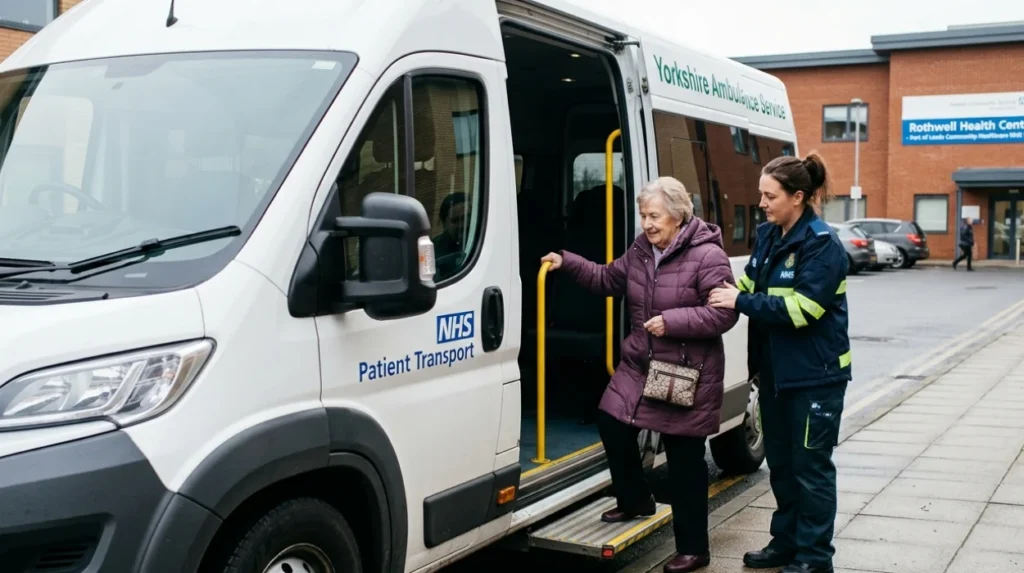
Eligible patients in Rothwell book through Yorkshire Ambulance Service Patient Transport Service by phone. The service checks eligibility first, then arranges non-emergency transport for patients who cannot safely use private, public, or taxi transport on their own.
Yorkshire Ambulance Service says patients registered with a GP in Yorkshire or North Lincolnshire can call 0330 678 4000 to make a transport booking. The booking line operates Monday to Friday from 07:00 to 19:00, and at weekends from 08:00 to 18:00.
The service is for people who need a specially adapted vehicle, specialist equipment, or trained staff support during the journey. West Yorkshire guidance from spring 2025 also says people who can travel by their own vehicle, public transport, community transport, or taxi should generally use those options instead.
If a patient in Rothwell needs hospital transport for regular treatment, the booking staff assess whether the person meets the criteria before confirming the journey. That matters because patient transport is a limited NHS service, not a general door-to-door taxi replacement.
What hospitals and journeys are covered?
Eligible NHS travel help covers journeys to hospital and other NHS premises for specialist treatment, diagnostic tests, and some scheduled follow-up care. It does not apply to every health-related trip, because the key test is referral, eligibility, and the type of appointment.
HTCS applies when a doctor, dentist, or another primary care health professional refers you to a specialist or hospital for further NHS treatment or tests. The NHS describes this as secondary care, which is the stage of care that follows a referral rather than a routine surgery visit.
Patient transport is broader in one sense and narrower in another. It covers travel when a patient needs medical support, mobility assistance, or special equipment, but it only applies to people who meet the service’s strict eligibility rules.
In Leeds, this includes many journeys to major hospitals and treatment centres used by Rothwell residents. The key issue is not the hospital name but whether the appointment is NHS-funded, referred, and eligible under the travel-support rules.
What travel options exist if you do not qualify?
If you do not qualify for NHS-funded travel, Rothwell residents still have ordinary transport choices such as bus, taxi, private car, and walking for nearby sites. The NHS expects most patients to use these options when travel is safe and practical.
Bus travel is often the cheapest option from Rothwell into Leeds. Travel listings show Arriva services 444 and 446 linking Rothwell with Leeds city centre, with a typical bus fare range shown online at about £1 to £3 for the Rothwell-to-Leeds trip.
That is relevant for patients attending sites such as St James’s University Hospital or Leeds city-centre appointments, where a bus and connecting service can be less expensive than a taxi. Taxi journeys from Rothwell to central Leeds are faster but cost more, so they are usually used when timing or mobility makes them necessary.
For patients who cannot use public transport but do not meet NHS transport criteria, local taxi or community transport remains a private option. The NHS and West Yorkshire guidance both make clear that patient transport is reserved for those with a genuine medical need, not simply for convenience.
What evidence should you keep?
Keep every document that proves the journey, the referral, and your eligibility. The most useful items are appointment letters, referral letters, bus or train receipts, benefit proof, and NHS Low Income Scheme certificates such as HC2 or HC3.
For HTCS, the NHS specifically asks for travel receipts, an appointment letter or card, and proof of a qualifying benefit. If you claim through the NHS Low Income Scheme, your HC2 or HC3 certificate becomes the main evidence of entitlement.
For hospital departments that reimburse travel after attendance, an attendance voucher or stamped attendance proof is often needed. Leeds Teaching Hospitals maternity guidance, for example, uses an attendance voucher plus the travel receipt and benefit proof before issuing a refund.
Good record-keeping speeds up the process and reduces rejected claims. Patients who travel regularly, such as for scans, dialysis, or follow-up treatment, should keep a folder or digital file for appointment letters and tickets so each claim is complete.
Why does this matter now?
This matters because NHS travel support is changing in West Yorkshire, and more patients need to prove eligibility before booking or claiming. The 2025 updates make the rules clearer and place more weight on independent travel where it is safe.
West Yorkshire’s updated non-emergency patient transport criteria were implemented from 28 April 2025. That update affects how patients are assessed for NHS-funded journeys and reinforces the principle that patients should first consider their own transport, family help, public transport, or taxi travel.
The practical result for Rothwell is a split system. Patients with low incomes claim after the journey through HTCS, while patients with serious mobility or clinical needs try to access booked patient transport before the appointment.
That structure should stay relevant because it reflects how the NHS separates reimbursement from transport provision. One system refunds cost, and the other provides the journey itself.
How should Rothwell patients decide which route to use?
Rothwell patients should use HTCS if they pay for travel to an eligible NHS referral and meet the benefit or low-income rules, and they should use patient transport if health or mobility makes ordinary travel unsafe. The right route depends on eligibility, not convenience.
Start with the appointment type. If it is a specialist NHS referral or diagnostic test, HTCS is the relevant refund route. If the patient cannot sit safely in a car, cannot walk to normal transport, or needs medical support en route, patient transport is the relevant booking route.
Then check evidence. Benefit claimants should confirm whether they receive one of the listed qualifying benefits or have HC2 or HC3 help. Patients with mobility needs should ask the referring clinician or GP whether they meet the patient transport criteria before the appointment date.
Finally, match the journey to the appointment. A person travelling from Rothwell to a Leeds hospital for an outpatient specialist review will often use a bus, train, or car if eligible transport is not available. A person needing assistance getting into the vehicle or during the journey fits the patient transport model instead.
What is the simplest route to free travel?
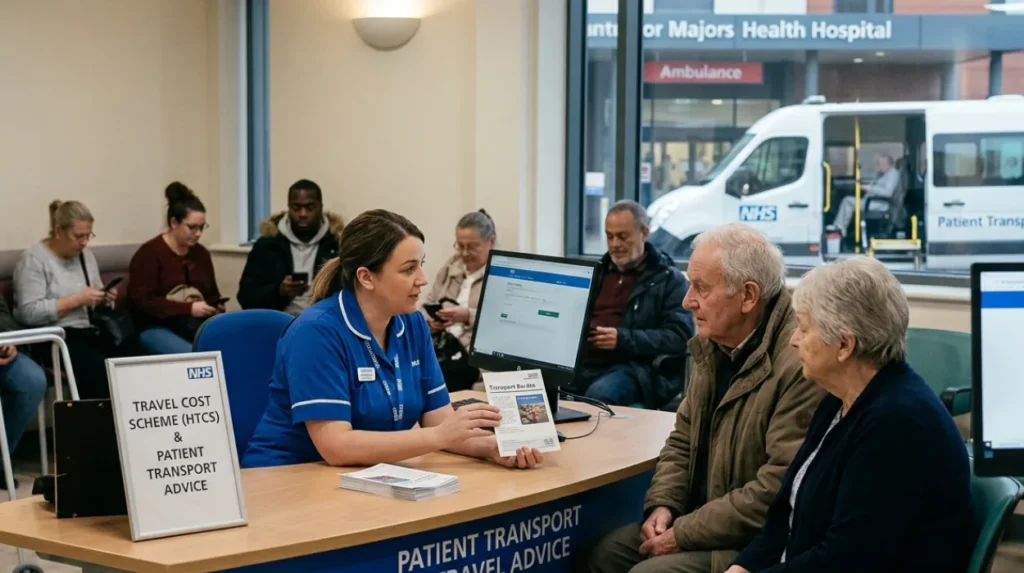
The simplest route is to check eligibility first, then use the correct NHS service without leaving the claim until later. If you receive a qualifying benefit, keep receipts and claim HTCS; if you need clinical or mobility support, ask for patient transport before the appointment.
For Rothwell residents, the process is straightforward when handled in order. Confirm whether the appointment is a referred NHS specialist appointment, check whether you receive a qualifying benefit or hold an HC2 certificate, and contact Yorkshire Ambulance Service if you need transport because of health or mobility restrictions.
That approach avoids missed refunds and last-minute travel problems. It also reflects the current West Yorkshire NHS position that most people should travel independently unless there is a clear medical or mobility reason for NHS transport.
In practice, free hospital travel in Rothwell exists, but it is targeted. The people who benefit most are those on low incomes with eligible referrals, and those whose condition makes ordinary travel unsafe or impossible.
What free hospital travel is available in Rothwell?
Free hospital travel in Rothwell is available through the NHS Healthcare Travel Costs Scheme (HTCS) and NHS Patient Transport Services for eligible patients.