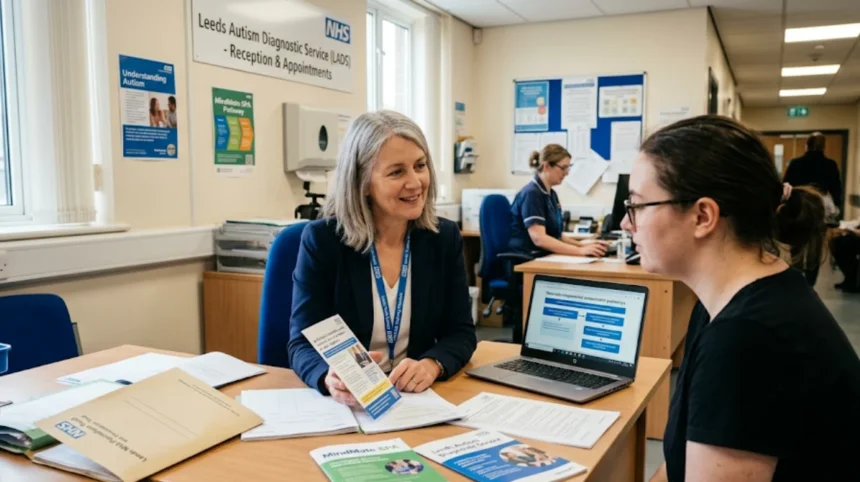
Getting an ADHD or autism diagnosis in Pudsey means using the Leeds NHS assessment pathways, because Pudsey patients are usually served through Leeds-based services rather than a separate town-specific diagnostic system. For adults, autism referrals can go through the Leeds Autism Diagnostic Service, and children and young people usually go through MindMate SPA or the Leeds neurodevelopmental assessment route.
- What is an ADHD or autism diagnosis in Pudsey?
- Who can refer for an assessment?
- How do you start the process?
- What evidence helps?
- What happens during the assessment?
- What clinicians look for
- Where do children and adults go in Leeds?
- How long does it take?
- What if the diagnosis is not confirmed?
- Why does diagnosis matter?
- What should Pudsey residents do next?
- Practical meaning for local search
- Useful local names
What is an ADHD or autism diagnosis in Pudsey?
An ADHD or autism diagnosis in Pudsey is a formal clinical assessment arranged through Leeds NHS services, usually starting with a GP, self-referral, or MindMate SPA depending on age. The diagnosis identifies whether symptoms meet recognised medical criteria and what support follows.
ADHD stands for attention deficit hyperactivity disorder. Autism refers to autism spectrum disorder. Both are neurodevelopmental conditions, which means they affect brain development and usually begin in childhood, even when recognition happens later in life. NICE guidance covers diagnosis and management of ADHD across children, young people, and adults, while NICE autism guidance covers adults and NHS autism assessment guidance covers children and adults.
For people in Pudsey, the practical issue is access, not the label. The correct route depends on age, symptoms, and local eligibility rules in Leeds. Adult autism assessment in Leeds is handled by Leeds Autism Diagnostic Service, while children and young people are usually directed through MindMate SPA and related CAMHS pathways.
Who can refer for an assessment?
A referral in Leeds can come from you, your GP, a parent, a carer, or another professional, depending on age and the service. Adults registered with a Leeds GP can self-refer for autism assessment, while young people and families can self-refer through MindMate SPA.
For adult autism assessment, Leeds Autism Diagnostic Service states that self-referral is allowed if the person is over 18, registered with a GP in Leeds, gives consent, and has had autistic features since childhood. The service also accepts referrals from healthcare professionals.
For children and young people, MindMate SPA provides the main access route. Leeds guidance states that families and professionals with a Leeds GP can refer to MindMate SPA, and the pathway is used for neurodevelopmental referrals including autism and ADHD.
For adults seeking ADHD assessment, Leeds NHS services also use a single point of access model. Local practice guidance says patients can be referred to the Adult ADHD Front Door Single Point of Access, and in some Leeds practices this can happen without a GP appointment first.
How do you start the process?
The process starts by identifying the right Leeds pathway for your age group and then submitting a referral with clear symptom history, childhood evidence, and contact details. Adults often begin with self-referral or GP referral, while children and young people usually begin through MindMate SPA.
If you are an adult and want an autism diagnosis, the Leeds Autism Diagnostic Service asks for a completed referral form and supporting documents by email. The service says incomplete forms or forms that do not meet the criteria are declined, so accuracy matters.
If you are a parent or carer of a child or teenager, MindMate SPA is the usual starting point. Leeds guidance says referrals are screened for clinical urgency and most accepted referrals are placed on a waiting list before routing to the correct service.
If you are seeking ADHD assessment, your first step is usually to discuss symptoms with a GP or access the Leeds ADHD single point of access route. NHS and NICE guidance both place specialist assessment at the centre of diagnosis, rather than a quick online test.
What evidence helps?
School reports, childhood notes, family observations, and previous assessments help because both ADHD and autism assessments look for symptoms that started in childhood and persisted over time. NHS autism assessment guidance says clinicians may speak to someone who knew the person as a child and may read reports from the GP, school, nursery, or workplace.
For adult ADHD, NHS guidance says the specialist asks about symptom history, especially whether symptoms started in childhood and affected school life. NICE also states that adults without a childhood diagnosis should be referred if there is evidence of typical ADHD symptoms that began in childhood and caused impairment.
What happens during the assessment?
A diagnosis comes from a specialist clinical assessment, not from one questionnaire alone. The clinician reviews childhood history, current symptoms, daily functioning, and possible alternative explanations before deciding whether ADHD or autism criteria are met.
For adult autism assessment, the NHS says the team may use questionnaires, ask about early life, relationships, home life, work or college, and speak to someone who knew the person as a child. They may also review GP records and school reports, then issue a written report after the assessment.
For ADHD, NICE says diagnosis requires a full clinical and psychosocial assessment of multiple aspects of life, carried out by a healthcare professional with specialist training, knowledge, and experience in ADHD. That means a diagnosis depends on pattern, persistence, and impairment, not simply on personality traits or a single screening tool.
For autism in adults, NICE guidance covers comprehensive assessment and the use of tools such as AQ-10 in the referral stage. NICE updated the AQ-10 threshold to 6 or above for offering a comprehensive assessment when that tool is used.
What clinicians look for
Clinicians look for symptom onset in childhood, current impact, and whether another condition explains the difficulties better. NICE says adult ADHD referral requires symptoms that began during childhood, persisted across life, and caused moderate or severe psychological, social, educational, or occupational impairment.
Autism assessments also look for lifelong patterns in communication, social interaction, routines, and sensory processing. NHS autism assessment guidance for adults says the team may ask about behaviour with other people, early life, home life, work or college, and childhood signs.
Where do children and adults go in Leeds?
Children and young people in Leeds usually go through MindMate SPA and the neurodevelopmental assessment pathway, while adults use the Leeds Autism Diagnostic Service for autism and Leeds ADHD services for ADHD. Pudsey residents use these Leeds pathways because Pudsey sits within the Leeds NHS system.
Leeds Community Healthcare says the neurodevelopmental assessment team undertakes autism and ADHD assessments for children and young people who meet CAMHS criteria. The service describes this as a specialist multidisciplinary team using a clinic model in line with NICE guidance.
Leeds Autism Diagnostic Service says it provides assessment and diagnosis for over-18s living in Leeds, including people with learning disabilities or other developmental conditions. It also states that referrals can come directly from individuals, not just clinicians.
For ADHD in Leeds, the local pathway includes the Leeds ADHD Single Point of Access Hub and Leeds GP Confederation services. Local practice information for Pudsey lists the Leeds ADHD single point of access contact details as part of the referral system.
How long does it take?
Waiting times in Leeds vary by service, demand, and age group. The NHS and local services say referrals are screened first, then accepted cases are placed on waiting lists, so the exact timeline depends on the pathway and current capacity.
Leeds Autism Diagnostic Service says up-to-date waiting time information is available on its website. It also says that referrals are only accepted when the form is complete and criteria are met, which affects how quickly a case moves forward.
General NHS ADHD diagnosis guidance shows that specialist assessment often involves more than one stage. NHS-linked ADHD timelines commonly include an initial GP contact, specialist referral, one or more assessment appointments, and a final report or treatment plan.
For SEO and planning purposes, the most reliable approach is to treat the process as a multi-stage pathway rather than a fixed appointment. That reflects how NHS neurodevelopmental services work in Leeds and avoids overpromising timing that changes with demand.
Explore More Help & Resources
How to find free legal advice for renters in Headingley
How to get an autism assessment for your child in Guiseley
What if the diagnosis is not confirmed?
A referral does not guarantee a diagnosis. The specialist may conclude that symptoms do not meet ADHD or autism criteria, or that another condition explains the difficulties better. That outcome still provides clarity and can redirect support to the right service.
NHS autism assessment guidance says the report should state whether the person is autistic, what they are good at, what they need help with, and whether any other conditions were found. That means assessment can produce a useful support plan even when the final answer is not a diagnosis.
For ADHD, NICE requires that symptoms fit a full pattern of childhood onset, persistence, and functional impairment. If that pattern is not present, the clinician does not confirm ADHD and may consider another explanation or refer elsewhere.
This matters in Pudsey because many people seek diagnosis after years of coping strategies. A clear outcome, even a negative one, can help target support through general mental health services, educational support, workplace adjustments, or other neurodevelopmental pathways.
Why does diagnosis matter?
A diagnosis matters because it creates a recognised clinical basis for support, adjustment, and treatment planning. It can unlock specialist advice, workplace or school accommodations, medication review for ADHD, and better access to local and national services.
For autism, NHS guidance explains that assessment can clarify strengths, support needs, and any other conditions found. Adults diagnosed with autism may also receive a follow-up appointment a few weeks or months later.
For ADHD, diagnosis can lead to treatment discussions that include medication, monitoring, and non-medication support under NICE guidance. That is important because ADHD affects education, employment, organisation, and daily functioning when it is untreated.
For children and young people, diagnosis also affects school planning. Leeds pathways connect with education support, and MindMate guidance shows that referrals are linked to wider support routes when specialist assessment is not the first or only outcome.
What should Pudsey residents do next?
Pudsey residents should match the pathway to age first, then gather childhood evidence, complete the correct referral form, and use Leeds NHS services rather than waiting for a standalone Pudsey clinic. Adults use Leeds autism or ADHD routes, and children use MindMate SPA.
Adults with possible autism should check the Leeds Autism Diagnostic Service criteria and self-refer if they are over 18, registered with a Leeds GP, and able to show childhood autistic features. Adults with suspected ADHD should speak to a GP or use the Leeds ADHD referral route available through local services.
Parents and carers should use MindMate SPA for children and teenagers, because Leeds routes neurodevelopmental referrals through that service. The service screens referrals for urgency and then directs them to the right assessment or support pathway.
Keep the referral practical and factual. Include examples from childhood, current symptoms, school or workplace reports, and details of how the difficulties affect everyday life. That is the material clinicians use to decide whether an ADHD or autism assessment is appropriate.
Practical meaning for local search
For search engines, the most useful answer is simple: Pudsey does not use a separate diagnosis system, it uses Leeds NHS neurodevelopmental pathways. Adults can self-refer for autism in Leeds, while children and young people usually go through MindMate SPA for autism or ADHD assessment.
This topic ranks well when the article clearly names the entity, the age-based route, the role of the GP, and the local service names. It also performs well when it explains that diagnosis is a specialist assessment based on childhood history, current impact, and clinical criteria, not an instant online result.
For a Pudsey audience, the strongest informational intent is local access. People want to know who to contact, what evidence to prepare, and which service handles adults versus children. That is why the Leeds Autism Diagnostic Service, MindMate SPA, and Leeds ADHD single point of access are the core entities to mention.
Useful local names
Leeds Autism Diagnostic Service is the adult autism assessment route in Leeds. MindMate SPA is the main entry point for many children and young people’s neurodevelopmental referrals. Leeds ADHD services and the Leeds GP Confederation route handle adult ADHD assessment access in the local system.
A Pudsey resident searching for this topic should think in terms of Leeds pathways, not postcode-specific clinics. That framing matches how the NHS organises autism and ADHD diagnosis in West Yorkshire and keeps the article aligned with real-world service design.
How do I get an ADHD or autism diagnosis in Pudsey?
People living in Pudsey usually access Leeds NHS neurodevelopmental services rather than a separate Pudsey clinic. Adults can use Leeds adult pathways, while children and young people are usually referred through MindMate SPA.