

Finding a free food pantry near Horsforth can provide immediate access to essential groceries for individuals and families experiencing food insecurity. Horsforth is a suburban area in the City of Leeds, West Yorkshire, with a population of more than 18,000 people according to recent census-based local population estimates. The area has residential neighbourhoods, schools, businesses, community organisations, churches, and local support services.
- What is a free food pantry in Horsforth?
- Why do people in Horsforth need emergency food support?
- Where can Horsforth residents find free food now?
- How does a food bank referral work in Horsforth?
- Can you get free food in Horsforth without a referral?
- What documents do you need to collect a food parcel?
- What food can you expect from a free pantry near Horsforth?
- How can you find a food pantry open today near Horsforth?
- What should you do if there is no food available in Horsforth?
- Can families with children get free food near Horsforth?
- Are there free food services for older people in Horsforth?
- How can you avoid needing emergency food support repeatedly?
- How does food insecurity affect the wider Horsforth community?
- What is the best way to find free food near Horsforth now?
- Frequently Asked Question
Food insecurity occurs when a person does not have reliable access to enough affordable, nutritious food. It affects households experiencing low income, unexpected expenses, unemployment, benefit delays, rising household bills, or temporary financial emergencies.
A food pantry is a community-based service that provides food parcels, grocery items, or access to low-cost food for people who meet its eligibility requirements. Some services operate as food banks, while others use pantry, community food hub, or emergency food support models.
For someone searching for free food near Horsforth now, the fastest approach is to identify services operating in Horsforth and nearby Leeds communities, check their current access requirements, and contact the organisation before travelling. Availability, opening times, referral procedures, and eligibility rules differ between providers.
What is a free food pantry in Horsforth?
A free food pantry is a community service that provides essential groceries without normal supermarket prices to people experiencing food insecurity. Services can include emergency food parcels, household staples, fresh produce, and signposting to additional financial support.
Food pantries form part of the wider community food-support system. Their purpose is to improve access to food when household income does not cover essential living costs.
A typical food pantry provides products such as rice, pasta, cereal, tinned vegetables, beans, soup, pasta sauce, tea, coffee, biscuits, toiletries, and other household essentials. Some organisations also distribute bread, fruit, vegetables, chilled food, or frozen products when supplies allow.
The term “food pantry” covers several operating models. A traditional food bank generally distributes a prepared food parcel. A community pantry can provide a wider selection of groceries and operate through membership, referral, or local eligibility rules. A community food hub can combine food distribution with advice, welfare support, cooking activities, or community services.
Horsforth residents can also access services in neighbouring Leeds areas. Food-support organisations often serve defined postcodes rather than a single neighbourhood. This means a pantry outside central Horsforth can still be relevant when it accepts residents from the Horsforth area.
Free food support is normally intended for people experiencing genuine financial difficulty. The service is not a replacement for normal grocery shopping. It provides short-term assistance while a household addresses the financial circumstances causing food insecurity.
Why do people in Horsforth need emergency food support?
People in Horsforth use emergency food support when household income does not cover essential food costs. Common causes include unemployment, delayed benefits, unexpected bills, low wages, rising living expenses, family changes, and temporary financial emergencies requiring immediate assistance.
Food insecurity is closely connected with household income and essential expenditure. A household can experience food insecurity even when someone is employed because wages, rent, energy costs, transport expenses, childcare, and other bills consume available income.
Unexpected expenses create another important pressure. A broken appliance, urgent travel requirement, household repair, or large energy bill can reduce the money available for food. Emergency food support helps protect the household food budget during these situations.
Benefit delays can also create short-term gaps. A person waiting for a benefit payment can require food assistance before the payment arrives. Food-support services provide practical help during this period.
Families with children can face additional food costs. Larger households need more groceries, and school holidays can increase the amount of food required at home.
Older people can experience food insecurity because of fixed incomes, higher household costs, mobility difficulties, or increasing prices. People living alone can also experience financial pressure because many household expenses remain fixed regardless of household size.
The need for food support does not indicate a permanent financial situation. Many people use emergency assistance during a temporary crisis and return to normal food purchasing after their circumstances improve.
Where can Horsforth residents find free food now?
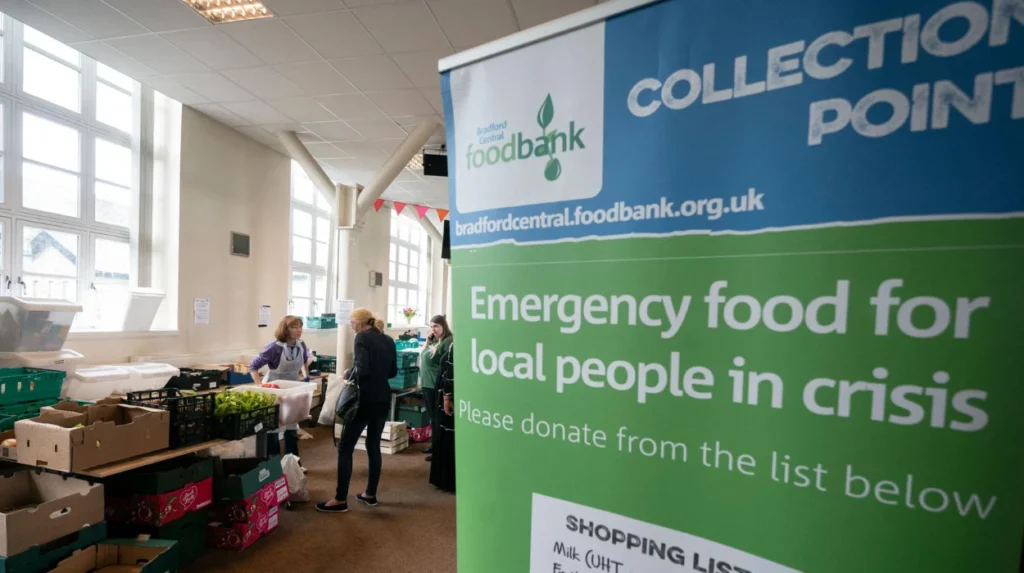
Horsforth residents can find free food through local food banks, community pantries, churches, charities, community centres, and Leeds-based emergency food services. Nearby services in Rawdon, Yeadon, Kirkstall, Headingley, and other Leeds areas can also serve eligible Horsforth residents.
The first step is to identify organisations serving the Horsforth postcode. Local food services normally define their catchment area according to postcode, neighbourhood, parish, council area, or referral arrangements.
Horsforth is positioned close to several communities in north-west Leeds and the wider Aireborough area. Residents should therefore search beyond the immediate town centre when a local service has limited availability.
Community organisations frequently operate from churches, community centres, charitable buildings, and neighbourhood facilities. Their physical location can change because food distribution depends on volunteer availability, premises, funding, and food supply.
A service that operated at one location previously can also change its opening day or collection procedure. Checking current information before travelling prevents unnecessary journeys.
People looking for food today should prioritise services that clearly state their current opening hours and emergency arrangements. Calling before travelling is particularly important when the household has no alternative food available.
A person can also contact local advice services and ask specifically for emergency food assistance in Horsforth. The adviser can identify relevant food-support options based on postcode and circumstances.
How does a food bank referral work in Horsforth?
A food bank referral connects a person experiencing financial hardship with an emergency food service that has agreed to provide assistance. The referral process normally confirms eligibility, identifies the household’s needs, and directs the person to an appropriate food collection point.
Referral systems differ between food-support organisations. Some services accept direct applications, while others require a referral from an approved professional or community organisation.
A referral can come from organisations such as welfare advisers, social workers, housing support workers, schools, healthcare professionals, community organisations, or local advice services.
The referral process normally collects basic information about the household. This can include the number of adults and children, postcode, dietary requirements, and the reason emergency food support is needed.
The purpose of a referral is not to create unnecessary barriers. It helps food services manage limited supplies and direct assistance toward households experiencing genuine need.
A person should explain the situation clearly when requesting a referral. Important information includes whether there is currently food at home, when the next income payment is expected, household size, and any dietary requirements.
Some emergency food services provide more than one food parcel when a continuing crisis exists, but the rules differ between organisations.
People should not assume that a previous referral automatically remains valid. Each service establishes its own collection and referral requirements.
Can you get free food in Horsforth without a referral?
Some community food services provide food without a formal referral, while traditional food banks often use referral systems. Eligibility depends on the organisation, funding model, local rules, and available supplies, so residents must confirm the current access procedure before visiting.
Community pantries often operate differently from traditional food banks. Some allow residents to join directly, while others require proof of local eligibility or a small membership payment.
A service described as a “free food pantry” can therefore have different rules from a conventional food bank. The word “free” does not always describe every service associated with community food provision.
Emergency food parcels are generally provided without requiring a person to purchase groceries. Community food schemes can use different financial models, including free distribution, membership contributions, or subsidised shopping.
Residents should ask four basic questions before visiting a service. They should ask whether a referral is required, whether Horsforth residents qualify, what identification is needed, and whether the service has food available that day.
If someone has no food and cannot wait for a standard referral process, they should explain this clearly when contacting a local support organisation. Emergency circumstances can require a different route into food assistance.
What documents do you need to collect a food parcel?
Food services commonly request basic information such as a name, address, postcode, household size, and referral details. Identification requirements vary by organisation, so residents should confirm required documents before travelling to collect emergency food.
A food-support organisation needs enough information to determine whether its service covers the applicant’s area. A postcode is particularly important because many food services operate within specific geographic boundaries.
Some organisations request identification documents. These can include proof of address or another document confirming identity. Other services rely on referral information rather than physical identification.
A person should not assume that a passport, driving licence, or specific government document is always required. Requirements differ between providers.
When contacting a service, ask what information must be brought to the collection appointment. This prevents delays and reduces the risk of arriving without the necessary documentation.
Household information also matters because food parcels are often prepared according to household size. A parcel for one adult differs from a parcel designed for a family with children.
Dietary requirements should be explained before collection. Vegetarian, halal, allergy-related, medical, or culturally specific requirements can affect which food items are appropriate.
What food can you expect from a free pantry near Horsforth?
A free food pantry or emergency food service commonly provides staple groceries such as pasta, rice, cereal, tinned foods, beans, soup, bread, and household essentials. Fresh, chilled, or frozen items depend on donations, suppliers, storage capacity, and availability.
Food parcels are designed around basic household food requirements. Long-life products are common because they can be stored safely for extended periods.
Typical grocery items include pasta, rice, cereal, flour, tinned tomatoes, baked beans, soup, tinned vegetables, tinned fruit, pasta sauces, tea, coffee, biscuits, and cooking ingredients.
Fresh food can include fruit, vegetables, bread, eggs, or other short-life products when the organisation has access to suitable supplies. Availability changes according to donations and deliveries.
Some services also provide toiletries and household products. Examples include soap, toothpaste, sanitary products, washing-up liquid, laundry products, and toilet paper.
Food parcels do not always contain every item a household normally buys. Their purpose is to provide essential support rather than reproduce a complete weekly supermarket shop.
People with allergies should communicate their requirements before receiving a parcel. The organisation can explain which alternatives are available.
How can you find a food pantry open today near Horsforth?
To find a food pantry open today, search current local listings, contact Horsforth-area food services directly, and confirm opening hours before travelling. Ask specifically about emergency collections, referral requirements, postcode eligibility, and same-day food availability.
Opening times are one of the most important details when searching for immediate food support.
A service can have regular weekly hours but close temporarily because of bank holidays, volunteer shortages, building access, staff changes, or food shortages.
Searching for “free food pantry near Horsforth now” identifies the immediate intention, but search results do not always reflect same-day operational changes. Direct confirmation is more reliable.
Residents should provide their postcode when contacting an organisation. This allows staff or volunteers to determine whether the service covers their location.
The phrase “open today” also needs careful interpretation. Some services operate appointment systems rather than walk-in collections. An organisation can be operating on a particular day while having no remaining collection appointments.
People requiring immediate assistance should explain that the household currently needs food. This helps the service understand the urgency and provide the correct information.
Nearby Leeds areas should also be considered if there is no available service in central Horsforth. Transport distance, collection time, and eligibility remain important factors.
What should you do if there is no food available in Horsforth?
If no food pantry has immediate availability in Horsforth, contact other local emergency food organisations, community centres, welfare advice services, and nearby Leeds food projects. Explain the immediate need and request the fastest available food-support option.
Food availability changes throughout the week. A service can have enough food on one day and limited supplies on another.
When one provider cannot help, residents should ask whether another local organisation serves the same postcode. Food-support networks often operate across several neighbourhoods.
Nearby areas can provide alternative options. Horsforth residents can investigate services in communities such as Headingley, Kirkstall, Rawdon, Yeadon, and other nearby parts of Leeds when eligibility permits.
A person should explain whether there is enough food remaining at home to last until the next day. If there is no food at all, this is an important emergency detail.
Local welfare advice organisations can also help identify financial assistance. Food insecurity often results from a wider income problem, so addressing the underlying issue reduces the need for repeated emergency food parcels.
A household facing an immediate crisis should not delay contacting support because it is uncertain about eligibility. The organisation can explain its rules and direct the person elsewhere when necessary.
Can families with children get free food near Horsforth?
Families with children can access emergency food support when they meet the requirements of a local food service. Providers can consider household size, children’s needs, dietary requirements, and the urgency of the family’s financial circumstances.
Children increase household food requirements because meals and snacks must be provided regularly throughout the week.
Food-support services consider household composition when preparing emergency parcels. A family with children can therefore receive a parcel designed for a larger household.
Parents and guardians should mention the ages of children when requesting support. This information helps the organisation understand the household’s food requirements.
School holidays can create additional pressure because children spend more time at home and do not receive meals provided through school-based programmes.
Families should also ask about local holiday food schemes. Some community organisations operate separate programmes that provide meals, activity sessions, or food support for children during school breaks.
Parents should communicate allergies and dietary requirements clearly. This is particularly important when food parcels contain donated products.
Emergency food support is designed to protect household access to basic food during financial hardship. Families experiencing continuing financial difficulty should also seek income and welfare advice.
Are there free food services for older people in Horsforth?
Older residents experiencing food insecurity can seek support through food banks, community organisations, local charities, and welfare services. Assistance can address immediate food needs while advisers identify financial, housing, benefits, or household-cost problems.
Older people can face food insecurity for several reasons. Fixed incomes, rising household expenses, unexpected bills, and mobility limitations can reduce access to affordable food.
Mobility is particularly relevant when food collection requires travel. An older person should ask whether delivery or an alternative collection arrangement exists.
Some community organisations operate local support schemes for older residents. These can include food distribution, community meals, social activities, and welfare advice.
A person living alone can also benefit from local community support because food insecurity can occur even when the household has relatively few food requirements.
Older residents should explain any mobility or dietary restrictions when contacting a food-support service. This information helps determine whether the available service is suitable.
Where food insecurity is linked to low income, benefit entitlement should also be reviewed. A welfare adviser can assess whether the household is receiving the support available under its circumstances.

How can you avoid needing emergency food support repeatedly?
Reducing repeated food emergencies requires addressing the financial cause of food insecurity. Practical steps include checking benefit entitlement, reviewing household bills, seeking debt advice, improving budgeting, accessing affordable food schemes, and obtaining employment support when relevant.
Emergency food parcels address immediate food needs. They do not normally resolve the financial problem causing repeated shortages.
A household experiencing repeated food insecurity should therefore seek wider financial advice.
Benefit entitlement is an important area to review. Changes in household income, rent, disability, children, employment, or other circumstances can affect eligibility for financial support.
Debt advice can help households manage arrears and repayment obligations. A structured repayment plan can reduce pressure on the weekly food budget.
Household budgeting also identifies spending patterns. Separating essential costs from non-essential spending helps determine how much income remains for food.
Affordable food schemes can provide longer-term support. Community pantries and subsidised food projects can reduce grocery costs without relying entirely on emergency food parcels.
Employment and training support can also improve household income when someone is able to work. The appropriate option depends on the person’s circumstances.
The most effective long-term approach combines immediate food assistance with financial support that addresses the underlying cause of food insecurity.
How does food insecurity affect the wider Horsforth community?
Food insecurity affects household nutrition, financial stability, children’s wellbeing, and community demand for support services. Local food organisations reduce immediate hardship by providing essential groceries and connecting residents with wider financial and community assistance.
Food insecurity has effects beyond an empty kitchen cupboard. Households facing food shortages can experience difficult choices between food, energy, transport, rent, and other essential costs.
Children are particularly affected when household food access is unreliable. Consistent access to nutritious meals supports normal development, concentration, learning, and daily wellbeing.
Adults experiencing food insecurity can also face difficulties maintaining regular meals and balanced diets.
Community food services therefore perform an important local support function. They provide food while also creating routes into advice, welfare assistance, community activities, and other services.
Food donations also contribute to the operation of many community food projects. Supermarkets, manufacturers, farms, charities, community groups, and individuals can contribute surplus or donated food.
Volunteers are another important part of the food-support system. They can sort donations, prepare parcels, manage collections, transport supplies, and support visitors.
The effectiveness of local food assistance depends on coordination between charitable organisations, community groups, advice services, and households experiencing financial difficulty.
What is the best way to find free food near Horsforth now?
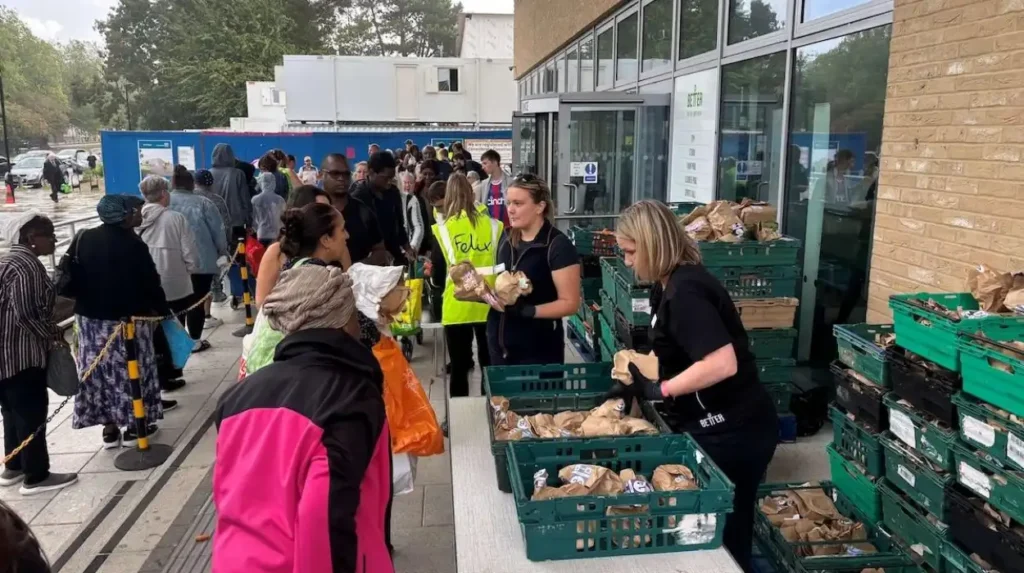
The fastest method is to search for current Horsforth food services, check whether the postcode qualifies, confirm opening hours, ask whether a referral is required, and contact the organisation before travelling for same-day food assistance.
Start with the exact need. If food is required immediately, search for emergency food support rather than general community activities.
Next, identify services covering the Horsforth postcode. Do not assume that a service located outside Horsforth is unavailable. Many organisations operate across several Leeds neighbourhoods.
Then confirm the access process. Ask whether the service requires a referral, appointment, membership, identification, or proof of address.
Confirm opening times on the same day. Online information can become outdated when services change schedules or temporarily suspend collections.
Ask about food availability before travelling. A service that is open can still have limited supplies or fully booked appointments.
If the first organisation cannot help, ask for another local service. Food-support organisations often know about other providers operating within the surrounding Leeds area.
Finally, address the reason for the food crisis. If the shortage results from low income, benefit delays, debt, high household costs, or unemployment, additional advice can help prevent the same emergency from recurring.
For residents searching “free food pantry near Horsforth now,” the key priority is current availability combined with postcode eligibility. A direct phone call or current local service listing provides the most practical route to immediate assistance.
Horsforth residents should also remember that emergency food support is intended to provide practical help during financial hardship. Using a food pantry does not prevent a person from seeking longer-term financial assistance. Combining immediate food support with benefits advice, budgeting assistance, debt support, and affordable food programmes provides a stronger response to ongoing household financial pressure.
The local food-support network serves an important role in protecting access to basic necessities. Understanding how food banks, community pantries, charities, churches, community centres, and welfare services operate makes it easier to identify appropriate assistance quickly.
For anyone facing an immediate shortage of food, the most important actions are simple: identify a service covering the Horsforth area, confirm that it is currently operating, check its requirements, explain the urgency, and arrange the earliest available collection or alternative support.
Frequently Asked Question
Where can I get free food near Horsforth?
Residents can get free food through local food banks, community pantries, churches, charities, and emergency food-support organisations serving Horsforth and nearby Leeds areas. Check current opening times and referral requirements before visiting.