

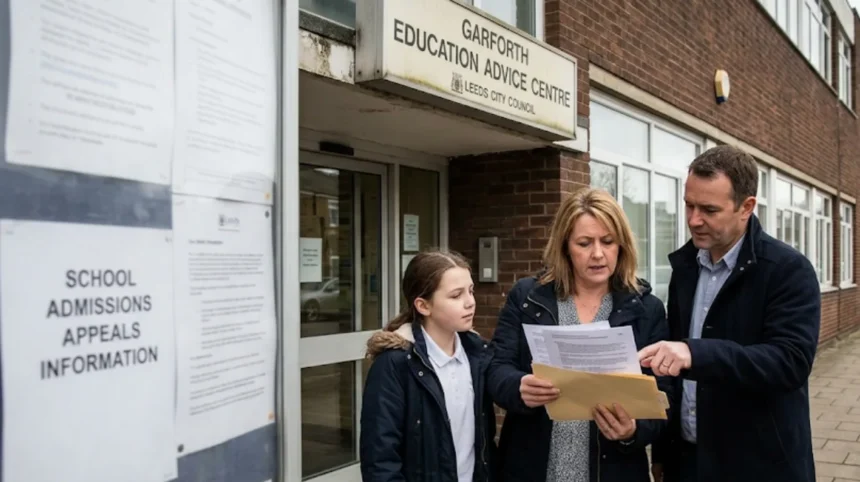
Appealing a school place decision in Garforth follows the Leeds admissions appeals process for most Leeds schools, with deadlines, written evidence, and an independent hearing. Leeds City Council says parents should accept the offered place first, then submit an appeal if they still want to challenge the decision.
- What is a school place appeal?
- How does the Leeds appeals process work?
- The legal framework
- When should you appeal a school place refusal?
- What evidence should you include?
- Common evidence types
- What makes an appeal more likely to succeed?
- What happens at the hearing?
- How are infant class size appeals different?
- What are the deadlines and timings?
- What happens after the decision?
- Which Garforth families need to contact schools directly?
- What should parents in Garforth do first?
What is a school place appeal?
A school place appeal is a formal challenge against a refusal to admit a child to a school. In Leeds, including Garforth schools handled by Leeds City Council, the appeal is decided by an independent panel using the School Admission Appeals Code.
A school place appeal exists because every refused applicant has a legal right to ask for the decision to be reviewed. The appeal process checks whether the school applied its admissions rules correctly and whether those rules comply with national admissions law. If a school is oversubscribed, the panel also weighs the family’s reasons for needing that place against the school’s case for keeping the refusal in place.
In Garforth, this matters because local families often apply to nearby Leeds schools and academy schools with limited spaces. The appeal system does not re-run the original application; it reviews the decision-making process and the strength of the evidence.
How does the Leeds appeals process work?
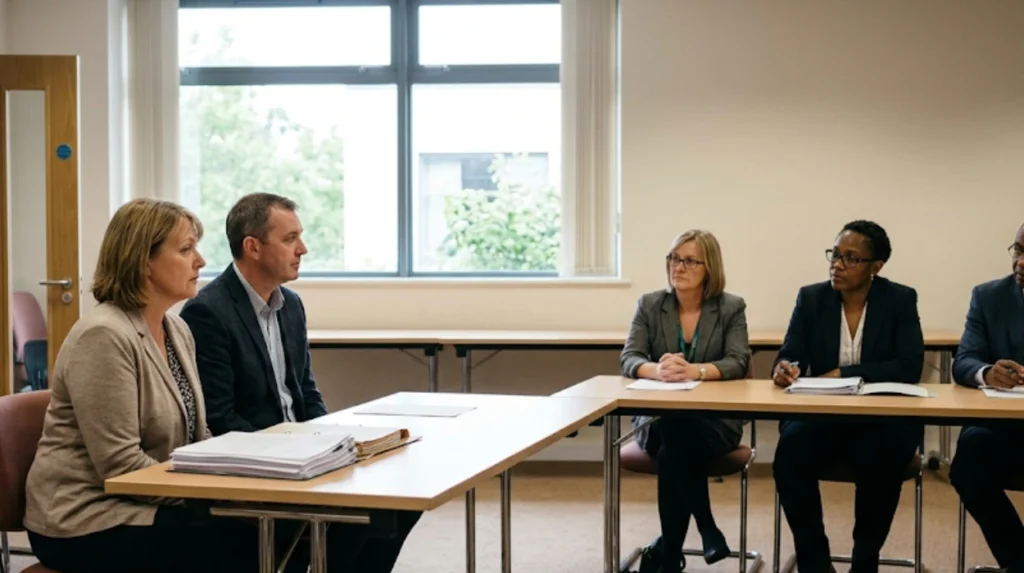
The Leeds process starts with a written appeal form, followed by an independent hearing, and ends with a written decision from the panel. Leeds says appeals are heard by three panel members, with a clerk present, and the decision is usually sent within five school days.
Leeds City Council says most appeals can be submitted online, although some schools must be contacted directly. The council also states that appeals for places starting in September 2026 have specific deadlines: Year 7 appeals by 31 March 2026 and Reception appeals by 15 May 2026. If you miss the deadline, you can still appeal, but Leeds says the hearing may happen after school starts in September.
The process has two main stages. First, you complete the appeal form and explain why your child should have a place. Then you receive papers for the hearing, including the school’s case and any documents you submitted, and you present your case to the panel. Leeds says hearings can be in person, by video link, or on paper if you do not attend.
The legal framework
School admission appeals in England are governed by the School Admissions Code and the School Admission Appeals Code. The appeal panel must be independent, and it must decide whether the school followed the law and applied its admissions policy properly. If the school did not follow the rules, or if its admissions arrangements do not comply with the code, the appeal should be upheld.
For infant classes in Reception, Year 1, and Year 2, the law limits class size to 30 pupils per teacher. That limit makes these appeals harder to win, because the panel can only uphold the appeal in narrow legal circumstances.
When should you appeal a school place refusal?
You should appeal as soon as you receive the refusal letter and before the deadline in that letter. In England, admission authorities must give at least 20 school days to appeal from the decision letter, and Leeds sets local deadlines for each intake.
The appeal deadline is not the hearing date. It is the final date for submitting the appeal form and supporting information. Leeds says it will then contact you at least 10 school days before the hearing. This gap matters because it gives the panel time to review the school’s case and your evidence before the hearing starts.
For Garforth families, the safest approach is to appeal immediately after deciding the refusal is worth challenging. Leeds advises parents to accept the place already offered first, in case the appeal is not successful. Accepting the offer does not harm the appeal, and it protects the child from being left without a school place.
What evidence should you include?
Your appeal should include clear reasons, relevant documents, and evidence that supports your case. Leeds specifically says medical or bullying issues should be backed by copies of GP letters or similar evidence, and the panel will not be given your waiting-list position.
The strongest evidence is specific and factual. A medical case should include letters from doctors or specialists explaining the child’s need. A social or welfare case should include documents showing the practical impact of the refusal. A school-specific case should explain why the preferred school is needed, not just why it is liked.
You should avoid weak statements such as “this is the best school” unless you can connect that view to evidence. Leeds says wanting a school because it is the best in the area is not likely to persuade the panel. The panel is looking for legal grounds, factual mistakes, or serious personal circumstances that outweigh the school’s admissions case.
Common evidence types
If you are preparing an appeal, the most useful evidence usually falls into several categories, for example medical letters from NHS professionals, school reports showing special educational needs, and proof of address or travel patterns. Each document should support one clear point, because the panel assesses the total case rather than isolated claims.
What makes an appeal more likely to succeed?
An appeal is more likely to succeed if the school made an admissions mistake, used an unlawful policy, or failed to apply the rules correctly. Leeds says a mistake can include giving a place to someone with lower priority or to someone living further away under the same priority band.
This is the cleanest route to success because it goes to the legality of the original decision. Leeds measures distance in a straight line from a point on the school building to a point on the home address using mapping data from the Local Land and Property Gazetteer. If that system was used incorrectly, or if the school applied its criteria inconsistently, the panel can intervene.
Other appeals succeed when the family’s reasons are strong enough to outweigh the school’s case. That can include serious medical needs, safeguarding issues, or exceptional family circumstances that make the refusal unreasonable in the legal sense. The legal threshold is high, and the panel must be convinced that no reasonable admissions authority would have made the same decision.
Explore More Help & Resources
How to get free food bank help near Headingley fast
How to report a broken street light in Guiseley
What happens at the hearing?
At the hearing, the school explains why it refused the place, you explain why your child should be admitted, and the panel decides whether the balance of reasons favours your appeal. Leeds says the hearing usually lasts around 30 minutes.
The panel has three people and works independently. A clerk records the process and keeps it lawful and confidential. Leeds says you can attend in person or by video call, and you can bring a family member, friend, or supporter with you.
The order is structured. First, the school presents its case. Then the panel checks whether the admissions policy was applied correctly. If the school has followed everything properly, you then present your reasons for appeal. The panel later decides in private whether your case outweighs the school’s case for refusing another place.
A practical example helps here. If two children apply for the same oversubscribed place, one appeal might succeed because the school incorrectly measured distance, while another fails because the parent only prefers the school for convenience. The difference is evidence and legal weight, not emotion.
How are infant class size appeals different?
Infant class size appeals are much stricter because Reception, Year 1, and Year 2 classes are limited to 30 pupils per teacher by law. Leeds and GOV.UK both state that these appeals are less likely to succeed.
This is the most important rule for younger children in Garforth. If the school already has 30 children in the class, the appeal panel cannot simply decide that your child seems more deserving. The panel can only uphold the appeal in narrow circumstances, such as a mistake in the admissions process, an unlawful admissions policy, or a place being available without exceeding the legal limit.
That legal limit explains why infant appeals are often harder than secondary appeals. Leeds reports that in the last school year, 69 reception infant class size appeals were heard and only 3 were successful, which is a success rate of 4.3%. For Year 7, Leeds heard 526 appeals and 86 were successful, a 16.3% success rate. Those figures show the difference between the stricter infant rules and the broader secondary appeal process.
What are the deadlines and timings?
Leeds says appeals for September 2026 places had deadlines of 31 March 2026 for Year 7 and 15 May 2026 for Reception. Once submitted, the council says hearing dates are issued at least 10 school days in advance and decisions are normally sent within five school days.
Timing matters because late appeals can still be heard, but not always before term begins. If your child is appealing for a Reception or Year 7 place, Leeds says non-appeal decisions can be delayed into the school year if the deadline has passed. The national rule also says appeals must be heard within 40 school days of the appeal deadline.
If you are appealing for another year group, Leeds says it will hold the hearing as soon as possible and no more than 30 school days after the appeal is submitted. That means the process can move quickly, so evidence should be prepared before submission rather than after.
What happens after the decision?
The panel’s decision is final, and Leeds says you are normally told within five school days of the hearing. If there was a procedural problem, you can complain to the Local Government Ombudsman, but the Ombudsman cannot overturn the panel’s decision.
If the appeal succeeds, the school must offer the place. If it fails, the child stays on waiting lists or remains with the place already offered. Leeds also says you should keep the place already offered while you wait for the appeal result.
A complaint route still exists if the process went wrong. The Ombudsman can investigate maladministration, such as a panel failing to follow the correct procedure, but it does not replace the panel or re-decide the case. For academy schools, complaints about the process can go to the Department for Education.
Which Garforth families need to contact schools directly?
Leeds says most appeals use its online form, but some schools require direct contact with the school itself. Leeds lists specific primary and secondary schools that use a direct route rather than the standard council form.
This detail matters because Garforth families sometimes apply across school boundaries. If the school you want is not in Leeds, Leeds says you must contact that school’s local council instead. That means the appeal route depends on the admissions authority, not just on where the family lives.
Admissions authority is the legal body responsible for the decision. For maintained schools, this is often the local authority; for academies and some faith schools, it is the school’s governing body or trust. Before submitting anything, check the refusal letter carefully because it normally explains who handles the appeal.
What should parents in Garforth do first?
Parents in Garforth should accept the place already offered, read the refusal letter carefully, gather evidence, and submit the appeal before the deadline. Leeds gives parents an online route for most schools and warns that late appeals can miss the September start date.
A strong appeal starts with organisation. Keep the refusal letter, application details, any school reports, and any medical or welfare evidence in one file. Then write a clear case that explains exactly what went wrong or why the child’s need outweighs the school’s case.
The main point is simple: appeals succeed on evidence, timing, and legal grounds. For Garforth families, the process is local in delivery but national in law, which means the best appeals are precise, documented, and focused on the admissions rules.
Can I appeal a school place refusal in Garforth?
Yes. If your child has been refused a place at a school, you have the legal right to appeal. Most appeals for Leeds schools are submitted through Leeds City Council, while some academy and voluntary-aided schools manage their own appeals.