

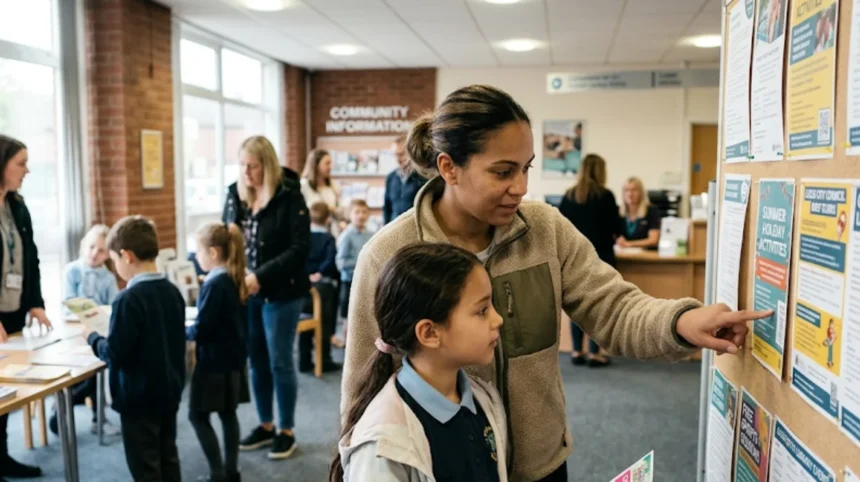
Free kids’ clubs and sports in Garforth are usually found through council holiday schemes, library activities, leisure centre sessions, parks, and local community venues. The most reliable options are the ones tied to public services, because they are updated regularly and cover different age groups across the year.
- What counts as free kids’ clubs and sports in Garforth?
- Where can families find free activities in Garforth?
- Which free clubs run during school holidays?
- Which places offer free sports or active play?
- How do you check if a club is truly free?
- What free options suit toddlers and under-fives?
- What free options suit school-age children?
- How should parents search for the latest sessions?
- Why do these free clubs matter for Garforth families?
- What should families do first?
- Final practical route
What counts as free kids’ clubs and sports in Garforth?
Free kids’ clubs and sports in Garforth include public activities that do not charge an entry fee, holiday sessions funded by the council, library events for young children, and open-access outdoor spaces. These options cover toddlers, primary school children, and older children who want active play or organised sport.
In practice, “free” can mean different things. Some sessions are completely free for everyone. Others are free only for families who meet eligibility rules, such as holiday programmes linked to free school meals. Some clubs are free to attend but still require booking or adult supervision.
Garforth has a useful mix of venues for family activities. That mix includes a library, a leisure centre, community halls, parks, and local clubs. Families benefit from that range because it gives them more than one route to the same outcome: active, structured time for children without high costs.
Where can families find free activities in Garforth?
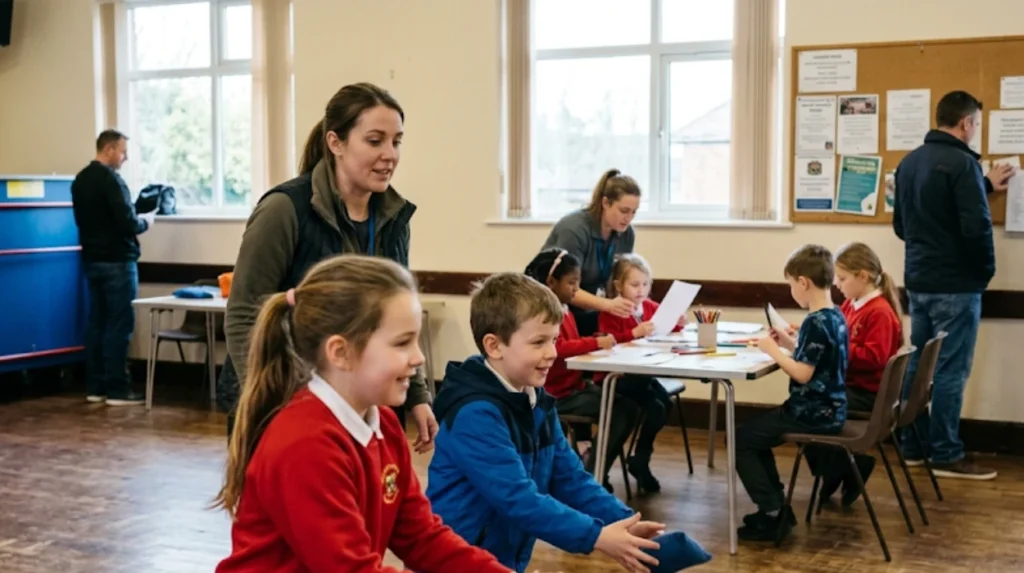
Families can find free activities in Garforth through council pages, library events, leisure centre updates, community venues, and local family listings. These are the main starting points because they show what is happening now, not just what exists in theory.
The local library is one of the easiest places to begin. It often hosts early-years sessions such as story time and rhyme time, which suit babies, toddlers, and pre-school children. These sessions are usually low-pressure, repeat weekly, and designed for adult-and-child attendance.
The leisure centre is the next key place to check. It is the most likely venue for junior gym sessions, holiday sports, swim activities, and supervised youth sport. Families looking for organised movement rather than informal play usually find the best fit there.
Community halls and hubs also matter. They often host rotating clubs, seasonal activity days, and family events. These venues are useful because they bring together different age ranges and can be easier to access than specialist sports facilities.
Which free clubs run during school holidays?
The strongest free holiday option is the council-backed holiday activity programme. It offers structured sessions during the main school breaks and usually includes sports, games, arts, and food for eligible children.
Holiday programmes matter because they solve two problems at once. They keep children active when school is closed, and they give parents dependable childcare-style support during long breaks. That makes them especially important in Easter, summer, and Christmas periods.
These schemes usually follow a booking process. Eligibility checks are common, so families need to confirm age, school stage, and support criteria before planning ahead. Once accepted, holiday places can be a major help for families who want regular activity without repeated costs.
For Garforth families, the holiday period is often the best time to find the widest range of free sports. Councils, schools, leisure centres, and community partners tend to release more sessions during those weeks than they do in term time.
Which places offer free sports or active play?
Free sports in Garforth usually come from public outdoor spaces, council-run activity sessions, and occasional community sport events. The most dependable free options are parks and open play areas because they stay accessible without membership fees.
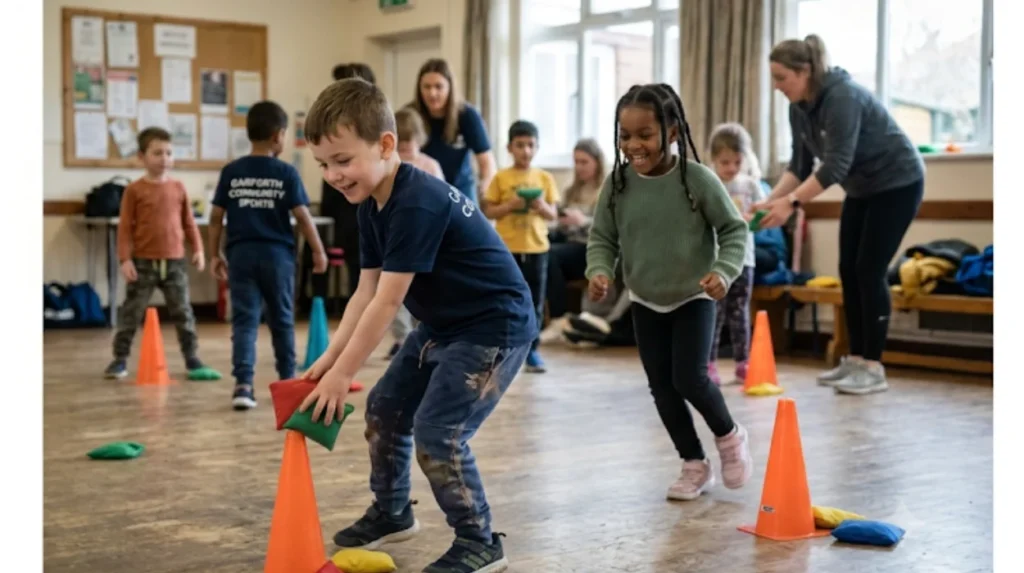
Outdoor space is the simplest route into free movement. Parks, skate areas, and play zones give children a place to run, climb, balance, and socialise without formal sign-up. These spaces are especially useful for younger children and families with mixed-age siblings.
Leisure centres are the main source of more structured activity. They may offer junior gym access, swimming opportunities, and holiday sports sessions. These are valuable because they introduce children to sport in a supervised setting and often build confidence for later club participation.
Local football and sports clubs also matter, even when they are not fully free. They often run taster sessions, beginner groups, or low-cost introductions for younger children. Families who start with free play often move into these sessions when children want something more regular.
How do you check if a club is truly free?
A club is truly free when the organiser clearly states there is no charge or when it is part of a funded public programme. The safest way to check is to look at the session listing, age rules, booking requirements, and any eligibility conditions.
First, read the organiser’s wording carefully. If it says “free,” that is a good sign, but it still helps to check whether any extras are charged separately. Some sessions are free but expect parents to pay for optional add-ons, refreshments, or transport.
Second, check the dates and format. Some activities are only available in term time, while others run only during school holidays. A session can also be free but not permanent, which matters if you want a weekly routine rather than a one-off event.
Third, confirm supervision rules. Some junior sessions require an adult to stay. Others require an adult to participate. That detail changes the practical cost and the level of commitment, especially for families with more than one child.
What free options suit toddlers and under-fives?
Toddlers and under-fives have the strongest free offer through library sessions, rhyme time, story time, and gentle play-based activities. These sessions are built around early learning, social confidence, and parent-child participation.
This age group benefits most from short, repeatable activities. A weekly story session or rhyme group works well because it fits around naps, nursery schedules, and childcare routines. It also helps children get used to group settings in a calm environment.
Libraries are especially useful for this stage. They combine free entry with a child-friendly atmosphere and often include books, songs, and simple movement. That makes them a strong option for families looking for something structured but not intense.
Outdoor play spaces are another strong choice. They support climbing, balance, and free movement, which are important for toddlers developing coordination. For many families, a mix of library time and park time is enough to fill several mornings a week.
What free options suit school-age children?
School-age children usually get the best free access through holiday clubs, outdoor sport spaces, and seasonal council activities. These options are more active, more varied, and better suited to children who want games, competition, and group play.
Older children often need more variety than toddlers. They want football, swimming, running games, dance, or mixed-sport sessions. Holiday programmes are useful because they usually include that variety under one booking system.
Parks and skate areas also matter for this age group. Children in primary school and early secondary school often use them for informal sport, scooter riding, running games, and socialising. These spaces are valuable because they do not depend on training schedules.
Some local clubs run intro sessions for beginners. These are useful when children want a regular sport but families want to test interest first. A taster session can be a practical bridge between free play and organised membership-based sport.
How should parents search for the latest sessions?
Parents should search by age, venue, day, and the word “free.” That simple method filters out unsuitable sessions and helps families find current clubs faster than a general web search.
Start with official local services. Council activity pages and library pages are the best places to look for funded sessions, opening times, and holiday programmes. They are usually the most reliable for dates and eligibility.
Then check local venue pages. Leisure centres, community hubs, and clubs often publish their own schedules. Those listings are useful because they show practical details such as start times, ratios, and contact numbers.
Finally, use local family listings for discovery. These are good for finding hidden sessions and small community clubs that do not always appear in official directories. The key is to confirm the details with the organiser before travelling.
Explore More Help & Resources
How to get free debt advice near Yeadon this week
How to report anti-social behaviour in Wetherby fast
Why do these free clubs matter for Garforth families?
Free clubs and sports matter because they reduce costs, support children’s health, and give families a regular structure outside school. They also help children build confidence, social skills, and physical activity habits early.
For many families, cost is the biggest barrier. A free session removes the pressure of weekly fees and makes it easier to keep children active across the year. That matters most during school holidays, when childcare and activity costs rise together.
These sessions also support local community life. Children who attend library groups, sports sessions, and holiday clubs become more familiar with local spaces and local people. That makes the area feel more connected and useful for day-to-day family life.
There is also a long-term benefit. Children who get used to moving, playing, and joining groups early are more likely to stay active later. That is important because regular physical activity supports health, confidence, and routine.
What should families do first?
Families should begin with three checks: child age, session timing, and any eligibility rule. That order saves time and quickly shows whether a free club is a fit for the child and the household schedule.
If the child is very young, start with library sessions and gentle play groups. These are the easiest to attend and usually require the least preparation. They also suit parents who want a relaxed first step into organised activity.
If the child is school-age, check holiday clubs and junior sport sessions first. These usually offer the most energy, the widest variety, and the clearest structure. They are the best match for children who want more action than a story session or toddler group.
If the child already likes a sport, look for beginner sessions or taster classes. That route helps families discover whether a longer-term club is worth joining later. It also keeps the initial cost as low as possible while interest is still being tested.
Final practical route
The best route for finding free kids’ clubs and sports in Garforth is simple: use council-funded holiday schemes, local library sessions, leisure centre activities, and community venues in that order. This gives families the widest choice without wasting time on outdated listings.
For toddlers, library events and soft play-style community sessions are the easiest win. For primary school children, holiday programmes and outdoor sport spaces usually offer the most value. For older children, leisure centre sessions and club taster events provide the best next step.
A good family routine is to check the same places each term and again before every school holiday. That keeps the search manageable and makes it easier to spot new free sessions as they appear.
Where can I find free kids’ clubs and sports in Garforth?
Families can find free activities through Leeds City Council holiday programmes, Garforth Library events, local leisure centre activities, community venues, parks, and public play areas. Official council and venue websites are the best places to check current sessions.