
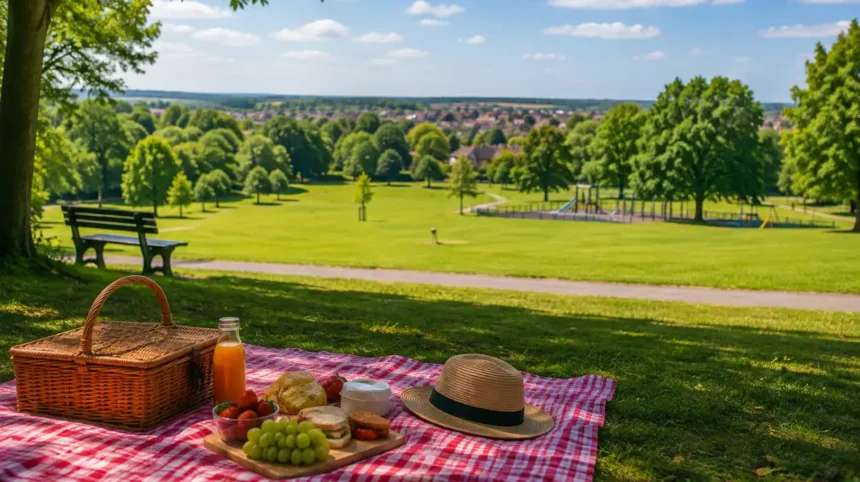
Garforth is a large settlement in south-east Leeds with a useful mix of community parks, recreation grounds, woodland, local green spaces and countryside connections. Its outdoor spaces support picnics, short walks, family downtime, informal exercise and quiet breaks away from busy urban areas.
- What makes Garforth suitable for a picnic and outdoor relaxation?
- Which Garforth parks are best for a traditional picnic?
- Is Glebelands Recreation Ground suitable for families and groups?
- Which Garforth woodland areas are suitable for a quieter outdoor break?
- Where can visitors find peaceful countryside near Garforth?
- Can you enjoy a picnic in Garforth without a car?
- What should you bring for a Garforth picnic?
- What are the best ways to combine a Garforth picnic with outdoor activities?
- How can visitors picnic responsibly in Garforth’s green spaces?
- Which Garforth picnic location should you choose for your visit?
The Leeds City Council parks and countryside records identify numerous green spaces within the Garforth and Swillington area. These include BarleyHill Park, Glebelands Recreation Ground, Hollinhurst Wood, Hawkes Nest Wood, East Garforth Recreation Ground, Firthfield POS, The Chase and other designated local green spaces.
This range makes Garforth suitable for different types of outdoor relaxation. A visitor looking for a conventional picnic area can focus on community parks and recreation grounds. Someone seeking a quieter setting can explore woodland and countryside routes. Travellers without a car also have access to Garforth railway station and East Garforth railway station.
What makes Garforth suitable for a picnic and outdoor relaxation?
Garforth combines accessible parks, recreation grounds, woodland and countryside spaces, giving visitors several settings for picnics and outdoor relaxation. BarleyHill Park and Glebelands Recreation Ground provide established recreational environments, while woodland and green-space routes offer quieter surroundings.
Garforth sits within the Leeds district and has a developed network of public green spaces. Leeds City Council classifies sites according to functions such as community parks, local green spaces, recreation grounds, woodland areas and nature areas.
This classification is useful when choosing a picnic location because outdoor spaces have different physical characteristics. A recreation ground is generally more appropriate for active family time. Woodland is better suited to walking and nature observation. A community park provides a more conventional park environment.
BarleyHill Park is officially listed by Leeds City Council as a community park. Glebelands Recreation Ground is classified as a recreation ground. Hollinhurst Wood is classified as a woodland area. These classifications establish a clear distinction between the main types of outdoor setting available around Garforth.
Garforth also has several smaller local green spaces. These include Firthfield POS, Glencoe Estate, Goosefields, Hanbury Place POS, Longmeadows, Primrose Hill Drive POS and The Chase. They provide additional open areas within the settlement rather than concentrating all outdoor activity in one major park.
The result is a distributed outdoor network. Visitors can combine a picnic with a walk, explore a green corridor after lunch or use a park as a short break between other activities in Leeds.
Which Garforth parks are best for a traditional picnic?
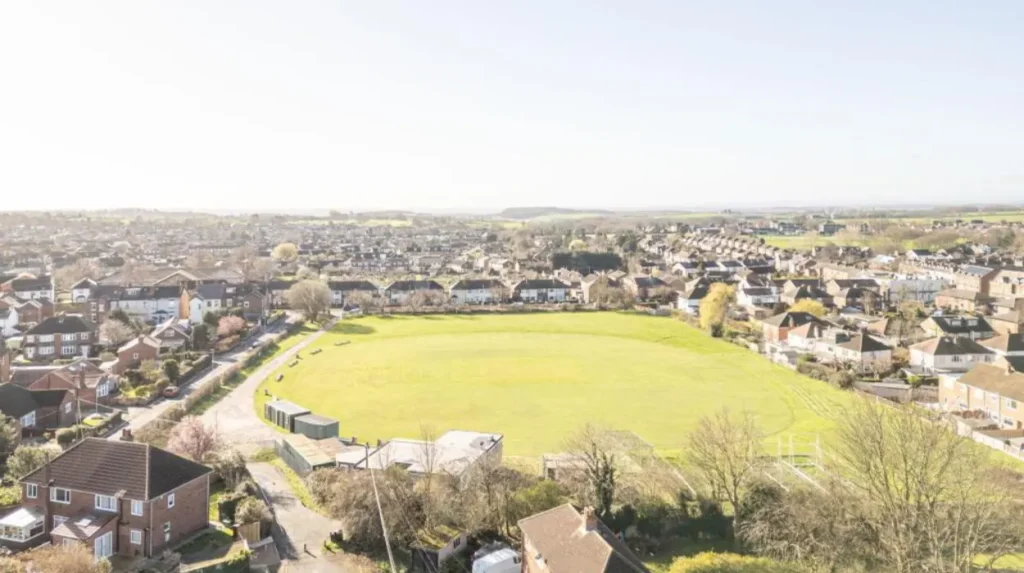
BarleyHill Park and Glebelands Recreation Ground are strong starting points for a traditional Garforth picnic because both are recognised public recreational spaces. Their open environments provide straightforward settings for sitting outdoors, eating packed food and combining lunch with leisure.
BarleyHill Park is one of the clearest options for visitors searching for a Garforth picnic location. Leeds City Council identifies it as a community park and records an area of approximately 3.16 hectares in its green-space evidence.
A community park has a different role from a remote countryside site. It is integrated into the local settlement and supports everyday recreation. This makes BarleyHill Park practical for families and visitors who want a simple outdoor break without committing to a long countryside walk.
Glebelands Recreation Ground provides another established outdoor option. Leeds City Council records the site at approximately 4.25 hectares and classifies it as a local recreation area in its green-space evidence.
The larger footprint gives visitors more open-space context than a small neighbourhood green. It also makes the location relevant for people combining a picnic with informal outdoor activity.
Visitors should treat public parks as shared spaces. Picnic equipment should remain within the area being used, food waste should be removed and paths should remain unobstructed. Leeds City Council’s parks byelaws apply to listed sites, including BarleyHill Park and Glebelands Recreation Ground.
Dog restrictions also require attention. Leeds City Council lists Barley Hill Rec Playground and Glebelands Rec Playground under its local Public Spaces Protection Order provisions, with smoking prohibited in the specified playground areas. BarleyHill Park also has a designated dog exclusion area.
That distinction matters for visitors planning a family picnic with a dog. A park can permit general outdoor access while particular playground areas have additional restrictions.
Is Glebelands Recreation Ground suitable for families and groups?
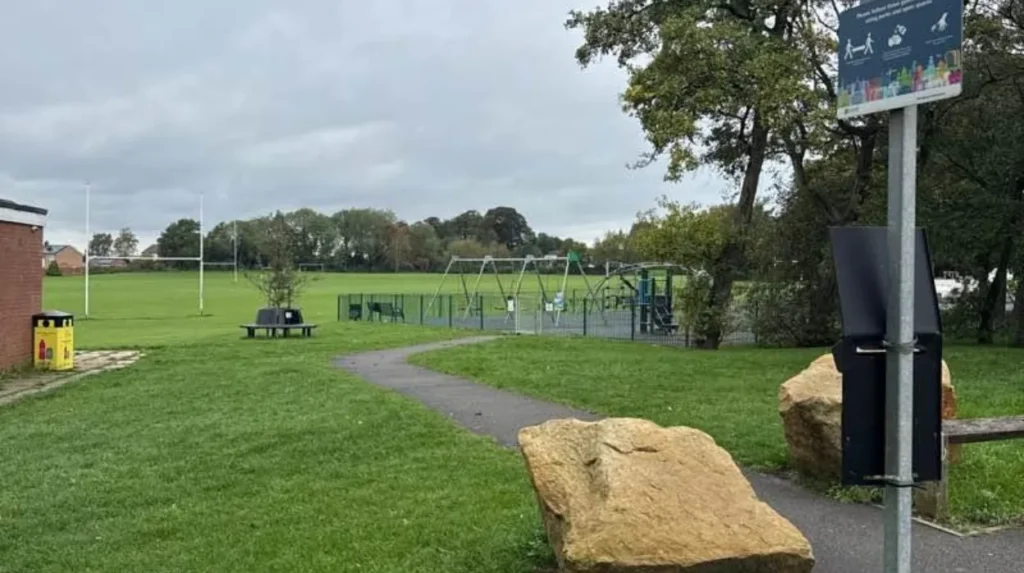
Glebelands Recreation Ground provides a substantial recreational setting within Garforth, with around 4.25 hectares recorded in Leeds green-space evidence. It suits families and small groups seeking open-air downtime, informal activity and a picnic combined with outdoor recreation.
Glebelands Recreation Ground is located around Ninelands Lane and forms part of Garforth’s established recreational network. Leeds City Council lists Glebelands Rec as a recreation ground and separately identifies its playground facilities within local public-space regulations.
The site works best for visitors who want more than simply sitting on grass. A recreation ground supports outdoor movement, informal games and family activity alongside a packed lunch.
Families should separate picnic activity from playground use. Children using play equipment need supervision, while food and personal belongings should remain away from areas where they obstruct other visitors.
The location also demonstrates how Garforth’s green infrastructure operates at neighbourhood level. Instead of relying on one destination park, the settlement contains several recreational areas distributed across residential districts.
This makes short outdoor breaks practical for residents and visitors staying locally. A visitor does not need to plan an entire day around a picnic. A short stop at a recreation ground can fit into a wider itinerary.
For domestic business travellers, a recreation ground can also provide a straightforward outdoor break between appointments. The setting is more suitable for walking, sitting and eating than for formal remote working, particularly where seating, weather protection and reliable connectivity are not guaranteed.
Which Garforth woodland areas are suitable for a quieter outdoor break?
Hollinhurst Wood and Hawkes Nest Wood provide woodland alternatives to conventional parks. They suit visitors prioritising walking, natural surroundings and quieter outdoor time. Woodland settings require stronger attention to footwear, weather, uneven surfaces, wildlife, vegetation and responsible access.
Hollinhurst Wood is formally listed by Leeds City Council as a woodland area within Garforth and Swillington. The council’s green-space evidence records the site at approximately 13.16 hectares and categorises it as natural green space.
Its scale makes Hollinhurst Wood particularly relevant to visitors who want a walk before or after an outdoor meal. Woodland changes the character of a picnic because the primary attraction is the surrounding natural environment rather than formal park infrastructure.
Hawkes Nest Wood is another Garforth woodland site. Leeds City Council’s green-space evidence records approximately 5.63 hectares and identifies it as a natural green-space site.
Woodland is not equivalent to a maintained picnic lawn. Ground conditions change with rainfall and seasons. Roots, mud, leaves and uneven surfaces affect accessibility. Visitors should therefore choose stable locations and avoid placing blankets or food directly on sensitive vegetation.
The strongest approach is to treat woodland as a walking and relaxation environment first. A small packed lunch can form part of the visit, but visitors should avoid damaging plants, disturbing wildlife or leaving food waste.
Woodland also provides a useful setting for digital detox. A short walk away from commercial areas separates leisure time from work routines. Digital nomads seeking a work-friendly outdoor hub should distinguish this from a formal workspace, however. Woodland is better for breaks than for extended laptop sessions.
As you explore Garforth’s modern green spaces, you are crossing land shaped by generations of local development. Read about the full to understand its origins.
Where can visitors find peaceful countryside near Garforth?
Visitors seeking broader countryside views should consider the green corridors and walking connections around Garforth, including routes towards Kippax and Allerton Bywater. These areas provide open landscapes, woodland edges and longer walking opportunities beyond conventional neighbourhood parks.
Garforth’s outdoor network extends beyond individual parks. The Lines Way provides an important walking connection running from Garforth towards Allerton Bywater. Leeds City Council identifies the route along the western edge of Townclose Hills Local Nature Reserve.
Townclose Hills is in neighbouring Kippax rather than central Garforth, but it is relevant to visitors planning a wider outdoor itinerary. Leeds City Council describes it as a Local Nature Reserve on Westfield Lane, LS25 7JD.
The reserve occupies a knoll of magnesium limestone. Its grassland plateau provides near-panoramic views of surrounding countryside. The site contains limestone grassland, woodland, meadows, scrub and a woodland glade. Much of the reserve has also been designated as a Site of Special Scientific Interest because of its conservation importance.
Townclose Hills is Open Access land. Visitors can explore the reserve but must take care around limestone features. Leeds City Council specifically warns about cracks known as grykes, steep paths and uneven or muddy ground.
This makes the reserve better suited to an active picnic outing than a casual blanket-and-basket visit. Visitors should prioritise sturdy footwear and choose safe stopping points away from fragile habitats and geological hazards.
The reserve also demonstrates the ecological value of the wider Garforth-Kippax landscape. Outdoor relaxation is not limited to manicured lawns. Nature reserves provide a different type of leisure experience based on landscape, biodiversity and walking.
Can you enjoy a picnic in Garforth without a car?
Garforth is practical for car-free outdoor trips because the settlement has two railway stations and a network of local walking connections. Garforth station has step-free platform access from its main entrance, while East Garforth provides another rail connection.
Garforth railway station is located on Station Road and is served by Northern. The station provides step-free access to platforms from the main entrance through lifts and stairs connecting to a footbridge. Northern also lists an alternative entrance from Aberford Road, although it is not suitable for wheelchair or mobility-scooter users because of the narrow footpath and curved highway.
East Garforth railway station provides another access point. Northern identifies it as a Category B station with ramped access to both platforms.
Rail connections make Garforth relevant to visitors staying in Leeds. Northern operates services on routes including Leeds to York and services connecting the wider regional network. Timetables change, so visitors should check the current service before travelling.
A car-free picnic itinerary can therefore begin with a train journey, continue with a local walk and finish with outdoor relaxation. The exact suitability depends on the selected green space and the visitor’s walking distance requirements.
Accessibility requires separate consideration. Step-free railway access does not mean every path or green space is fully accessible. Woodland trails and natural areas have different surfaces and gradients from railway platforms.
Visitors using wheelchairs or mobility scooters should check the access conditions of the specific destination before travelling. Townclose Hills, for example, has uneven ground and steep sections that require additional care.
What should you bring for a Garforth picnic?
A Garforth picnic needs practical food storage, weather protection, reusable drinking water, a suitable sitting layer and waste bags. Visitors walking to woodland or countryside locations should also bring sturdy footwear, weather-appropriate clothing and sufficient water for the route.
Weather conditions are central to outdoor leisure in West Yorkshire. Grass becomes wet after rainfall, while woodland paths become muddy and uneven. A waterproof picnic blanket provides a more practical surface than a thin fabric sheet.
Food should be packed securely and transported at suitable temperatures. Perishable food requires appropriate insulation, particularly during warm weather. Visitors should also bring enough drinking water because natural green spaces do not guarantee access to drinking-water facilities.
A small waste bag is essential. Leeds City Council advises visitors to take litter home and specifically highlights responsible behaviour at Townclose Hills Local Nature Reserve.
Sun protection is relevant during warm weather. A hat, sunscreen and drinking water reduce exposure risks during longer outdoor stays.
For woodland visits, sturdy footwear provides better protection against mud, roots and uneven ground. Townclose Hills also has exposed limestone features and uneven paths, making robust footwear particularly important.
Visitors with children should bring age-appropriate equipment and supervise them around roads, water, woodland, uneven ground and natural hazards.
Dog owners should check restrictions before entering particular areas. Leeds City Council’s Public Spaces Protection Order identifies specific dog exclusion areas and playground-related restrictions in Garforth and surrounding Leeds locations.
The best picnic preparation therefore depends on the destination. A short park visit needs less equipment than a woodland walk or countryside route.
What are the best ways to combine a Garforth picnic with outdoor activities?
The most effective Garforth outdoor itineraries combine eating with walking, nature observation or informal recreation. Visitors can use BarleyHill Park or Glebelands for straightforward picnics, then explore nearby green spaces or choose woodland and countryside routes for longer outdoor sessions.
A park-based itinerary is the simplest option. Visitors can arrive at BarleyHill Park, settle for a packed lunch and continue with a short walk or informal recreation. The site is officially classified as a community park.
A recreation-ground itinerary works differently. Glebelands Recreation Ground provides a larger recreational environment and is suitable for visitors who want movement and outdoor activity alongside food. Its recorded area of approximately 4.25 hectares provides substantial open-space context.
A woodland itinerary focuses on walking. Hollinhurst Wood covers approximately 13.16 hectares according to Leeds green-space evidence, making it one of the larger natural sites listed within Garforth and Swillington.
A countryside itinerary can extend towards Kippax and Townclose Hills. The Lines Way connects Garforth with Allerton Bywater and runs along the western edge of Townclose Hills Local Nature Reserve.
Nature-focused visitors can use Townclose Hills for landscape observation and walking. Its limestone grassland, woodland, meadow and scrub habitats create a more ecologically diverse environment than a conventional recreational park.
Photography is another suitable activity. Open grassland provides broad landscape views, while woodland provides close-range subjects such as trees, vegetation and seasonal changes. Visitors should remain on appropriate paths and avoid disturbing sensitive habitats.
For business travellers, the most practical arrangement is a short outdoor break rather than a full remote-working session. A park or green space provides an opportunity to walk and eat lunch before returning to accommodation or meetings.
Explore More Area Guide
Garforth Without a Car: Walking & Transport Guide 2026
Garforth Shopping Guide: Local Shops and Retail Areas | Garforth 2026
How can visitors picnic responsibly in Garforth’s green spaces?
Responsible picnicking means respecting park byelaws, protecting vegetation, controlling dogs where required, keeping playground areas clear, removing litter and avoiding damage to wildlife habitats. These practices protect public access and preserve Garforth’s green spaces for future visitors.
Leeds City Council manages a broad network of parks and countryside sites under local rules. Its parks byelaws schedule includes numerous Garforth and Swillington locations, covering community parks, recreation grounds, local green spaces, woodland and nature areas.
Visitors should therefore follow signs at each location rather than assuming every park operates under identical conditions.
Litter management is one of the most important responsibilities. Food packaging, bottles and leftover food should leave the site with the visitor when suitable bins are unavailable. Natural areas require particular care because food waste can affect wildlife behaviour.
Vegetation also requires protection. Visitors should use established paths and appropriate open areas rather than creating informal tracks through grassland, woodland or sensitive habitats.
Dog owners must follow local restrictions. Leeds City Council’s Public Spaces Protection Order identifies specific dog exclusion areas in Garforth and restrictions applying to playground locations.
Smoking restrictions also apply at listed playground locations, including Barley Hill Rec Playground and Glebelands Rec Playground.
Townclose Hills requires additional environmental care because of its limestone habitats and conservation designations. Leeds City Council warns visitors about uncommon wildflowers, limestone grykes and uneven terrain.
Responsible access therefore has two purposes. It protects visitors from avoidable hazards and protects the landscape from avoidable damage.
Which Garforth picnic location should you choose for your visit?
Choose BarleyHill Park for a straightforward community-park picnic, Glebelands for recreational family time, Hollinhurst Wood for woodland walking, or the wider Garforth-Kippax green network for countryside exploration. Your choice should reflect access, walking distance, facilities and the type of relaxation planned.
BarleyHill Park is the strongest choice for visitors seeking a conventional community-park setting. Its official classification and established recreational role make it a practical starting point.
Glebelands Recreation Ground is more appropriate when a picnic forms part of a wider family or recreational outing. Its approximately 4.25-hectare recorded area provides a substantial local recreation setting.
Hollinhurst Wood is more suitable for visitors who prioritise trees, walking and natural surroundings. Its approximately 13.16 hectares make it one of the larger natural spaces listed in the local green-space evidence.
Hawkes Nest Wood provides another natural-space option within Garforth. The council’s green-space evidence records approximately 5.63 hectares at the site.
Visitors wanting wider countryside should consider routes towards Kippax and Townclose Hills. The Lines Way creates an important walking connection from Garforth towards Allerton Bywater, while Townclose Hills adds panoramic countryside views and nationally recognised conservation interest.
The most important distinction is between formal recreational spaces and natural spaces. Parks provide easier everyday leisure. Woodland and nature reserves provide a more active outdoor experience and require greater preparation.
Garforth’s combination of green spaces, rail access and countryside connections gives it strong potential for low-cost outdoor leisure. A picnic does not need to be a standalone activity. It can form the central break within a wider walking, photography, family or nature-focused itinerary.
Visitors should check current council information, local signs and transport timetables before travelling. Northern’s published Garforth timetable information is updated for current service periods, while Leeds City Council maintains the relevant parks, byelaws and nature-reserve information.
For travellers, the practical advantage is choice. Garforth offers accessible neighbourhood recreation, woodland, open green space and connections towards broader countryside. That variety allows visitors to select an outdoor relaxation spot according to the length of the visit, preferred activity and required level of accessibility.
What are the best picnic spots in Garforth?
BarleyHill Park and Glebelands Recreation Ground are the main established options for a traditional picnic in Garforth. Both provide public recreational space where visitors can combine outdoor eating with walking, family activities and general leisure.