
Key Points
- Two covered padel courts have been officially approved for development at Swinnow Grange Mills on Stanningley Road in west Leeds.
- Planning permission was granted by Leeds City Council officers following an application submitted by Gems Investments Ltd.
- The facility will feature a pre-booking system to control operating hours, which are restricted between 7am and 11pm daily.
- Environmental protections include measures to prevent floodlight glare from affecting nearby residential properties, with lighting restricted to daylight-prohibited hours and subject to formal council approval.
- Transport provisions include two designated parking spaces (including a disabled bay) alongside existing communal spaces, a covered eight-bike storage shelter, and proximity to bus stops within 300 metres.
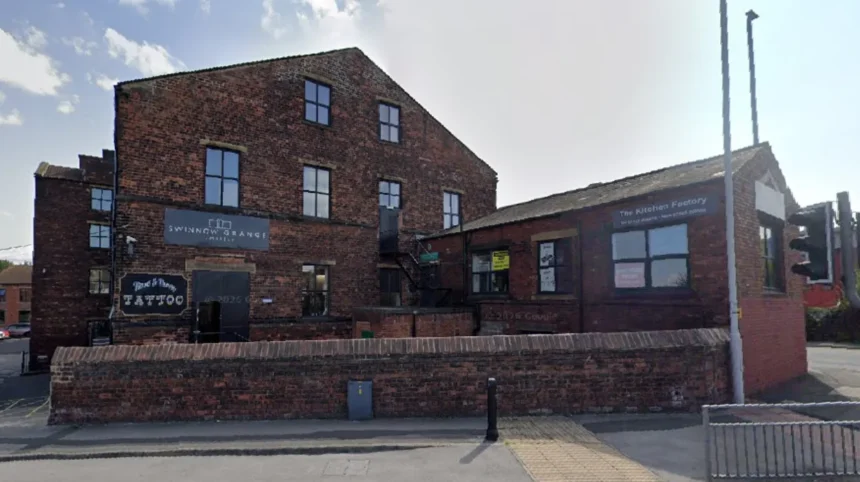
West Leeds (The Leeds Times) September 17, 2026 – Racket sport enthusiasts in west Leeds are set to benefit from a new sporting facility after local planning officers officially greenlit proposals for a dedicated padel development. The initiative, brought forward by applicant Gems Investments Ltd, will see two covered padel courts constructed within the established industrial and commercial setting of Swinnow Grange Mills located on Stanningley Road.
- Key Points
- How will traffic, parking, and site access be managed for the development?
- What environmental and operational conditions have been placed on the courts?
- Why is padel being introduced at Swinnow Grange Mills?
- Background of the development
- Prediction on how this development can affect the local community and sports enthusiasts
The application process concluded successfully when council planners determined that the project met all local development criteria. Assessing the suitability of the land, a formal Leeds City Council evaluation report stated:
“The proposal would provide a community sporting use in an accessible, built up location within an established commercial complex. Its scale, design and relationship with surrounding development are acceptable.”
How will traffic, parking, and site access be managed for the development?
Addressing potential logistical concerns regarding transportation and site capacity, planning documents submitted by the applicant emphasised the location’s multi-modal accessibility. While the broader mill complex already features communal car parking facilities shared by operating businesses, the new scheme introduces specific additions to accommodate players.
Elaborating on the infrastructure arrangements, a design report highlighted:
“The wider site has communal car parking for all businesses operating with Swinnow Grange Mills. However as part of this application a further two designated parking spaces will also be included, one of which will be a disabled parking bay.”
Furthermore, the site benefits from robust public transport integration. The design documentation noted that users would have convenient access to regular local bus routes, with designated stops positioned within 300 metres of the development on both Stanningley Road and Swinnow Road. To champion sustainable travel habits, the project also incorporates an eight-bike covered shelter complete with secure bike racks. Emphasising the broader integration with the neighbourhood, the council report added:
“No unacceptable effects on road safety or the operation of the wider site have been identified.”
What environmental and operational conditions have been placed on the courts?
To safeguard the amenity of local residents living near the commercial complex, strict operational boundaries have been legally tied to the planning consent. Council stipulations dictate that the newly authorised courts must remain closed between the hours of 11pm and 7am every day. Additionally, activity levels and court access will be tightly regulated via an automated pre-booking system, ensuring visitor numbers remain manageable and predictable.
Lighting management forms another critical element of the local authority’s oversight. Floodlights associated with the covered courts are prohibited from operating during daylight hours. Moreover, specific technical provisions have been mandated to eliminate light pollution. Highlighting these safeguards, the official planning report stated:
“Measures would be in place to prevent glare from floodlights affecting nearby homes.”
A formal planning condition further clarifies this requirement, noting:
“No external lighting shall be installed until full details of the proposed lighting scheme have been submitted to and approved in writing by the local planning authority.”
Why is padel being introduced at Swinnow Grange Mills?
Proponents of the development have pointed to the rapid expansion of the sport nationwide as a core driver for the project. Padel—a format of tennis that is typically played in doubles on an enclosed court roughly a third of the size of a standard tennis court—has experienced a sharp surge in popularity across the United Kingdom.
Reflecting on the wider community impact and commercial viability of repurposing space within the historical mill grounds, the applicant noted that the initiative addresses a growing consumer demand for active lifestyle infrastructure. Reinforcing this perspective, the design report concluded:
“The proposed change of use and development will constitute a positive addition not only to Swinnow Grange Mills but to the residential of the wider community.”
Explore More Local Leeds News
LNER Launches £12 Train Tickets from London to Leeds for 2026
Leeds Knights II Shine in Weekend Fixtures, Sheffield 2026
Background of the development
The approval of padel courts at Swinnow Grange Mills represents a continuation of modern trends regarding the adaptive reuse of traditional industrial and manufacturing sites across West Yorkshire. Swinnow Grange Mills, situated along the prominent Stanningley Road corridor in Bramley, has historically functioned as a commercial and industrial hub.
However, shifts in local commercial real estate demand, coupled with the clearance of redundant or vacant structures on parts of the wider footprint, have opened up opportunities for alternative commercial and leisure ventures.
In recent years, padel has transitioned from a niche European pastime into one of the fastest-growing participation sports in the UK, creating a high demand for accessible urban and suburban court facilities. Local authorities have increasingly encountered planning applications seeking to convert brownfield pockets, underutilised car parks, and industrial yards into modern athletic hubs.
By embedding a modern leisure facility within an established commercial zone like Swinnow Grange Mills, developers are leveraging existing urban infrastructure while attempting to diversify local economic and recreational offerings.
Prediction on how this development can affect the local community and sports enthusiasts
The integration of two covered padel courts into Swinnow Grange Mills is expected to yield tangible changes for residents, local businesses, and regional sports participants in west Leeds. For local residents, the strict operational hours (banning play between 11pm and 7am) and mandatory glare-prevention lighting controls are designed to protect domestic tranquility while introducing a vibrant recreational amenity to their doorstep.
For sports enthusiasts and the wider community, the facility bridges a gap in local sporting infrastructure by providing an accessible, weather-resistant venue for a booming racket sport. Because the site is supported by dedicated pedestrian links, public transport nodes within 300 metres, and active travel provisions like cycle storage, regular traffic congestion is anticipated to remain low.
Ultimately, the development stands to inject steady daytime and evening footfall into the commercial complex, potentially benefiting neighbouring businesses while transforming an underused portion of a historic industrial site into a modern hub for community health and fitness.