
Key Points
- Developers are reviewing preservation strategies for the historic, unlisted Yorkshire Post clock tower and temperature gauge located on Wellington Street in Leeds.
- The landmark structure has remained standing on the site since the regional newspapers vacated the premises in 2012, prior to the building’s demolition in 2014.
- Urbanite Leeds Ltd originally secured planning consent in 2023 to transform the vacant former newspaper headquarters into a major student accommodation and residential scheme.
- Fresh planning applications have since emerged proposing a reconfiguration of the northern section of the site, swapping previously approved high-rise student towers for lower-height office blocks.
- Project planners are actively consulting with Leeds City Council to determine how best to integrate or reinterpret the legacy of the iconic clock and temperature gauge into the modern architectural framework.
- Proposed options under consideration include creative digital interpretations embedded into the new building facades to preserve the collective memory and identity of the site.
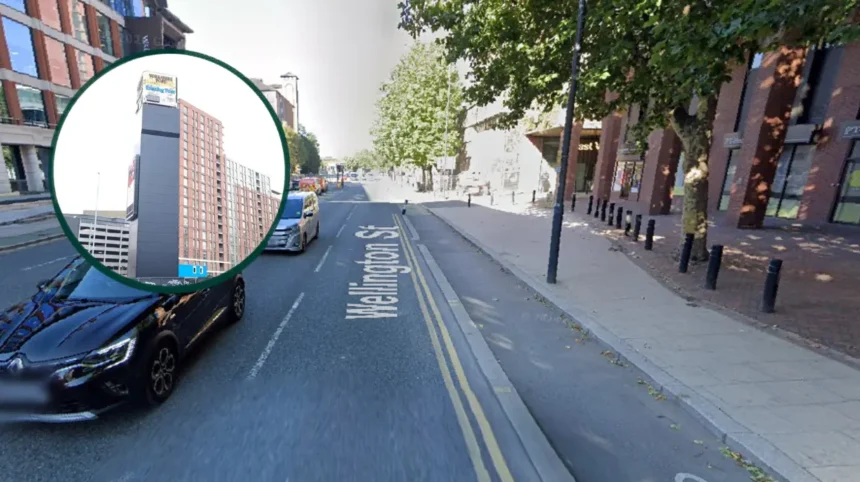
Leeds (The Leeds Times) October 7, 2026 — Developers in West Yorkshire are carefully evaluating how best to preserve and honor a historic local landmark as part of refreshed regeneration proposals for a prominent city centre plot. As reported by local news publications, a developer is currently considering how best to preserve a historic clock tower as part of new plans for the former Yorkshire Post Newspapers site. The landmark tower and temperature gauge is still standing on Wellington Street after the city’s two newspapers left in 2012. Urbanite Leeds Ltd secured planning permission in 2023 to turn the former home of the Yorkshire Post and Evening Post into student flats.
How are plans for the former Yorkshire Post site changing?
The scope of development for the strategic gateway site has undergone notable revisions since initial concepts were approved. As detailed in regional planning updates, Urbanite Leeds Ltd originally secured planning permission in 2023 to turn the former home of the Yorkshire Post and Evening Post into student flats, aiming to introduce thousands of student beds and residential apartments across high-rise towers reaching up to 42 storeys.
However, subsequent commercial evaluations indicated that the approved residential massing faced viability hurdles, prompting fresh design strategies. Under the updated proposals submitted for the northern section of the wider site, the layout pivots away from high-rise student accommodation and switches toward lower-height commercial workspace blocks.
These revised plans feature substantial reductions in building heights, substituting the residential towers with 15 and 17-storey office blocks designed to provide nearly 49,000 square metres of workspace.
What are the options for preserving the historic clock tower?
With the reconfiguration of the site layout, questions have intensified regarding the physical preservation and cultural legacy of the surviving structure. The 2023 planning permission explicitly stipulated that
“a full methodology and strategy for the re-use of the Yorkshire Post clock and temperature gauge shall be submitted to and approved in writing by the local planning authority,”
noting that the condition was imposed
“in the interests of preserving the clock tower as an important heritage feature for the city of Leeds.”
Addressing these heritage requirements under the updated framework, Urbanite representatives outlined that project stakeholders are actively engaging with municipal authorities. Through the planning application process, project teams will work alongside Leeds City Council to agree how the existing clock tower can be reimagined within the development in an appropriate way.
Among the creative solutions being evaluated, Urbanite noted that a modern interpretation of the clock tower could involve digital displays integrated directly into the facade of the new office buildings. Elaborating on this architectural approach, design reports submitted to the council stated that
“subject to further design development, technical assessment and detailed consideration, this approach could reinterpret the historic function of the Yorkshire Post clock and temperature gauge within the architecture itself.”
The documentation further emphasizes that such measures would offer a means of embedding a familiar and recognisable aspect of the site’s identity into the new building, celebrating its collective memory and creating a distinctive connection between the development and its historic legacy.
Explore More Local Leeds News
Major Accessibility Overhaul Proposed for Morley Church, Leeds 2026
A64 Crash Inquest: Driver Died High Speed Crambeck 2026
Background of the particular development
The history of the Wellington Street site stretches back decades as a vital industrial and media anchor in West Yorkshire. The former newspaper headquarters building was originally designed by the John Madin Design Group in 1968, serving as the bustling base for the Yorkshire Post and Yorkshire Evening Post until the publication teams relocated in 2012 after 54 years of service. The main office complex was subsequently demolished in 2014, leaving the plot largely vacant alongside the isolated, unlisted clock tower and temperature gauge.
Initial planning consent for the comprehensive redevelopment of the land was first granted in 2015. The earliest realization of this masterplan delivered The Headline, a stepped residential apartment block ranging from 13 to 18 storeys. While subsequent consents in 2023 authorized massive high-density student and residential towers, shifting market conditions and structural constraints—such as wind tunnel modelling and microclimate assessments—have driven developers to continuously refine the masterplan.
The latest planning applications focus exclusively on the northern section of the site, while separate development proposals for the southern riverside plots are anticipated to follow in due course.
Prediction
The ongoing evolution of the Wellington Street site carries significant implications for local residents, urban planners, and the wider Leeds community. For the local populace and civic heritage groups—such as Leeds Civic Trust, which monitors regional landmarks at risk—the successful retention or digital re-interpretation of the clock tower represents a crucial test of how modern commercial regeneration can respect local identity and collective memory.
If the collaborative discussions between Urbanite Leeds Ltd and Leeds City Council yield a successful integration strategy, the project could establish a benchmark for blending corporate workspace innovation with industrial heritage preservation. Conversely, failure to adequately honour the landmark risks drawing criticism from community advocates who value the site’s enduring cultural footprint. Ultimately, the successful execution of these plans will shape the visual and functional dynamics of Leeds’ western city gateway for decades to come.