Headingley is a neighbourhood in north-west Leeds, West Yorkshire, known for its independent shops, cafés, student population and residential streets. Its local shopping environment provides opportunities to explore reusable household products, second-hand goods and environmentally conscious purchasing. Visitors and residents seeking sustainable alternatives benefit from understanding which products reduce waste, how to identify responsible retailers and where to find reliable local information.
- What Does Eco-Friendly Shopping Mean in Headingley?
- Where Can Shoppers Find Reusable Household Products in Headingley?
- Which Reusable Kitchen Products Are Worth Buying in Headingley?
- Where Can People Buy Refillable Cleaning and Personal Care Products Near Headingley?
- How Can Second-Hand Shopping Support Sustainable Living in Headingley?
- How Can Shoppers Identify Genuinely Sustainable Household Products?
- Which Reusable Shopping and Food Storage Products Reduce Household Waste?
- How Do Leeds Recycling and Reuse Services Complement Eco-Friendly Shopping?
- How Can Students, Tourists and Remote Workers Shop More Sustainably in Headingley?
- How Can Households Calculate the Value of Reusable Products?
- What Should Shoppers Know About Sustainable Shopping Regulations and Environmental Claims in the UK?
- How Can Headingley Become More Sustainable Through Everyday Shopping Choices?
Reusable household products are items designed for repeated use instead of frequent disposal. Examples include refillable water bottles, washable cleaning cloths, reusable shopping bags, glass food containers and rechargeable batteries. Eco-friendly shopping involves choosing products that reduce unnecessary packaging, last longer, support repair and reuse, or use fewer resources throughout their lifecycle.
Headingley shoppers can approach sustainable purchasing through several practical routes. These include buying durable everyday essentials, choosing refillable products where local services are available, purchasing pre-owned household items and checking the environmental claims made by manufacturers. Leeds-wide reuse and recycling services also help residents manage unwanted possessions responsibly.
The most effective approach starts with identifying genuine household needs. Buying a reusable product that replaces an item regularly purchased in disposable form creates a clearer environmental benefit than accumulating unnecessary alternatives. Product durability, cleaning requirements, repairability, transport and end-of-life disposal all influence the overall environmental impact.
What Does Eco-Friendly Shopping Mean in Headingley?
Eco-friendly shopping in Headingley means choosing household products that reduce waste, limit unnecessary packaging and remain useful for longer. Shoppers prioritise durability, reuse, repair and responsible disposal while checking product materials, local availability and environmental claims before making purchases.
Eco-friendly shopping describes purchasing decisions intended to reduce environmental harm. It covers the entire life of a product, from extracting raw materials and manufacturing to transport, daily use and final disposal.
In Headingley, this approach applies to routine purchases such as kitchen equipment, cleaning supplies, bathroom accessories, storage containers and shopping bags. It also includes buying second-hand furniture, repairing household objects and using refillable containers when suitable facilities are available.
A reusable product is not automatically the most environmentally responsible choice in every situation. A durable item that replaces many disposable products generally offers a stronger case for reuse than an alternative that is rarely used, difficult to clean or frequently replaced.
Shoppers therefore need to consider four main factors: how long a product lasts, how frequently it replaces a disposable item, what resources its manufacture requires and how it is managed when it reaches the end of its useful life.
For example, a washable cotton shopping bag provides a practical alternative to single-use carrier bags when used repeatedly. A stainless-steel water bottle offers a durable option for carrying drinks. Glass containers support food storage, while rechargeable batteries reduce the need to purchase and discard conventional disposable batteries.
These examples demonstrate the central principle of sustainable shopping: use existing resources efficiently and avoid unnecessary replacement.

Where Can Shoppers Find Reusable Household Products in Headingley?
Shoppers can investigate reusable household products through independent retailers, household goods shops, charity shops, second-hand sellers and refill businesses serving Headingley and nearby Leeds neighbourhoods. Check current stock, product availability and refill facilities directly before travelling to a particular shop.
Headingley has a mixed retail environment serving students, families, professionals and visitors. Its shopping streets and surrounding residential areas provide a starting point for locating everyday household essentials and investigating more sustainable purchasing options.
The first step is to distinguish between businesses that sell reusable products, businesses that accept containers for refilling and businesses that specialise in second-hand goods. These services serve related but different purposes.
Independent household retailers are useful places to investigate reusable kitchenware, durable storage containers, cleaning accessories and shopping bags. Product selection varies by shop, so shoppers should confirm current stock before visiting.
Charity shops and second-hand retailers offer another route. Their changing inventories sometimes include kitchen utensils, storage equipment, crockery, small furnishings and other household essentials. Purchasing suitable pre-owned items extends their useful life and reduces demand for newly manufactured replacements.
Refill shops focus on dispensing products into reusable containers. Depending on the business, these products include dry foods, liquid cleaning products, toiletries or other household supplies. A shop selling refillable products is not necessarily a dedicated zero-waste retailer, and available services differ between locations.
Visitors can also broaden their search beyond Headingley to nearby areas of Leeds. This is particularly useful when searching for specialist refill products, durable household equipment or particular second-hand items.
Before making a journey, check a retailer’s official website, current business listing or direct contact details. Confirm opening hours, payment methods, container requirements and whether the specific product is in stock.
This verification prevents unnecessary travel and helps shoppers make informed decisions. It also distinguishes confirmed local services from general recommendations about sustainable shopping.
Which Reusable Kitchen Products Are Worth Buying in Headingley?
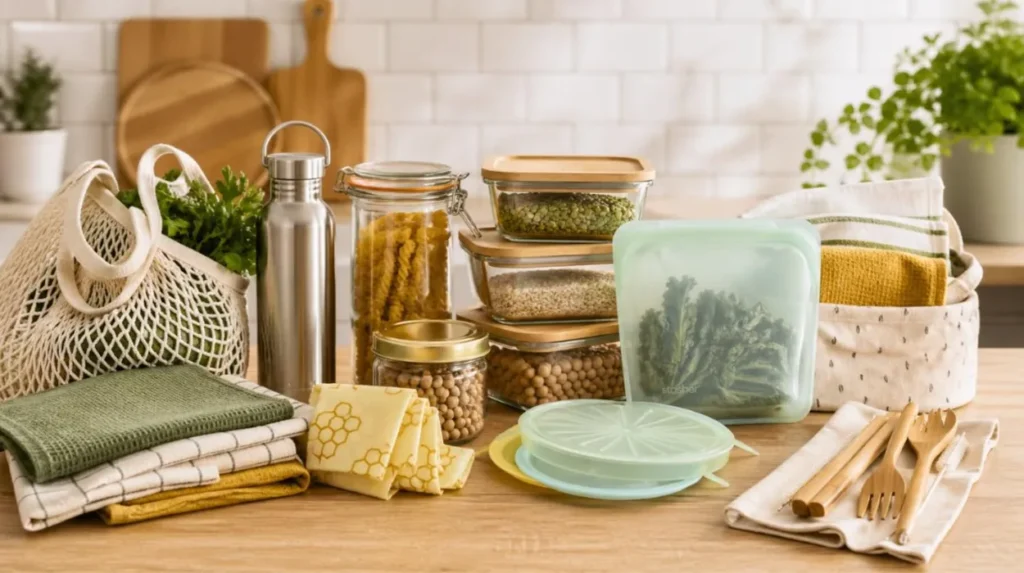
Reusable kitchen products help reduce repeated purchases of disposable household items. Practical examples include glass food containers, stainless-steel water bottles, washable dishcloths, durable lunch boxes and reusable baking mats. Choose products according to cleaning needs, expected lifespan, food safety and everyday use.
The kitchen is a practical starting point for reducing household waste because it contains many items used repeatedly throughout the day.
Glass food containers provide a reusable option for storing leftovers and preparing meals in advance. Their non-porous surfaces are suitable for many food-storage applications, although glass containers are heavier and breakable. Check whether lids are replaceable and whether the complete product is suitable for the intended temperature.
Stainless-steel lunch boxes and water bottles offer durable alternatives to disposable food packaging and bottled drinks. Their useful life depends on construction quality, cleaning and maintenance. Shoppers should inspect seals, closures and replacement-part availability before purchasing.
Washable dishcloths replace disposable kitchen wipes in suitable cleaning tasks. They require regular laundering and thorough drying to maintain hygiene. Separate cloths for food-preparation surfaces, general cleaning and bathrooms help prevent cross-contamination.
Reusable baking mats provide an alternative to single-use baking parchment for compatible recipes and oven temperatures. Follow the manufacturer’s temperature limits and cleaning instructions. Damaged or deteriorating mats require replacement.
Beeswax-coated fabric wraps and reusable silicone food covers also provide options for covering certain foods and containers. Their suitability depends on food type, temperature and the manufacturer’s instructions. They are not appropriate substitutes for every food-storage method.
The best purchases are those that fit established routines. A person who regularly prepares packed lunches benefits from reusable containers. A household that frequently drinks tap water benefits from refillable bottles. People who cook at home regularly gain more value from durable kitchen tools than from specialist products used occasionally.
When shopping locally, prioritise easy cleaning, sturdy construction, replaceable components and clear product-care instructions. These characteristics help extend product life and reduce the need for frequent replacements.
Where Can People Buy Refillable Cleaning and Personal Care Products Near Headingley?
Refillable cleaning and personal care products reduce dependence on single-use packaging when customers reuse suitable containers. Shoppers should check Leeds-area refill retailers for current product ranges, hygiene requirements, container policies and opening hours before travelling from Headingley.
Refill shopping involves purchasing a product without repeatedly buying a new primary container. Customers bring an approved container or purchase a reusable one and refill it according to the retailer’s procedures.
Common refill categories include washing-up liquid, laundry detergent, multipurpose cleaner, shampoo, conditioner and hand wash. Individual shops stock different ranges, and some specialise in particular categories.
Headingley shoppers should confirm whether a retailer offers genuine refills rather than simply selling products in recyclable packaging. These are different services. A recyclable bottle still requires collection and processing, whereas a suitable refill system enables the same container to be used repeatedly.
Before refilling a container, check the retailer’s rules. Some businesses require clean, dry containers, while others provide containers for particular products. Containers previously used for food are not automatically suitable for chemicals or cleaning liquids.
Product labels are especially important for household cleaners. Read dilution instructions, storage requirements and safety warnings. Keep chemicals in their original labelled containers whenever possible, and never mix cleaning products unless the manufacturer explicitly directs it.
Personal care products also require appropriate storage and handling. Refillable systems should maintain product quality and minimise contamination. Follow the retailer’s instructions rather than transferring products into unsuitable containers.
Refill shopping works best when the journey fits an existing routine. Combining a refill visit with a regular shopping trip reduces unnecessary travel. Choosing concentrated products, where appropriate, can also reduce packaging and transport requirements.
Shoppers who cannot locate a suitable refill service in Headingley should search the wider Leeds area and verify availability directly with individual businesses. Local services change, so current confirmation is more reliable than assuming a shop offers a particular product category.
How Can Second-Hand Shopping Support Sustainable Living in Headingley?
Second-hand shopping extends the useful life of household goods by finding new owners for existing products. Headingley shoppers can investigate charity shops, pre-owned furniture sellers, community reuse schemes and online local listings for suitable items that meet safety and quality requirements.
Buying second-hand products reduces the need to manufacture replacements when an existing item remains functional. It also helps prevent usable household goods from entering the waste stream prematurely.
Typical pre-owned purchases include crockery, books, lamps, storage baskets, desks, chairs and small decorative objects. Examples vary with stock, season and donations, so shoppers should inspect listings or visit retailers to confirm availability.
Students and visitors staying in Headingley often need practical household equipment for temporary accommodation. Purchasing suitable pre-owned items can provide an alternative to buying everything new. Residents furnishing longer-term homes can also benefit from checking second-hand options before purchasing new furniture.
Condition is important. Inspect furniture for structural damage, unstable legs, broken fasteners and signs of damp. Check electrical goods carefully and purchase them from sources that provide appropriate safety information and testing where required.
Mattresses, upholstered furniture and other fabric-covered items need particular attention. Inspect them for cleanliness, odours, damage and signs of pest infestation. Avoid products whose safety or hygiene cannot be established.
Charity shops have variable stock and do not necessarily accept every category of donation. Contact a shop before transporting large household items. Some organisations operate separate furniture collection or reuse services.
Online community listings can help people find goods offered by nearby residents. Check the seller’s description, dimensions, collection arrangements and condition before agreeing to a purchase. Use sensible personal-safety precautions when arranging collections.
The environmental value of second-hand shopping depends on the purchase replacing a new item or extending the life of something already manufactured. Buying unnecessary second-hand goods still consumes resources and storage space. Select items that fulfil a genuine need and remain useful.
For more background on how the neighbourhood developed, connect your shopping journey with the [Headingley History and Heritage Guide] to explore the area’s historical character alongside its contemporary independent businesses and residential life.
How Can Shoppers Identify Genuinely Sustainable Household Products?
Genuinely sustainable household products combine practical durability with reduced resource consumption, responsible materials and appropriate end-of-life management. Shoppers should compare product lifespans, repair options, packaging, cleaning requirements and independently verifiable environmental claims instead of relying on labels or marketing language alone.
Environmental claims describe different product characteristics, and these characteristics are not interchangeable. A product described as recyclable is not necessarily reusable. A biodegradable item does not necessarily break down quickly in ordinary household waste. A product made from recycled material is not automatically durable.
Understanding these distinctions helps Headingley shoppers make better purchasing decisions.
Durability and repairability
Durability describes how well a product withstands regular use. Repairability refers to the ability to restore a damaged product to working condition.
For example, a saucepan with a replaceable handle is easier to maintain than one that requires complete replacement after handle damage. A vacuum cleaner with available spare parts offers a practical advantage over a model that cannot be repaired economically.
Material selection
Materials influence manufacturing impacts, product weight, cleaning requirements and disposal options. Stainless steel, glass, wood, cotton and recycled plastics each have different characteristics.
Glass containers are reusable and suitable for many food-storage applications, but their weight and fragility affect transport and handling. Cotton bags are washable, but their production requires resources. Recycled plastic products can reduce demand for virgin plastic, although their durability and recyclability depend on the specific material and product design.
No single material is the best choice for every application.
Packaging
Look for products with minimal unnecessary packaging and packaging that can be reused or recycled through available local systems. Avoid assuming that a recyclable symbol guarantees acceptance in Leeds household collections.
The actual recycling route depends on the packaging material, local collection arrangements and any restrictions imposed by the relevant waste service.
Environmental labels
The UK Government’s Green Claims Code provides guidance for businesses making environmental claims. The Competition and Markets Authority published the code in 2021 to help businesses communicate environmental benefits accurately and clearly.
Consumers can use its principles when assessing claims such as environmentally friendly, sustainable, natural and planet-friendly. Look for specific evidence rather than broad statements.
A product with a verifiable material specification, clear maintenance instructions and a realistic expected lifespan provides more useful information than one relying on vague environmental promises.
Which Reusable Shopping and Food Storage Products Reduce Household Waste?
Reusable shopping and food-storage products reduce waste when they replace disposable alternatives over repeated uses. Examples include washable shopping bags, refillable water bottles, reusable takeaway cups and durable food containers. Their effectiveness depends on regular use, cleaning, maintenance and appropriate replacement.
Shopping bags are among the simplest reusable products to incorporate into everyday routines. Keep washable bags near the front door, in a work bag or in a regularly used backpack. This reduces the likelihood of purchasing additional carrier bags during routine shopping trips.
Wash reusable bags when they become dirty, especially after carrying raw food, leaking products or unwrapped groceries. Separate bags used for raw meat from those used for other shopping.
Refillable water bottles support repeated use throughout the day. Select a bottle that is easy to clean and appropriate for the drinks being carried. Inspect seals and lids regularly, and follow the manufacturer’s cleaning instructions.
Reusable takeaway cups suit people who regularly buy hot drinks away from home. Check whether a café accepts customer cups and whether its hygiene procedures permit their use. Participation varies between businesses, so do not assume every café offers a refill discount.
Food-storage containers help households store leftovers, prepare lunches and organise ingredients. Standardised container sizes simplify storage and make it easier to match lids with their bases.
Silicone food bags and reusable covers provide additional storage options. Check their compatibility with dishwashers, freezers, microwaves or ovens before using them in these appliances.
For Headingley visitors, a compact reusable kit can cover common daily needs. A water bottle, shopping bag and food container provide a practical starting point without requiring a large collection of specialist products.
The main consideration is repetition. A product delivers its intended benefit when it becomes part of a consistent routine and replaces disposable purchases rather than simply adding another possession.
How Do Leeds Recycling and Reuse Services Complement Eco-Friendly Shopping?
Leeds recycling and reuse services complement sustainable shopping by helping households manage products after their useful lives. Residents should follow Leeds City Council guidance on household collections, recycling centres, accepted materials and waste disposal rather than assuming every item belongs in the same recycling container.
Sustainable shopping is only one part of responsible household resource management. Reusing existing items, repairing damaged products and separating waste correctly also reduce unnecessary disposal.
Leeds City Council provides information about local waste collections, recycling facilities and household waste management. Residents should consult the council’s current guidance for accepted materials, collection arrangements and recycling centre requirements.
Household recycling depends on the material and the facilities available. Paper, cardboard, glass, metals and certain plastics have different processing requirements. Not every plastic product is accepted through every household collection service.
Electrical equipment requires particular care. Under the UK’s Waste Electrical and Electronic Equipment regulations, electrical and electronic products are subject to specific collection and treatment arrangements. Items such as kettles, chargers, lamps and small appliances should not automatically be placed in general household waste.
Batteries also require appropriate disposal. Certain battery types present fire risks when damaged or placed in unsuitable waste streams. Follow local council guidance and use designated collection points where provided.
Furniture and household goods that remain functional are often better candidates for reuse than disposal. Donate suitable items to organisations that accept them, offer them through local reuse networks or use an appropriate collection service.
Before donating goods, check the receiving organisation’s requirements. Damaged, unsafe or unhygienic products are not automatically suitable for redistribution.
Packaging reduction and recycling also serve different purposes. Reusing a container prevents the immediate need for another container, while recycling processes an accepted waste material into a usable material stream. Both have a role, but avoiding unnecessary waste and extending product life are important starting points.
Visitors staying in temporary accommodation should check the property’s recycling instructions before disposing of packaging or unwanted household items. Waste arrangements vary between accommodation types and collection systems.
How Can Students, Tourists and Remote Workers Shop More Sustainably in Headingley?
Students, tourists and remote workers can shop sustainably in Headingley by prioritising portable reusable essentials, purchasing only what they need and checking local second-hand and refill options. Planning purchases around accommodation, luggage space and length of stay helps prevent unnecessary spending and waste.
Different visitors have different household requirements. A tourist staying for two nights needs fewer household products than a student furnishing a rented room or a remote worker spending several months in Leeds.
Tourists benefit from portable products that fit easily into luggage. A refillable water bottle, reusable shopping bag and compact food container support everyday activities without requiring bulky equipment.
Visitors should check their accommodation’s facilities before purchasing kitchen products. A hotel room, serviced apartment and self-catering flat provide different opportunities for preparing food, washing reusable items and storing household essentials.
Students often need practical items such as crockery, storage containers, laundry bags and cleaning cloths. Purchasing suitable second-hand goods can reduce initial expenses while extending the life of existing products. Before buying, check tenancy arrangements and whether the accommodation already supplies essential equipment.
International students should also consider luggage restrictions and the availability of everyday products locally. Buying heavy household equipment before travelling creates avoidable transport demands when similar items are available after arrival.
Remote workers and domestic business travellers benefit from reusable products that fit their daily routines. A durable travel mug, water bottle, lunch container and reusable shopping bag cover common needs during workdays.
Headingley’s cafés, shops and public spaces form part of the wider neighbourhood environment, but facilities differ between venues. Check opening hours, seating policies, refill arrangements and other relevant details before planning a visit.
People staying longer can establish a small collection of household essentials and purchase additional items only when a clear need arises. Before leaving temporary accommodation, they should arrange to donate or responsibly redistribute suitable goods rather than abandon them.
These approaches reduce unnecessary purchases, simplify travel and support more efficient use of household resources.
How Can Households Calculate the Value of Reusable Products?
The financial value of a reusable product depends on its purchase price, maintenance costs, useful lifespan and the disposable products it replaces. Comparing total costs over a realistic period helps shoppers distinguish genuine savings from purchases that offer little practical or financial benefit.
A simple cost comparison provides a useful starting point. Consider a reusable product’s initial cost, the cost of cleaning or maintenance and the money saved by avoiding disposable alternatives.
For example, a reusable water bottle costs £12. If it replaces bottled water purchases worth £1 each on 30 occasions, the avoided expenditure totals £30. Subtracting the bottle’s £12 purchase price gives an illustrative saving of £18 before cleaning costs and other considerations.
This example assumes that the bottle actually replaces 30 purchases. It is not a forecast of savings for every shopper.
A reusable shopping bag can be assessed in the same way. If a household already owns several suitable bags, using those bags is more economical than purchasing additional ones.
Cleaning costs also matter. Reusable cloths require laundering, while food containers need washing. The financial and environmental cost of these activities depends on the household’s existing washing routine, water consumption and energy use.
A product’s lifespan influences the comparison. A durable item used for years spreads its initial cost across many uses. A poorly made item that breaks quickly offers less value and requires earlier replacement.
Shoppers should also consider whether a product replaces something they already own. Replacing a functional set of containers with a new supposedly eco-friendly set creates an additional purchase without necessarily reducing waste.
The most reliable financial approach is to use existing possessions first, identify repeated disposable purchases and select reusable replacements that meet those specific needs.
What Should Shoppers Know About Sustainable Shopping Regulations and Environmental Claims in the UK?
UK consumer protection rules help shoppers assess environmental claims and product information. The Green Claims Code guides businesses on environmental marketing, while product safety requirements and waste regulations govern other aspects of purchasing, use and disposal. Check official guidance when evaluating specific claims.
Environmental marketing influences how retailers describe household goods. Terms such as eco-friendly, green, sustainable and environmentally responsible communicate potential benefits, but their meaning depends on the evidence supporting them.
The Competition and Markets Authority’s Green Claims Code sets out six principles for environmental claims. Claims should be truthful and accurate, clear and unambiguous, and should not omit or hide important information. Comparisons must be fair and meaningful, claims must consider the full lifecycle where relevant, and supporting evidence must be available.
These principles help consumers assess whether a product’s advertised benefits match its actual characteristics.
For example, a cleaning product described as environmentally friendly should have evidence supporting that claim. A container labelled recyclable should not be assumed to be accepted by every local recycling service.
The UK also has regulations addressing product safety and waste management. Electrical equipment, batteries and certain packaging materials are subject to specific requirements. These rules affect how products are sold, used, collected and processed.
Shoppers should distinguish between legal requirements, voluntary environmental certifications and general marketing statements. A certification provides useful information only when its standards and scope are understood.
For current consumer guidance, consult the official websites of the Competition and Markets Authority, the UK Government and Leeds City Council. These sources provide more reliable information than unverified claims on retailer listings or social media.
How Can Headingley Become More Sustainable Through Everyday Shopping Choices?
Everyday shopping choices support more sustainable resource use when residents and visitors prioritise existing possessions, durable replacements, reuse and responsible disposal. Headingley shoppers can begin with practical household changes, investigate suitable local services and review their purchasing habits regularly.
Sustainable shopping does not require replacing every household item with a product marketed as environmentally friendly. It begins with reducing unnecessary consumption and making better use of goods already available.
First, identify repeated purchases and unnecessary waste. Examples include disposable shopping bags, frequently replaced storage containers and cleaning products sold in single-use packaging.
Second, choose appropriate alternatives. These include reusable shopping bags, refillable bottles, washable cleaning cloths and durable kitchen containers. Select products that match actual household needs and remain easy to maintain.
Third, manage unwanted possessions responsibly. Repair functional items where practical, donate suitable goods and follow local guidance when recycling or disposing of products that have reached the end of their useful lives.
Headingley’s independent retail environment, residential community and student population make it a relevant place to explore these practices. However, individual retailers differ in the products and services they provide. Confirming current availability is essential when planning a dedicated shopping trip.
Households should also avoid unnecessary journeys. Combining shopping with an existing trip, walking where practical and checking stock before travelling can reduce wasted time and transport-related impacts.
Over time, small purchasing changes create more consistent habits. The objective is to reduce avoidable waste, extend product lifespans and make household consumption more efficient.
For visitors, these habits offer a practical way to explore local shops while avoiding unnecessary purchases. For residents, they support more considered spending and responsible household management.