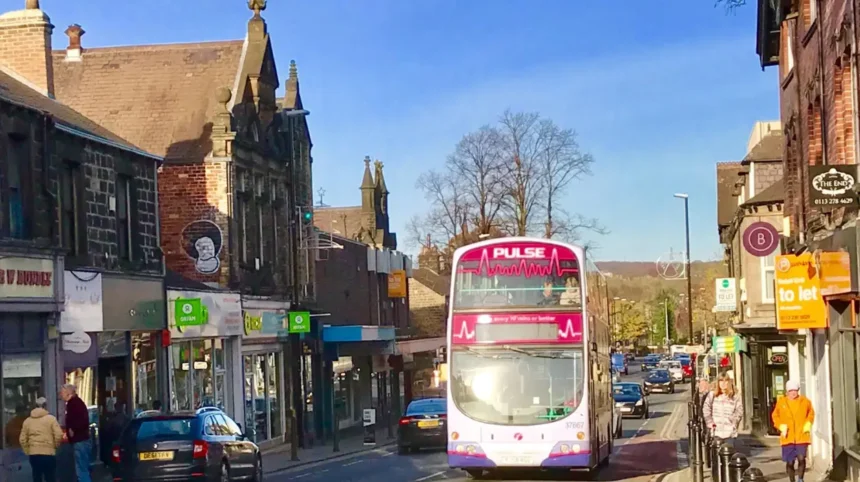
Accessible bus travel is an important part of getting around Headingley and the wider Leeds area. Disabled passengers, older travellers and people with temporary mobility requirements use local buses to reach shops, healthcare services, visitor attractions, railway stations and other destinations.
- What accessibility features are available on buses serving Headingley?
- How can disabled passengers plan an accessible bus journey in Headingley?
- What happens when a wheelchair user boards a bus?
- Are mobility scooters allowed on buses in Headingley?
- How do blind and partially sighted passengers use buses in Headingley?
- How do deaf and hard-of-hearing passengers access bus information?
- What concessionary bus travel is available for disabled passengers?
- How accessible are bus stops and streets in Headingley?
- How can tourists and visitors make accessible bus travel easier?
- What should passengers do when accessible bus travel does not go as planned?
- How is accessible bus travel in Headingley likely to develop?
- What is the key information disabled passengers should remember before travelling by bus in Headingley?
Headingley is a busy district in north-west Leeds. Its main transport corridor includes Headingley Lane and Otley Road, which connect the area with Leeds city centre and surrounding neighbourhoods. Local bus services form a major part of the public transport network.
Modern accessible buses are designed around national accessibility standards. Features such as low floors, wheelchair spaces, ramps, priority seating, visual information and audio announcements help passengers travel independently. Accessibility also depends on bus stops, pavements, journey information and staff support.
This guide explains how accessible bus travel works in Headingley, what disabled passengers can expect, and how to plan a journey with mobility requirements in mind.
What accessibility features are available on buses serving Headingley?
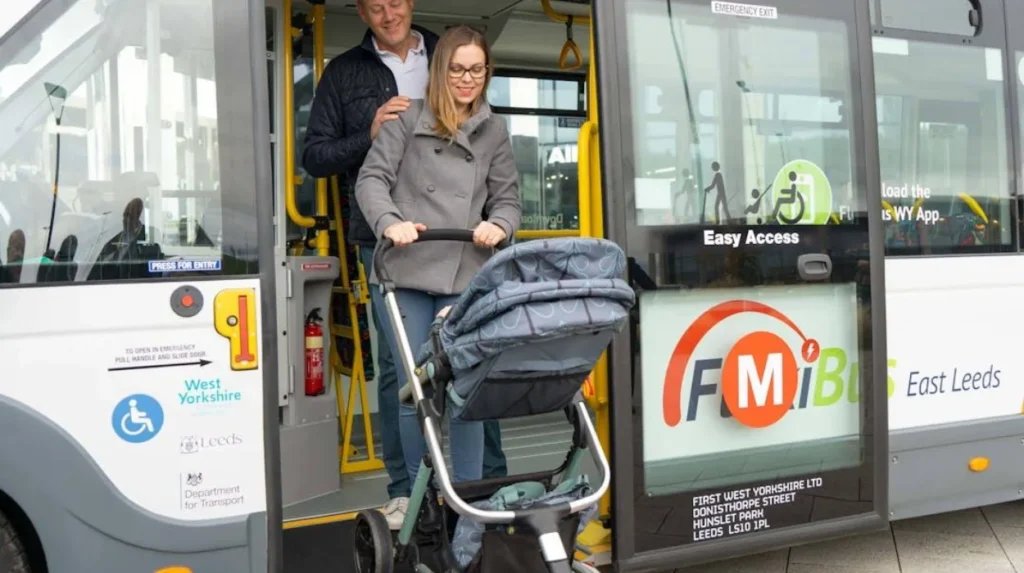
Buses serving Headingley generally provide low-floor access, wheelchair spaces, boarding ramps and priority seating. Accessibility features are supported by national vehicle standards, while operators and local authorities provide journey information, accessible infrastructure and assistance arrangements for disabled passengers travelling through Leeds.
The most important accessibility feature on a modern local bus is step-free boarding. A low-floor bus reduces the height difference between the pavement and the vehicle entrance. This design helps wheelchair users and passengers who find steps difficult to use.
Most accessible buses also carry a boarding ramp. The driver deploys the ramp when a passenger needs wheelchair access. The ramp creates a route between the pavement and the bus floor.
Low-floor vehicle design
A low-floor bus has a passenger area designed to reduce or remove internal steps near the entrance. This improves access for wheelchair users and people using walking aids.
The Equality Act 2010 provides the wider legal framework for preventing discrimination against disabled people in services. Public transport accessibility is also supported by specific vehicle accessibility requirements.
The Public Service Vehicles Accessibility Regulations set technical standards for buses and coaches used on public services. Requirements cover features including boarding arrangements, wheelchair accommodation and passenger information equipment.
Wheelchair spaces and priority areas
Accessible buses normally include a designated wheelchair space. This area is positioned to allow a wheelchair user to remain safely within the passenger compartment during the journey.
Priority seating is intended for passengers who have greater difficulty standing. Examples include disabled passengers, older people, pregnant passengers and people with temporary injuries.
Priority spaces support access but do not remove the need for consideration from other passengers. A busy bus creates practical challenges when the wheelchair space or priority seats are already occupied.
Passengers travelling with mobility equipment should check operator guidance before travelling. Different equipment types have different dimensions and safety requirements.
Audio and visual passenger information
Passenger information systems help people identify where they are and when to leave the bus. Audio announcements are particularly useful for blind and partially sighted passengers. Visual displays support deaf and hard-of-hearing passengers.
The Bus Services Act 2017 introduced powers relating to accessible information on local bus services in Great Britain. Accessible information requirements have increased the importance of audio and visual next-stop information.
For passengers unfamiliar with Headingley, clear information reduces dependence on asking other passengers for directions. This is particularly relevant for tourists, business visitors and people travelling independently.
How can disabled passengers plan an accessible bus journey in Headingley?
Disabled passengers should plan accessible bus journeys by checking routes, stop locations, service times and vehicle information before travelling. Allowing extra time, identifying suitable boarding points and reviewing operator accessibility guidance helps passengers manage mobility requirements and unexpected service changes effectively.
Journey planning begins with identifying the starting point and destination. Headingley has several important bus corridors, including Otley Road and Headingley Lane. Services connect the district with Leeds city centre and other parts of the metropolitan area.
West Yorkshire public transport information is provided through regional transport bodies and operators. Timetables, route maps and live service information help passengers understand available travel options.
Check the exact bus stop
Not every stop has identical physical conditions. Pavement width, kerb height, shelter design and surrounding street layouts affect accessibility.
Passengers using a wheelchair or mobility aid benefit from identifying the precise stop before leaving home or accommodation. This reduces uncertainty when approaching an unfamiliar location.
A bus needs sufficient space beside the stop for safe ramp deployment. Vehicles also need to stop close enough to the kerb to create a practical boarding route.
Obstructions on the pavement can affect access. Examples include parked vehicles, street furniture and temporary roadworks.
Allow additional journey time
Accessible travel planning should include time for reaching the stop, waiting for the service and boarding the bus.
A journey that appears short on a timetable can take longer when a passenger needs step-free routes or has reduced walking speed. Visitors should also allow time to locate the correct stop in Headingley’s busy main streets.
Service disruption is another important factor. Roadworks, traffic congestion and diversions can change normal stopping arrangements.
Checking live travel information before departure helps passengers identify significant changes. Where possible, passengers should retain an alternative route or contact method.
Review operator information
Bus operators publish accessibility policies and customer guidance. This information explains vehicle features, assistance procedures and contact arrangements.
Passengers with specific needs should review this guidance before a first journey. Examples include users of powered wheelchairs, mobility scooters and assistance dogs.
The local transport network also provides information about concessionary travel and eligibility. National concessionary schemes and local arrangements have different rules.
What happens when a wheelchair user boards a bus?
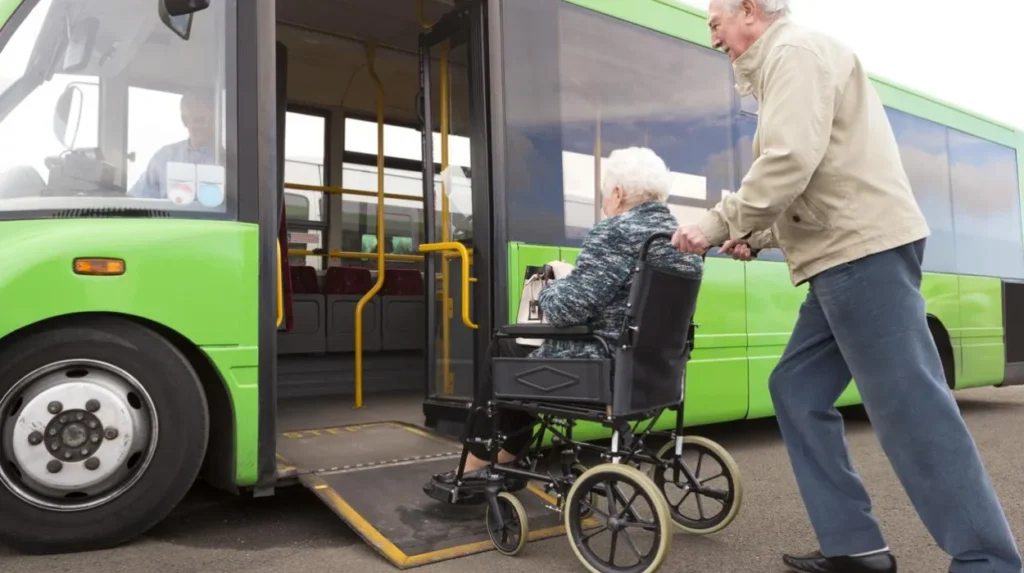
A wheelchair user can request access to the bus, after which the driver deploys the boarding ramp where necessary. The passenger enters the designated wheelchair area, positions the wheelchair safely and follows the vehicle operator’s instructions throughout the journey.
Boarding begins when the bus stops at a suitable position. The passenger should make their presence clear to the driver.
The driver lowers or kneels the bus where the vehicle has this feature and deploys the ramp when required. The passenger then boards and moves to the designated wheelchair space.
Using the designated wheelchair space
The wheelchair space is designed for a passenger travelling in their wheelchair. The position and restraint arrangements depend on the vehicle.
Passengers should follow the instructions displayed inside the bus. The driver can also provide practical guidance.
The designated area is an essential part of accessible public transport. Its availability can determine whether a wheelchair user can make a journey independently.
The legal position surrounding wheelchair spaces has been shaped by court decisions and equality law. Operators have duties to make reasonable adjustments and to operate their services without unlawful discrimination.
When the wheelchair space is occupied
A wheelchair space can be temporarily occupied by another passenger or by items such as pushchairs. Bus operators have policies covering how priority for the space is managed.
Passengers should follow the driver’s instructions. The driver has responsibility for the safe operation of the vehicle.
A passenger planning a time-sensitive journey should allow for the possibility that the next bus is more suitable. This is particularly important during busy periods around Headingley.
Headingley experiences increased passenger activity during university terms, major sporting events and peak commuting periods. Travellers should consider these conditions when planning accessible journeys.
Are mobility scooters allowed on buses in Headingley?
Mobility scooter access depends on the scooter type, dimensions, safety requirements and the individual bus operator’s policy. Passengers should obtain approval before travelling where required and should never assume that every mobility scooter is suitable for carriage on every service.
Mobility scooters are not all built to the same size or weight. Some are designed for compact urban use, while others are larger and heavier.
Bus operators therefore use specific acceptance criteria. These rules address the dimensions of the vehicle, turning space, ramp capacity and safety inside the wheelchair area.
Check the operator’s mobility scooter policy
Passengers should contact the relevant operator before travelling with a mobility scooter. Some operators use a permit or assessment process.
An assessment confirms that the scooter can enter, turn and position safely within the bus. It also checks whether the passenger can use the vehicle safely.
Approval arrangements vary between operators. A permit from one operator does not automatically establish acceptance on every bus service.
Plan for alternative travel
Passengers whose mobility equipment does not meet bus requirements should identify alternative accessible transport before travelling.
Accessible taxis and rail services can form part of a wider journey. A multi-stage journey requires accessibility checks at every stage.
This approach is especially useful for visitors who do not know the local transport system. Confirming arrangements before travelling prevents disruption after arriving at a bus stop.
How do blind and partially sighted passengers use buses in Headingley?
Blind and partially sighted passengers use accessible bus services through clear stop information, driver assistance, audio announcements and journey planning tools. Passengers can tell the driver their destination or requested stop to receive practical support during unfamiliar journeys.
Visual impairment creates specific challenges during bus travel. Identifying the correct service, locating the entrance and knowing when to leave the bus all require accessible information.
Audio announcements provide direct location information without requiring passengers to read a screen. Next-stop announcements are particularly important for independent travel.
Identifying the correct bus
Passengers can ask the driver to confirm the route number and destination. At a busy stop, this helps distinguish between services arriving close together.
Journey planning before departure also reduces uncertainty. Knowing the route number, direction and major landmarks provides a clearer travel plan.
A passenger can tell the driver which stop they need. This provides additional support when travelling through an unfamiliar part of Leeds.
Assistance dogs and bus travel
Assistance dogs support many disabled passengers during daily travel. Public transport services have duties under equality legislation regarding access for disabled people and their assistance dogs.
Passengers travelling with an assistance dog should ensure the dog is positioned safely and does not obstruct the aisle.
The driver and other passengers also have responsibilities for maintaining a safe environment during the journey.
How do deaf and hard-of-hearing passengers access bus information?
Deaf and hard-of-hearing passengers benefit from visual displays, digital journey information and clearly presented route details. Accessible information systems provide alternatives to spoken announcements and help passengers identify services, stops and service changes throughout their journey.
Bus travel involves both visual and spoken communication. A passenger who cannot hear an announcement needs another way to receive essential information.
Digital displays on buses provide route numbers and destination details. Electronic passenger information can also identify upcoming stops.
Visual information on the bus
Visual displays support passengers by presenting information in written form. Common information includes the next stop, route details and service messages.
The usefulness of a display depends on its location, size and readability. Passengers should also consider whether a particular bus route has the information equipment they need.
National accessible information requirements have strengthened expectations around the provision of passenger information.
Digital journey planning
Websites and mobile applications provide another source of information before travel. Timetables, live departures and service alerts can be checked without relying on spoken communication.
Passengers should save important information before beginning a journey. Mobile signals and battery levels are not always reliable during travel.
A written note containing the destination and key bus stop can also support communication with staff.
What concessionary bus travel is available for disabled passengers?
Eligible disabled people can access concessionary bus travel through the English National Concessionary Travel Scheme and locally administered passes. Eligibility, application procedures and travel conditions are set through national rules and local authority administration rather than individual bus operators.
The English National Concessionary Travel Scheme provides eligible older and disabled people with free off-peak travel on local buses across England.
Local authorities administer applications for concessionary passes. Eligibility is based on nationally defined categories.
Disabled person’s bus passes
A disabled person’s concessionary pass is available to people who meet qualifying criteria. Eligibility categories are linked to the statutory scheme and include specified disabilities.
Applicants normally provide evidence supporting their eligibility. The local authority responsible for the application process confirms the required documentation.
Visitors should remember that a concessionary pass is a travel entitlement rather than a general identification document.
Check local travel conditions
The national scheme provides a baseline entitlement. Local arrangements can provide additional benefits.
The time when free travel begins and local rules on other services should be checked before travelling. Conditions can change through policy decisions.
Passengers should use official local authority and regional transport information for current application and usage rules.
How accessible are bus stops and streets in Headingley?
Accessible bus travel depends on both the vehicle and the surrounding street environment. Kerb design, pavement space, crossings, lighting and temporary obstructions affect whether disabled passengers can reach a stop and board a bus safely and independently.
A fully accessible bus does not solve every mobility barrier. The passenger must first reach the stop and move between destinations.
Headingley’s urban environment includes busy roads, residential streets, shops, educational buildings and leisure venues. Accessibility conditions vary between locations.
Pavements and crossings
Pavement quality affects wheelchair users, people using walking aids and people with visual impairments. Narrow paths and uneven surfaces can make a direct route difficult.
Controlled pedestrian crossings provide structured crossing points on busy roads. Tactile paving helps blind and partially sighted people identify crossing areas.
Temporary works can change normal pedestrian routes. Passengers should check for planned disruptions when travelling to unfamiliar locations.
Bus stop infrastructure
Bus stops can include shelters, seating, route information and raised kerbs. Each feature contributes to the overall passenger experience.
Raised kerbs help reduce the vertical gap between the pavement and a low-floor bus. Clear stopping areas also help drivers position the vehicle correctly.
Local authorities and transport bodies manage infrastructure through different responsibilities and funding programmes.
As you explore Headingley’s transport network, its streets also reflect the development of the district over many generations. Read about the full [Insert Anchor Text for Headingley History Article Here] to understand its origins.
How can tourists and visitors make accessible bus travel easier?
Visitors can make accessible bus travel easier by researching routes before arrival, choosing accommodation near well-served corridors, saving official journey information and allowing extra time. Clear advance planning reduces dependence on unfamiliar streets and last-minute transport decisions.
Headingley attracts visitors for sport, culture, education and leisure. Visitors often travel without detailed knowledge of local streets or public transport arrangements.
Planning before arrival creates a more reliable journey.
Choose locations with good transport access
Accommodation close to major roads and frequent bus corridors provides more transport options. Visitors should check the walking route between their accommodation and the nearest bus stop.
A short distance on a map does not always indicate an accessible route. Road crossings, gradients and pavement conditions affect the practical journey.
Business travellers should also consider accessibility when selecting venues and meeting locations.
Keep essential information available
Passengers should keep the route number, destination and stop name available during the journey. Screenshots or printed information provide a backup when a mobile device cannot connect to the internet.
Official operator and regional transport information should be checked shortly before travel.
Visitors with complex mobility requirements benefit from contacting accommodation providers and transport operators in advance.
What should passengers do when accessible bus travel does not go as planned?
Passengers should prioritise safety, communicate their needs to transport staff and use official customer service channels when an accessibility problem occurs. Recording the route, time and nature of the issue provides clear information for complaints and service improvement processes.
Transport journeys can be affected by vehicle faults, diversions, overcrowding and infrastructure problems.
A passenger who cannot board safely should avoid taking unnecessary risks. Waiting for another service or arranging an alternative form of transport is safer than attempting unsafe boarding.
Report accessibility problems
A clear report should identify the date, time, route and location. It should explain what happened and how the issue affected the journey.
Examples of accessibility problems include an unavailable ramp, an obstructed wheelchair space, missing passenger information or a bus stop that cannot be reached safely.
Operators use customer reports as part of their service monitoring and complaint procedures.
Understand passenger rights
The Equality Act 2010 protects disabled people from discrimination in the provision of services.
Transport providers also operate within vehicle accessibility rules and wider passenger rights frameworks. A complaint process allows passengers to seek an explanation and raise concerns about service standards.
Where a problem relates to local infrastructure rather than the bus itself, the relevant local authority or transport body can be the appropriate organisation to contact.
Explore More Area Guide
Headingley Bicycle Storage: Secure Parking Facilities in Leeds
Headingley Hardware Shops and Household Repair Guide
How is accessible bus travel in Headingley likely to develop?
Accessible bus travel will continue to depend on modern vehicles, reliable passenger information and inclusive street design. National accessibility requirements, local transport investment and technological improvements are shaping a public transport system with stronger support for independent travel.
Accessibility is an ongoing transport issue rather than a completed infrastructure project. New buses improve access, but older streets and changing travel patterns require continued investment.
The development of passenger information systems is particularly important. Audio and visual information supports a wider range of travellers and reduces barriers for people using unfamiliar routes.
Vehicle accessibility and information standards
National standards establish a consistent framework for accessible public service vehicles. These standards influence the design and equipment of buses entering service.
Accessible information requirements also recognise that a journey depends on communication as well as physical access.
For Headingley passengers, these changes support more independent travel across the wider Leeds transport network.
Inclusive transport planning
Future transport planning needs to consider the complete journey. The complete journey includes the route from home or accommodation, the pavement, the crossing, the bus stop, the vehicle and the destination.
A barrier at any stage can prevent a passenger from completing the journey.
This approach is relevant to three broad groups: wheelchair users, people with sensory impairments and passengers with reduced mobility. Examples include a wheelchair user needing ramp access, a blind passenger needing audio stop information and an older traveller needing priority seating.
What is the key information disabled passengers should remember before travelling by bus in Headingley?
Disabled passengers should check the route, identify an accessible stop, understand their mobility equipment requirements and allow additional travel time. Modern buses provide important accessibility features, but successful journeys also depend on reliable information, suitable infrastructure and advance planning.
Accessible bus travel in Headingley combines vehicle design, legal standards, public infrastructure and practical preparation. Low-floor buses, ramps, wheelchair spaces and passenger information systems provide the foundation for inclusive travel.
Passengers should still plan around their individual requirements. A wheelchair user needs to understand vehicle access arrangements. A blind or partially sighted passenger benefits from clear stop information. A deaf or hard-of-hearing passenger benefits from visual journey information.
The Equality Act 2010 and public service vehicle accessibility standards provide an important legal framework. National concessionary travel arrangements also support eligible disabled passengers.
For tourists and other visitors, advance research is especially valuable. Knowing the route, stop location and destination before departure reduces uncertainty in an unfamiliar area.
Headingley’s position within the wider Leeds transport network provides access to city-centre services and neighbouring destinations. Accessible travel works best when every stage of the journey is considered.
Passengers should use official information from bus operators, Leeds City Council, West Yorkshire transport authorities and the UK Government when planning a journey or checking current rules. Transport services and policies change, while the core principles of accessible travel remain consistent: safe access, clear information, suitable assistance and an inclusive public transport environment.
Are buses in Headingley accessible for wheelchair users?
Most modern buses serving Headingley have low-floor access, wheelchair spaces and boarding ramps. Passengers should check the relevant bus operator’s accessibility information before travelling, particularly when using larger mobility equipment.