Headingley is one of Leeds’s best-known neighbourhoods for cycling, walking and public transport connections. Its mix of residential streets, student accommodation, independent businesses, educational facilities and sporting venues creates a practical need for secure bicycle storage. Cyclists travelling through Headingley need convenient places to leave their bikes while shopping, working, studying, visiting attractions or meeting friends.
- What types of bicycle storage and secure parking are available in Headingley?
- Where can cyclists find public bicycle parking in Headingley?
- Does Headingley railway station provide secure bicycle storage?
- Is the railway station bicycle parking covered?
- Is CCTV available at Headingley station?
- Who should use Headingley station cycle storage?
- What bicycle storage facilities are available at Leeds universities near Headingley?
- What does Leeds Beckett University provide?
- Can visitors use university cycle storage?
- Why are showers and lockers useful for cyclists?
- Are there bicycle parking facilities at Headingley Stadium?
- What should visitors check before attending a match?
- Is stadium bicycle parking suitable for overnight storage?
- What is the difference between public cycle stands and secure bicycle storage?
- How can cyclists protect their bicycles when parking in Headingley?
- Which bicycle locks should cyclists use?
- How should a bicycle be attached to a public stand?
- Should cyclists register their bicycles?
- What information should bicycle owners record?
- Are there secure bicycle parking facilities in Leeds city centre for Headingley visitors?
- Can Headingley cyclists use these city-centre facilities?
- How does the Hooplr bicycle parking system work?
- How should residents choose bicycle storage for homes and flats in Headingley?
- What storage options suit traditional Headingley houses?
- What should flat residents look for?
- How can students store bicycles in shared accommodation?
- How does Headingley’s cycling infrastructure support bicycle parking?
- Which local areas are relevant to cyclists?
- Why is bicycle parking important for sustainable transport?
- How can visitors plan bicycle parking when exploring Headingley?
- What should visitors consider before leaving a bicycle?
- How can cyclists combine bicycle travel with public transport?
- Why does Headingley’s historical development matter to cycling?
- What is the future of bicycle storage and secure parking in Headingley?
Bicycle storage and secure parking facilities help protect bicycles from theft, accidental damage and exposure to poor weather. They also support sustainable travel by making cycling a more practical option for short journeys across Leeds.
This guide explains the bicycle parking options available in Headingley, the importance of secure storage, how to choose suitable cycle parking and what visitors and residents need to check before leaving a bicycle unattended.
What types of bicycle storage and secure parking are available in Headingley?
Headingley offers several forms of bicycle parking, including public cycle stands, railway station storage, university cycle facilities and venue-based bicycle racks. These options serve commuters, students, residents and visitors, although access arrangements and security levels differ between individual locations.
Bicycle storage refers to designated facilities where cyclists leave bicycles temporarily or for longer periods. The facilities range from simple metal stands on public pavements to enclosed, access-controlled cycle rooms.
Headingley has a combination of residential and commercial areas. Otley Road, North Lane, Headingley Lane and Kirkstall Lane connect local shops, educational buildings, railway facilities and leisure destinations. Each area has different parking requirements.
The main bicycle storage options include:
- Public bicycle stands: Metal Sheffield stands or similar fixtures allow cyclists to secure their bicycle frames and wheels.
- Railway station cycle parking: Designated stands provide parking for passengers combining cycling with train journeys.
- University cycle storage: Educational campuses provide cycle stands, covered shelters and restricted-access storage for eligible users.
- Sports venue bicycle racks: Stadium facilities provide bicycle parking for spectators and visitors.
- Private residential storage: Secure sheds, garages and communal cycle rooms accommodate bicycles belonging to residents.
- Commercial premises storage: Some workplaces and businesses provide designated bicycle spaces for employees and customers.
These facilities do not provide identical protection. An uncovered public stand requires the cyclist to supply a suitable lock. An enclosed cycle store offers additional access control, while a private garage provides a different level of protection.
Cyclists should identify the exact facility, its opening arrangements and its security features before relying on it for extended parking.
Where can cyclists find public bicycle parking in Headingley?
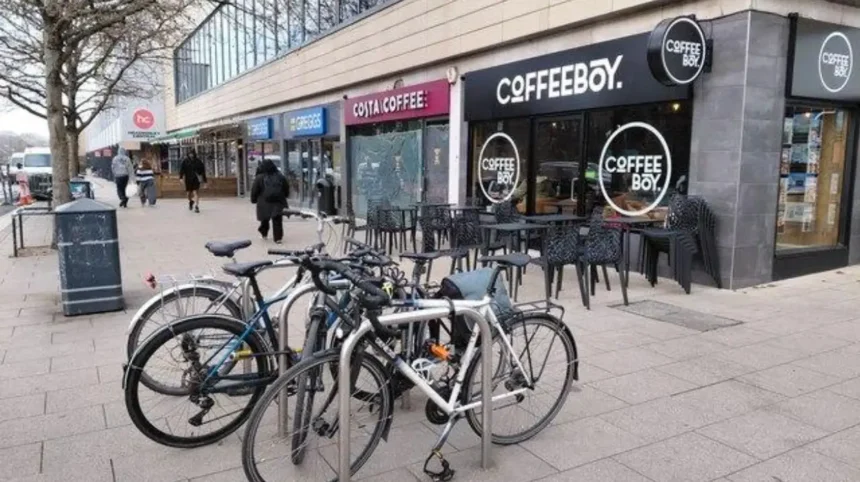
Public bicycle parking is recorded around Headingley Central, North Lane and other local streets. These facilities support short visits to shops, services and community destinations. Cyclists should inspect individual stands and confirm their current availability before parking.
Headingley’s commercial centre attracts residents, students and visitors throughout the week. Public cycle stands provide convenient parking near local destinations without requiring cyclists to enter private buildings.
The Headingley Neighbourhood Plan, published by Leeds City Council, identifies several locations with secure cycle parking infrastructure.
The plan specifically records facilities in the following areas:
- Outside Headingley Library.
- Around Headingley Central.
- On North Lane, outside the Natural Food Store.
The document also identifies a historical gap in cycle parking provision further south along Otley Road. This information provides a useful planning reference, but it does not guarantee that every recorded stand remains unchanged. Cyclists should check the current street layout.
What should cyclists know about Headingley Central?
Headingley Central is a local shopping and service destination around Otley Road. Its surrounding streets connect supermarkets, independent shops, food outlets and other everyday amenities.
Public bicycle racks in this commercial area help cyclists stop without carrying their bicycles into shops. They are particularly useful for short shopping trips and visits to nearby businesses.
Before leaving a bicycle, check that the stand is firmly fixed and allows the frame and wheels to be secured. Avoid attaching a bicycle to railings, pedestrian barriers or street furniture that obstructs public access.
Where can cyclists park near North Lane?
North Lane connects Headingley’s commercial centre with nearby residential streets and community facilities. The neighbourhood plan records cycle parking outside the Natural Food Store.
This location is relevant to cyclists visiting independent businesses and local services. However, the exact number of usable spaces and present condition of the stands require an on-site check.
Cyclists should choose a visible, well-lit stand and avoid leaving valuable accessories attached to an unattended bicycle.
Does Headingley railway station provide secure bicycle storage?
Headingley railway station provides 12 bicycle parking spaces in stands within its car park. Published station information confirms CCTV coverage, although the storage is unsheltered. Cyclists should check the latest station facilities before planning longer parking periods.
Headingley railway station is on Kirkstall Lane and serves passengers travelling between Leeds and destinations towards Harrogate and York.
The station provides an important interchange for people combining cycling and rail travel. A cyclist can ride to the station, secure a bicycle and continue the journey by train.
These details appear in published station information supplied through railway travel information services.
The station’s bicycle stands are useful for commuters and visitors making short rail connections. However, they are not the same as an enclosed, individually locked cycle locker.
Is the railway station bicycle parking covered?
No. The published information identifies the bicycle storage as unsheltered. This means bicycles remain exposed to rain, wind and other weather conditions.
Cyclists should use weather-resistant equipment and avoid leaving electronic accessories attached to their bicycles. A waterproof seat cover also helps protect exposed components.
Is CCTV available at Headingley station?
Yes. Published station information confirms CCTV coverage at the bicycle storage area.
CCTV provides an additional security measure, but it does not guarantee that a bicycle cannot be stolen. Cyclists still need to use a suitable lock and secure the frame to the stand.
Who should use Headingley station cycle storage?
The facility is particularly relevant to:
- Railway commuters travelling into Leeds.
- Students travelling between home and university.
- Visitors combining cycling with regional rail journeys.
- Residents using trains for longer journeys.
The 12-space capacity is limited. Cyclists should avoid assuming that an available space will always be present during busy commuting periods.
What bicycle storage facilities are available at Leeds universities near Headingley?
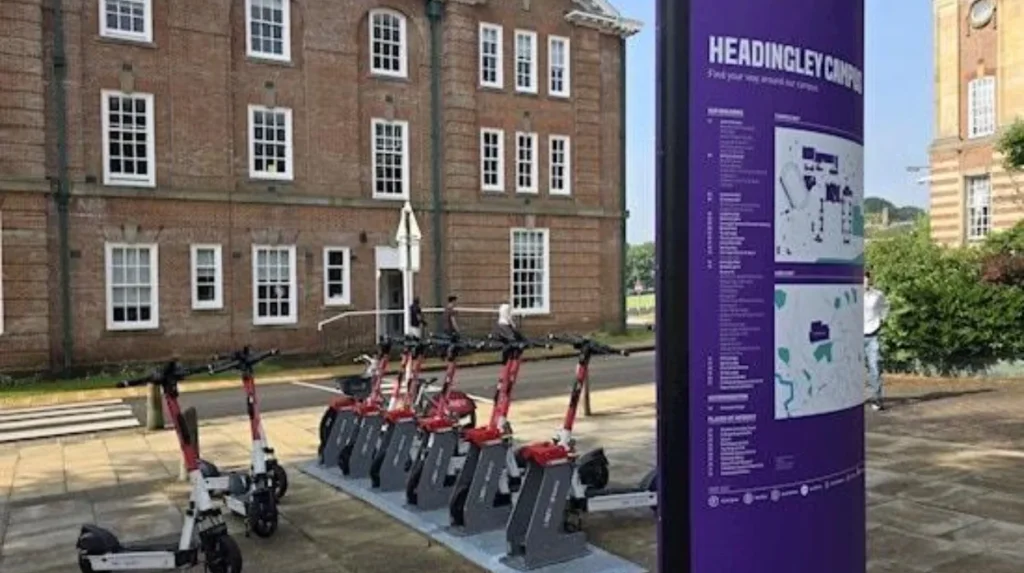
University bicycle storage includes public cycle stands, covered parking and restricted-access storage. Leeds Beckett University publishes details of cycle facilities across its campuses. Access to enclosed storage depends on university membership, staff status and individual building arrangements.
Headingley has a strong student population and several educational institutions. University cycle facilities are therefore an important part of the neighbourhood’s wider active-travel infrastructure.
Students and employees often need longer-term parking than visitors stopping briefly at a shop. Secure cycle rooms, covered stands and access-controlled storage provide different solutions for these requirements.
What does Leeds Beckett University provide?
Leeds Beckett University publishes a cycling facilities document covering its Headingley and City campuses.
The document identifies several types of facilities, including:
- Standard cycle stands.
- Covered bicycle storage.
- Secure cycle storage cages.
- Shower facilities.
- Lockers and changing facilities.
The published information includes facilities at buildings such as Macaulay, Priestley Hall and other university locations.
Some secure storage facilities have restricted access. The university’s facilities document identifies storage areas that require residents, staff or students to contact the appropriate reception or university department.
For example, the document records secure storage at the Headingley campus with access arrangements through reception. It also identifies covered storage and cycle stands at different buildings.
The document is useful for understanding the range of facilities, but its publication date means users should confirm current arrangements directly with Leeds Beckett University.
Can visitors use university cycle storage?
University bicycle storage is not automatically available to the general public.
Some stands are positioned outside buildings, while enclosed cycle rooms and secure cages operate under university access arrangements. Visitors should contact the university before relying on these facilities.
Students should check whether their accommodation or campus access arrangements include cycle storage. Staff members should confirm whether their building has a dedicated bicycle room.
Why are showers and lockers useful for cyclists?
Showers and lockers support people who cycle regularly to work or study. Cyclists can store clothing, change after travelling and keep personal equipment away from public areas.
These facilities improve the practicality of cycling for longer journeys. They also support people who combine cycling with a full working or academic day.
Are there bicycle parking facilities at Headingley Stadium?
Headingley Stadium provides bicycle racks for spectators and visitors attending sporting events. Yorkshire County Cricket Club confirms that bicycles are left at the owner’s discretion. Cyclists should therefore use their own locks and check event-specific arrangements before travelling.
Headingley Stadium is a major sporting destination in Leeds. The wider stadium complex includes the cricket ground operated by Yorkshire County Cricket Club and facilities associated with rugby league.
Matchdays attract large crowds, creating additional demand for convenient transport and bicycle parking.
Yorkshire County Cricket Club confirms that bicycle racks are available at the ground. Its published travel guidance also states that bicycles are left at the owner’s discretion.
This distinction is important. The presence of bicycle racks does not mean the venue operates a staffed bicycle storage service or guarantees protection against theft.
What should visitors check before attending a match?
Visitors should check the stadium’s official travel information before setting off.
Important considerations include:
- The location of available bicycle racks.
- Whether racks are accessible during the event.
- Whether temporary restrictions apply.
- Whether additional security arrangements are in place.
- Whether the bicycle needs to be collected before the venue closes.
Large sporting events also create busy pedestrian areas. Cyclists should avoid blocking entrances, emergency routes and accessible pathways.
Is stadium bicycle parking suitable for overnight storage?
The published information does not establish a dedicated overnight bicycle storage service. Visitors should not assume that bicycles can remain at the venue after an event.
Anyone needing overnight storage should arrange an alternative secure location and confirm access arrangements in advance.

What is the difference between public cycle stands and secure bicycle storage?
Public cycle stands provide basic parking through a fixed structure, while secure bicycle storage uses additional physical protection or controlled access. Enclosed cycle rooms, locked cages and monitored facilities offer different security arrangements for longer bicycle parking periods.
Understanding the difference between these facilities helps cyclists select an appropriate parking location.
A standard cycle stand allows a cyclist to attach a bicycle using a personal lock. The stand itself is usually accessible to the public and does not prevent unauthorised people from approaching the bicycle.
Secure bicycle storage introduces additional protective features. These include enclosed structures, restricted entry systems, stronger locking points and controlled access.
The main differences are:
- Open cycle stands: Publicly accessible metal stands that support short visits.
- Covered cycle parking: Sheltered spaces that protect bicycles from direct rainfall.
- Locked cycle cages: Enclosed areas with controlled entry for authorised users.
- Secure cycle rooms: Indoor facilities with access restrictions and designated bicycle stands.
- Individual cycle lockers: Lockable compartments designed for individual bicycle storage.
Leeds City Council’s Transport Supplementary Planning Document provides guidance on the design of long-stay cycle parking.
The council recommends enclosed, weather-protected and secure facilities. It also identifies good lighting, natural surveillance, secure doors and two-point bicycle locking as important design considerations. Leeds+1
Why does two-point bicycle locking matter?
Two-point locking means securing the bicycle at more than one location. A suitable stand allows cyclists to secure the frame and wheels rather than attaching only one component.
A strong D-lock combined with a secondary chain or cable provides additional protection. The arrangement makes it more difficult for thieves to remove the bicycle or its individual components.
What makes a cycle storage facility secure?
A well-designed facility combines physical security with practical accessibility.
Important features include:
- A strong, fixed locking structure.
- Restricted access where appropriate.
- Good lighting and visibility.
- CCTV coverage where available.
- Weather protection.
- Sufficient space between bicycles.
- Convenient access for different bicycle designs.
Cargo bikes and adapted cycles require additional space. Leeds City Council’s planning guidance specifically recognises the importance of accommodating these bicycle types.
How can cyclists protect their bicycles when parking in Headingley?
Cyclists should use two quality locks, secure the frame and wheels to an immovable stand and choose visible parking locations. Registering the bicycle, recording its serial number and removing detachable accessories provide additional protection against theft.
Bicycle security involves more than choosing a parking location. The quality of the lock, the way it is attached and the value of exposed accessories all influence the level of protection.
West Yorkshire Police and Police.uk provide practical bicycle theft prevention advice.
Which bicycle locks should cyclists use?
A high-quality D-lock is a common security choice. It uses a rigid metal structure to secure the bicycle frame to a fixed object.
A secondary chain or folding lock adds another layer of protection. Using different lock types increases the number of tools and methods required to remove the bicycle.
Police.uk recommends using two locks, including at least one D-lock, where possible. It also advises securing the frame and both wheels to a cycle stand. police.uk+1
How should a bicycle be attached to a public stand?
The frame should be secured directly to a fixed cycle stand. Cyclists should position the bicycle close to the stand to minimise the space available for tools.
The locking arrangement should include:
- The main bicycle frame.
- The rear wheel.
- The front wheel, using a second lock where necessary.
Quick-release wheels require particular attention. These components are easier to remove without additional security measures.
Should cyclists register their bicycles?
Yes. Registration creates a record that helps identify a bicycle if it is stolen and subsequently recovered.
Leeds City Council supports the BikeRegister scheme in partnership with West Yorkshire Police.
The council’s registration programme includes free marking events. Participants can bring their bicycles to an event, receive a tamper-proof QR code sticker and have their bicycle details added to the national database.
The registration system helps police identify recovered bicycles and reunite them with their owners. Leeds+1
What information should bicycle owners record?
Owners should maintain a record containing:
- Bicycle make and model.
- Frame serial number.
- Colour and distinguishing features.
- Purchase date and receipt.
- Photographs from different angles.
- Registration information.
- Insurance details, where applicable.
The frame number is commonly located underneath the bicycle near the bottom bracket, between the pedals.
Keeping this information in a secure digital location makes reporting a theft easier.
Are there secure bicycle parking facilities in Leeds city centre for Headingley visitors?
Leeds city centre has a dedicated secure cycle hangar scheme operated through the Hooplr smartphone application. These weatherproof facilities provide an alternative for cyclists travelling beyond Headingley, but they are located in the city centre rather than within Headingley itself.
Leeds City Council introduced secure cycle hangars in July 2026 in partnership with Hooplr and the West Yorkshire Combined Authority.
The facilities provide enclosed, weatherproof bicycle parking. They meet the Sold Secure Powered Cycle Diamond security accreditation and include secure ground-anchor locking points.
The published scheme includes nine standard cycle hangars and one cargo-bike hangar. Standard units accommodate up to six bicycles, while the cargo-bike unit accommodates two cargo or adapted cycles.
The locations include:
- St Anne’s Street.
- New Briggate.
- City Square.
- Park Square South.
- South Parade.
- Edward Street.
- Kirkgate Market.
- The Calls.
- Waterloo Street.
- Bond Street, for the cargo-bike hangar.
The published starting price is 50p for up to two hours. Users manage bookings, payments and access through the Hooplr smartphone application.
Can Headingley cyclists use these city-centre facilities?
Yes. Cyclists travelling from Headingley into central Leeds can use the city-centre scheme where a suitable space is available.
However, these hangars are not Headingley parking facilities. Their locations are in central Leeds and require cyclists to travel further into the city.
They are particularly relevant to people who cycle from Headingley to workplaces, shopping destinations or central business districts.
How does the Hooplr bicycle parking system work?
The system uses a smartphone application to manage access and payment.
The general process involves:
- Downloading the Hooplr application.
- Creating an account.
- Finding an available cycle hangar.
- Checking the parking price.
- Making a booking or starting a parking session.
- Using the application to lock and unlock the facility.
Bluetooth technology supports the locking and unlocking process.
Cyclists should check the application for current availability, prices and operating instructions before travelling.
How should residents choose bicycle storage for homes and flats in Headingley?
Residents should choose bicycle storage according to available space, access arrangements, bicycle value and the length of time the bicycle remains unattended. Secure garages, communal cycle rooms and purpose-built outdoor stores provide practical residential options.
Headingley includes traditional terraced houses, converted residential buildings, student accommodation and modern apartment developments.
These property types create different bicycle storage requirements. A homeowner with a garage has different options from a tenant living in a flat without private outdoor space.
What storage options suit traditional Headingley houses?
A secure garage or purpose-built garden shed provides a practical solution where sufficient space exists.
The storage area should have a strong door, reliable locking hardware and a convenient entrance. Cyclists should avoid placing bicycles in exposed shared passageways where they obstruct residents or provide easy access to thieves.
The UK Government’s parking design guidance recommends integrating cycle storage into residential layouts and avoiding inconvenient access routes through narrow rear alleys.
For terraced housing, direct and convenient access to the street is an important design consideration. GOV.UK+1
What should flat residents look for?
Apartment residents should check whether their building provides:
- An enclosed communal cycle room.
- Access-controlled bicycle storage.
- Ground-floor cycle stands.
- Covered outdoor bicycle shelters.
- Individual lockable cycle lockers.
Residents should confirm whether the storage facility is included in their tenancy or property agreement.
A bicycle should not be stored in a communal corridor, stairwell or emergency escape route. Building fire safety arrangements and management rules take priority.
How can students store bicycles in shared accommodation?
Students should check accommodation facilities before bringing a bicycle to Headingley.
Purpose-built student accommodation often operates controlled access arrangements. However, bicycle storage capacity and eligibility differ between properties.
Students should ask accommodation providers about access cards, bicycle registration requirements, overnight storage and any additional charges.
A personal bicycle lock remains important even when the storage area has controlled access.
How does Headingley’s cycling infrastructure support bicycle parking?
Headingley’s cycling infrastructure connects residential streets, local shopping areas, university facilities and transport corridors. Cycle routes through back streets and Beckett Park support local journeys, while designated parking allows cyclists to complete trips conveniently.
Cycling infrastructure includes more than dedicated cycle lanes. It also covers route connections, signs, crossing points, parking stands and facilities supporting everyday bicycle use.
The Headingley Neighbourhood Plan identifies cycle routes through the area using back streets and paths around Beckett Park.
It also highlights the connection between local cycling routes and the wider Leeds network. Leeds+1
Which local areas are relevant to cyclists?
Several parts of Headingley are important for everyday cycling.
Otley Road: This is a major commercial corridor connecting Headingley with West Park and the wider north Leeds area.
North Lane: This street provides access to independent businesses and local services.
Headingley Lane: This corridor connects residential and educational areas with the wider Leeds road network.
Kirkstall Lane: This road provides access to Headingley railway station and surrounding residential streets.
Beckett Park: This green space contains paths identified in local planning information as part of the area’s cycling network.
Cyclists should follow signed routes, respect pedestrian areas and check local restrictions before using shared paths.
Why is bicycle parking important for sustainable transport?
Convenient bicycle storage supports active travel by making cycling a practical option for everyday journeys.
Active travel describes journeys made through walking, wheeling and cycling. These modes reduce dependence on private cars for suitable short-distance trips.
Secure parking helps address one of the barriers to cycling: concern about leaving an expensive bicycle unattended.
The combination of accessible routes, secure storage and transport connections supports journeys involving multiple travel modes.
Explore More Area Guide
Headingley Hardware Shops and Household Repair Guide
Headingley DIY and Home Improvement Shops Guide
How can visitors plan bicycle parking when exploring Headingley?
Visitors should identify their destination, locate suitable cycle parking and check access arrangements before travelling. Planning ahead is particularly important for sporting events, university visits and longer shopping trips where available bicycle spaces are limited.
Tourists and leisure travellers often use bicycles to explore neighbourhoods without relying on cars or taxis. Headingley offers access to independent shops, sporting attractions, parks and educational sites.
A practical cycling visit starts with identifying a suitable parking location close to the destination.
What should visitors consider before leaving a bicycle?
Visitors should consider five important factors:
- Distance: Choose parking within a reasonable walking distance of the destination.
- Security: Prefer fixed stands in visible locations with suitable surveillance.
- Weather: Use sheltered facilities for longer parking periods where available.
- Accessibility: Check whether the parking area remains accessible throughout the visit.
- Duration: Confirm whether the facility permits the intended parking period.
Visitors attending Headingley Stadium should check the venue’s bicycle parking information before matchdays. Railway passengers should consider the limited 12-space capacity at Headingley station.
How can cyclists combine bicycle travel with public transport?
Cycling and public transport provide an effective combination for journeys across Leeds.
A visitor can cycle from accommodation to Headingley railway station, secure the bicycle and continue by train. Alternatively, cyclists can travel towards central Leeds and use designated cycle parking facilities there.
Leeds City Council provides cycle journey planning information through its cycling and transport guidance. The Cycle City Connect journey planner also helps users identify routes across the city.
Why does Headingley’s historical development matter to cycling?
Headingley’s development as a residential, educational and commercial neighbourhood influences its present-day transport requirements. Its historic streets, established housing and long-standing community destinations create different conditions for cycle parking and modern travel infrastructure.
As you explore the modern neighbourhood, you are also crossing an area shaped by generations of urban development. Discover the [History of Headingley: From Historic Village to Modern Leeds Neighbourhood] to understand the origins of its streets, buildings and community spaces.
Historical buildings and established residential streets also create practical planning considerations. New bicycle storage needs to fit existing buildings and public spaces while maintaining pedestrian access and the character of the neighbourhood.
What is the future of bicycle storage and secure parking in Headingley?
The future of bicycle storage in Headingley depends on accessible parking, improved security and integration with sustainable transport. Secure cycle rooms, covered stands, digital access systems and additional public parking support growing demand from residents and visitors.
Cycling infrastructure is an important part of Leeds’s wider transport planning. As more people consider bicycles for commuting, education and leisure, parking facilities need to accommodate different bicycle designs and travel patterns.
Several developments are relevant to the future of bicycle storage.
More secure cycle parking
Secure cycle storage addresses concerns about theft and damage. Enclosed facilities, controlled access and stronger locking points provide additional protection.
Leeds City Council’s cycle hangar scheme demonstrates the use of modern, app-operated storage in central Leeds.
Expanding similar facilities to residential and commercial neighbourhoods would improve access to secure parking.
Better facilities for electric bicycles
Electric bicycles are becoming an important part of everyday cycling.
These bicycles often have higher replacement costs than standard bicycles. Their batteries and electrical components also require additional consideration when choosing storage.
Future facilities need sufficient space, appropriate security and clear rules concerning battery storage and charging.
More inclusive cycle storage
Accessible bicycle parking should accommodate different users and bicycle designs.
Cargo bicycles, adapted cycles and non-standard frames require more space than conventional bicycles. Leeds City Council’s transport planning guidance recognises the importance of providing suitable spaces for these vehicles.
Integration with public transport
Combining bicycle parking with railway and bus connections supports longer journeys without relying entirely on private cars.
Headingley railway station already provides bicycle stands. Improving the quality, capacity and shelter of cycle parking at transport interchanges would strengthen this connection.
Headingley provides several bicycle parking options for residents, students, commuters and visitors. Public cycle stands around the commercial centre, railway station bicycle storage, university facilities and Headingley Stadium racks serve different travel requirements.
The railway station has 12 unsheltered bicycle spaces with CCTV coverage. Leeds Beckett University publishes details of covered and restricted-access storage facilities. Yorkshire County Cricket Club confirms that bicycle racks are available at Headingley Stadium, with bicycles left at the owner’s discretion.
Cyclists should distinguish between basic public stands and genuinely secure storage. Using two quality locks, registering bicycles through BikeRegister and choosing visible parking locations improves protection.
Leeds’s wider secure cycle hangar programme also provides an additional option for people travelling into the city centre.
Checking current availability and access arrangements before travelling remains essential. These simple precautions help make cycling around Headingley more convenient, secure and practical.
Where can I park my bicycle in Headingley?
Cyclists can find bicycle parking at public cycle stands around Headingley, at Headingley railway station, at university facilities and at Headingley Stadium. Availability and access arrangements vary by location, so cyclists should check facilities before travelling.