Headingley’s local history is preserved not only in buildings, streets and public records, but also in thousands of newspaper reports. Historical newspapers recorded everyday events, local politics, property development, sport, education, crime, businesses and community life. For visitors, residents and researchers, these archives provide direct evidence of how Headingley and the wider Leeds area changed over time.
- What are the best sources for historical newspapers about Headingley?
- Which historic newspapers are most useful for researching Headingley?
- How can you search newspaper archives effectively?
- What information can historical newspapers reveal about Headingley?
- How do newspaper archives help explain the historical development of Headingley?
- Where can visitors access historical newspaper resources in Leeds?
- How should you verify information found in old newspaper reports?
- What is the best process for researching a Headingley story from beginning to end?
- Why do local newspaper archives remain important for Headingley’s future?
- How can newspaper research enrich a visit to Headingley?
Newspapers are particularly valuable because they record events close to the date on which they occurred. A report about a new railway service, a university development, a cricket match or a local election captures contemporary information that later histories often summarise or omit. Historical news archives therefore provide an important route into the social and physical history of Headingley.
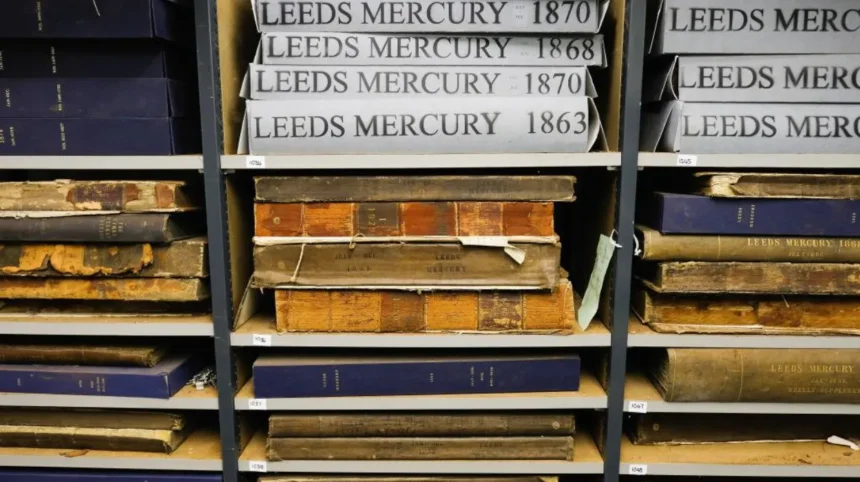
The main research resources for this subject include Leeds Libraries, the British Newspaper Archive, university library collections and the West Yorkshire Archive Service. Together, these institutions provide access to digitised newspapers, microfilm, local studies collections and original historical records.
Leeds Libraries’ Local and Family History collections contain more than 180,000 items, including newspaper archives, maps, photographs, directories and electoral records. Its digital resources also provide access to major historical and current newspaper databases. The British Newspaper Archive contains millions of digitised pages from newspapers across Britain and Ireland, with publications dating back to the late seventeenth century.
This guide explains how to find, search and interpret newspaper archives for research into Headingley. It also shows how newspaper evidence can be combined with maps, photographs, directories and archive records to build a more accurate understanding of local history.
What are the best sources for historical newspapers about Headingley?
The strongest sources for Headingley newspaper research are Leeds Libraries, the British Newspaper Archive, university collections and the West Yorkshire Archive Service, which provide digitised newspapers, historic copies, local studies material and original records for investigating Leeds and West Yorkshire history.
Historical research into Headingley benefits from using several sources rather than relying on one newspaper or database. Different publications served different audiences and reported events in different ways.
Leeds Libraries is a central starting point for local research. Its Local and Family History resources include newspapers alongside books, maps, photographs, directories and other historical material. The library service also provides access to digital newspaper resources, including the British Newspaper Archive, historical newspaper collections and NewsBank.
The British Newspaper Archive is one of the largest resources for historical press research in Britain and Ireland. Its collection contains millions of digitised newspaper pages and thousands of publication titles. Researchers can search by publication title, date, place and keyword. This structure makes the archive particularly useful when investigating a named street, institution, family or event connected with Headingley.
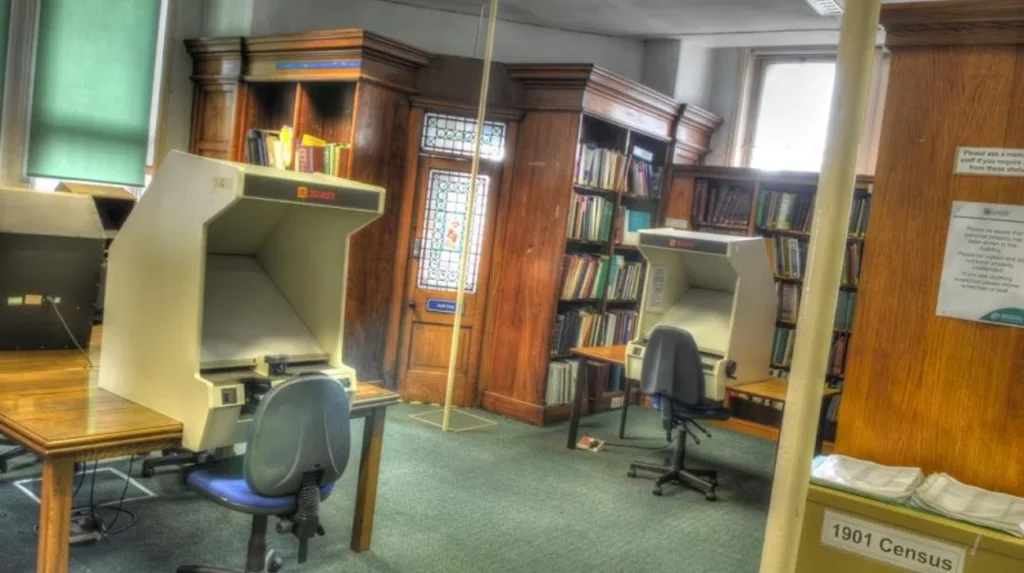
The University of Leeds Library also provides substantial newspaper resources for academic research. Its collections include digital historical newspapers and some older newspaper copies on microfilm. Database access varies according to membership and institutional arrangements, but the catalogue provides an important route for identifying available titles.
The West Yorkshire Archive Service preserves documentary heritage from the region and holds records dating from the twelfth century to the present day. Newspaper reports become more valuable when they are checked against archive records such as council documents, business papers, property records and organisational collections.
These sources perform different functions. A newspaper establishes how an event was reported at the time. A map establishes the geographical setting. A directory identifies businesses or residents. An archive document provides administrative or legal evidence. Combining these records creates a stronger local history.
Which historic newspapers are most useful for researching Headingley?
Leeds and Yorkshire newspapers are the most useful starting points because they reported local events, institutions and communities, while national newspapers provide wider political and social context for events that affected Headingley and the surrounding Leeds area.
The value of a newspaper depends on the research question and period. A local publication generally provides more detailed reporting of neighbourhood events than a national newspaper. National publications are more useful for placing major events within a wider British context.
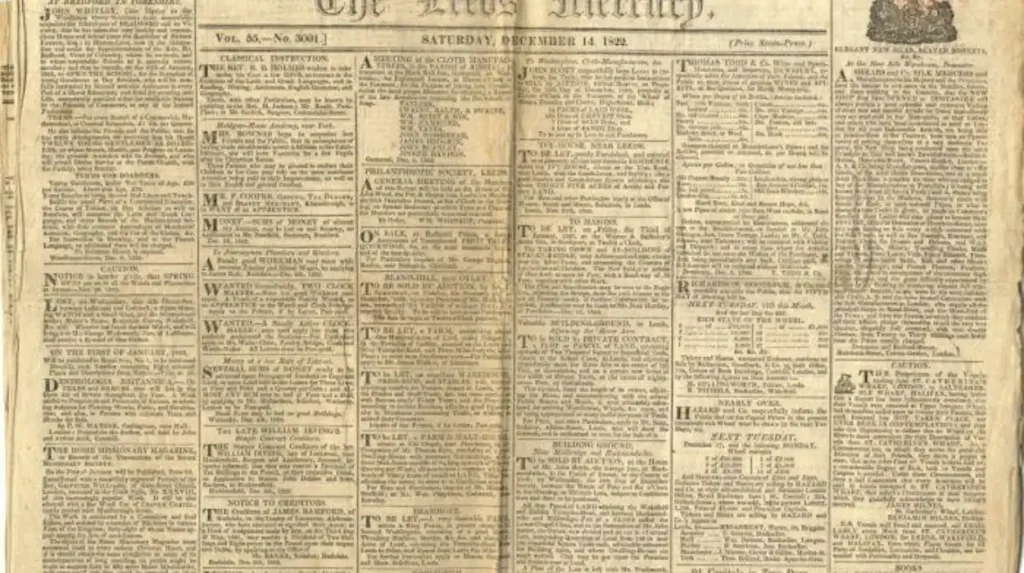
The Leeds Times is an important historical title for nineteenth-century research. The weekly newspaper began publication in 1833 and continued until 1901. Its surviving digitised issues provide evidence about politics, industry, reform, education and local society during a period of rapid urban growth in Leeds.
The Yorkshire Post and the Yorkshire Evening Post are also significant resources for studying Leeds and Yorkshire. Their reporting covers local government, business, education, sport and community events. Access to historic editions depends on the archive or database being used.
Researchers should also search smaller regional and district newspapers. A major city newspaper often focused on events of regional importance, while smaller publications frequently reported local meetings, property transactions, court cases and community organisations in greater detail.
Newspaper titles also changed ownership, merged or ceased publication. This affects research because a story does not disappear when a particular newspaper stops printing. Reporting often continues in a successor title or another publication serving the same geographical area.
A useful research process starts with the broadest relevant title and then narrows the search. For example, a researcher investigating the history of a Headingley building can search for the building name, street name and former occupiers across several newspapers and decades.
How can you search newspaper archives effectively?
Effective newspaper research uses precise names, alternative spellings, date ranges and location terms, followed by wider searches that identify related people, institutions and events connected with Headingley’s historical development.
Historical newspapers present several search challenges. Place names changed, streets were renumbered and organisations adopted new names. Digitised text also relies on optical character recognition, known as OCR, which converts printed pages into searchable text.
OCR is useful but imperfect. Older typefaces, damaged pages and unusual layouts produce incorrect transcriptions. A failed keyword search does not prove that a subject was absent from a newspaper.
Start with the most precise search term available. This can include a full street name, a building name, a person’s surname or the name of an organisation. Add a date range when the approximate period is known.
The next stage is to search variations. A person can appear under initials, a title or an abbreviated name. A business can trade under a proprietor’s name. A street can appear with a shortened form or an earlier spelling.
Location searches are equally important. Search for “Headingley” and then test nearby geographical terms where relevant. Events involving Headingley residents were sometimes reported as Leeds news rather than neighbourhood news.
A chronological approach also improves results. Search before and after a known event. An announcement of a building project can appear months before construction begins. A later report can describe the opening, financial problems or closure.
Researchers should record the publication title and date of every useful article. This creates a clear evidence trail and makes it easier to return to the original report.
What information can historical newspapers reveal about Headingley?
Historical newspapers reveal how people experienced local change by recording housing, businesses, education, transport, sport, public meetings, crime and social events that are often absent from official records and modern summaries.
Newspapers provide evidence across many areas of local history. Property advertisements can identify when buildings were sold or leased. Public notices can record planning proposals, auctions and legal proceedings. Meeting reports can show how local organisations operated.
Education is another important subject. Headingley’s connection with the wider educational landscape of Leeds generated reporting on schools, colleges, lectures and public events. Newspaper archives help researchers establish dates, participants and public responses.
Sporting history is also well represented in the press. Match reports, fixture lists and club notices provide evidence about sporting institutions and community activity. These records are particularly useful when combined with club archives and historic photographs.
Transport reporting documents the movement of people and goods. Railway developments, tram services, road schemes and public transport changes affected the relationship between Headingley and central Leeds.
Business history can be reconstructed through advertisements and commercial notices. A single business can leave a sequence of evidence through opening advertisements, staff announcements, sales notices and closure reports.
Newspapers also preserve ordinary social history. Reports of concerts, charity events, church activities, lectures and local celebrations show how people used public spaces and participated in community life.
The press therefore provides more than accounts of major events. It records the routine activity that formed the structure of daily life.
How do newspaper archives help explain the historical development of Headingley?
Newspaper archives document Headingley’s transformation by recording new housing, changing transport, expanding institutions and shifting community life, providing dated contemporary evidence that connects individual local events with wider developments across Leeds and Yorkshire.
Headingley changed alongside the wider growth of Leeds. Historical newspapers provide a chronological record of this process.
Reports about property development show changes in the built environment. Advertisements identify new residential areas and commercial premises. Public notices record auctions, ownership changes and legal matters. Together, these reports help establish when a place entered public use.
Transport news explains changes in accessibility. Improved connections affected where people lived, worked and spent leisure time. A newspaper report about a new service or infrastructure project therefore provides evidence about a wider pattern of urban development.
Institutional reporting also matters. Schools, religious organisations, businesses, sporting bodies and voluntary groups generated notices and reports. These references show when institutions emerged and how they interacted with the local community.
As you explore the modern site, you are crossing land with a deep heritage. Read about the full [Headingley Guide to Local History and Historical Development] to understand its origins.
This historical context is important for visitors as well as researchers. A modern street or venue becomes easier to interpret when newspaper evidence explains what stood there previously, who used the area and which events shaped its development.
Where can visitors access historical newspaper resources in Leeds?
Visitors can use Leeds Libraries and other research institutions to access local history resources, while online archives provide searchable newspaper material that allows researchers to prepare investigations before visiting Headingley or Leeds.
Leeds Central Library is an important destination for local and family history research. Its collections bring together newspapers and complementary sources such as maps, directories, photographs and historical publications.
The Leeds Libraries digital collection extends this research beyond physical shelves. Library users can access selected newspaper resources according to the terms of each service. The British Newspaper Archive is available through Leeds Libraries at library locations under the access arrangements published by the library service.
This combination of digital and physical research is useful for travellers. A visitor can identify likely dates and publications before arriving in Leeds, then use local collections to investigate material that requires in-person access.
The University of Leeds Library is another major research resource. Its newspaper collections include digital archives and historic material. Access conditions differ between public visitors, students and researchers, so users should check current library requirements before planning a visit.
The West Yorkshire Archive Service provides another route for deeper research. Its regional collections contain records that support and verify information found in newspapers. Researchers planning to consult original records should check current access procedures and booking requirements.
For travellers with limited time, a focused research plan produces better results. Select one subject, identify the approximate date range and prepare a list of names and locations before arriving.
How should you verify information found in old newspaper reports?
Historical newspaper reports should be checked against other contemporary sources because newspapers contain editorial errors, incomplete information and competing interpretations, while maps, official records and additional publications provide independent evidence for accurate local research.
A newspaper is a primary source when it reports an event during the period being researched. This gives it significant historical value, but primary sources still require evaluation.
A report can contain incorrect names, dates or figures. Journalists worked to publication deadlines and depended on information supplied by witnesses, officials and organisations. Editorial priorities also influenced which events received coverage.
The first verification method is comparison. Search for the same event in another newspaper. Differences in wording often reveal which facts were independently confirmed and which information reflected a particular source.
The second method is to consult official records. Council minutes, electoral registers, civil registration records and archive documents provide evidence created for administrative purposes.
The third method is geographical verification. Historic maps and plans establish whether a street, building or boundary existed at the time described by a newspaper report.
Photographic collections add another layer of evidence. The Leodis photographic archive maintained through Leeds Libraries contains a large collection of historic Leeds images and helps researchers compare written reports with visual evidence.
A strong historical conclusion therefore identifies the source of each important claim. Newspaper evidence is most reliable when the publication, date and relevant page or article are recorded alongside supporting material.
What is the best process for researching a Headingley story from beginning to end?
A reliable Headingley newspaper investigation defines one question, establishes dates and names, searches several archives, verifies key claims with independent records and records complete references so the final research remains accurate, transparent and repeatable.
Begin by defining a specific question. “What is the history of Headingley?” is too broad for an efficient archive search. A focused question identifies a person, building, event, organisation or period.
Create a list of search terms before opening an archive. Include full names, surnames, street names, building names and alternative spellings. Add approximate dates where possible.
Search the most relevant local newspaper titles first. Read the full article rather than relying only on a search-result extract. The surrounding page can provide additional context through related reports, advertisements and notices.
Record useful references immediately. A complete note should include the newspaper title, publication date, article heading and archive reference or page location where available.
Next, search for independent evidence. Check another newspaper, an official record, a historic map or a directory. This stage separates a reported claim from a verified historical conclusion.
Build a chronological timeline as evidence accumulates. This reveals gaps and contradictions. A timeline also shows whether a newspaper report describes the beginning of an event, its immediate consequences or a later retrospective account.
The final stage is interpretation. Historical research should distinguish between confirmed facts and information that remains uncertain. Clear source notes make the research useful to future readers and other researchers.
Explore More Area Guide
Archaeological Discoveries Around Leeds: A Headingley Guide
Headingley Cemeteries and Memorial Heritage Guide
Why do local newspaper archives remain important for Headingley’s future?
Local newspaper archives remain important because they preserve evidence of community change, support heritage research and provide a permanent record that helps future generations understand how Headingley’s buildings, institutions and public life developed over time.
Historical newspapers are part of the documentary record of Leeds. They preserve details that often disappear from the physical landscape.
A demolished building can survive in property advertisements and photographs. A closed business can remain documented through commercial notices. A local organisation can be reconstructed through meeting reports and event announcements.
Digitisation has expanded access to this material. Keyword searching allows researchers to examine large quantities of historical information quickly. Digital access also supports visitors planning research trips and residents investigating local history from home.
However, digitisation does not replace careful research. Not every newspaper has been digitised, and searchable text contains errors. Physical collections, microfilm and original records remain essential.
The future value of newspaper archives also depends on context. A digitised article becomes more useful when archive catalogues, maps and photographic collections explain the people and places it mentions.
For Headingley, newspaper archives provide a bridge between visible heritage and recorded experience. They explain not only what changed but also how those changes were reported and understood at the time.
How can newspaper research enrich a visit to Headingley?
Newspaper research enriches a Headingley visit by connecting modern streets and landmarks with documented historical events, businesses and communities, allowing visitors to investigate local heritage through evidence created during the periods they are exploring.
A visitor can use historical newspapers to create a focused heritage route. Research a particular street, institution or building before travelling and identify events associated with that location.
This approach works particularly well alongside local maps and historic photographs. A newspaper report supplies a date and event. A map identifies the location. A photograph provides visual evidence of the changing landscape.
Visitors interested in architecture can search for building announcements, property sales and descriptions of public openings. Sports visitors can investigate historic matches and clubs. Family historians can search names alongside addresses and occupations.
Digital nomads and business travellers can also use library resources during periods of downtime. A short, structured archive search provides a practical introduction to the history of the area without requiring a full-day excursion.
The strongest research experience combines preparation with local exploration. Search historical records first, visit the relevant area and then return to the archive with new questions. This process links documentary evidence with the modern landscape.
Headingley’s historical newspapers provide a detailed record of local life and change. They document events that shaped the area while preserving information about ordinary people, businesses, institutions and communities.
Leeds Libraries, the British Newspaper Archive, university collections and the West Yorkshire Archive Service form the core research network for this subject. Each resource contributes different evidence, from digitised press reports to original archive documents.
The most effective research method is systematic. Define a question, identify names and dates, search multiple publications, read articles in context and verify important claims against independent records.
For tourists and leisure travellers, historical newspapers add depth to a visit. For residents, they provide tools for investigating familiar places. For researchers, they remain an essential source for reconstructing Headingley’s changing landscape and community life.
Newspaper archives preserve the contemporary record of the past. Used carefully and alongside maps, photographs and official documents, they provide one of the clearest ways to understand how Headingley became the place seen today.
Where can I find historical newspapers about Headingley?
Historical newspapers about Headingley can be researched through Leeds Libraries, the British Newspaper Archive, the University of Leeds Library and the West Yorkshire Archive Service. These resources contain digitised newspapers, local history collections, microfilm and original historical records.