
Horsforth is a well-connected suburb in north-west Leeds with parks, heritage sites, walking routes, independent local amenities and easy transport connections into Leeds city centre. Its location makes it useful for travellers who want to add a quieter local experience before or after spending time in central Leeds.
- Which Horsforth places are worth visiting before or after a Leeds trip?
- Why should you visit Horsforth as part of a Leeds itinerary?
- What can you see at Horsforth Hall Park?
- Is Horsforth Hall Park suitable for families?
- What makes Kirkstall Abbey important to a Horsforth visit?
- What can you do at Kirkstall Abbey besides viewing the ruins?
- Why should you visit Abbey House Museum near Horsforth?
- Can you combine Kirkstall Abbey and Abbey House Museum in one visit?
- Is Golden Acre Park worth visiting before or after Leeds?
- How does Golden Acre Park connect with the Leeds Country Way?
- What outdoor places near Horsforth are useful for nature and walking?
- What is the best way to travel between Horsforth and Leeds city centre?
- How should you plan a short Horsforth stop before visiting Leeds?
- What should you do in Horsforth after a day in Leeds?
- Which Horsforth attractions are best for different types of visitors?
- What should visitors know before planning a Horsforth and Leeds trip?
- Why is Horsforth a useful addition to a Leeds travel itinerary?
The area sits approximately six miles north-west of Leeds city centre. Horsforth Hall Park provides a substantial green space, while nearby Kirkstall contains one of Leeds’ most important medieval landmarks, Kirkstall Abbey. Golden Acre Park extends the choice of outdoor attractions towards Adel and Bramhope.
Horsforth also works well as a practical travel stop. Horsforth railway station is on Station Road and provides step-free access to both platforms, with connections forming part of the wider Leeds rail network. National Rail lists the station as Horsforth, code HRS.
For visitors planning a Leeds itinerary, this creates a useful combination of urban sightseeing, local history, green space and transport accessibility.
Which Horsforth places are worth visiting before or after a Leeds trip?
Horsforth offers parks, heritage attractions, walking routes and transport links that complement a Leeds city visit. The strongest choices include Horsforth Hall Park, Kirkstall Abbey, Abbey House Museum, Golden Acre Park and local countryside around the Aire.
Horsforth is particularly useful for travellers who want to experience more of Leeds than the city centre. Its attractions range from a community park with a Japanese garden and skate park to medieval monastic ruins and countryside footpaths.
The area also connects naturally with neighbouring districts. Kirkstall lies south-east of Horsforth, while Golden Acre Park lies north of Horsforth towards Adel and Bramhope. Rodley Nature Reserve sits beside the River Aire on the southern edge of Horsforth.
This geography allows visitors to build different types of short itineraries. A traveller with two spare hours can choose a park. Someone with half a day can combine Kirkstall Abbey and Abbey House Museum. A visitor with more time can create a longer walking itinerary through the surrounding countryside.
Horsforth is therefore best understood as a local base for exploring the north-west side of Leeds rather than as a single attraction.
Why should you visit Horsforth as part of a Leeds itinerary?
Horsforth adds local character to a Leeds trip without requiring a major detour. Its proximity to Leeds, railway station, parks, heritage attractions and countryside creates practical options for short visits, longer stays, family outings and outdoor breaks.
Leeds city centre provides major shopping, cultural, entertainment and business destinations. Horsforth provides a different environment. The suburb has established residential streets, open spaces and access to the wider landscape surrounding Leeds.
This contrast is useful for travellers with flexible schedules. A morning in Horsforth can precede an afternoon in central Leeds. A city-centre day can finish with a quieter walk around Horsforth. Business travellers can also use the area for downtime between appointments.
The transport connection is important. Horsforth railway station is located on Station Road, LS18 5NL. National Rail records step-free access to all platforms, although access involves long or steep ramps and there are no lifts. The station has toilets, accessible toilets, baby-changing facilities, bicycle storage and 68 parking spaces.
Travellers should check current departure information before setting out because rail services and engineering arrangements change. National Rail provides live departures and journey-planning information for Horsforth and Leeds.
What can you see at Horsforth Hall Park?
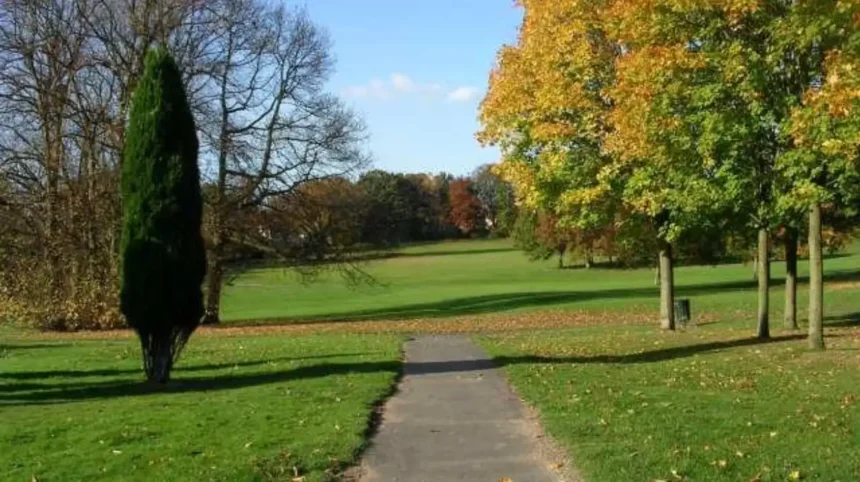
Horsforth Hall Park is a large community park with scenic paths, a Japanese garden, cricket pitch, trim trail, skate park and inclusive play facilities. It provides one of the easiest outdoor stops for visitors seeking recreation close to Horsforth’s residential centre.
Horsforth Hall Park is located on Hall Lane, Horsforth, LS18 5JE. Leeds City Council describes it as a large community park approximately six miles north-west of Leeds city centre.
The park contains several distinct facilities. These include a cricket pitch, Japanese garden, trim trail, skate park, integrated play facility and spider’s web playground. The combination gives the site relevance for families, walkers and visitors looking for outdoor activity.
The inclusive play facility has particular significance. Leeds City Council states that it was designed to allow disabled and able-bodied children under eight to play together. The project involved the Horsforth Integrated Play Project, known as HIPPO, working with Mencap and the council’s Parks and Countryside service.
The park also has paths suitable for wheelchair users and wheelchair-accessible entrances. Two disabled parking bays are located in the main car park off Hall Lane. Leeds City Council notes that there are no disabled toilets at the park.
For visitors, Horsforth Hall Park works especially well before a Leeds city-centre afternoon. It provides open space without requiring a full countryside excursion.
Is Horsforth Hall Park suitable for families?
Horsforth Hall Park is well suited to families because it combines playgrounds, inclusive equipment, open paths, a skate park, a trim trail and recreational space. The facilities support different ages and activity levels within one accessible community park.
Families can use the park for a short stop or a longer outdoor visit. Younger children have access to the integrated play facility, while older children can use the spider’s web playground and skate park.
The park’s layout also allows visitors to combine active and quieter activities. A family can use the play equipment, walk through the landscaped areas and spend time around the Japanese garden.
The inclusive design is an important feature for families with different accessibility requirements. The council confirms that the entrances are wheelchair accessible and that paths are suitable for wheelchair users.
Visitors should check local conditions before travelling, particularly when planning around seasonal events or outdoor facilities. The park is primarily an open-air destination, so weather conditions affect the experience.
What makes Kirkstall Abbey important to a Horsforth visit?
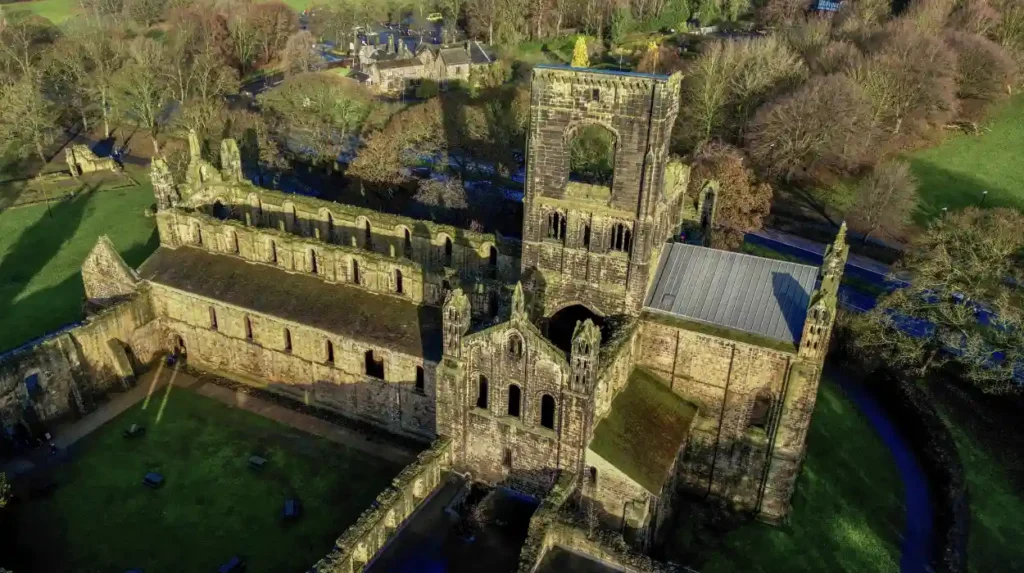
Kirkstall Abbey is a major medieval heritage attraction near Horsforth. Founded in 1152 for Cistercian monks, the abbey operated for almost four centuries before its closure in 1539 during the Dissolution of the Monasteries under Henry VIII.
Kirkstall Abbey is one of the strongest heritage additions to a Horsforth and Leeds itinerary. The Cistercian monastery was founded in 1152 after Henry de Lacy secured land for monks from Fountains Abbey. Leeds Museums and Galleries records that the community remained at Kirkstall for nearly 400 years.
The abbey closed in 1539 following the Dissolution of the Monasteries ordered under King Henry VIII. The site subsequently passed through private ownership before Colonel North acquired it in 1889 and presented it to the City of Leeds.
The ruins contain evidence of different architectural periods. The chapter house, for example, includes a late-12th-century Norman section and a 13th-century Gothic section. The chapter house was used for daily meetings, religious observance and important administrative decisions.
Kirkstall Abbey also has an important connection with the wider history of Leeds. Its buildings, collections and surrounding landscape demonstrate how medieval religious institutions shaped settlement, agriculture and economic activity in the region.
As you explore the modern site, you are crossing land with a deep heritage. Read about the full to understand its origins.
What can you do at Kirkstall Abbey besides viewing the ruins?
Visitors can explore the abbey ruins, use interpretation and audio resources, visit the visitor centre and combine the site with Abbey House Museum. The surrounding grounds also provide space for walking and form a practical heritage stop near Horsforth.
Kirkstall Abbey is more than an architectural ruin. Leeds Museums and Galleries provides audio material explaining who lived at the abbey, how different rooms were used and what archaeological evidence has been discovered. Visitors can access audio content through QR codes around the site.
The chapter house provides a particularly useful example of how the building functioned. The room was divided into sections representing different construction phases. The monks met there daily, and the abbot led the chapter meetings.
The abbey library provides another connection with medieval intellectual life. Leeds Museums and Galleries records that the library held books used by the monks for reading and meditation. Some books survived after the Dissolution because Edward Heptonstall removed and preserved them.
The site also has visitor facilities and accessible routes. The visitor centre has level access, while the route from some parking areas includes slopes. Leeds Museums and Galleries recommends an alternative route for visitors who need to avoid the steeper section.
Why should you visit Abbey House Museum near Horsforth?
Abbey House Museum provides an indoor history experience focused on Leeds social history, Victorian life, childhood and everyday objects. Its recreated Victorian streets make it a strong companion attraction to Kirkstall Abbey, especially during wet-weather visits.
Abbey House Museum stands across the road from Kirkstall Abbey on Abbey Walk. The museum occupies a building with medieval connections. It originated as the inner gatehouse of Kirkstall Abbey and became a house after the Dissolution of the Monasteries. It opened as a museum in 1927.
The museum focuses on social history. Its collections include authentic toys, childhood objects, household items and tools. Visitors can also walk through recreated Victorian streets representing historical shops, houses and other aspects of everyday life.
This makes Abbey House Museum useful for visitors who want historical context beyond medieval architecture. Kirkstall Abbey explains monastic life and medieval religious institutions. Abbey House Museum moves the focus towards later urban and domestic history.
The museum also has accessibility provisions. Its main entrance has level, step-free access, and most galleries and Victorian streets are wheelchair accessible. Some cobbled surfaces and narrow spaces remain within the recreated streets.
The museum is therefore a practical choice when the weather is unsuitable for a long outdoor itinerary.
Can you combine Kirkstall Abbey and Abbey House Museum in one visit?
Kirkstall Abbey and Abbey House Museum are naturally suited to a combined visit because they stand opposite each other. Together they connect medieval monastic history with Victorian social history and create a compact heritage-focused itinerary.
The physical proximity of the two attractions reduces travel time between them. Abbey House Museum is located on Abbey Walk, directly across from the abbey complex. Leeds Museums and Galleries also identifies bus services including routes 33, 34 and A1 serving the area outside Kirkstall Abbey.
The combination works particularly well for visitors interested in historical development. Kirkstall Abbey provides the medieval foundation, while Abbey House Museum explains later aspects of Leeds social history.
Abbey House Museum also provides indoor space, making the pairing practical in changeable weather. Visitors can explore the abbey when conditions are suitable and then move indoors for the museum.
For transport planning, the nearest railway stations listed by Abbey House Museum are Kirkstall Forge and Headingley, both approximately one mile away. The museum also has a large free car park on Abbey Walk.
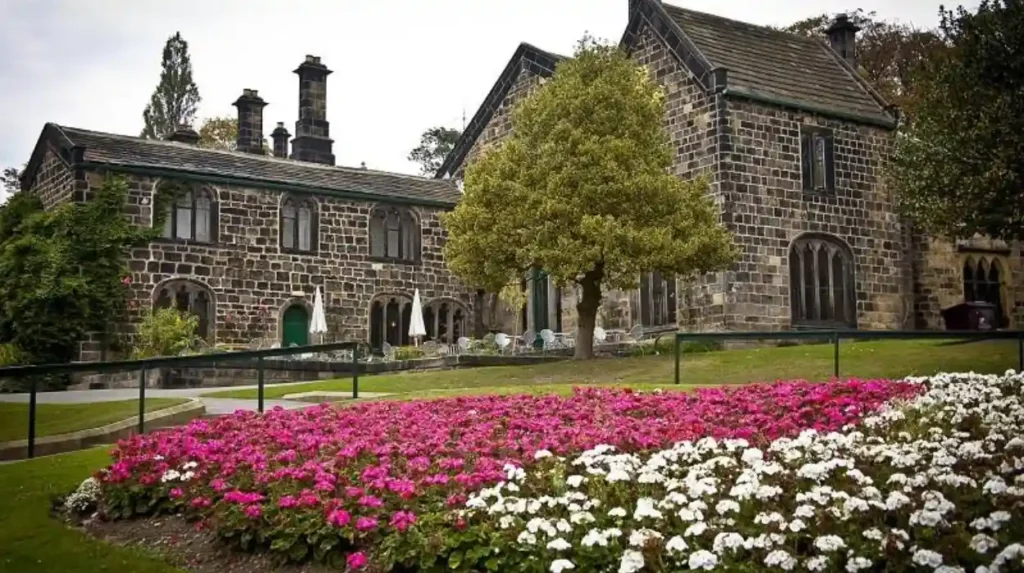
Is Golden Acre Park worth visiting before or after Leeds?
Golden Acre Park is a strong choice for visitors seeking lakeside walking, gardens and woodland outside central Leeds. The park lies six miles north of Leeds city centre and provides accessible paths, parking, toilets and a café.
Golden Acre Park sits on the A660 between Adel and Bramhope. Leeds City Council identifies it as approximately six miles north of Leeds city centre. The park contains a lake, streams, ponds, woodland, gardens and plant collections.
Its circular lakeside walk is one of the main reasons to visit. The route provides a straightforward outdoor experience without requiring a long-distance hike.
The park also contains a café with outdoor seating and wheelchair access. Public toilets include a Changing Places facility. Six disabled parking bays are available in the car park off the A660.
Golden Acre Park therefore suits visitors who have a car or are already travelling through north-west Leeds. It is especially useful as a pre-Leeds stop for travellers approaching the city from the north-west.
Parking is managed through pay-and-display and PayByPhone arrangements. Leeds City Council currently lists charges for the Otley Road and Arthington Road car parks, so visitors should check the council’s current parking information before travelling.
How does Golden Acre Park connect with the Leeds Country Way?
Golden Acre Park forms part of the wider walking network around Leeds and connects with the Leeds Country Way. The Country Way is a 62-mile circular footpath divided into four main stages and shorter walking sections.
The Leeds Country Way is a 62-mile footpath around Leeds. Leeds City Council divides it into four main stages of approximately 15 miles, with shorter five-mile walks providing more manageable sections.
Golden Acre Park features in the route between Golden Acre Park and Barwick-in-Elmet. The first five-mile section runs from Golden Acre Park to Lofthouse Lodge.
This gives visitors another way to experience Horsforth’s surrounding landscape. Instead of limiting a visit to formal attractions, walkers can use the wider public-rights-of-way network to explore the countryside around Leeds.
Long-distance walking requires more planning than a normal park visit. Footwear, weather, daylight, navigation and transport connections all affect the suitability of a route.
For most tourists, the park itself is the practical choice. Experienced walkers can use Golden Acre Park as an access point for a longer countryside itinerary.
What outdoor places near Horsforth are useful for nature and walking?
Horsforth has access to open countryside, public footpaths, woodland and the River Aire corridor. Rodley Nature Reserve and surrounding green spaces provide additional opportunities for wildlife observation, walking and landscape photography close to the Leeds urban area.
The Horsforth Design Statement identifies the landscape south of the built-up area as a transition between Horsforth and the River Aire floodplain. Rodley Nature Reserve sits within a bend of the River Aire and contains wetland habitat used by overwintering birds.
The same planning document identifies open fields between Horsforth and Rawdon, including public footpaths running towards Rawdon. It also records historic landscape features known as lynchets, which are ridges or terraces formed through earlier cultivation.
These landscapes provide a different experience from formal parks. They are part of the wider countryside structure surrounding Horsforth.
Visitors should distinguish public footpaths from private land. A marked public route does not provide unrestricted access to surrounding fields. Responsible countryside access includes following signed paths and respecting land-management notices.
Nature-focused visitors can therefore use Horsforth as a gateway to a broader landscape rather than limiting their itinerary to attractions with formal entrances.
What is the best way to travel between Horsforth and Leeds city centre?
Horsforth connects with Leeds through rail and bus services, making it practical for visitors who do not want to drive. Horsforth railway station provides step-free platform access, while Leeds station is the city’s principal rail interchange.
Horsforth railway station is managed by Northern and located on Station Road. National Rail records step-free access to all platforms, although the station uses ramps rather than lifts. It also has bicycle storage and a 68-space car park.
Leeds station is located on New Station Street in the city centre. National Rail lists it as a Category A step-free station with lifts, toilets, accessible facilities and passenger assistance.
Bus connections provide another option. National Rail’s Leeds onward travel information lists the A1 service between Leeds and Horsforth.
The best transport choice depends on the visitor’s starting point and final destination. Rail is useful when travelling between stations. Bus services provide access to areas not directly served by rail.
Visitors should check live information before travelling because departure times, platforms and service arrangements change.
How should you plan a short Horsforth stop before visiting Leeds?
A short Horsforth stop works best when the attraction matches the available time. Use Horsforth Hall Park for a quick outdoor break, Kirkstall for heritage, or Golden Acre Park for a longer nature-focused visit before continuing towards central Leeds.
A two-hour itinerary should stay geographically compact. Horsforth Hall Park provides the simplest option because it does not require a major excursion outside the suburb.
A three-to-four-hour itinerary can focus on Kirkstall Abbey and Abbey House Museum. Their proximity allows visitors to combine medieval architecture and social history without repeatedly changing transport.
A longer outdoor itinerary can use Golden Acre Park or sections of the Leeds Country Way. This option requires more attention to transport and walking conditions.
Visitors arriving by train should build their itinerary around Horsforth station and check the return service before leaving the attraction area. Visitors travelling by car should check current parking restrictions and charges.
The key principle is to avoid treating every attraction as a separate destination. Horsforth works best when visitors group attractions by geography.
What should you do in Horsforth after a day in Leeds?
After a day in central Leeds, Horsforth provides a quieter alternative for walking, green space, local food and relaxed downtime. Horsforth Hall Park is the simplest outdoor option, while Kirkstall offers a stronger heritage-focused evening itinerary.
A post-Leeds visit works differently from a pre-Leeds visit. Travellers have usually already spent several hours in a busy urban environment. A park or heritage site provides a contrasting setting.
Horsforth Hall Park is suitable for an outdoor break. Its paths, Japanese garden and recreational facilities provide several ways to spend time without planning a major excursion.
Kirkstall also works well because it combines heritage with open grounds. Abbey House Museum provides an indoor alternative when it is open.
Travellers should check attraction opening times before making a late visit. Museums and heritage venues operate within specific opening schedules, while outdoor parks offer greater flexibility.
The location also benefits visitors staying in north-west Leeds. A short local visit can reduce unnecessary travel back into the city centre.
Which Horsforth attractions are best for different types of visitors?
Families benefit from Horsforth Hall Park and Abbey House Museum, history-focused visitors benefit from Kirkstall Abbey, walkers benefit from Golden Acre Park and the Leeds Country Way, while rail travellers benefit from Horsforth’s direct station connection.
Families have several practical options. Horsforth Hall Park provides inclusive play facilities, a playground, a skate park and open paths. Abbey House Museum provides indoor exhibits and recreated Victorian streets.
History-focused visitors have a clear combination. Kirkstall Abbey covers medieval monastic history, while Abbey House Museum focuses on later social history.
Walkers have access to formal parks and longer routes. Golden Acre Park provides a circular lakeside walk, while the Leeds Country Way offers a much longer network around the city.
Rail travellers benefit from Horsforth station. Its facilities include step-free platform access, bicycle storage, toilets and parking.
Business travellers can use the same attractions as short downtime destinations. The main advantage is proximity to Leeds combined with access to quieter outdoor and heritage environments.
Explore More Area Guide
Horsforth Free Places and Experiences Guide Leeds 2026
Horsforth Architecture & Historic Buildings Guide | The Leeds
What should visitors know before planning a Horsforth and Leeds trip?
Visitors should check transport schedules, attraction opening times, accessibility information, parking rules and weather conditions before travelling. Horsforth is easy to combine with Leeds, but individual attractions have different access arrangements, facilities and operating schedules.
Transport information should be checked close to the travel date. National Rail provides live departure information and journey planning for Horsforth and Leeds.
Accessibility information also differs between locations. Horsforth Hall Park has wheelchair-accessible entrances and suitable paths. Kirkstall Abbey has accessible facilities but includes sloping routes. Abbey House Museum has step-free entrance access and extensive wheelchair accessibility, although some recreated streets contain cobbles and narrow spaces.
Drivers should check current parking charges. Leeds City Council publishes parking information for Horsforth and surrounding destinations, including Fink Hill and Golden Acre Park.
Weather is particularly relevant for outdoor attractions. Parks, countryside paths and abbey grounds are exposed to changing conditions, while museums provide indoor alternatives.
The most effective itinerary therefore combines one primary attraction with one nearby secondary activity rather than attempting to cover the entire area in a short period.
Why is Horsforth a useful addition to a Leeds travel itinerary?
Horsforth expands a Leeds visit beyond the city centre by combining local heritage, accessible green space, countryside and practical transport. Its location supports short stops and half-day excursions while retaining straightforward connections with central Leeds.
The area’s main strength is variety within a compact part of the Leeds region. Horsforth Hall Park provides recreation and family facilities. Kirkstall Abbey provides nationally significant medieval heritage. Abbey House Museum provides social-history collections. Golden Acre Park provides gardens, woodland and lakeside walking.
The wider landscape adds another layer. The River Aire corridor, Rodley Nature Reserve, open fields and public footpaths show the relationship between Horsforth and the countryside around Leeds.
Horsforth also has a practical role in regional travel. Its railway station connects visitors with the wider network, while bus links provide additional access to Leeds.
For tourists, this means Horsforth can function as a pre-Leeds stop, a post-Leeds break or a standalone half-day destination.
For residents, it provides local recreation and heritage. For business travellers, it creates accessible downtime away from the central commercial district.
The result is a flexible itinerary area where history, nature, family recreation and transport infrastructure operate together.
What are the best places to visit in Horsforth before a Leeds trip?
The best places include Horsforth Hall Park, Kirkstall Abbey, Abbey House Museum and Golden Acre Park. Each offers a different experience, from green space and family activities to medieval history, social history and countryside walking.