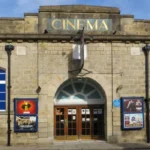
Headingley, a suburb in north-west Leeds, West Yorkshire, has a pub heritage shaped by village life, Victorian expansion, student culture, sport and changing patterns of socialising. Its traditional pubs offer visitors a way to understand how local communities developed and how public houses evolved alongside the city.
- What makes Headingley important in the history of Leeds pubs?
- How did Headingley’s village history shape its early public houses?
- How did Victorian expansion transform Headingley’s pub culture?
- What is the story behind The Original Oak in Headingley?
- Why is The Skyrack one of Headingley’s most historically significant pubs?
- How did the Shire Oak influence Headingley’s identity and public houses?
- How did transport improvements change Headingley’s traditional pub trade?
- How did Headingley’s pubs adapt to university life and student culture?
- What role do Headingley’s pubs play on rugby and cricket match days?
- What architectural features help identify historic pubs in Headingley?
- How can visitors explore Headingley’s historic pubs on a heritage walk?
- Why do Headingley’s historic pubs matter to local heritage today?
For tourists and leisure travellers, exploring historic pubs in Headingley combines local history with architecture, food, drink and the atmosphere of a busy university neighbourhood. The area’s connections with the University of Leeds, Leeds Beckett University, Headingley Stadium and the historic Otley Road corridor help explain why pubs have remained important meeting places for generations.
What makes Headingley important in the history of Leeds pubs?
Headingley is an established Leeds suburb with a pub tradition connected to village life, nineteenth-century urban growth, education and sport. Its public houses reflect changing patterns of work, travel and leisure, providing useful historical context for visitors exploring this part of West Yorkshire.
Headingley developed from a settlement outside the historic centre of Leeds into a substantial residential suburb. Its location along routes leading north-west from the city helped connect local residents, travellers and businesses. As the population expanded, public houses served practical social functions as well as providing refreshments.
A traditional British pub is a licensed premises that serves alcoholic drinks and often provides meals, non-alcoholic beverages and spaces for social interaction. Historically, pubs also functioned as places for conversation, community announcements, informal meetings and rest during journeys.
Headingley’s pub heritage reflects this wider British tradition. Older public houses emerged within a changing landscape of roads, houses, commercial premises and recreational facilities. Later establishments adapted to new audiences, including university students, sports supporters, professionals and visitors.
The suburb’s identity also differs from that of central Leeds. Its residential streets, educational institutions, green spaces and sporting venues create a neighbourhood setting in which pubs serve local customers alongside people travelling from elsewhere.
How did Headingley’s village history shape its early public houses?
Headingley’s early public houses developed within a settlement that predated modern Leeds suburban expansion. Their role reflected local travel, agricultural activity, neighbourhood interaction and the gradual growth of businesses serving residents moving between Headingley and the city centre.
Before Headingley became a major urban suburb, the area had a village character associated with surrounding farmland, residential properties and established routes. Public houses in such settlements commonly served residents, tradespeople and travellers who needed refreshments and places to meet.
The growth of Leeds during the eighteenth and nineteenth centuries increased connections between the city and nearby communities. Improvements to roads and public transport made journeys more regular, while suburban development brought more households into areas previously characterised by lower-density settlement.
Public houses responded to these changes by serving an increasingly varied population. Their customers included local workers, householders, visitors and people travelling along important routes. This transition established the foundations for the pub culture associated with Headingley today.
The historical record for individual pubs varies. Some premises retain architectural features associated with older buildings, while others have undergone substantial rebuilding or changes of use. A building’s age, its first licensing date and the date when it adopted its present name are separate historical details. They should not be treated as interchangeable.
Visitors researching a particular establishment should consult Leeds local history collections, historic maps, trade directories and heritage records. These sources help establish when a building appeared, how its surroundings changed and whether the current pub occupies the same site as an earlier business.
How did Victorian expansion transform Headingley’s pub culture?
Victorian expansion changed Headingley from a village settlement into a growing suburb connected to Leeds. Population growth, housing development, transport improvements and new commercial activity increased demand for neighbourhood pubs serving residents, workers and visitors.
During the nineteenth century, Leeds expanded as an important industrial and commercial city. Population growth created pressure for housing beyond the historic centre, encouraging development in surrounding districts. Headingley became part of this wider process of suburbanisation.
Suburbanisation is the movement of residential development and population towards areas outside a central urban district. In Headingley, this process changed the local environment through new homes, roads, shops and community facilities.
Public houses formed part of this expanding commercial landscape. They provided places for residents to meet after work, discuss local matters and socialise outside the home. Their position along established roads also helped them serve people travelling through the suburb.
Victorian pub architecture frequently included decorative brickwork, traditional masonry, prominent entrances and carefully designed public rooms. However, architectural style alone does not prove that a particular Headingley pub dates from the Victorian period. Reliable identification requires building records, historic maps or a documented heritage assessment.
The development of pubs also reflected changing expectations about hospitality. Public houses increasingly competed for customers through the quality of their premises, food offerings and social environment. Some buildings retained older layouts, while others were remodelled as neighbourhood needs changed.
This period established a connection between Headingley’s built environment and its pub culture. Historic buildings and street layouts provide evidence of the suburb’s growth, even where individual premises have since changed ownership or function.
What is the story behind The Original Oak in Headingley?
The Original Oak is a historic Headingley public house associated with the ancient Shire Oak, a landmark that gave its name to the surrounding area. Its early nineteenth-century building is Grade II listed, recognising its special architectural and historic interest.
The Original Oak stands on Otley Road, close to the historic village centre. Its history is closely connected to the large oak tree that once stood nearby and served as an important landmark in Headingley.
According to the local history account published by Headingley Development Trust, the establishment was known by names including the Oak, the Oak Tree and the Skyrack Oak. Joseph Clark, who took over the inn with his wife Hannah in 1818, adopted the name Old Original Oak. The name distinguished it from its competitor across the road, the Skyrack.
The Shire Oak was more than a tree used for navigation. It was associated with the Skyrack wapentake, an administrative division of the historic West Riding of Yorkshire. Wapentakes were regional administrative units used for local government and legal business.
The tree eventually collapsed in 1941 after centuries of decline. A commemorative plaque near The Original Oak marks its former location. The tree’s disappearance did not erase its influence on the neighbourhood’s identity. Its name survives in local landmarks and the two public houses associated with it.
The present building is recognised by Historic England as a Grade II listed public house. Its official listing describes an early nineteenth-century structure built from coursed squared gritstone, with a hipped slate roof and two storeys. The record was first added to the statutory list on 5 August 1976.
For visitors, The Original Oak offers a direct connection between the present-day pub scene and Headingley’s historic landscape. Examining its location alongside the plaque and nearby village landmarks helps explain why this site remains significant to local heritage.
Why is The Skyrack one of Headingley’s most historically significant pubs?
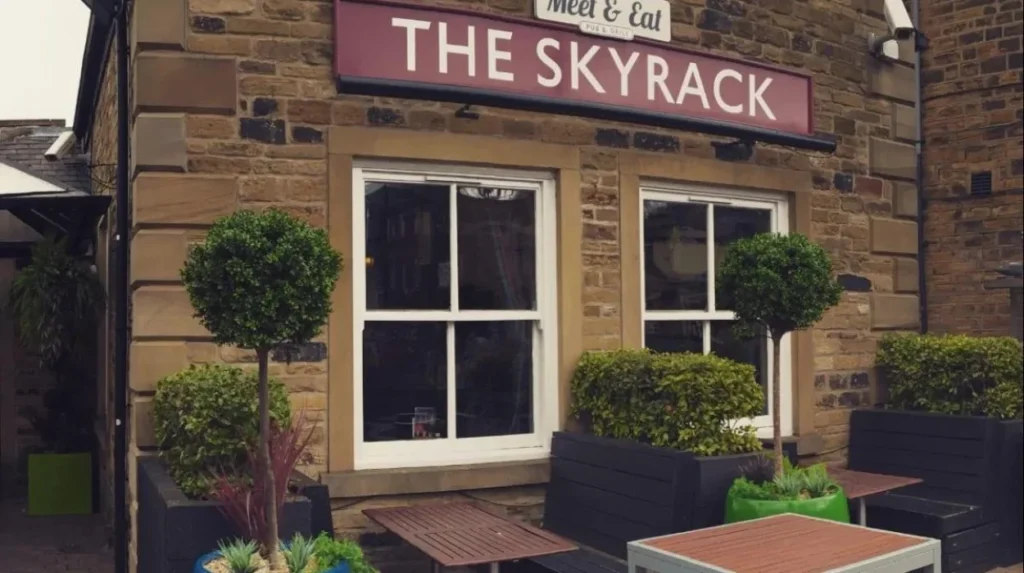
The Skyrack is a Grade II listed public house on Otley Road, named after the historic Shire Oak. Its early nineteenth-century building preserves a connection to Headingley’s former village centre and the administrative history of the Skyrack wapentake.
The Skyrack stands opposite The Original Oak, creating one of Headingley’s most recognisable historic pub settings. The two establishments share a connection to the same ancient tree, although their names and individual histories developed differently.
Historic England records The Skyrack as an early nineteenth-century public house constructed from coursed gritstone rubble, with ashlar quoins and a slate roof. Its listing dates to 5 August 1976. The official record also notes that the interior was replanned and refitted in the late twentieth century.
The name Skyrack is linked to the expression Shire Oak. The tree was historically associated with the Skyrack wapentake, which formed part of Yorkshire’s system of local administration. This connection gives the pub a historical significance that extends beyond hospitality.
The nearby village green, church and historic road network help explain the location’s importance. Headingley Development Trust identifies the old village centre as a place where the Shire Oak, church, school and two pubs formed a connected group of landmarks.
The Skyrack’s history also extends into modern sporting and social life. The pub has been associated with local gatherings, and a historical account of the Yorkshire Ramblers’ Club records that the organisation was founded at a meeting held there on 6 October 1892. The club’s history adds another dimension to the pub’s significance beyond its role as a drinking establishment.
Visitors interested in heritage should examine the relationship between The Skyrack and The Original Oak rather than treating them as unrelated pubs. Their shared location, similar historical associations and distinctive building details illustrate how one landmark influenced the identity of an entire neighbourhood.
How did the Shire Oak influence Headingley’s identity and public houses?
The Shire Oak shaped Headingley’s identity by serving as a historic landmark associated with the Skyrack wapentake. Its name survives through The Original Oak, The Skyrack and local heritage references, connecting modern Headingley with centuries of regional history.
The Shire Oak was central to Headingley’s historic landscape. The tree stood near the old village centre, where routes, religious buildings and local institutions helped define the settlement. Its association with the Skyrack wapentake gave it administrative as well as geographical importance.
A wapentake was a subdivision of a county used for local administrative and judicial purposes in parts of northern England. Historical accounts associate such units with assemblies and local legal business. The Skyrack name preserves the memory of this earlier system in the Leeds area.
The oak also demonstrates how natural landmarks influence place names. Before modern street numbering and digital mapping, a large and familiar tree served as a recognisable reference point. Its importance was reflected in the names of nearby establishments and the wider district.
The tree collapsed in 1941. The surviving commemorative plaque near The Original Oak helps visitors identify the former site. Local historical material also documents photographs and illustrations of the tree, including images showing the changing appearance of the surrounding village centre.
The history of the Shire Oak is a useful starting point for exploring the area’s wider heritage. As you explore today’s pubs and the surrounding streets, you are crossing a landscape shaped by centuries of change. Read the full [history of Headingley and its development from village to Leeds suburb] to understand how its historic landmarks, roads and buildings evolved.
This connection is particularly valuable for visitors who want to understand why two neighbouring pubs share such similar names. Their significance comes from the historic setting and the local memory preserved through buildings, place names and community records.
How did transport improvements change Headingley’s traditional pub trade?
Transport improvements connected Headingley more closely with Leeds, encouraging suburban growth and increasing movement along Otley Road. Better access supported shops, homes and public houses serving local residents, commuters and visitors travelling between the suburb and the city centre.
Headingley’s relationship with Leeds changed as roads and public transport improved. The Leeds–Otley turnpike, developed from 1755 onwards, redirected an important route through the village. This helped bring passing travellers and new commercial opportunities into the area.
A turnpike was a road maintained through tolls charged to travellers. Turnpike trusts helped finance road improvements, making routes more suitable for regular traffic and longer-distance journeys.
The improved road helped establish Otley Road as a significant commercial corridor. Historic photographs collected by Headingley Development Trust show the changing street scene, including horse trams and views of The Original Oak alongside the road. These records demonstrate how transport and pub history developed together.
The arrival and development of public transport supported a wider suburban population. People could travel more easily between Headingley and Leeds for work, education, shopping and leisure. Public houses benefited from this movement because their customer base was no longer limited to people living immediately nearby.
Transport also influenced the way visitors experience historic pubs today. Otley Road remains a useful route for exploring Headingley’s commercial centre, while buses and other local transport connections help visitors reach the area without relying on a car.
A heritage walk along this corridor reveals different stages of development. Older stone buildings sit alongside later commercial premises, showing how Headingley adapted to changing transport, retail and residential needs.
How did Headingley’s pubs adapt to university life and student culture?
Headingley’s pubs adapted to the growth of university education by serving students alongside established residents, professionals and visitors. Their social role expanded as the suburb developed into a popular student neighbourhood with links to the University of Leeds and Leeds Beckett University.
Headingley is closely associated with university life. The University of Leeds and Leeds Beckett University contribute to the wider student population of Leeds, while Headingley’s housing, cafés, shops and pubs form part of the city’s broader student neighbourhood network.
As the suburb became more densely populated, pubs served customers with different schedules and interests. Students used licensed premises for socialising, meeting friends and following sporting events. Residents continued to use local pubs as neighbourhood gathering places, while visitors brought additional demand during busy periods.
This changing customer base encouraged establishments to adapt their food, drinks, entertainment and opening arrangements. Some pubs developed a stronger focus on televised sport and large social gatherings. Others maintained a more traditional public-house atmosphere while updating their menus and interiors.
Student culture also influenced how Headingley is perceived beyond Leeds. The area is known for a lively social scene, but its identity is not limited to nightlife. Its historic village centre, residential streets, educational connections and local businesses form part of the same neighbourhood.
For visitors interested in pub history, the distinction between a pub’s historic building and its modern use is important. An establishment can retain an old exterior while changing its interior, management, menu and target audience. Such changes are part of the continuing history of traditional pubs.
Headingley’s pub heritage therefore illustrates continuity and adaptation. Public houses remain recognisable community spaces, but the people who use them and the activities they support have changed alongside the suburb.
What role do Headingley’s pubs play on rugby and cricket match days?
Headingley’s pubs form part of the wider social environment surrounding the area’s sporting venues. Rugby league, rugby union and cricket attract different audiences, while local public houses provide places to meet before matches, follow live coverage and socialise afterwards.
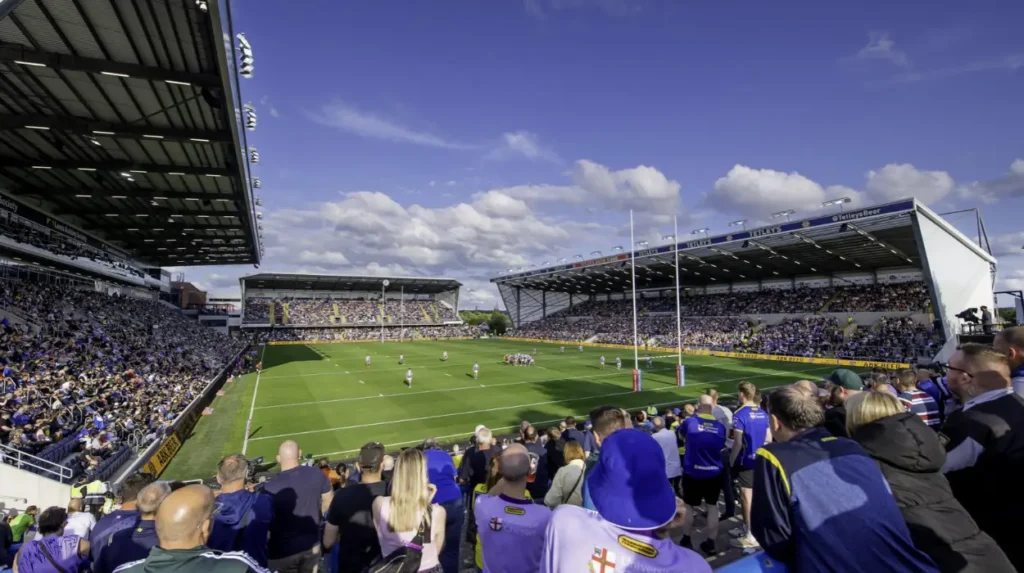
Sport is an important part of Headingley’s modern identity. Headingley Stadium is associated with Yorkshire County Cricket Club and the Leeds Rhinos rugby league team. The wider sporting area also has a strong connection to rugby union through Leeds Tykes and the history of rugby in the district.
On match days, pubs offer a social setting for supporters travelling to the area. Customers gather before events, watch televised fixtures and meet friends after games. The atmosphere differs according to the sport, fixture, kick-off time and size of the crowd.
This sporting role is part of a broader British pub tradition. Public houses have historically provided meeting places near markets, transport routes and recreational facilities. In Headingley, the combination of established pubs and major sporting venues helps sustain that relationship between hospitality and community life.
Sporting events also affect practical visitor arrangements. Roads and pavements around busy venues experience increased pedestrian activity, and popular pubs can become crowded. Visitors should check fixture schedules, transport services and individual pub opening arrangements before travelling.
For a historical visit, the sporting context helps explain why Headingley’s pubs attract people from outside the immediate neighbourhood. Their audiences include local residents, university students, travelling supporters and leisure visitors.
What architectural features help identify historic pubs in Headingley?
Historic pubs in Headingley often display traditional stone construction, sash windows, slate roofs and prominent entrances. The Original Oak and The Skyrack are documented examples of early nineteenth-century public houses whose listed status recognises their architectural and historic significance.
Architecture provides visible evidence of Headingley’s development. The historic centre includes older stone buildings, nineteenth-century residential properties and later commercial structures. Examining these buildings helps visitors understand how the village evolved into a substantial suburb.
The Original Oak is described by Historic England as a two-storey public house built from coursed squared gritstone, with a hipped slate roof and sash windows. The Skyrack is described as an early nineteenth-century building using gritstone rubble, ashlar quoins and a slate roof.
Gritstone is a coarse-grained sandstone widely used in buildings across parts of Yorkshire. Ashlar refers to finely dressed stone blocks laid with neat joints. Sash windows are windows with movable panels that slide vertically or horizontally within a frame.
These details help distinguish traditional building methods from later construction. However, not every old-looking pub is a listed building, and not every historic pub retains its original interior. Refurbishments, extensions and changes of use often alter internal layouts while preserving important external features.
Historic England’s National Heritage List for England is the authoritative starting point for checking whether a building is statutorily listed. The official records for The Original Oak and The Skyrack provide building descriptions, listing dates and location details.
Visitors should look beyond decorative details and consider the wider streetscape. The relationship between the pubs, village green, church and historic road network helps explain why this part of Headingley retains a recognisable sense of place.
Explore More Area Guide
Headingley Volunteering & Community Projects Guide in Leeds
Headingley Community Projects and Volunteer Opportunities
How can visitors explore Headingley’s historic pubs on a heritage walk?
Visitors can explore Headingley’s historic pubs by starting near the former village centre, comparing The Original Oak and The Skyrack, and examining the surrounding streets and historic landmarks. Checking opening hours, walking routes and transport information helps make the visit practical.
A heritage walk is an effective way to understand the relationship between Headingley’s pubs and its wider history. The two principal landmarks are close together on Otley Road, making them suitable starting points for a short visit.
Begin by locating The Original Oak and its commemorative connection to the Shire Oak. Examine the building’s exterior and the surrounding street layout. Continue to The Skyrack opposite, where the historic building and its name reinforce the connection to the former village landmark.
Next, explore the nearby historic centre. St Michael’s Church, the surviving section of the old village green and other traditional buildings help place the pubs within the original settlement. Historic maps and photographs from Headingley Development Trust provide additional context for understanding how the area has changed.
Visitors with more time can continue along Otley Road to compare older buildings with later commercial development. This approach reveals how transport, housing and retail growth changed the neighbourhood while leaving parts of its older character intact.
A useful visit does not require purchasing alcohol. Visitors can appreciate the architecture from public pavements, consult heritage information and visit pubs that welcome them for food or non-alcoholic refreshments. Respecting private property and following local rules helps protect the historic environment.
Before setting out, confirm current opening hours and any restrictions associated with busy sporting events. Public transport is useful for reaching Headingley from central Leeds, while checking return services helps visitors plan their journey.
Why do Headingley’s historic pubs matter to local heritage today?
Headingley’s historic pubs preserve evidence of the suburb’s village origins, transport development and changing social life. The Original Oak and The Skyrack remain especially significant because their names, buildings and location connect modern visitors with the history of the Shire Oak.
Historic pubs are part of the built heritage of a place. Their value comes from a combination of architectural features, documented history, location and continued community use. In Headingley, the two listed public houses help maintain the relationship between the modern commercial centre and the older village landscape.
Their stories also reveal how the function of public houses changes over time. An inn serving travellers along an important road became part of a growing suburb. Later, public houses adapted to university life, sporting events and contemporary leisure habits.
Listed status provides formal recognition of architectural or historic interest, but it does not mean that a building must remain unchanged. Appropriate maintenance and careful alterations help historic properties remain usable while protecting the features that justify their heritage value.
Local historical organisations also contribute to preservation by recording photographs, collecting oral and written histories, and explaining the significance of buildings. Headingley Development Trust’s historical resources help visitors connect present-day streets with archival photographs and local research.
The future of Headingley’s pub heritage depends on the continued care of historic buildings and the preservation of reliable records. Local planning decisions, conservation work and community interest all contribute to how this heritage is understood by future generations.
For tourists, the pubs offer more than a place to stop during a day out. They provide a practical introduction to Headingley’s transformation from a historic village into a Leeds suburb shaped by transport, education, sport and changing social life.
What are the most historic pubs in Headingley?
The Original Oak and The Skyrack are two of Headingley’s best-known historic pubs. Both are Grade II listed buildings on Otley Road and share a connection to the historic Shire Oak.