Headingley is a historic suburb of north-west Leeds, West Yorkshire, known for its historic buildings, educational institutions, Victorian streets, independent businesses and sporting heritage. Researching its past involves exploring local history societies, public libraries, university archives, historic maps, newspapers, photographs and original documents. These resources help residents, visitors, students and researchers understand how Headingley developed from an established settlement into a prominent residential and cultural district of Leeds.
- What Is the Historical Background of Headingley?
- Which Local History Societies Help People Research Headingley’s Past?
- Where Can Researchers Find Historical Records About Headingley?
- Leeds City Library Heritage and Research
- West Yorkshire Archive Service
- Leeds Libraries’ online heritage resources
- How Can People Research Headingley’s Historic Buildings and Streets?
- Which Libraries and University Collections Support Headingley History Research?
- How Can Researchers Investigate Headingley’s Family and Community History?
- Census records
- Parish registers and religious records
- Newspapers and personal accounts
- Recording and organising findings
- How Can Visitors and Residents Join Local History Activities in Headingley?
- Attend historical talks and excursions
- Use libraries for independent research
- Explore history on foot
- Participate in community heritage projects
- What Is the Best Way to Start a Headingley History Research Project?
- Step 1: Define the research question
- Step 2: Search online catalogues
- Step 3: Compare different source types
- Step 4: Visit specialist repositories when necessary
- Step 5: Keep a clear record of evidence
- Step 6: Present conclusions accurately
- Why Are Headingley’s Local History Societies and Research Resources Important?
- Where Should You Look First for Headingley Local History Research?
The area’s historical record connects local events with wider developments across Yorkshire. Agricultural change, urban expansion, railway development, education, religious institutions and the growth of leisure facilities all contributed to Headingley’s development. Historical societies and archival institutions preserve evidence of these changes and make it available for public research.
The most useful starting points are Leeds Libraries’ Heritage and Research collections, the West Yorkshire Archive Service, the Thoresby Society and the University of Leeds and Leeds Beckett University collections. Each provides different types of evidence, from historical photographs and printed publications to institutional records, maps and manuscripts. Combining these resources creates a stronger understanding of Headingley’s history.
What Is the Historical Background of Headingley?
Headingley is a historic suburb of Leeds whose development reflects changes in settlement, agriculture, transport, education and urban life. Its surviving buildings, historical maps, photographs and archival records provide evidence for understanding the area’s transformation and its continuing connection with the wider history of Leeds.
Headingley has a long history that predates its modern suburban character. Its development is associated with the historic parish of Leeds and the wider landscape of north-west Yorkshire. The area’s name and early settlement history form part of the historical geography of the region.
During the nineteenth century, Leeds experienced significant population growth and industrial expansion. Improvements in transport and the increasing demand for residential accommodation contributed to the development of suburban districts, including Headingley. Houses, educational establishments, religious buildings, shops and recreational facilities gradually shaped the area’s built environment.
Headingley’s history is also closely connected with education. The University of Leeds and Leeds Beckett University maintain collections that document aspects of the city’s educational and institutional development. The latter’s history is particularly relevant to Headingley’s association with teacher training and higher education.
Sport provides another important historical connection. Headingley Stadium became a significant venue for cricket and rugby league, linking the district to the development of organised sport in Yorkshire and beyond.
These themes provide practical starting points for local history research. A researcher interested in one Victorian terrace can investigate property maps, census returns, trade directories and historic photographs. Someone studying the growth of education can investigate institutional archives, prospectuses and university histories.
For readers who want a broader overview before examining individual records, explore the full [Headingley history and heritage background article] to understand the origins and development of the area.
Historical context helps researchers interpret evidence accurately. A photograph of a building, for example, becomes more useful when its date, original purpose, ownership and surrounding streets are established through independent records.
Which Local History Societies Help People Research Headingley’s Past?
Local history societies connect researchers with historical publications, specialist knowledge, archival collections and community activities. For Headingley research, the Thoresby Society, Leeds Civic Trust and relevant Leeds-area historical groups provide useful starting points for investigating buildings, neighbourhood development and the social history of the district.
Local history societies are organisations that promote the study and preservation of a particular area’s history. Their activities often include lectures, publications, research projects, guided visits and the collection of historical material.
Headingley researchers benefit from looking beyond organisations based directly within the suburb. Leeds has an established network of historical organisations whose collections cover neighbourhoods across the city.
The Thoresby Society
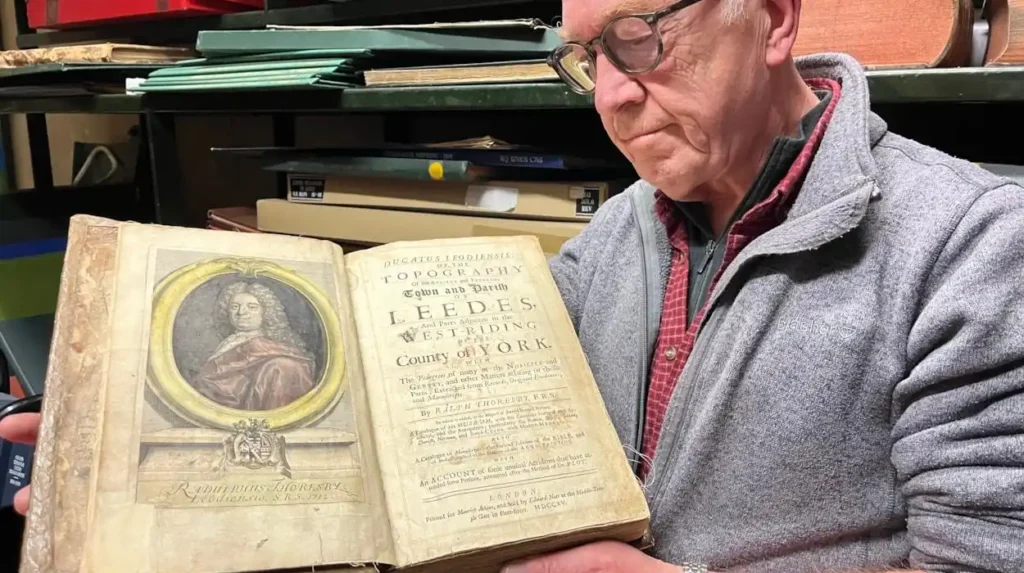
The Thoresby Society is the principal historical society for Leeds and its surrounding district. Founded in 1889, it promotes historical research and preserves material relating to the city’s past. The society takes its name from Ralph Thoresby, the seventeenth- and eighteenth-century Leeds antiquarian whose historical work helped establish the study of Leeds history.
Its resources include historical publications, maps, images, newspapers and archival material. The society also organises talks and excursions and publishes research on different aspects of Leeds history.
Researchers can explore the society’s collections through the official Thoresby Society website. Its publications and research resources provide context for investigating Headingley’s development within the wider history of Leeds. Access arrangements differ between online material, member resources and items requiring an appointment.
Leeds Civic Trust
Leeds Civic Trust is a heritage and civic organisation concerned with the city’s built environment, conservation and public understanding of local history.
Its work provides useful context for investigating historic buildings, streetscapes and the changing character of Leeds neighbourhoods. Researchers examining an older Headingley property can use civic heritage information to identify relevant buildings and understand wider conservation issues.
The trust’s activities complement documentary research by drawing attention to the relationship between historic structures, urban development and contemporary planning.
Other Leeds-area historical societies
Leeds Libraries maintains a directory of historical societies and archives covering different parts of the city and surrounding districts. Examples include Aireborough Historical Society, East Leeds History and Archaeology Society, Horsforth Village Museum and Pudsey and District Civic Society.
These organisations concentrate on different geographical areas, so their relevance depends on the research question. A society covering a neighbouring district can provide useful evidence about regional transport, landownership, industry or settlement patterns, but its collections should not automatically be treated as direct evidence of events in Headingley.
Before joining a society or attending an event, check its current programme, membership arrangements, research facilities and access conditions. Some activities welcome occasional visitors, while specialist collections require advance arrangements.
Where Can Researchers Find Historical Records About Headingley?
Leeds Libraries and the West Yorkshire Archive Service are key resources for researching Headingley’s past. Their collections include maps, newspapers, photographs, directories, institutional records and other historical documents that help researchers establish dates, identify people, investigate buildings and reconstruct neighbourhood change.
Historical records are original or published materials that preserve evidence about people, places and events. They include administrative documents, photographs, maps, newspapers, business records and personal papers.
Different records answer different questions. A street directory identifies businesses and residents listed at a particular address, while a historical map shows buildings, roads and land boundaries. A newspaper reports contemporary events, and an archive document can establish an institution’s activities or legal responsibilities.
Leeds City Library Heritage and Research
Leeds City Library houses the Heritage and Research department, which supports local history, family history and wider historical investigation.
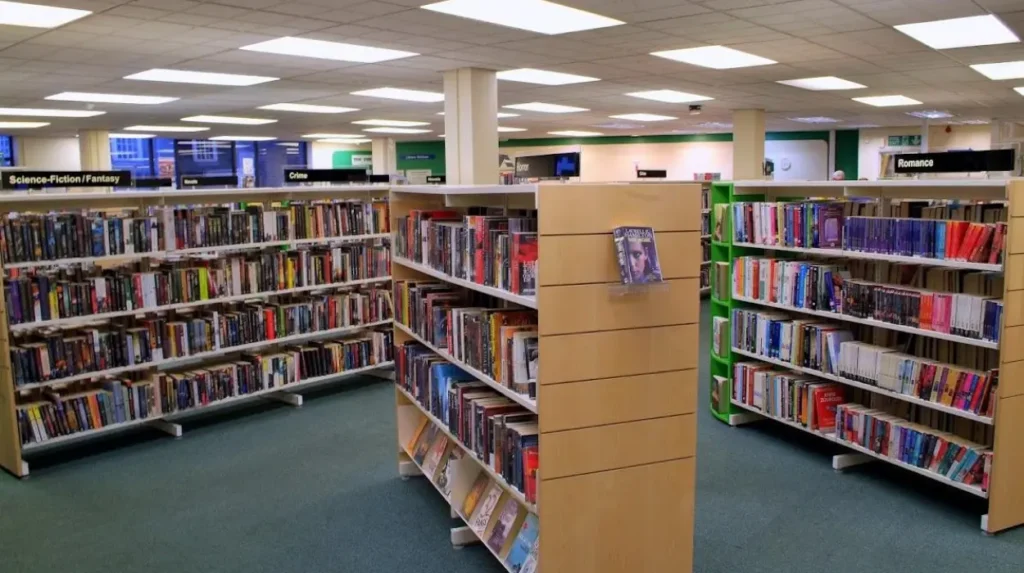
Leeds Libraries reports that its Local and Family History collection contains more than 180,000 items. The collection includes books, newspaper archives, journals, directories, maps, photographs, electoral registers, playbills, parish records and online resources.
This breadth makes the library a useful first stop for Headingley research. A researcher investigating a former shop can compare trade directories with historic photographs and newspaper advertisements. Someone studying a particular street can examine maps and historical publications to establish how the area changed over time.
The library also provides access to online resources, including the Leodis photographic archive and historical newspaper collections. Some digital services are available remotely, while other resources require access through library facilities or particular subscription arrangements.
Consult the official Leeds Libraries Heritage and Research service before planning a visit. The library recommends contacting the service in advance where access to specific collections is important, particularly when materials are affected by maintenance or availability restrictions.
West Yorkshire Archive Service
The West Yorkshire Archive Service preserves historical records relating to the region’s institutions, communities, organisations and individuals.
Its Leeds collections include local authority records, court records, church records, family and estate papers, and records connected with commercial activity. These collections help researchers investigate landownership, administration, religious life, industry and property development.
For Headingley research, archive catalogues are particularly useful when a question concerns a building, institution, organisation or family. Searching a catalogue identifies relevant collections before a researcher requests access to original documents.
The service operates a Leeds archive office at Nepshaw Lane South, Leeds, LS27 7JQ. Access to original documents generally requires advance booking, so researchers should check the latest arrangements before travelling.
Leeds Libraries’ online heritage resources
Online collections help researchers begin their work without immediately visiting a physical archive.
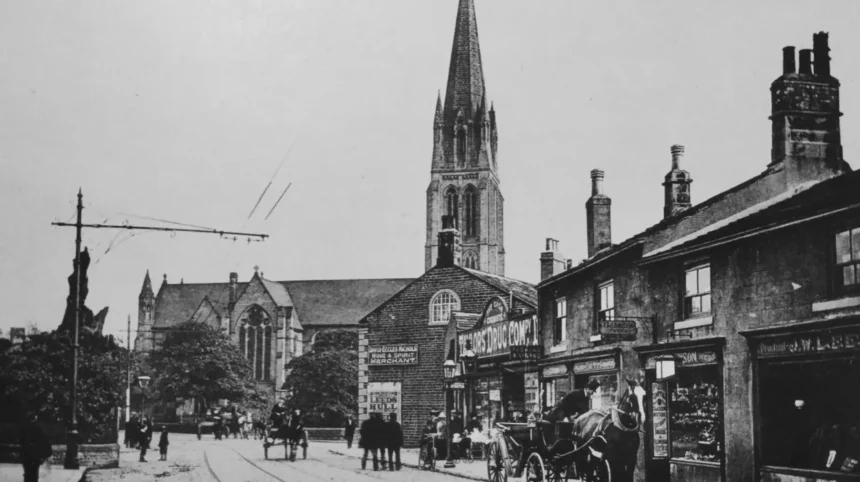
Leodis is a photographic archive containing historical images of Leeds. Its photographs provide visual evidence of buildings, streets, businesses, public events and everyday life. Comparing an older photograph with the present-day streetscape helps identify demolished structures, altered façades and changes in land use.
The Secret Library, Leeds Libraries’ heritage blog, provides research guidance, information about collections and articles about local history.
Both resources are valuable for developing an initial research question. However, photographs and blog articles should be checked against additional evidence when precise dates, ownership details or historical claims are important.
How Can People Research Headingley’s Historic Buildings and Streets?
Researching a historic building involves identifying its location, establishing a date range and comparing maps, directories, photographs and property records. Leeds Libraries, the West Yorkshire Archive Service and university collections provide complementary evidence for understanding how Headingley’s streets and buildings developed.
Building history research examines the origins, use, ownership and physical changes of a property. It can reveal when a street developed, how buildings were occupied and how a neighbourhood’s character changed.
A reliable investigation starts with a precise location. Record the modern address, street name and any known former names. Historic streets sometimes changed names, while individual properties were renumbered or divided into separate dwellings.
Historical maps and plans
Maps show how land use and settlement patterns changed over time. Researchers can compare maps from different dates to identify new roads, buildings, open spaces and changes to property boundaries.
A useful method is to locate a building on the earliest available map, then compare it with later editions. This establishes a date range for the appearance of a structure, although a map alone does not always establish the exact construction date.
The West Yorkshire Archive Service holds maps and plans among its wider archival resources. Leeds Libraries also maintains local history materials that support geographical research.
Trade directories and electoral registers
Trade directories list businesses, professionals and other residents according to the publication’s coverage and editorial rules. They help researchers identify former shops, tradespeople and commercial activities in Headingley.
Electoral registers provide evidence about people registered to vote at particular addresses. Their coverage depends on registration rules and eligibility at the time, so they do not represent every resident.
Comparing directories and electoral registers across several years can help establish patterns of occupation and residential change. These records are particularly useful when investigating the history of a family home or commercial premises.
Photographs and newspapers
Historical photographs document the appearance of streets, buildings and public spaces. Newspapers provide additional evidence about openings, planning disputes, community events, accidents, local businesses and institutional activities.
The Leodis archive is an important resource for locating historical Leeds photographs. Newspaper collections held through Leeds Libraries provide contemporary accounts of events and developments.
Researchers should record the publication date, photographer or author where known, and the original source of each item. These details help distinguish contemporary evidence from later interpretations.
A strong building history combines several independent sources. A photograph establishes appearance, a map establishes location, a directory identifies an occupant or business, and an archival document provides further evidence about ownership or construction.
Which Libraries and University Collections Support Headingley History Research?
University libraries and specialist collections provide historical publications, personal papers, institutional records, maps and research expertise. The University of Leeds and Leeds Beckett University are especially relevant to Headingley because their collections document regional history, educational development and aspects of the area’s institutional heritage.
University collections complement public archives by preserving materials associated with teaching, research, university administration and individual donors. They often contain specialist sources that are not available in ordinary lending libraries.
Access policies vary. Some collections welcome members of the public, while rare materials require advance appointments or supervised consultation.
University of Leeds Cultural Collections
The University of Leeds holds historical materials relating to Yorkshire and wider British history. Its collections include personal papers, local burial records, printed works, Quaker meeting records, maps, atlases and travel guides.
The Liddle Collection contains personal papers from people who experienced the First World War and Second World War. The university also holds the Leeds General Cemetery Company Archive, which includes burial registers for the cemetery now known as St George’s Fields.
These resources are particularly useful for family historians and researchers investigating the social history of Leeds. Their relevance to a specific Headingley question depends on the people, institutions or geographical areas represented in each collection.
The university also holds Yorkshire archaeological and historical material, including records associated with local families and estates.
Researchers can explore collection descriptions through the University of Leeds Library’s family and local history research guide. The university welcomes public interest in its Cultural Collections, subject to the relevant access procedures.
Leeds Beckett University archives
Leeds Beckett University’s Archive and Special Collections are held at its Headingley Library.
The collections include records relating to the university’s own history, material associated with the West Yorkshire Society of Architects Library and the Tom Pevsner Collection.
These holdings are relevant to research into educational institutions, architecture and the professional history of the built environment.
The university also provides historical research resources through its library guidance. Its public history work includes the Leeds Monument Map, an interactive resource documenting commemorative sites such as statues, monuments and murals.
Headingley Library
Headingley Library operates from Headingley Community Hub on North Lane, Leeds, LS6 3HG.
It provides public library services, internet access, computers and a local point of access to Leeds Libraries’ services. It is a practical starting point for readers who want to consult general historical publications, use online resources or obtain guidance before visiting specialist collections.
The library’s catalogue helps researchers identify relevant books and other materials available through the wider Leeds Libraries network.
For visitors, combining a visit to Headingley Library with a walk around the area’s historic streets provides a useful way to connect documentary research with the surviving built environment.
How Can Researchers Investigate Headingley’s Family and Community History?
Family and community history research combines census returns, parish registers, electoral records, newspapers, directories and personal documents. These sources help establish relationships, trace residential changes and investigate everyday life, provided researchers account for gaps, changing boundaries and differences in historical record-keeping.
Family history investigates the lives and relationships of individuals across generations. Community history examines how people lived, worked, worshipped, studied and participated in local organisations.
Headingley research often benefits from combining these approaches. A family’s residential history, for example, can reveal changes in a street’s population, occupations and housing patterns.
Census records
Historical census returns provide information about households, occupations, ages and places of birth, subject to the questions and recording practices of each census.
Researchers can use census records to establish who lived at an address at a particular point in time. Comparing successive census years helps identify household changes, movement between districts and shifts in employment.
Census evidence should be interpreted carefully. Ages, occupations and names were sometimes recorded inconsistently, and some individuals appear under variant spellings.
Parish registers and religious records
Parish registers document events such as baptisms, marriages and burials within the relevant church’s coverage. Nonconformist religious organisations also produced records that can support family and community research.
These documents help establish relationships and life events that are not fully explained by census records.
The West Yorkshire Archive Service holds church records among its Leeds collections. The availability of a particular register depends on the institution, date range and survival of the original records.
Newspapers and personal accounts
Newspapers document community events, public meetings, business activity and local concerns. Personal letters, diaries, memoirs and institutional publications offer additional perspectives on everyday life.
Researchers should distinguish between an individual’s recollection, a contemporary newspaper report and an official record. Each source has a different purpose and potential limitations.
A newspaper report can establish that an event was publicly reported, but it does not automatically confirm every detail in the account. Comparing it with other evidence produces a more reliable historical interpretation.
Recording and organising findings
A simple research log improves accuracy. Record the source title, repository, date, page or catalogue reference, and the specific information obtained.
Maintain a separate note for facts that remain unverified. This prevents assumptions from becoming established claims as the research progresses.
Researchers should also respect privacy and copyright restrictions when publishing family histories, reproducing documents or sharing photographs online.
How Can Visitors and Residents Join Local History Activities in Headingley?
Visitors and residents can engage with Headingley’s history through society talks, library research, archival appointments, heritage walks and university collections. Checking event calendars, access requirements and membership conditions before attending helps people select suitable activities and make effective use of their time.
Local history participation ranges from independent reading to structured research projects. Some people attend occasional lectures, while others join societies, volunteer with heritage organisations or investigate a particular building over several months.
Attend historical talks and excursions
The Thoresby Society organises talks and excursions focused on Leeds history. Its programme provides opportunities to learn from researchers and discover subjects that are not always covered in general tourist guides.
These events are suitable for visitors interested in the city’s heritage and residents seeking a deeper understanding of their neighbourhood.
Use libraries for independent research
Headingley Library offers a convenient starting point for people who want to investigate local history without immediately undertaking specialist archival research.
Visitors can begin by consulting books and online resources, identifying relevant historical terms and preparing a list of questions for further investigation.
Leeds City Library provides more specialised heritage and research facilities. Researchers working with rare or fragile materials should contact the appropriate department before visiting.
Explore history on foot
Walking through Headingley helps researchers connect maps and photographs with the modern landscape. Historic buildings, older street patterns and surviving public spaces provide geographical context for documentary evidence.
A useful walk begins with a selected street or building. Compare its present appearance with a historical photograph, then investigate the property’s earlier use through maps, directories or archival records.
Do not assume that an older-looking building retains its original form. Later extensions, façade changes and alterations to surrounding streets can obscure earlier features.
Participate in community heritage projects
Local heritage projects often depend on volunteers who identify photographs, transcribe documents, record memories and research historic buildings.
Residents with knowledge of a street, school, business or community organisation can contribute information that helps researchers interpret archival material.
Before donating documents or photographs, establish the receiving organisation’s collection policy, ownership requirements and arrangements for public access. Preserve original captions and dates because these details often provide valuable historical context.
What Is the Best Way to Start a Headingley History Research Project?
The most effective research process begins with a specific question, identifies suitable sources and compares independent evidence. Researchers should record citations, distinguish confirmed facts from assumptions and consult specialist archivists when original documents are required to establish a reliable historical conclusion.
A focused question makes historical research more manageable. Instead of attempting to investigate all of Headingley’s past, select a defined subject, such as the history of a street, a local school, a former shop or a family associated with the district.
The following process provides a practical starting point.
Step 1: Define the research question
Write down exactly what you want to establish. Examples include when a building first appeared on a map, which businesses occupied a particular address or how a local institution changed over time.
A specific question determines which records are most relevant and reduces unnecessary searching.
Step 2: Search online catalogues
Start with Leeds Libraries’ Heritage and Research resources, the West Yorkshire Archive Service catalogue and relevant university collection guides.
Search using the modern place name, former street names, institution names, personal names and relevant date ranges.
Catalogue descriptions often identify the creator of a record, its date range and the subjects it covers. These details help establish whether a collection is relevant before arranging a visit.
Step 3: Compare different source types
Use maps to establish locations, directories to investigate businesses and occupants, photographs to study buildings, and newspapers to identify contemporary reports.
Compare evidence from independent sources whenever possible. If two sources disagree, record the discrepancy and investigate whether it results from different dates, spellings, boundaries or recording practices.
Step 4: Visit specialist repositories when necessary
Some questions require original documents that are not available online. Contact the relevant archive or library to confirm opening arrangements, appointment requirements, document availability and reproduction policies.
For the West Yorkshire Archive Service, check the current guidance before travelling to its Leeds office. For rare materials at Leeds City Library, consult the Special Collections guidance and arrange access as required.
Step 5: Keep a clear record of evidence
Record the exact source of each important claim. Include document titles, publication dates, catalogue references and page numbers wherever available.
This makes it easier to verify findings, revisit documents and share research with a local history society or publication.
Step 6: Present conclusions accurately
A completed local history project should explain what the evidence establishes and identify any remaining gaps.
Avoid presenting an estimated construction date as a confirmed date. Distinguish between a building’s earliest appearance on a surviving map and the actual date it was built.
This approach produces research that is useful to residents, visitors, heritage organisations and future researchers.
Explore More Area Guide
Headingley Nature Conservation Groups: Local Volunteering Guide
Burgerism Smash Burger Chain Expands to Leeds City Centre 2026
Why Are Headingley’s Local History Societies and Research Resources Important?
Local history societies, libraries and archives preserve evidence of Headingley’s development and make it accessible for education, heritage conservation and community research. Their collections help explain how buildings, institutions, businesses and everyday life changed while connecting local history with the wider development of Leeds.
Historical research contributes to the understanding of place. It identifies the origins of buildings, documents the activities of earlier residents and explains how neighbourhoods developed.
For heritage conservation, historical evidence helps establish why a building or streetscape is significant. Historic photographs and maps can identify earlier features, while institutional records and published research provide additional context.
For education, local history connects broader historical themes with identifiable places. Students can investigate industrialisation, urban growth, transport, housing and social change through evidence associated with their own neighbourhood.
For tourism, historical resources support more informed exploration. Visitors who understand a building’s former purpose or a street’s development gain a clearer picture of Headingley’s relationship with Leeds.
For residents, community history provides a means of recording local knowledge and preserving memories that are not always represented in formal archives.
Digital access is also changing how people discover historical material. Online catalogues and photographic archives enable researchers to identify sources remotely before consulting original documents. However, digitisation does not replace the need to examine source descriptions, provenance and context.
Preserving historical evidence requires collaboration between libraries, archives, universities, societies and local communities. Donations of photographs, documents and personal papers can strengthen collections when the material has clear historical value and is accompanied by reliable information about its origin.
Headingley’s history is therefore best understood through a combination of published scholarship, original documents, visual evidence and community knowledge. Each resource contributes a different perspective, and together they provide a stronger foundation for understanding the suburb’s past.
Where Should You Look First for Headingley Local History Research?
Start with Leeds Libraries for photographs, books and local history guidance, then consult the Thoresby Society for historical publications and the West Yorkshire Archive Service for original records. University collections provide additional specialist material for investigating buildings, institutions, families and community heritage.
The best starting point depends on the question being investigated. Researchers looking for historical street photographs should begin with Leodis. Those tracing a building’s occupants should examine directories, maps and relevant records. Family historians should compare census returns, parish registers and other documentary evidence.
Where can I find local history societies in Headingley?
The Thoresby Society is a useful starting point for researching Headingley’s history. It focuses on Leeds and the surrounding district, offering historical publications, talks and research resources. Leeds Libraries also provides information about local historical societies.