Headingley is an important location for prospective students planning university visits in Leeds. The area combines a major university campus with student housing, transport connections, sports facilities and easy access to Leeds city centre. A well-planned campus visit helps applicants compare courses, facilities, accommodation and everyday student life before making higher education decisions.
- What are university open days and campus visits?
- Why is Headingley important for prospective university students?
- How should you prepare for a university open day?
- What happens during a university open day?
- What should you look for during a Headingley campus visit?
- How do open days help you compare university courses?
- What questions should prospective students ask university staff?
- How can you assess student accommodation during a visit?
- How do you travel to university open days in Headingley?
- What alternatives are available if you cannot attend an open day?
- How can school and college groups arrange university visits?
- How should you use information after a campus visit?
- Why do campus visits remain important for future university choices?
University open days provide structured access to academic staff, current students, specialist facilities and support services. Campus visits offer a more focused alternative for people who cannot attend a major event. For prospective students considering Leeds, Headingley provides direct access to Leeds Beckett University’s Headingley Campus while also sitting close to the University of Leeds and other higher education destinations.
This guide explains how university open days and campus visits work, what to prepare, what to inspect and how to use a visit to make a stronger university choice.
What are university open days and campus visits?
University open days are organised events that allow prospective students to explore courses, facilities and student services, while campus visits provide smaller-scale opportunities to see a university environment and ask questions outside major recruitment events before making an informed application decision.
An open day is a formal visitor event organised by a university. It usually follows a published programme and includes activities such as course presentations, academic talks, student-led tours and accommodation visits.
A campus visit is broader. It can include a scheduled guided tour, an individual appointment, a school group visit or an online experience. Universities use different formats because prospective students have different schedules, locations and information needs.
The University of Leeds provides undergraduate open days, campus and city tours, online events and recorded sessions. Its campus tours allow visitors to explore the university and speak with student ambassadors.
Leeds Beckett University also offers undergraduate and postgraduate open days alongside campus tours at its City and Headingley campuses. Its open-day programme includes opportunities to speak with course teams and current students, tour facilities and accommodation, and obtain advice from admissions, support, money and careers services.
The main difference is scale and structure. An open day offers a concentrated programme with many activities. A campus tour focuses more closely on the physical environment and general student experience.
Both formats help visitors move beyond course descriptions and websites. A campus visit shows how academic and everyday spaces connect.

Why is Headingley important for prospective university students?
Headingley is important because it contains Leeds Beckett University’s Headingley Campus, a major higher education site with teaching, sports and student facilities, while its established student environment provides useful context for prospective students exploring life in Leeds.
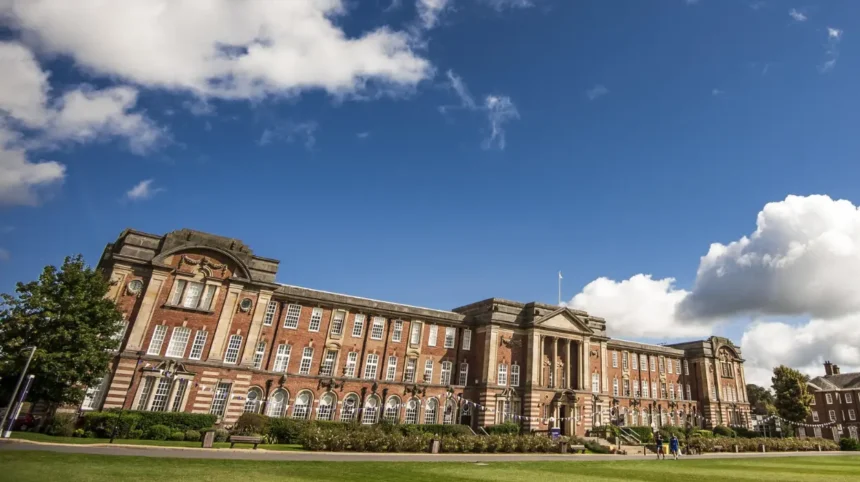
Leeds Beckett University’s Headingley Campus is located in Beckett Park, close to the Headingley district. The campus includes academic buildings, specialist facilities and extensive outdoor space.
The university describes its Headingley Campus as a leafy site located less than three miles from Leeds city centre. The wider campus setting covers 94 acres of parkland and sits within walking distance of Headingley’s shops, services and established student neighbourhood.
This location gives visitors two forms of information during a campus visit. They can assess the university itself and examine the surrounding area where students spend time outside lectures.
Headingley also forms part of the wider Leeds higher education geography. The University of Leeds is located closer to Leeds city centre, creating a different campus environment and allowing prospective students to compare major study locations during the same trip. The Headingley Leeds universities directory identifies both Leeds Beckett University’s Headingley Campus and the University of Leeds as key higher education institutions in the local area.
As you explore the modern university area, you are also moving through a district with a long educational and community heritage. Read about the full to understand the historical development of Headingley.
For visitors, this broader context matters. A university choice includes the course and campus, but also transport, local services, accommodation options and the character of the surrounding area.
How should you prepare for a university open day?
Effective preparation requires visitors to book required places, review the event timetable, identify priority sessions, prepare course-specific questions and plan travel before arrival, ensuring enough time to examine academic facilities, accommodation and the wider student environment.
Start by confirming the type of event. Undergraduate open days target prospective bachelor’s degree students. Postgraduate events focus on master’s degrees, diplomas and other advanced study routes.
Check the official university event page before travelling. Event dates, booking arrangements and programmes change between academic years.
At Leeds Beckett University, visitors are advised to book for open days, and event programmes can include course talks, campus tours, accommodation tours and support stands.
Create a personal schedule before arrival. Prioritise activities that provide information unavailable elsewhere. These usually include subject talks, specialist facility tours and conversations with academic staff.
Prepare questions in advance. Course questions should cover modules, assessment, teaching methods, placements and professional accreditation where relevant.
Student-life questions should cover accommodation, commuting, study spaces, societies and the daily timetable.
Support questions should cover admissions, finance, disability support, wellbeing and careers.
Bring the information needed to compare universities consistently. A simple written checklist helps visitors record the same categories at each institution.
The most useful preparation produces a clear purpose for the visit. A campus is easier to assess when visitors know what evidence they need before arriving.
What happens during a university open day?
A university open day normally combines course information, subject talks, facility tours, accommodation visits and support services, giving prospective students direct access to academics, student ambassadors and specialist teams responsible for admissions, finance and student support.
Open-day programmes vary by institution and subject. The core structure remains consistent.
Academic sessions explain the course. These sessions often cover the curriculum, teaching approach, assessment and progression opportunities.
The University of Leeds states that its subject sessions enable prospective students to speak with academics, experience taster lectures and ask questions about their chosen subjects. Its wider open-day activities include information fairs, student ambassadors, demonstrations and tours.
Campus tours show the physical environment. Visitors can identify lecture spaces, libraries, study areas, social facilities and specialist buildings.
Accommodation visits provide information about residential options. Visitors should examine location, room arrangements, shared facilities and travel distances rather than relying only on promotional photographs.
Information fairs bring together specialist services. Examples include admissions, student finance, careers and disability support.
Current students provide another source of information. Student ambassadors can explain daily routines and practical aspects of university life from direct experience.
An open day works best when visitors combine these sources. Academic staff explain the course. Support teams explain university systems. Current students explain everyday experience.
What should you look for during a Headingley campus visit?
A Headingley campus visit should assess course facilities, libraries, study spaces, accessibility, transport routes and the surrounding student area, because these factors directly shape how prospective students learn, travel and organise daily university life.
Start with the academic facilities relevant to the chosen course.
Specialist subjects require particular attention. Sports courses use different spaces from laboratory-based courses. Creative subjects require different facilities from classroom-based programmes.
Leeds Beckett’s Headingley Campus includes facilities connected with teaching, activity and laboratory work, including the Carnegie School of Sport environment.
Next, examine independent study space. Libraries and quiet work areas are part of the regular academic environment, not occasional visitor attractions.
The local Headingley information site states that the Leeds Beckett University library at Headingley is open to external visitors during specified daily hours, although access arrangements should always be checked directly with the university before travelling.
Walk the routes between important locations. Measure the practical relationship between teaching buildings, transport stops, local shops and accommodation areas.
Look at accessibility throughout the route. Prospective students with additional access requirements should contact the university before the visit so appropriate arrangements are in place.
Leeds Beckett’s open-day booking process provides a route for visitors to identify accessibility requirements and request support arrangements.
A strong visit assesses the campus as a working environment rather than simply as a collection of buildings.

How do open days help you compare university courses?
Open days support course comparison by allowing applicants to examine teaching, modules, assessment, facilities, placements and academic support directly, using consistent questions to identify meaningful differences between courses with similar titles at different universities.
Course titles do not provide a complete comparison.
Two degrees with the same broad subject name can have different compulsory modules, assessment methods and professional opportunities.
Ask academic staff which modules are compulsory and which are optional. Find out when students choose specialisms.
Ask how students are assessed. Examples include examinations, coursework, practical assessments, presentations and dissertations.
Examine the balance between lectures, seminars, laboratory work, studio activity and independent study.
Ask about work placements and study abroad where these form part of the course structure.
The University of Leeds uses open days to connect prospective students with subject specialists and current students, while Leeds Beckett open days include course teams and specialist facilities within their visitor programmes.
Use the same questions at every university. This creates a more reliable comparison.
Record answers immediately after each session. Open days contain a large amount of information, and details become difficult to separate after visiting several institutions.
The strongest course decision comes from matching the academic structure to the applicant’s own educational goals.
What questions should prospective students ask university staff?
Prospective students should ask direct questions about course content, assessment, teaching contact, facilities, placements, careers and support, because official conversations during an open day provide detailed information that course summaries and promotional materials do not always explain.
Questions should be specific.
Ask course teams how the programme develops from the first year to the final year. Ask which modules are compulsory.
Ask how assessment is distributed across the academic year.
Ask which facilities students use regularly and whether access is restricted by course, year or booking arrangements.
Ask about professional accreditation when it is relevant to the intended career.
Ask careers teams how the university supports internships, placements and graduate employment.
Ask admissions teams about application requirements and deadlines. Application processes change, so official university and UCAS guidance should always take priority over informal advice.
Ask student ambassadors practical questions. Useful topics include commuting, food costs, study routines and how students use the surrounding area.
Questions should seek facts rather than general reassurance. Specific answers are easier to compare and verify.
How can you assess student accommodation during a visit?
Assessing student accommodation requires visitors to examine location, room types, shared facilities, travel routes and contract conditions, while comparing university-managed and private options to understand the practical costs and routines associated with living while studying.
Accommodation forms part of the wider university decision.
During an open day, visit available accommodation tours and ask which properties are managed directly by the university.
Look at the journey between accommodation and the teaching campus. A room’s distance from the campus affects commuting time and transport costs.
Examine the local area during the visit. Headingley contains established student services and housing, while Leeds city centre provides a different residential environment.
Ask about contract length and what is included in the accommodation cost. Examples include utility bills, internet access and communal facilities.
Leeds Beckett includes accommodation tours as part of its open-day activity, while its standard campus tours do not normally include access inside student accommodation because students remain in residence. Virtual accommodation tours provide an alternative source of information.
Compare accommodation using consistent criteria.
Important categories include location, cost, facilities, travel time and contract structure.
Do not base a decision on one model room alone. The wider residential environment is equally important.
How do you travel to university open days in Headingley?
Travel planning for Headingley university visits should begin with the campus location and official event instructions, followed by checking rail, bus, walking and parking arrangements, because large open days create additional demand and parking availability remains limited.
Headingley is connected to Leeds through major road, rail and bus routes.
Leeds Beckett’s visitor information identifies the A660 as a principal approach from the north-west through Headingley. It also states that Headingley Campus is approximately a 20-minute walk across Beckett Park from Headingley railway station.
Walking forms part of many campus journeys. Visitors should allow time for unfamiliar routes, registration and moving between scheduled activities.
Parking requires advance consideration. Leeds Beckett states that campus parking is limited and normally operates through a permit system, with different arrangements possible for large public events such as open days.
Always follow the event-specific travel guidance supplied by the university. Open days can use designated arrival points and temporary visitor arrangements.
Visitors travelling from outside Leeds should also consider whether a campus tour or open day provides enough time to explore the wider area.
For tourists and leisure travellers, a university visit can form part of a wider Leeds itinerary. However, the university event timetable should remain the priority because subject sessions and specialist talks often run at fixed times.
What alternatives are available if you cannot attend an open day?
Prospective students who cannot attend an open day can use scheduled campus tours, virtual experiences, online events and recorded presentations, combining official digital information with later in-person visits when practical to build a complete understanding of the university.
An open day is not the only way to visit a university.
Leeds Beckett runs campus tours at both its City and Headingley campuses. These tours are not course-specific, so visitors should check where their intended course is taught before booking.
The University of Leeds also provides campus tours and online experiences for prospective students. Its official visitor pages include online events, recorded talks and a 360-degree virtual experience.
International visitors have additional planning needs. The University of Leeds offers bespoke international campus tours led by student ambassadors, with advance notice required for booking under its published arrangements.
Digital resources are useful for preparation and follow-up. They do not replace every part of an in-person visit.
A physical campus visit allows prospective students to assess travel routes, distances and the surrounding environment directly.
The best approach combines official course information with a campus experience whenever travel is possible.
How can school and college groups arrange university visits?
School and college groups can arrange organised campus visits and higher education experience activities through university outreach teams, which combine tours, academic sessions and student information to help learners understand progression routes before submitting university applications.
Universities operate dedicated outreach programmes for younger learners and school groups.
The University of Leeds provides campus visits and taster days across Arts, Health Sciences, Social Sciences and STEM subjects. Its programmes include specialist facilities, academic activities and student ambassador engagement.
Leeds Beckett also provides campus visits for groups and states that visits can include university tours and taster lectures tailored to student needs.
These organised visits serve a different purpose from an individual open day.
A school visit introduces the higher education environment and explains university progression. An individual open day supports a specific course and university choice.
Teachers and careers advisers should contact the relevant outreach team directly because group capacity, subject availability and booking procedures change during the academic year.
Students should still attend an individual open day when choosing between final options. Personal course requirements often need more detailed investigation.
Explore More Area Guide
Headingley Sporting Events: Travel and Transport Guide
Headingley Taxi Services and Pre-Booked Local Transfers Guide
How should you use information after a campus visit?
After a campus visit, applicants should organise notes using consistent categories, compare verified facts across institutions and identify unanswered questions, creating a clear evidence-based record that supports course selection and later application decisions.
The work continues after leaving the campus.
Review notes on the same day. Separate confirmed facts from personal impressions.
Compare each institution using the same categories. These should include course structure, facilities, accommodation, transport, student support and career opportunities.
Check important information through official university sources. Event conversations provide useful detail, but published course and admissions information remains essential.
Identify unanswered questions and contact the relevant university department.
Do not judge a university solely by the size of the event or the appearance of one building. A higher education decision involves academic content, support systems and practical daily arrangements.
Keep records from every visit. This becomes increasingly useful when comparing several universities over a long application period.
A return visit can also provide additional information. Campus tours operate separately from major open days at several Leeds institutions.
Why do campus visits remain important for future university choices?
Campus visits remain important because university education increasingly combines academic study, specialist facilities, digital learning and student support, requiring applicants to understand both the formal course and the physical environment where their daily university experience will take place.
University websites provide extensive information, but a campus visit places that information in context.
Prospective students can see the relationship between teaching spaces, libraries, accommodation and transport.
They can also speak directly with people who teach, support and study at the institution.
Leeds continues to provide several formats for prospective student engagement, including open days, campus tours, virtual experiences and outreach activities. The University of Leeds and Leeds Beckett University both maintain official visitor programmes designed around different stages of the student decision process.
For prospective students visiting Headingley, the central task is to use the time systematically.
Attend the sessions that answer course-specific questions. Walk the routes that students use. Examine the facilities that support the intended subject. Explore the surrounding area. Record information accurately.
A university open day is most valuable when it becomes part of a structured comparison process. The visit should produce clear evidence about where and how a student will learn.
Headingley provides a useful starting point for this process. Its university campus, established student environment and connections with the wider Leeds higher education landscape allow visitors to examine both academic opportunities and practical student life in one of the city’s major education districts.
What is the difference between a university open day and a campus visit?
A university open day is a larger organised event featuring course talks, academic staff, student ambassadors, facility tours and support services. A campus visit is usually smaller and focuses on exploring the university environment through a guided or self-guided tour.