Horsforth is a historic suburban settlement in north-west Leeds, West Yorkshire, with a strong village character, green spaces, historic buildings and convenient transport links. Horsforth sits around six miles north-west of Leeds city centre and combines heritage attractions with everyday local life.
- What makes Horsforth worth visiting for a short stay?
- Which Horsforth landmark should you see first?
- What can you see around Horsforth Hall Park?
- Why is Horsforth Town Street important for visitors?
- What historic features can you see around The Green?
- Is St Margaret’s Church a worthwhile Horsforth landmark?
- What is worth seeing at Horsforth Village Museum?
- How does Horsforth’s railway station help with a short visit?
- Is Kirkstall Abbey close enough to include in a Horsforth visit?
- How can you combine Horsforth landmarks during a short visit?
- Which Horsforth landmarks suit visitors interested in architecture?
- What should visitors know about accessibility and transport?
- Why does Horsforth’s history matter when visiting its landmarks?
- What is the best way to spend limited time in Horsforth?
- What makes Horsforth’s landmarks relevant for future visitors?
For visitors with limited time, Horsforth works best as a compact heritage and leisure destination. Horsforth Hall Park provides a substantial green space, while Town Street and The Green retain elements of the historic settlement. St Margaret’s Church adds architectural interest, and Horsforth Village Museum explains the area’s local development.
The district also provides a practical base for visiting nearby landmarks. Horsforth railway station connects the area with the wider rail network, while Kirkstall Abbey lies close to the southern edge of the area. The result is a short-visit destination where visitors can combine history, architecture, parks and local culture without travelling across the whole of Leeds.
What makes Horsforth worth visiting for a short stay?
Horsforth is worth visiting because it combines historic streets, community landmarks, green space, local museums and transport access within a compact part of Leeds. Its strongest short-visit attractions include Horsforth Hall Park, Town Street, St Margaret’s Church and Horsforth Village Museum.
Horsforth has a long documented history. The settlement appears in the Domesday Survey of 1086, when it was recorded as a community with an assessed value of 30 shillings. Leeds City Council’s heritage research identifies Horsforth as an established settlement with medieval origins and a later transition from rural community to industrial village and Leeds suburb.
The village structure remains important to understanding the area. Horsforth developed around historic routes, the village green and agricultural land before industrialisation changed its economy. The arrival of the railway in 1849 accelerated growth and strengthened connections with Leeds and other settlements.
The modern visitor experience reflects this layered history. Town Street contains shops, cafés, restaurants and other businesses, while historic buildings provide evidence of earlier settlement patterns. Horsforth Hall Park adds open space and recreational facilities, creating a clear contrast with the built-up centre.
For a short visit, the area is best approached as a sequence of connected landmarks rather than as a destination requiring a full-day itinerary.
Which Horsforth landmark should you see first?
Horsforth Hall Park is one of the strongest first stops because it provides accessible paths, gardens, recreation facilities and historic features in one location. The park also reveals the relationship between Horsforth’s surviving landscape, former estate land and modern community use.
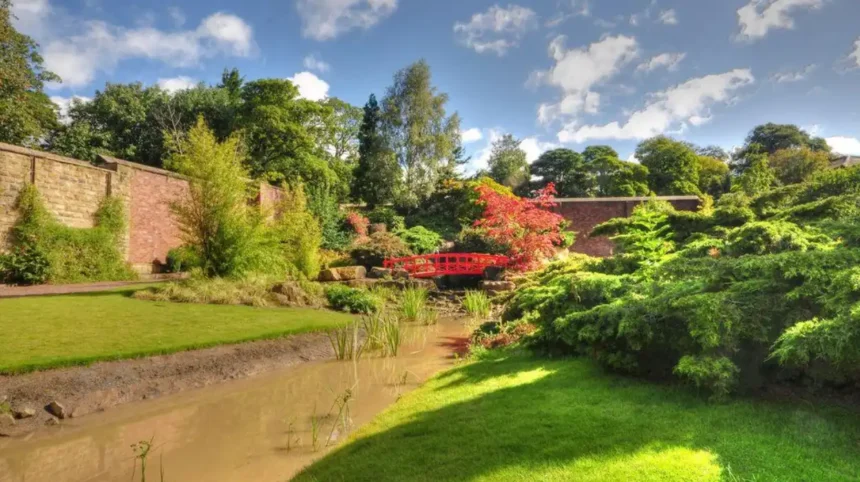
Horsforth Hall Park is a large community park on Hall Lane, approximately six miles north-west of Leeds city centre. Leeds City Council identifies scenic walks, a cricket pitch, Japanese garden, trim trail, skate park and children’s play facilities among its attractions.
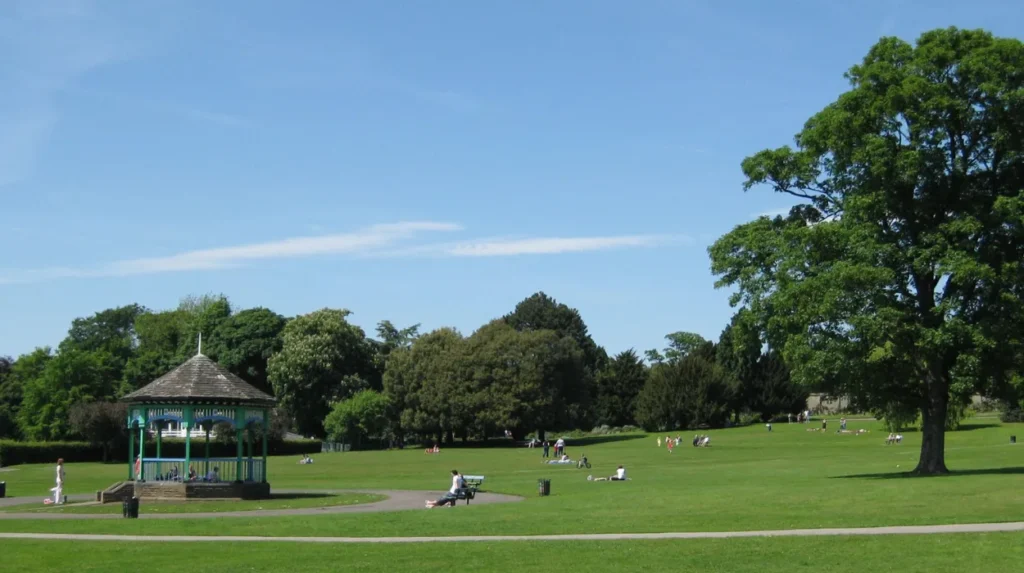
The park is historically significant because it occupies land associated with Horsforth Hall. The original hall was demolished, but surviving features connected with the former estate remain. Leeds planning documentation identifies the listed stables block and listed war memorial as notable heritage features, while the bandstand is another significant feature of the park.
This makes the park more than a recreational space. It represents the conversion of historic estate land into a public community asset.
Accessibility is also relevant for visitors with limited time. Leeds City Council states that the park’s paths are suitable for wheelchair users and that all entrances are wheelchair accessible. Two disabled parking bays are available in the main car park off Hall Lane.
The park works particularly well for visitors who want a landmark that does not require an admission process or a long indoor visit. A short walk through the gardens and around the principal features provides an immediate introduction to Horsforth.
What can you see around Horsforth Hall Park?
Horsforth Hall Park contains several distinct features, including the Japanese garden, cricket pitch, bandstand, war memorial, historic stables area, skate park, trim trail and integrated play facilities. These features allow visitors to combine heritage, recreation, landscape and community facilities.
The Japanese garden provides one of the park’s most distinctive landscaped areas. It forms part of the wider park environment rather than operating as a separate visitor attraction.
The cricket pitch reflects the park’s role as a community sports space. The trim trail and skate park provide more active recreational uses, while children’s facilities broaden the park’s appeal to families.
The historic features provide the strongest heritage connection. The former Horsforth Hall no longer survives, but the surviving stables block demonstrates the earlier estate structure. The listed war memorial provides another layer of local history.
The park is therefore useful for travellers who want to understand how historic land has been incorporated into modern Leeds. It also provides a practical place to take a short break between visits to other Horsforth landmarks.
Leeds has 65 community parks, according to Leeds City Council, placing Horsforth Hall Park within a substantial citywide network of public green spaces.
Why is Horsforth Town Street important for visitors?
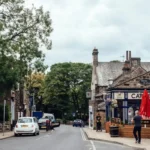
Horsforth Town Street is important because it forms part of the historic village core and continues to function as a local commercial centre. Visitors can see traditional buildings while accessing cafés, restaurants, shops and services that demonstrate Horsforth’s contemporary community identity.
Town Street is one of the most useful areas for understanding Horsforth as a living settlement rather than simply a collection of historic sites.
The street forms part of the historic core identified in Leeds heritage documentation. The area contains historic stone buildings, traditional terraces and later structures that illustrate the gradual expansion of Horsforth.
Leeds planning research records that the historic centre retained much of its village character because its medieval settlement pattern was less suitable for large-scale nineteenth-century industrial redevelopment.
This surviving character is significant for short visits. Travellers do not need to enter a formal museum to encounter the area’s heritage. The street itself provides architectural evidence of earlier development.
Town Street also serves a practical purpose. Visit Leeds describes Horsforth as having a strong food and drink offer, with Town Street functioning as a destination for restaurants, bars and nightlife.
For a visitor with only a few hours, Town Street can therefore combine sightseeing with food or refreshments without requiring a separate journey.
What historic features can you see around The Green?
The Green is one of Horsforth’s important historic spaces because the settlement developed around its village core. Nearby historic buildings and streets retain evidence of Horsforth’s earlier rural identity before industrial growth and suburban expansion transformed the area.
The Green represents an important part of Horsforth’s historical geography. Historic settlement patterns developed around central open space, routes and agricultural land.
The area changed substantially after the dissolution of Kirkstall Abbey in 1539. Abbey lands in Horsforth were sold to private owners, including the Stanhope family. Leeds heritage research links the Stanhopes with important buildings and developments in Horsforth, including later work associated with St Margaret’s Church.
The survival of the historic core provides useful context for visitors walking between Town Street and other local landmarks.
The surrounding architecture also demonstrates different periods of development. Leeds planning documents identify eighteenth-century stone cottages alongside nineteenth-century terraces and Victorian villas in parts of Horsforth.
This architectural variety gives a short walking visit a clear historical sequence. Visitors can see older stone construction alongside buildings associated with Horsforth’s nineteenth-century expansion.
The Green is therefore best understood as part of a wider historic landscape rather than as an isolated monument.
As you explore the modern village core, you are crossing land with a deep heritage. Read about the full to understand its origins.
Is St Margaret’s Church a worthwhile Horsforth landmark?
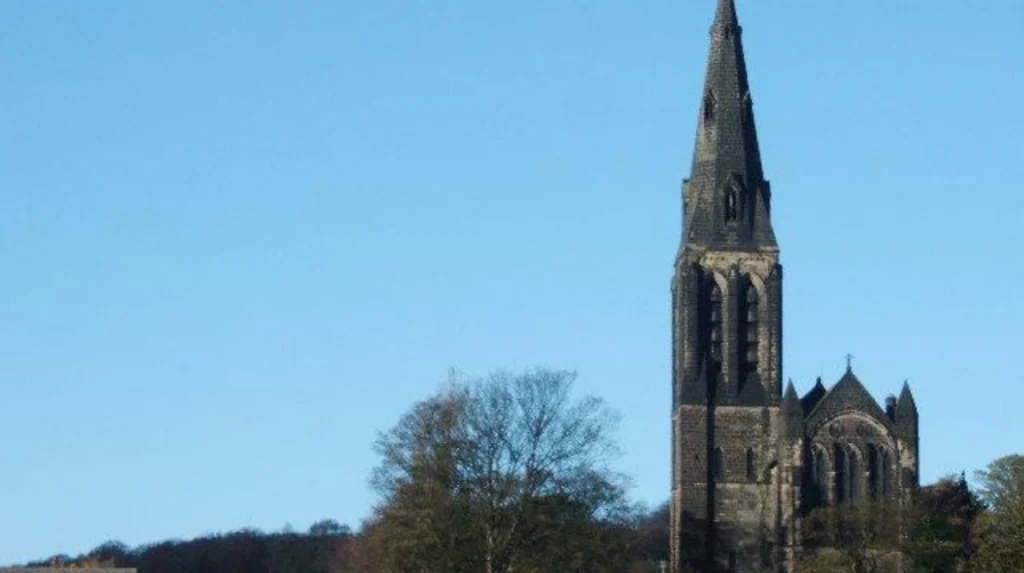
St Margaret’s Church is a significant Horsforth landmark because its present building dates from the late nineteenth century and forms part of a historic group around Church Lane. Its architecture, churchyard and relationship with nearby heritage buildings make it important for visitors.
St Margaret’s Church is one of Horsforth’s principal architectural landmarks. The Church of England’s Church Heritage Record identifies the building as part of the Diocese of Leeds and records its official heritage information.
The present church emerged from the area’s changing religious and social landscape. Leeds heritage research states that a chapel stood near The Green and that a later member of the Stanhope family built the present St Margaret’s Church, replacing the earlier chapel.
The surrounding area adds to its importance. The Old Vicarage on Church Lane was built in 1894 as a stone-built vicarage and shares architectural relationships with the church and parish centre. Horsforth’s neighbourhood plan identifies the group as having architectural and historical significance.
Visitors should treat the church as part of the wider Church Lane heritage setting. The building, churchyard and nearby historic structures collectively demonstrate the development of Horsforth’s religious and residential landscape.
A short exterior visit is suitable when time is limited. Visitors should check current arrangements before expecting access to the interior.
What is worth seeing at Horsforth Village Museum?
Horsforth Village Museum is the most direct place to explore local history through collections and exhibitions. The volunteer-run museum focuses on Horsforth’s people, buildings, industries and community development, making it particularly useful for visitors seeking detailed local context.
Horsforth Village Museum provides a focused introduction to the settlement’s local history. Visit Leeds describes the museum as a volunteer-run institution housed in the former council chambers. Its exhibitions cover aspects of life in and around Horsforth village.
The museum’s value comes from its local scale. Large museums often explain regional or national history, while a village museum concentrates on the specific community surrounding the visitor.
That focus is useful for understanding how Horsforth changed over time. The settlement developed from an agricultural community into an industrial village before becoming part of the expanding Leeds urban area.
Historical records demonstrate the scale of that transformation. Horsforth had 215 chimneys recorded in the 1672 Hearth Tax assessment, while a population account from October 1795 recorded 2,018 inhabitants.
The museum provides context for interpreting these changes. It is therefore particularly useful before or after a walk around the historic centre.
Visitors should check opening arrangements before travelling because community museums often operate on specific days or seasonal schedules.
How does Horsforth’s railway station help with a short visit?
Horsforth railway station makes the area practical for short visits because it provides direct rail access and sits within Horsforth itself. The station has step-free access to platforms, passenger assistance and parking, although access involves ramps rather than lifts.
Horsforth railway station is located on Station Road, Horsforth, LS18 5NL, and is managed by Northern. National Rail lists step-free access to all platforms, although the station has no lifts.
The station has 68 parking spaces and bicycle storage. National Rail also records accessible toilets, baby-changing facilities and staff assistance.
For travellers arriving by train, the station provides a useful starting point for exploring Horsforth. A visitor can combine rail travel with local walking, buses or taxi connections.
The station itself is not a traditional heritage attraction on the scale of St Margaret’s Church or the village museum. Its importance lies in transport history and accessibility.
Rail access also reflects Horsforth’s nineteenth-century expansion. Planning documentation states that the railway arrived in 1849 and accelerated the settlement’s growth.
This makes the station relevant when considering how Horsforth developed from a village into a well-connected Leeds suburb.
Is Kirkstall Abbey close enough to include in a Horsforth visit?
Kirkstall Abbey is close enough to consider during a longer short visit, especially for travellers interested in medieval architecture. The twelfth-century Cistercian abbey stands beside the River Aire and provides a major heritage attraction near Horsforth.
Kirkstall Abbey is not inside Horsforth, but its proximity makes it a logical addition for visitors extending their itinerary beyond the immediate neighbourhood.
The abbey was founded in 1152 by Cistercian monks and is recognised by Visit Leeds as one of Britain’s most complete examples of a medieval Cistercian abbey. It stands beside the River Aire within parkland.
The site contains substantial medieval ruins and a visitor centre explaining the history of the monastery. The surrounding park provides walking space and wildlife habitat.
Kirkstall Abbey also has practical facilities, including accessible parking, accessible toilets, picnic facilities and wheelchair accessibility. Visit Leeds lists it as a family-friendly and dog-friendly venue.
Its inclusion depends on the visitor’s available time. A visitor with only one or two hours should concentrate on Horsforth itself. A visitor with several hours can combine Horsforth’s village landmarks with Kirkstall Abbey.
The connection is also historical. Horsforth’s medieval development was influenced by its relationship with Kirkstall Abbey and its lands. When Henry VIII dissolved the abbey in 1539, former abbey lands in Horsforth entered private ownership.
How can you combine Horsforth landmarks during a short visit?
A practical short visit combines one major green space, one historic village area and one cultural landmark. Horsforth Hall Park, Town Street and Horsforth Village Museum provide a balanced route, while St Margaret’s Church and nearby heritage streets add architectural context.
A compact itinerary starts at Horsforth Hall Park. The park provides open space, gardens and historic features without requiring a long visit.
The next stage is the historic village area. Town Street and The Green provide a transition from landscaped estate land to the older built environment.
St Margaret’s Church provides a further architectural stop. Church Lane adds another perspective on Horsforth’s nineteenth-century development.
Horsforth Village Museum then provides historical interpretation. This sequence moves from landscape to architecture and finally to documentary and community history.
The exact order depends on transport and opening hours. Visitors arriving by train can begin at Horsforth station and travel towards the central landmarks. Visitors arriving by car can use the park as an initial stop.
The Town Council identifies Horsforth as having three busy high streets, local businesses, a farmers’ market and a volunteer-run museum.
This supports a short-visit model that combines heritage with everyday local activity rather than treating Horsforth solely as a historic destination.
Which Horsforth landmarks suit visitors interested in architecture?
Visitors interested in architecture should focus on St Margaret’s Church, the Old Vicarage, Town Street, The Green and surviving stone buildings around the historic core. These sites demonstrate Horsforth’s transition from rural settlement to Victorian village and modern Leeds suburb.
Horsforth’s architecture reflects several stages of development.
Earlier stone cottages demonstrate the area’s rural building tradition. Later terraces and villas reflect population growth and economic expansion during the eighteenth and nineteenth centuries.
Leeds heritage documentation identifies eighteenth-century stone cottages and late nineteenth-century terraces around parts of Lee Lane East, alongside larger Victorian stone villas.
The Old Vicarage is particularly useful as a dateable building. The neighbourhood plan records its construction in 1894 and describes it as a stone-built former vicarage. Its architectural relationship with St Margaret’s Church creates group value.
St Margaret’s Church adds a larger institutional building to this architectural sequence.
The historic core is protected through planning policy. Leeds City Council lists Horsforth and Horsforth Cragg Hill among the city’s conservation areas.
A conservation area is a designated area where special architectural or historic interest receives additional planning protection. This designation helps preserve the character of significant historic environments.
What should visitors know about accessibility and transport?
Horsforth offers practical transport options for short visits through rail and bus connections, while key public spaces provide accessibility features. Horsforth railway station has step-free platform access, and Horsforth Hall Park has accessible entrances and wheelchair-suitable paths.
Transport is one of Horsforth’s advantages for visitors with limited time.
National Rail records Horsforth station at Station Road and identifies step-free access to all platforms. The access route uses ramps, and no station lifts are provided.
Horsforth also has regular bus connections. Visit Leeds identifies bus routes including services 50, 30 and 33a as routes connecting Horsforth with Leeds city centre.
The park has particularly useful accessibility provisions. Leeds City Council states that all entrances are wheelchair accessible and that paths are suitable for wheelchair users. Two disabled parking spaces are located in the main car park.
Visitors should distinguish between physical accessibility and full access to individual buildings. Outdoor spaces can have accessible paths while historic interiors have different restrictions.
Checking current opening arrangements is therefore important for museums, churches and other managed attractions.
Why does Horsforth’s history matter when visiting its landmarks?
Horsforth’s history matters because its landmarks represent different periods of development, from medieval settlement and monastic influence to estate ownership, industrial growth, railway expansion and suburbanisation. Understanding this sequence makes each surviving building, street and park easier to interpret.
Horsforth’s historical development is unusually visible in its present landscape.
The Domesday Survey provides the earliest major written record. By the seventeenth century, the Hearth Tax evidence demonstrates a substantial settlement, while the 1795 population figure shows further growth.
The nineteenth century brought major change. Horsforth developed as a clothing village, and the railway arrived in 1849. The settlement subsequently expanded while retaining parts of its earlier village structure.
The relationship with Kirkstall Abbey is also important. Abbey land influenced local land ownership and development before the Dissolution of the Monasteries.
Later buildings such as St Margaret’s Church and the Old Vicarage demonstrate Victorian expansion. Horsforth Hall Park illustrates another stage, when former estate land became an important public recreational space.
These layers explain why a short walk through Horsforth can reveal medieval, Georgian, Victorian and modern influences within a relatively small area.
Explore More Area Guide
Horsforth Best Quiet Places for a Peaceful Day Out
Horsforth Accessible Places: Wheelchair-Friendly Attractions and Facilities
What is the best way to spend limited time in Horsforth?
The best short visit focuses on the historic village core and Horsforth Hall Park, with the museum or St Margaret’s Church added when opening times permit. Travellers with additional time can extend the visit towards Kirkstall Abbey and the River Aire.
A one-hour visit should prioritise the outdoor landmarks. Horsforth Hall Park and the historic village streets provide the most flexible experience because they do not depend entirely on indoor opening times.
A two-hour visit allows the addition of Horsforth Village Museum or a more detailed architectural walk around Church Lane and The Green.
A longer half-day visit supports an extended journey towards Kirkstall Abbey.
The key principle is geographic efficiency. Visitors should group nearby landmarks rather than repeatedly returning to the same transport point.
Horsforth’s compact village character supports this approach. Visit Leeds describes the area as approximately six miles from Leeds city centre and highlights its train station, food and drink offer, museum and Hall Park.
This combination makes Horsforth suitable for travellers who have limited downtime but still want to experience a distinct part of Leeds.
The area’s heritage also remains relevant beyond tourism. Horsforth continues to function as a residential community, commercial centre and transport-connected suburb.
For visitors, that means the strongest landmarks are not isolated attractions. They form part of an active local environment.
What makes Horsforth’s landmarks relevant for future visitors?
Horsforth’s landmarks remain relevant because heritage protection, public parks, community museums and transport connections preserve access to the area’s historic identity. The combination supports sustainable short visits while maintaining Horsforth as a functioning residential and commercial part of Leeds.
Horsforth’s future visitor appeal depends on retaining the relationship between heritage and everyday community life.
The conservation area framework protects important historic character. Leeds City Council’s heritage system identifies Horsforth and Horsforth Cragg Hill as conservation areas.
Horsforth Hall Park provides another form of long-term public value. It is maintained as a community park with recreation, gardens, sports facilities and accessible paths.
The museum provides community-led interpretation of local history. Its volunteer-run structure reflects the continuing role of residents in preserving Horsforth’s identity.
Transport also supports continued accessibility. Horsforth railway station provides rail connections, while bus services connect the neighbourhood with Leeds and surrounding areas.
For travellers, the result is a destination that does not depend on a single attraction. Its value comes from the combined presence of historic streets, religious architecture, public gardens, community heritage and transport infrastructure.
A short visit can therefore provide a clear introduction to Horsforth without requiring a full day. The strongest route connects Horsforth Hall Park, the historic village core, St Margaret’s Church and Horsforth Village Museum, with Kirkstall Abbey as an optional nearby extension.
Horsforth’s landmarks show how a historic West Yorkshire settlement developed into a modern Leeds suburb while retaining substantial elements of its earlier character. That combination makes the area particularly suitable for visitors seeking accessible local heritage during a limited stay.
What are the best landmarks to see in Horsforth?
The main landmarks include Horsforth Hall Park, Horsforth Village Museum, St Margaret’s Church, Town Street and The Green. These sites cover local history, architecture, green space and community heritage.