Horsforth is a suburban area of Leeds, West Yorkshire, located about six miles north-west of Leeds city centre. It combines historic stone buildings, community green spaces, mature trees, church architecture, streetscapes and nearby river landscapes, giving photography beginners several accessible subjects within a compact area.
- What makes Horsforth suitable for photography beginners?
- Which parts of Horsforth offer the most accessible photography subjects?
- How can beginners photograph Horsforth Hall Park?
- What historic buildings should photography beginners look for in Horsforth?
- How can beginners photograph streets and architecture around Horsforth?
- Where can photographers find nature and landscape subjects near Horsforth?
- Is Kirkstall Abbey suitable for a photography trip from Horsforth?
- What photography techniques can beginners practise in Horsforth?
- How should visitors plan a beginner photography walk in Horsforth?
- What should photographers know before taking pictures in Horsforth?
- Why does Horsforth remain relevant for photography beginners?
The area has a strong historical identity. Horsforth appears in the Domesday Book of 1086 under several spellings. Its later development included connections with Kirkstall Abbey, the wool and cloth trade, transport infrastructure and Victorian expansion. Leeds City Council identifies Horsforth as a designated conservation area, while Horsforth Cragg Hill and Woodside also have conservation-area status.
For beginners, the value of Horsforth lies in the variety of subjects rather than specialist photographic access. A visitor can practise photographing architecture on Town Street, trees and open space at Horsforth Hall Park, religious architecture around St Margaret’s Church, and wider landscapes towards West End Lane and Hunger Hills.
The area also connects naturally with nearby attractions. Kirkstall Abbey lies south-east of Horsforth and provides a contrasting setting of medieval ruins, stone architecture, landscaped grounds and the River Aire. Leeds Museums & Galleries identifies the abbey as a Cistercian monastery dating from 1152 and also provides information about visiting, events and photography-related venue use.
What makes Horsforth suitable for photography beginners?
Horsforth suits photography beginners because its streets, parks, historic buildings, trees and nearby landscapes provide varied subjects without requiring specialist equipment. Locations such as Horsforth Hall Park and Town Street offer straightforward opportunities to practise composition, framing, light, texture and architectural photography.
Beginner photography benefits from locations where subjects are easy to identify and access. Horsforth provides this through a combination of public streets, community green spaces and heritage sites.
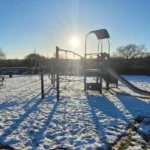
Horsforth Hall Park is particularly useful because Leeds City Council lists scenic walks, a cricket pitch, Japanese garden, skate park, playground facilities and other features within the park. Its paths are suitable for wheelchair users and its entrances are wheelchair accessible.
The built environment provides another set of subjects. Horsforth contains historic sandstone cottages, Victorian villas, churches and civic buildings. These buildings create opportunities to practise straight architectural lines, repeating windows, stone textures and relationships between buildings and streets.
Photography beginners can also use the area’s ordinary details. Doorways, walls, railings, trees, street signs and boundary features provide simple subjects for learning exposure and composition without relying on major landmarks.
The compact nature of the area also supports short photography walks. A visitor can photograph several different subject types during one outing rather than travelling between distant parts of Leeds.
Which parts of Horsforth offer the most accessible photography subjects?
Town Street, Horsforth Hall Park, Hall Lane, The Green, Church Lane and the area around West End Lane provide accessible photography subjects. They combine historic buildings, mature vegetation, open space, streetscapes and architectural details that beginners can photograph from public areas.
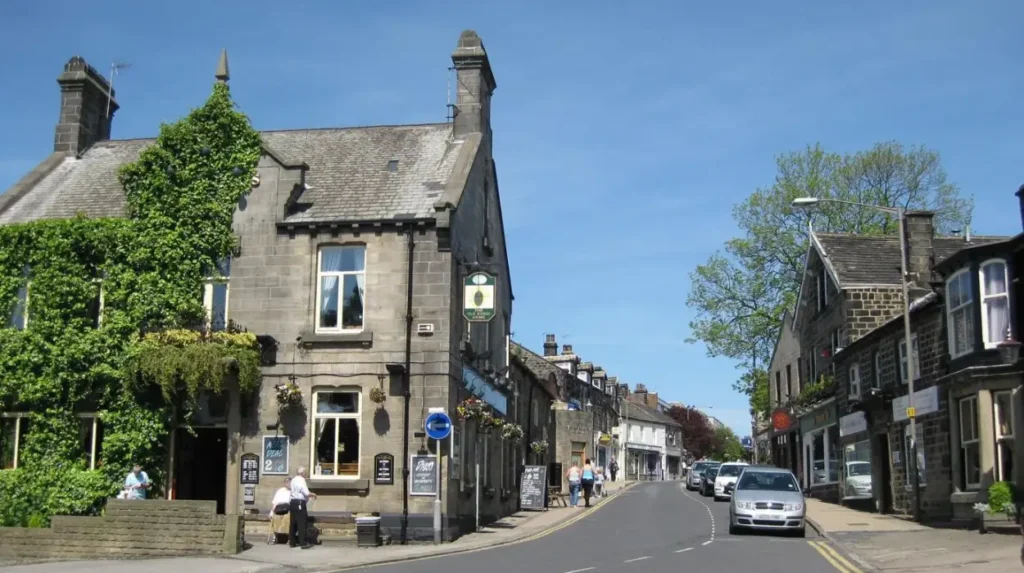
Town Street is one of the most useful starting points for architectural photography. Leeds City Council’s Horsforth design statement records rows of historic sandstone cottages and other buildings along the street. Examples include 123–135 Town Street, a group of seven stone cottages originally associated with a farmhouse and outbuildings.
The Green adds another type of subject. Its surrounding buildings and street arrangement provide opportunities for wider compositions. The area also includes a historic telephone kiosk identified in the local design statement as a 1935 Type K6 kiosk.
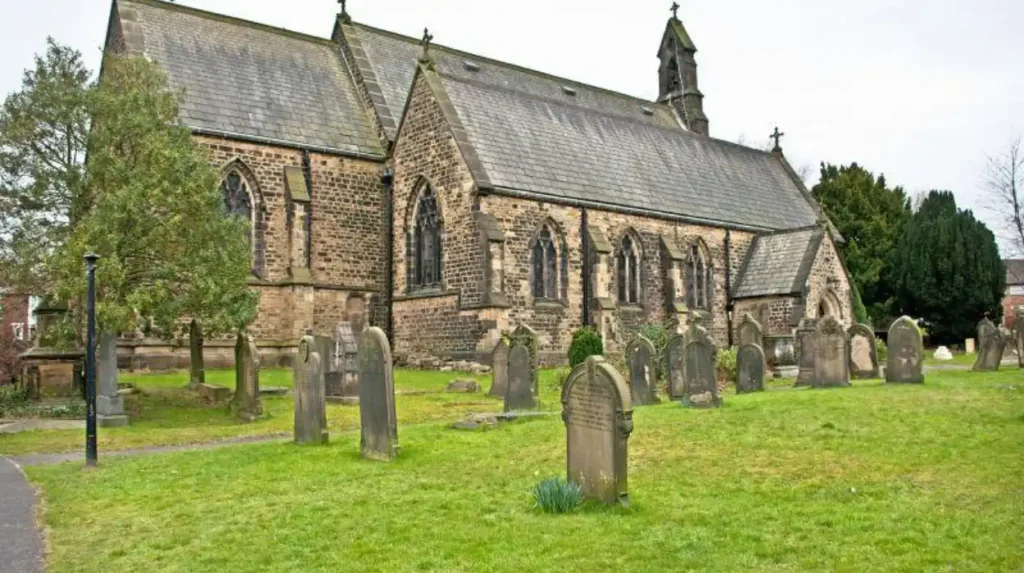
Church Lane introduces religious architecture and vertical compositions. St Margaret’s Church is a sandstone building dating from 1877–83, with its spire completed in 1902. The church forms a distinctive visual feature within the local landscape.
Hall Lane provides access towards Horsforth Hall Park. Mature trees, stone walls and historic structures create contrasting textures and foreground-background relationships.
West End Lane is useful for wider landscape compositions. Leeds City Council’s character assessment records extensive rolling farmland west of West End Lane, with longer-distance views towards surrounding hills.
How can beginners photograph Horsforth Hall Park?
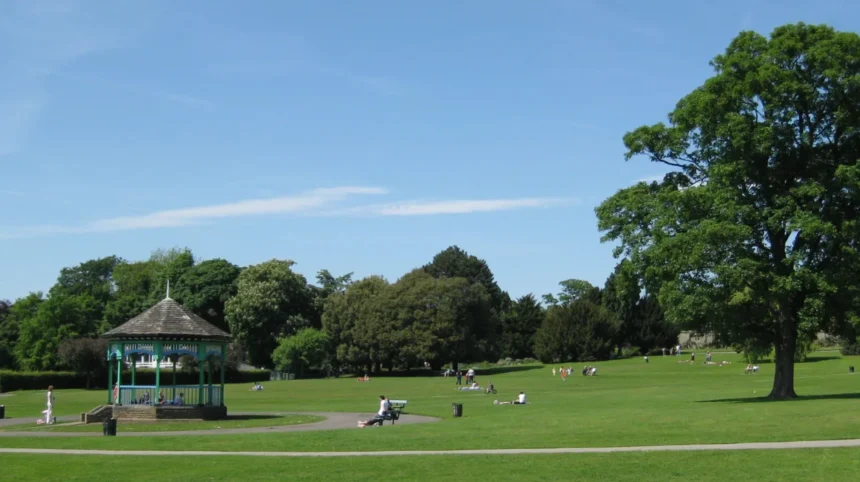
Horsforth Hall Park provides a practical setting for learning photography through trees, paths, historic structures, open grassland, gardens and recreational features. The park is about six miles north-west of Leeds city centre and includes scenic walks, a cricket pitch, Japanese garden and mature trees.
Horsforth Hall Park is one of the area’s principal public green spaces. Leeds City Council classifies it as a community park and provides its location as Hall Lane, Horsforth, LS18 5JE.
The park also has an important historical dimension. Horsforth Hall stood on the site from the late seventeenth or early eighteenth century until its demolition in the early 1950s. Leeds City Council’s character assessment states that the hall was built between 1699 and 1707 and that the existing parkland reflects the grounds associated with the former building.
For photography beginners, the surviving features are particularly relevant. The council identifies the listed stables, war memorial and bandstand as historic structures within the park. These features create subjects with different scales, from close architectural details to wider landscape compositions.
The mature trees provide another useful subject. A beginner can photograph individual trunks, branches, paths beneath tree cover and changes in texture between vegetation and open grass.
The Japanese garden introduces more structured compositions. Paths, planting and controlled vegetation provide opportunities to practise foreground framing and symmetrical arrangements.
The park also contains recreational spaces. The cricket pitch and skate park provide subjects with strong lines and movement. These are useful for learning shutter speed and timing while keeping the setting familiar and accessible.
The council states that paths are suitable for wheelchair users and that all entrances are wheelchair accessible. Two disabled parking bays are located in the main car park off Hall Lane.
What historic buildings should photography beginners look for in Horsforth?
Photography beginners should look for sandstone cottages, historic villas, churches, the Horsforth Hall stable block, the war memorial, the bandstand and older civic buildings. These subjects demonstrate architectural details, stone textures, repeated forms and changes in building styles across Horsforth.
Horsforth’s historic architecture is concentrated across several streets and character areas. Leeds City Council’s design documentation records buildings ranging from eighteenth-century sandstone cottages to nineteenth-century institutional architecture.
The Horsforth Hall stable block is one of the most significant surviving reminders of the former hall. The council’s records identify the stable block as a listed structure, with a date stone from 1707.
St Margaret’s Church provides a different architectural subject. Its sandstone construction and tall spire create strong vertical lines, while the surrounding mature vegetation introduces natural framing. The church dates from the late nineteenth century, with the spire completed in 1902.
Town Street contains several rows of historic sandstone buildings. The local design statement identifies 79, 81 and 83 Town Street as a late-eighteenth-century row of three stone buildings. It also identifies 123–135 Town Street as a row of seven eighteenth-century sandstone cottages.
The Mechanics Institute on Town Street dates from 1881. The building is constructed in sandstone and provides a civic architecture subject with a different visual character from residential cottages. Grove Methodist Church, dating from 1867, adds another example of nineteenth-century sandstone architecture.
As you photograph these modern streets and surviving structures, you are crossing a landscape shaped by centuries of development. Read the full to understand the origins and historical development behind these locations.
Photography beginners should remember that listed buildings and conservation areas require respectful behaviour. Public photography from streets and other legitimate public spaces differs from entering private property or interfering with residents.
How can beginners photograph streets and architecture around Horsforth?
Beginners can photograph Horsforth streets by using building lines, doorways, windows, stone walls, road perspectives and repeating architectural features as composition guides. Town Street, Lee Lane East, Hall Lane and Church Lane provide distinct examples of historic residential and civic streetscapes.
Street photography in Horsforth does not require specialist equipment. A standard smartphone camera provides sufficient control for practising framing, exposure and perspective.
Town Street is particularly useful for architectural details. Its sandstone cottages demonstrate how repeated windows, doors and rooflines create visual patterns. A beginner can photograph an entire building first and then move closer to isolate masonry, windows or door surrounds.
Lee Lane East provides a different architectural setting. The council characterises the area as containing late nineteenth-century terraces alongside earlier eighteenth-century stone cottages. Larger Victorian villas also form part of the surrounding conservation-area character.
Hall Lane creates another transition between architecture and landscape. The road borders Horsforth Hall Park, where stone walls and mature trees contribute to the character of the area.
Beginners should pay attention to perspective. Photographing along a street creates converging lines that draw attention towards the distance. Photographing directly towards a building places greater emphasis on symmetry and façade detail.
Windows provide repeated shapes. Doors provide vertical framing. Stone walls provide texture. Tree branches can frame the upper section of an image.
These simple subjects allow beginners to practise one photographic principle at a time. The approach also reduces the need to find dramatic landmarks.
Where can photographers find nature and landscape subjects near Horsforth?
Nature and landscape photography around Horsforth centres on Horsforth Hall Park, Hunger Hills, West End Lane and nearby green corridors. These locations provide mature trees, open grassland, woodland, farmland views and changing relationships between built-up areas and the surrounding landscape.
Horsforth contains several green spaces recognised in Leeds planning and environmental documentation. The council’s design statement identifies Hunger Hills as a local nature area and records links between Hunger Hills, Horsforth Hall Park and West End Lane.
Hunger Hills provides a woodland-oriented setting. Trees create opportunities for photographing trunks, paths, foliage and changing light between open and shaded areas.
West End Lane offers a more open landscape. Leeds City Council records extensive rolling farmland west of the road and longer-distance views towards surrounding hills.
Horsforth Hall Park provides the easiest combination of open and wooded subjects. Mature trees line parts of the park, while grassland and recreational areas create open compositions. The council specifically identifies a fine stand of mature forest trees on the eastern side of the park.
Nature photography beginners should also observe seasonal differences. Trees change from bare branches to spring foliage, dense summer greenery and autumn colour before winter returns to more open branch structures.
The same location therefore provides different visual conditions throughout the year. A repeat visit also helps beginners understand how weather and daylight affect exposure.
Photographers should remain on permitted paths and respect planted areas, wildlife and other park users. Public green space remains a shared community resource.
Is Kirkstall Abbey suitable for a photography trip from Horsforth?
Kirkstall Abbey is a strong nearby photography destination because its medieval Cistercian ruins provide arches, stone walls, columns, windows, open grounds and river views. Leeds Museums & Galleries identifies the abbey as a monastery dating from 1152 and provides visitor information.
Kirkstall Abbey is located in Kirkstall, south-east of Horsforth. The abbey is one of the most recognisable historic attractions in this part of Leeds.
The site was founded in 1152 as a Cistercian monastery. Its surviving ruins provide a substantially different photographic environment from Horsforth’s residential streets and community parks.
The architecture contains repeated arches, stone columns, large openings and long walls. These features create strong geometric structures that are useful for beginner composition practice.
The surrounding grounds add landscape opportunities. Leeds Museums & Galleries states that the park provides space for walking, picnics and exploration, with the River Aire also accessible within the wider setting.
The abbey also has a dedicated audio guide called Tales of Kirkstall Abbey. The guide uses ten points around the ruins to introduce visitors to parts of the site and its history.
For photographers, the combination of ruins and open landscape creates different image scales. A wide photograph can include the architecture and surrounding grounds. A closer image can focus on masonry, arches or individual architectural details.
The site is also used for filming and photoshoots. Leeds Museums & Galleries lists Kirkstall Abbey among its filming locations and describes it as an atmospheric ruined Cistercian monastery. Formal commercial photography requirements differ from casual visitor photography, so photographers should check current venue conditions before organised shoots.
What photography techniques can beginners practise in Horsforth?
Horsforth allows beginners to practise composition, perspective, exposure, texture, framing, depth and movement using familiar subjects. Buildings provide lines and patterns, parks provide depth and natural framing, while people, sport and changing light provide opportunities to practise timing.
Composition is the first useful skill. Beginners can divide an image into foreground, middle ground and background. A tree in the foreground, a path in the middle ground and a building behind it create visible depth.
Perspective is especially useful around Horsforth’s historic streets. Photographing a row of cottages from an angle emphasises the direction of the street. Photographing the same buildings straight-on emphasises symmetry.
Texture is another straightforward exercise. Sandstone walls, tree bark, leaves, paving and historic masonry all contain visible surface detail.
Framing uses one object to surround or partially surround another. Tree branches can frame a church spire. A doorway can frame an interior architectural detail where access is permitted. An arch at Kirkstall Abbey can frame the landscape beyond it.
Exposure becomes easier to understand when photographing the same subject under different conditions. Bright open grass, shaded woodland and stone buildings have different light levels. Comparing images helps beginners understand how cameras respond to highlights and shadows.
Movement provides another exercise. The cricket pitch and skate park at Horsforth Hall Park create opportunities to practise timing and shutter speed. Leeds City Council lists both the cricket pitch and skate park among the park’s facilities.
Smartphone users can also practise by changing their position rather than relying on digital zoom. Moving closer changes perspective and reveals details that a zoomed image often compresses.
How should visitors plan a beginner photography walk in Horsforth?
A beginner photography walk works best when it combines one historic street, one green space and one architectural landmark. A practical Horsforth route can include Town Street, The Green, Hall Lane, Horsforth Hall Park and nearby heritage features.
A short visit can begin around Town Street, where historic sandstone buildings provide immediate architectural subjects. The Green adds further street details and civic features.
The route can then continue towards Hall Lane and Horsforth Hall Park. The transition from buildings to open parkland gives beginners a clear change in photographic subject.
Inside the park, photographers can concentrate on one area at a time. Mature trees provide natural subjects. The bandstand and stable block provide architectural subjects. The cricket pitch and skate park provide lines and movement.
A longer visit can extend towards Church Lane and St Margaret’s Church. The church’s sandstone architecture and spire provide a strong landmark within the local streetscape.
Visitors seeking a larger heritage subject can continue towards Kirkstall Abbey. The abbey introduces medieval architecture, landscaped grounds and river-related scenery to the photography itinerary.
The route works for visitors using a smartphone as well as those carrying interchangeable-lens cameras. A beginner does not need to photograph every attraction. Focusing on a small number of subjects produces a more useful practice session.
Explore More Area Guide
Horsforth Best Places for a Casual Afternoon With Friends
Horsforth Recreation Guide for Older Visitors
What should photographers know before taking pictures in Horsforth?
Photographers should respect private property, pedestrians, residents, wildlife, park users and site-specific rules. Public streets and parks provide legitimate photography opportunities, but entering restricted land, obstructing paths or interfering with activities is inappropriate and can breach local requirements.
Horsforth contains residential streets, conservation areas and public parks. The presence of historic architecture does not automatically create unrestricted access to buildings or private land.
Leeds City Council maintains specific conservation-area documentation for Horsforth and Horsforth Cragg Hill. Conservation-area status recognises architectural and historic character, but it does not turn every building into a public attraction.
Park users should follow current signs and local park requirements. Leeds City Council maintains parks byelaws covering Horsforth Hall Park and other local public spaces.
Photographers should avoid blocking footpaths, entrances or access routes. This is particularly relevant around popular parks, churches and residential streets.
Wildlife photography also requires distance and restraint. Birds and other animals should not be disturbed for a photograph. Planting areas should remain protected.
Commercial photography, organised shoots and professional production work can have additional requirements at managed attractions. Kirkstall Abbey, for example, is listed by Leeds Museums & Galleries as a venue available for filming and photoshoots, indicating that organised photography is treated separately from ordinary visitor photography.
These principles help maintain access to Horsforth’s public spaces while protecting its historic buildings, natural areas and residential character.
Why does Horsforth remain relevant for photography beginners?
Horsforth remains relevant because its photographic subjects reflect several layers of Leeds geography and history within a relatively compact area. Historic streets, community parks, woodland, farmland views, churches and nearby Kirkstall Abbey create varied opportunities for repeat photography practice.
The area’s photographic value comes from its diversity of environments. Horsforth is not defined by a single attraction. Instead, its visual character combines residential architecture, historic structures, public green space and surrounding countryside.
Its history also creates a clear connection between photography and place. The Domesday reference of 1086, the development of Horsforth Hall, the wool trade, railway expansion and later suburban growth are reflected in the surviving built environment.
The preservation of historic buildings gives beginners opportunities to photograph architectural details that have remained visible through different periods of development. Conservation-area designation provides an additional planning framework for protecting important character.
Horsforth Hall Park adds an important public landscape. Its current facilities serve the local community, while its historic layout and surviving structures retain links to the former Horsforth Hall estate.
Nearby Kirkstall Abbey expands the range of photographic subjects into medieval architecture and river landscapes. Its grounds and ruins provide a different visual environment from Horsforth’s streets and parks.
For visitors, this combination makes Horsforth suitable for short photography sessions and longer local exploration. Beginners can start with simple subjects such as trees, doors and buildings before progressing towards architectural composition, landscape photography and movement.
The area also supports repeat visits. Seasonal vegetation, changing daylight and different weather conditions alter the appearance of the same locations without requiring a completely new itinerary.
Horsforth therefore works as an accessible photography area within the wider Leeds destination. Its historic buildings, public green spaces and nearby heritage attractions provide a structured way for beginners to learn photographic techniques while exploring the local landscape.
Is Horsforth a good place for beginner photographers?
Yes. Horsforth offers historic buildings, sandstone cottages, churches, parks, mature trees, woodland and open landscapes. Beginners can practise composition, perspective, texture, framing and exposure without travelling far between different photography subjects.