

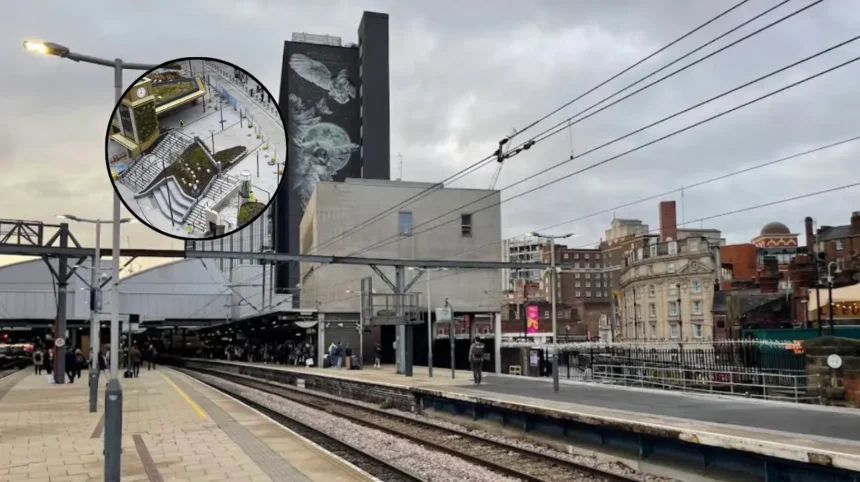
Key Points
- Opening Deferred Again: The grand opening of Leeds City Station’s redesigned New Station Street entrance has experienced another timeline setback, moving the anticipated operational window to early-to-mid October.
- Multi-Million Pound Overhaul: The comprehensive £46 million regeneration project—officially known as the Leeds Station Sustainable Travel Gateway—aims to modernise the major transport hub, introducing new pedestrian zones, improved accessibility, and expanded cycle facilities.
- Complex Engineering Challenges: Project managers cite underground structural complexities, including extensive beam strengthening works beneath New Station Street above the Mill Goit watercourse, as central reasons for schedule adjustments.
- Traffic and Access Impacts: Temporary pedestrian detours remain active, and taxi pick-up operations continue from alternative locations while final groundworks and street-level finishes are finalized.
- Partner Collaboration: The scheme is being delivered in partnership by Leeds City Council, Network Rail, the West Yorkshire Combined Authority, and the Department for Transport through the Transforming Cities Fund.
Leeds (The Leeds Times) September 3, 2026 – The long-awaited opening of Leeds City Station’s redesigned New Station Street entrance has encountered further project delays, with the revised completion window now shifted to early-to-mid October. The £46 million multi-partner redevelopment scheme, designed to transform one of the United Kingdom’s busiest regional rail hubs into a modern, accessible, and pedestrian-friendly gateway, has faced repeated timeline adjustments due to complex underground structural engineering and public realm works.
- Key Points
- Why Has the Leeds Station Entrance Scheme Been Delayed Again?
- What Specific Improvements Are Being Delivered Under the £46 Million Scheme?
- How Are Public Authorities and Project Leaders Managing the Execution?
- Background to the Leeds Station Sustainable Travel Gateway Project
- Prediction: How Will This Further Delay Impact Rail Passengers, Local Businesses, and Regional Commuters?
Why Has the Leeds Station Entrance Scheme Been Delayed Again?
The latest schedule shift reflects ongoing complexities associated with retrofitting aging railway infrastructure while maintaining safe, continuous station operations. As reported by local media outlets and confirmed by project partners, construction crews working on the New Station Street entrance encountered significant engineering demands beneath the surface. Crucial elements of the project required structural reinforcement of the historic arches and support beams positioned over the Mill Goit watercourse—an underground culvert running beneath the main entrance area.
Work on the Leeds Station Sustainable Travel Gateway project originally began to take physical shape in 2022 and 2023, with initial early estimates envisioning earlier operational phases. However, the scope of subterranean repairs, coupled with the necessity to carefully coordinate civil engineering works above active railway lines and underground utilities, has continuously pushed back delivery dates across various construction phases.
What Specific Improvements Are Being Delivered Under the £46 Million Scheme?
The multi-million pound initiative involves a wide-reaching overhaul of the physical environment surrounding Leeds City Station. Designed to improve active travel links and enhance pedestrian flow, the core components of the project include:
- Pedestrianisation of New Station Street: Converting the busy thoroughfare outside the main entrance into a vehicle-free pedestrian space featuring high-quality paving, outdoor seating, and green landscaping.
- Enhanced Accessibility Steps and Lifts: Installing two high-capacity, 21-passenger lifts connecting Bishopgate Street directly to New Station Street, offering step-free access for passengers with mobility requirements, luggage, or pushchairs.
- Dedicated Cycle Hub: Constructing a modern, secure cycle facility with electric bike charging points and extensive storage capacity to promote sustainable multi-modal transport.
- Relocated Taxi Infrastructure: Moving the former primary taxi rank on New Station Street to a purpose-built facility on Bishopgate Street, featuring a large, well-lit shelter with capacity for multiple vehicles and kerb-side boarding facilities.
- Public Realm and Streetscape Upgrades: Carrying out environmental and lighting enhancements along Neville Street, Dark Neville Street, and surrounding approach routes to improve safety and visual appeal.
How Are Public Authorities and Project Leaders Managing the Execution?
The delivery of the £46 million transformation is managed as a joint civic initiative. The project is being delivered by Leeds City Council in direct partnership with the West Yorkshire Combined Authority and landowner Network Rail. Funding has been secured primarily through the Department for Transport’s Transforming Cities Fund, supplemented by regional transport allocations.
Civic leaders have consistently stressed that while timeline shifts are frustrating for passengers and local businesses, delivering a durable, high-quality public entrance remains the priority. West Yorkshire regional representatives have noted that Leeds City Station acts as a primary economic engine for the entire North of England, making a safe and comprehensive completion vital for long-term regional connectivity.
Background to the Leeds Station Sustainable Travel Gateway Project
Leeds City Station represents the primary rail hub for West Yorkshire and stands as one of the busiest railway stations in the United Kingdom outside central London, handling tens of millions of passenger journeys in typical operating years. For over a decade, local planning authorities identified significant spatial constraints, highway congestion, and accessibility bottlenecks around the station’s main entrances on New Station Street and Bishopgate Street.
In response to rising passenger volumes and regional net-zero transport targets, the Leeds Station Sustainable Travel Gateway scheme was formally devised as part of a wider masterplan to modernise the city’s transport infrastructure. Initial public consultations took place in early 2020, leading to formal funding approvals via the West Yorkshire Combined Authority and the Department for Transport in 2021.
Preliminary site works commenced in May 2022, followed by the closure of New Station Street to vehicular traffic in May 2023. The closure required the immediate relocation of taxi ranks to temporary facilities at Princes Square and altered pedestrian entry points around City Square. Over the course of 2023 and 2024, engineers carried out extensive structural interventions to reinforce historical Victorian subterranean structures, while simultaneously laying new utilities, installing lift shafts, and paving pedestrian walkways. While earlier public projections targeted project completion stages between late 2024 and 2025, incremental engineering complexities have extended the overall schedule, leading to the updated autumn opening window for the main entrance area.
Explore More Local Leeds News
Leeds Inner Ring Road Works Trigger 15 Weeks Overnight Closures Leeds 2026
Man Hospitalised After Violent Assault at Leeds Bus Station, Leeds 2026
Prediction: How Will This Further Delay Impact Rail Passengers, Local Businesses, and Regional Commuters?
The push of the New Station Street entrance opening into early-to-mid October creates immediate operational and economic effects across several key user groups:
1. Daily Commuters and Passengers
In the immediate short term, daily commuters and visitors to Leeds will continue to experience minor navigational disruption. Passengers arriving at or departing from the station will need to rely on existing temporary pedestrian diversions via Boar Lane, Princes Square, and secondary entrances. For individuals with reduced mobility, the delay means relying on temporary access arrangements for a few weeks longer until the permanent high-capacity lifts and step-free routes on Bishopgate Street are fully commissioned and certified for public use. However, once open, the modernised space will significantly alleviate historic overcrowding at peak commuting hours.
2. Local Retailers and City Centre Businesses
Businesses operating adjacent to New Station Street, City Square, and the southern entrance of the station have experienced altered footfall patterns throughout the multi-year construction period. The minor delay into October means trader traffic will remain slightly constrained through the end of the summer season. Nevertheless, the arrival of a fully pedestrianised, high-amenity station entrance in mid-autumn is projected to boost footfall ahead of the critical winter trading period, creating an attractive, welcoming environment for shoppers and visitors entering the city centre.
3. Taxi Operators and Transport Providers
Hackney carriage and private hire operators will continue utilizing alternative drop-off and pick-up arrangements at Princes Square until the permanent taxi shelter and dedicated kerb-side boarding zone on Bishopgate Street come into full operation. While the delay requires temporary working patterns to remain in place for a brief additional period, the eventual opening of the custom-designed facility will streamline taxi queue management and reduce urban traffic congestion on local arterial roads.
4. Long-Term Regional Economic Connectivity
From a macro-economic perspective, the short delay of a few weeks represents a temporary pause in a transformative long-term investment. The completion of the £46 million entrance project will integrate Leeds Station more seamlessly with the city’s expanded pedestrian network, supporting regional economic growth, encouraging public transport adoption, and providing a modern transport hub aligned with West Yorkshire’s long-term sustainability goals.