

Horsforth is a suburban area in north-west Leeds with a strong mix of parks, woodland, historic landscapes, canals and nearby heritage attractions. Its location makes it useful for short walks, relaxed afternoons, nature-focused visits and quick breaks from the normal urban routine.
- What makes Horsforth a good place for a change of scenery?
- Which places in Horsforth are best for green space?
- Where can you find woodland and countryside near Horsforth?
- Can you walk from Horsforth into wider Leeds countryside?
- Is Golden Acre Park worth visiting from Horsforth?
- What historic place near Horsforth offers a completely different setting?
- What can you visit near Kirkstall Abbey for more variety?
- Can the Leeds and Liverpool Canal provide a quieter change of scenery?
- Which nearby destination is best for a longer countryside break?
- How can visitors create a full day of different scenery from Horsforth?
- Which Horsforth places suit different types of visitors?
- When is the best time to visit Horsforth for a change of scenery?
- How should you plan a Horsforth change-of-scenery visit?
- Why are Horsforth’s green and historic places important for Leeds visitors?
For visitors, Horsforth offers more than a residential setting. Horsforth Hall Park provides formal recreation and landscaped areas, while Hunger Hills Woods introduces woodland and historic industrial remains. Nearby destinations such as Golden Acre Park, Kirkstall Abbey and the Leeds and Liverpool Canal create further options without requiring a full-day journey.
The area also connects with wider walking routes. The Leeds Country Way is a 62-mile circular footpath around Leeds, divided into four main stages and shorter walking sections.
What makes Horsforth a good place for a change of scenery?
Horsforth combines parks, woodland, historic landscapes, waterways and nearby attractions within a compact part of north-west Leeds. This variety lets visitors switch between green space, heritage sites, walking routes and cafés without travelling far from the area.
Horsforth sits about six miles north-west of Leeds city centre. Its position between established residential neighbourhoods and the open countryside around north-west Leeds gives it a varied landscape.
The most useful feature for visitors is the range of environments. A visit can begin with landscaped parkland, continue through woodland and finish beside a canal or historic building.
This makes Horsforth suitable for several types of short break. Tourists can explore local scenery, residents can discover less familiar green spaces, digital nomads can combine a walk with café time, and business travellers can use the area for downtime between commitments.
The change of scenery does not depend on a single attraction. It comes from the concentration of different environments within and around Horsforth.
Which places in Horsforth are best for green space?
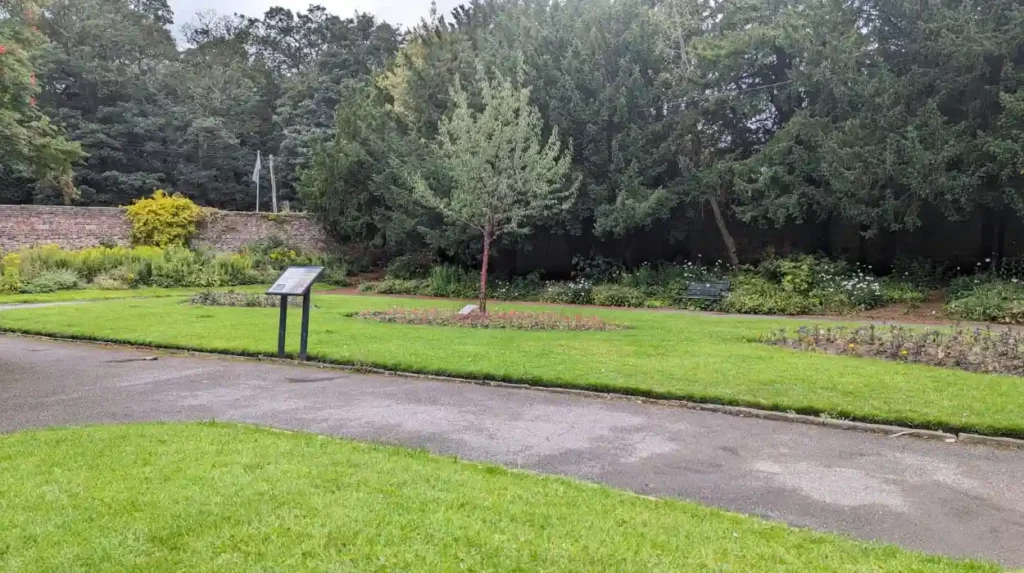
Horsforth Hall Park and Hunger Hills Woods provide two contrasting green spaces. Hall Park offers maintained paths, gardens and recreation facilities, while Hunger Hills provides woodland, historic quarry remains and longer countryside connections around the edge of Horsforth.
Horsforth Hall Park
Horsforth Hall Park is one of the most accessible places to begin a local visit. Leeds City Council describes it as a large community park around six miles north-west of Leeds city centre.
The park contains scenic walks, a cricket pitch, a Japanese garden, a trim trail, a skate park and children’s play facilities. Its integrated play facility was developed through the Horsforth Integrated Play Project with Mencap and Leeds City Council’s parks service.
The paths are suitable for wheelchair users, and all entrances are wheelchair accessible. Two disabled parking bays are available in the main car park off Hall Lane.
The combination of landscaped gardens and recreational space gives Hall Park a different atmosphere from the surrounding streets. It works particularly well for a short visit because visitors do not need to plan a long route.
Hunger Hills Woods
Hunger Hills provides a more natural setting. Leeds City Council lists Hunger Hills as a woodland area within its parks byelaws schedule.
The woodland also has a documented industrial past. Leeds planning material identifies quarry and bell-mining remains at Hunger Hills, including evidence connected with coal, ganister and fireclay extraction.
The area therefore combines nature with visible traces of earlier industry. Paths through the woodland and surrounding fields provide a different walking experience from the maintained environment of Horsforth Hall Park.
The Friends of Hunger Hills Woods group meets regularly and organises activities and action days, showing the continuing community role of the woodland.
As you explore the modern landscape, you are crossing land with a deep local heritage. Read about the full to understand how the area’s older industries and settlements shaped its present landscape.
Where can you find woodland and countryside near Horsforth?
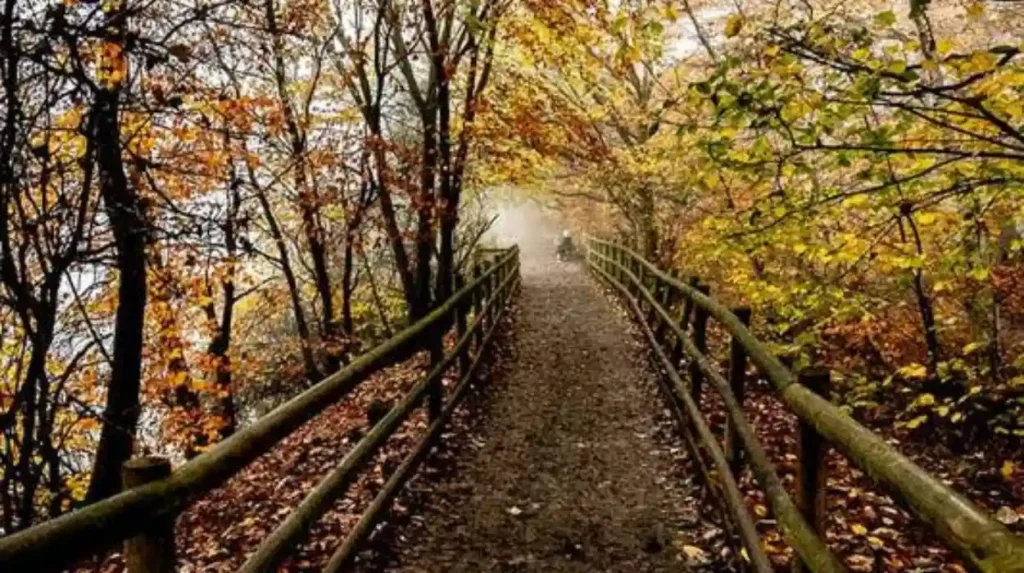
Hunger Hills, Cragg Wood and surrounding countryside provide a stronger rural setting than central Horsforth. These areas contain woodland, fields, historic landscape features and public paths, creating opportunities for quieter walks and a noticeable break from built-up surroundings.
Horsforth’s northern and western edges contain several green spaces that connect residential areas with open land.
Cragg Wood is identified by Leeds City Council as a woodland area. The same council records Hunger Hills, Little Hawksworth Wood, Swaine Wood and The Outwood within its local woodland listings for Horsforth.
Hunger Hills has particular historical importance because its landscape preserves evidence of former extraction. Historic planning documentation records more than 50 bell pits and small drift mines across Horsforth, with approximately 26 associated with the Hunger Hills area.
These remains are part of the landscape rather than a conventional visitor attraction. Visitors therefore experience history through paths, woodland, fields and surviving landforms.
The wider countryside also connects with walking routes. Horsforth Hall Park and Hunger Hills Woods form part of the wider West Leeds Country Park landscape, while a section of the Leeds Country Way passes through the area.
Can you walk from Horsforth into wider Leeds countryside?
Yes. Horsforth connects with wider walking networks that extend beyond the immediate neighbourhood. The Leeds Country Way and local footpaths provide access to fields, woodland and neighbouring districts, making longer walks possible without starting in central Leeds.
The Leeds Country Way is one of the area’s most useful long-distance walking connections. Leeds City Council describes it as a 62-mile circular footpath around Leeds. The full route is divided into four main stages of roughly 15 miles, with shorter five-mile sections.
For visitors staying in or around Horsforth, the important point is that the route does not require a commitment to the entire 62 miles. Individual sections can form part of a shorter outing.
The route provides a transition from suburban streets to fields, woodland and countryside. This makes it suitable for visitors who want a stronger change of scenery without travelling outside the Leeds district.
Leeds also lists several other recreational walking routes, including the Meanwood Valley Trail, Dales Way Link and Ebor Way.
A walking-focused visit therefore has two scales. A short local walk works for an hour or two, while sections of wider routes provide a longer half-day activity.
Is Golden Acre Park worth visiting from Horsforth?
Golden Acre Park offers lakeside walking, gardens, woodland and parkland approximately six miles north of Leeds city centre. Its circular lake route, accessible paths, gardens and café make it a practical nearby destination for a longer change of scenery.
Golden Acre Park is one of the most substantial nearby green-space options. Leeds City Council describes it as a popular park known for its circular lakeside walk, gardens and tea rooms. It is located on the A660 between Adel and Bramhope.
The park contains gardens and plant collections, parkland, a lake, streams, ponds and woodland. The main circular route around the lake is maintained and relatively flat.
Accessibility is a significant feature. The park has disabled parking spaces, accessible toilets and a wheelchair-accessible café. Mobility scooters are also available to hire free of charge, subject to advance booking.
Golden Acre also provides a stronger sense of open space than the built-up parts of Horsforth. The lake creates a clear focal point, while the gardens and woodland introduce different environments within one visit.
The park also forms part of the Leeds Country Way. One documented section runs from Golden Acre Park towards Lofthouse Lodge and covers five miles.
What historic place near Horsforth offers a completely different setting?
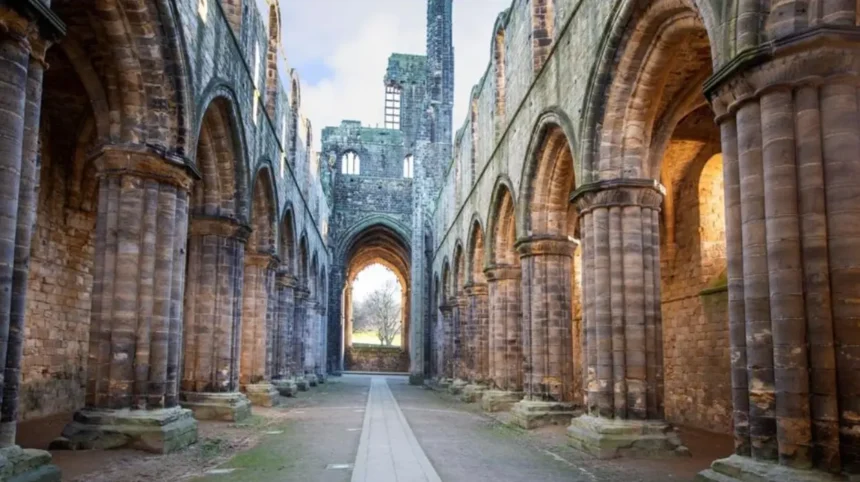
Kirkstall Abbey provides a major change of scenery through medieval architecture, riverside grounds and open parkland. The former Cistercian monastery dates from 1152 and provides a direct contrast with Horsforth’s residential streets and modern suburban environment.
Kirkstall Abbey is one of the strongest heritage destinations close to Horsforth. The Cistercian abbey was founded in 1152 and its surviving ruins form a major historic attraction in Leeds.
The site contains extensive ruins and open grounds. Visitors can walk around the remains, explore the surrounding landscape and follow the River Aire nearby.
Leeds Museums and Galleries currently operates Kirkstall Abbey as a Give What You Can museum. The suggested donation is £5 per person. Opening hours vary between April–September and October–March, so visitors should check current arrangements before travelling.
Kirkstall Abbey also has a free audio guide called Tales of Kirkstall Abbey. It covers ten locations around the ruins and explains aspects of the site’s history, including the Cistercian monks, the abbey’s buildings and its dissolution under Henry VIII.
The destination therefore combines architecture, archaeology, open space and walking. It works as a separate heritage-focused visit or as part of a longer itinerary around north-west Leeds.
What can you visit near Kirkstall Abbey for more variety?
Abbey House Museum adds social history to a visit around Kirkstall Abbey. Its recreated Victorian streets, historic objects, exhibitions and penny arcade provide an indoor alternative when visitors want to replace outdoor walking with a structured heritage experience.
Abbey House Museum sits on Abbey Walk near Kirkstall Abbey. It focuses on Leeds social history and presents reconstructed Victorian streets alongside collections of toys, household objects, tools and other historical material.
The museum’s Victorian streets include Abbey Fold, Harewood Square and Stephen Harding Gate. These displays provide a visual representation of urban life and everyday activities in earlier periods.
The museum also contains a collection of original penny slot machines. Visitors can use old-fashioned pennies to operate selected machines, adding an interactive element to the historical displays.
Abbey House Museum is particularly useful when the weather changes during a day out. Most galleries and the Victorian streets are wheelchair accessible, although some cobbled areas and narrow spaces remain.
The museum and abbey can therefore be combined into a heritage-focused itinerary without requiring a journey into Leeds city centre.
Can the Leeds and Liverpool Canal provide a quieter change of scenery?
The Leeds and Liverpool Canal provides a linear waterside environment where visitors can walk away from busy roads and residential streets. Its towpath landscape introduces water, bridges, vegetation and long views into a local walking itinerary.
The canal forms part of the wider waterways landscape around north-west Leeds. Its towpaths provide a different physical environment from parks because the route follows a linear water corridor.
A canal walk works well for visitors who prefer steady walking rather than landscaped gardens or woodland paths. The route also supports short and longer outings because walkers can turn back at any point.
The waterway connects with other parts of Leeds, allowing visitors to create routes that combine Horsforth, Kirkstall and surrounding neighbourhoods.
For a change of scenery, the key feature is the transition between environments. Residential streets give way to water, vegetation and open views. Bridges and canal infrastructure add built heritage to the landscape.
Visitors should follow the applicable towpath rules, keep clear of cyclists and respect private property alongside the canal.
Which nearby destination is best for a longer countryside break?
Otley Chevin Forest Park provides a larger countryside environment north-west of Horsforth. Its woodland, open slopes, walking routes and elevated viewpoints create a stronger rural experience for visitors who want more distance and landscape variety.
Otley Chevin Forest Park is one of the larger countryside destinations accessible from the wider Horsforth area. Leeds City Council lists it among the city’s major parks.
The Chevin landscape differs substantially from the flatter, more structured setting of Horsforth Hall Park. Woodland and elevated ground create longer views across the surrounding countryside.
The park is also connected to the wider recreational walking network around Leeds. It suits visitors who want a longer walk, more open countryside and a stronger outdoor focus.
Leeds Council operates several car parks at Otley Chevin, including Surprise View, Upper Shawfield, Lower Shawfield, East Chevin Quarry and Yorkgate.
A visit to the Chevin is therefore better suited to a planned half-day outing than a quick local break.
How can visitors create a full day of different scenery from Horsforth?
A full day can combine Horsforth Hall Park, Hunger Hills Woods, a canal walk and a nearby heritage attraction. This sequence moves between landscaped parkland, woodland, waterside scenery and historic architecture without requiring a city-centre itinerary.
Start with Horsforth Hall Park for a relatively easy introduction to the area. The Japanese garden, paths and recreational facilities provide a structured green setting.
Continue towards Hunger Hills for woodland and historic landscape features. The change between maintained parkland and semi-natural woodland creates a clear shift in scenery.
A canal section can then provide a flatter walking environment. This part of the day works well for visitors who want a slower route beside water.
Finish at Kirkstall Abbey and Abbey House Museum. The abbey provides medieval architecture and open grounds, while the museum provides indoor social history displays.
Another option is to replace the local walking section with Golden Acre Park. Its lake, gardens, woodland and café provide enough variety for a longer visit.
Which Horsforth places suit different types of visitors?
Horsforth’s attractions serve different visitor needs through their distinct environments. Families have playgrounds and parks, walkers have woodland and countryside routes, heritage visitors have Kirkstall Abbey, and quieter visitors have lakeside and woodland settings.
Families can use Horsforth Hall Park because it includes an integrated play facility, a playground for older children, a skate park and other recreational features.
Walkers have access to Hunger Hills, Cragg Wood, local paths and the wider Leeds Country Way. The combination supports both short walks and longer countryside routes.
Heritage visitors have Kirkstall Abbey and Abbey House Museum. The abbey focuses on medieval monastic history, while the museum focuses on social history and Victorian Leeds.
Visitors looking for accessible green space have Golden Acre Park as a particularly useful option because its main circular route is relatively flat and the site includes accessible facilities.
Digital nomads and business travellers can also structure a short break around a café stop and nearby walking route. Golden Acre’s café and the cafés around Horsforth provide practical stopping points, while nearby green spaces offer a clear break from screen-based work.
When is the best time to visit Horsforth for a change of scenery?
Horsforth works throughout the year because its attractions include parks, woodland, waterways and indoor heritage venues. Spring and summer favour gardens and longer walks, autumn highlights woodland colour, while winter suits shorter walks combined with museums.
Spring provides suitable conditions for gardens, woodland and longer outdoor routes. Golden Acre Park’s gardens and plant collections are particularly relevant during the growing season.
Summer allows visitors to spend longer outdoors and combine several destinations in one day. Kirkstall Abbey’s grounds, Horsforth Hall Park and canal paths all support outdoor visits.
Autumn changes the visual character of woodland areas such as Hunger Hills and Cragg Wood. Shorter daylight hours make route planning more important.
Winter provides a different type of itinerary. Visitors can combine a short park or canal walk with Abbey House Museum, which provides an indoor historical attraction.
Visitors should check opening times before travelling to managed attractions. Kirkstall Abbey’s published hours differ between April–September and October–March.
Explore More Area Guide
Horsforth Guide to Everyday Local Life in Leeds
Horsforth Best Places to Spend Time Alone
How should you plan a Horsforth change-of-scenery visit?
Planning works best when visitors choose one main environment and add one complementary destination. A park can pair with woodland, a canal with a museum, or a local walk with Golden Acre Park for a balanced itinerary.
A short visit can focus on Horsforth Hall Park and Hunger Hills. This combination requires little travel between contrasting landscapes.
A heritage-focused visit can combine Kirkstall Abbey with Abbey House Museum. Both are in the Kirkstall area, making the pairing efficient.
A nature-focused visit can centre on Golden Acre Park. The lake, gardens, woodland and accessible circular route provide several environments in one location.
A longer walking day can use sections of the Leeds Country Way. The full route covers 62 miles, but its shorter five-mile sections make it possible to create more manageable walks.
Visitors should check current parking, opening hours, accessibility information and weather conditions before setting out. Council-managed attractions and parks can have seasonal arrangements.
Why are Horsforth’s green and historic places important for Leeds visitors?
Horsforth’s parks, woodland, waterways and heritage sites form part of Leeds’s wider network of accessible cultural and natural spaces. They provide recreation, local history, walking opportunities and community value beyond the city’s central attractions.
Leeds City Council manages 65 community parks across the city, demonstrating the scale of the city’s green-space network. Horsforth Hall Park is included within that community-park network.
The council’s Parks and Green Spaces Strategy identifies culture, history, recreation, nature and community activity as important elements of green spaces.
Horsforth demonstrates these functions at a local level. Hall Park provides recreation, Hunger Hills preserves evidence of former industry, the canal supports waterside walking, and nearby Kirkstall Abbey preserves medieval heritage.
The area’s value therefore comes from variety rather than a single landmark. Visitors can experience several different landscapes within a relatively small geographical area.
For travellers based in Leeds, Horsforth provides an alternative to a central-city itinerary. For residents, it offers accessible options for changing surroundings without making a long journey.
Final perspective
Horsforth is well suited to visitors looking for a straightforward change of scenery around Leeds. Horsforth Hall Park offers landscaped green space, Hunger Hills Woods provides woodland and industrial heritage, and the Leeds Country Way connects the area with wider countryside.
Golden Acre Park adds lakeside scenery and gardens, while Kirkstall Abbey and Abbey House Museum provide substantial heritage attractions nearby. The Leeds Country Way extends the walking potential beyond individual parks and neighbourhood paths.
The result is a flexible visitor area where a short local walk can become a longer countryside outing, and a simple park visit can develop into a full day combining nature, history and waterside scenery.
What are the best places to visit in Horsforth?
Horsforth Hall Park, Hunger Hills Woods and the surrounding countryside are key places to visit in Horsforth. Nearby attractions include Golden Acre Park, Kirkstall Abbey, Abbey House Museum and sections of the Leeds Country Way.