

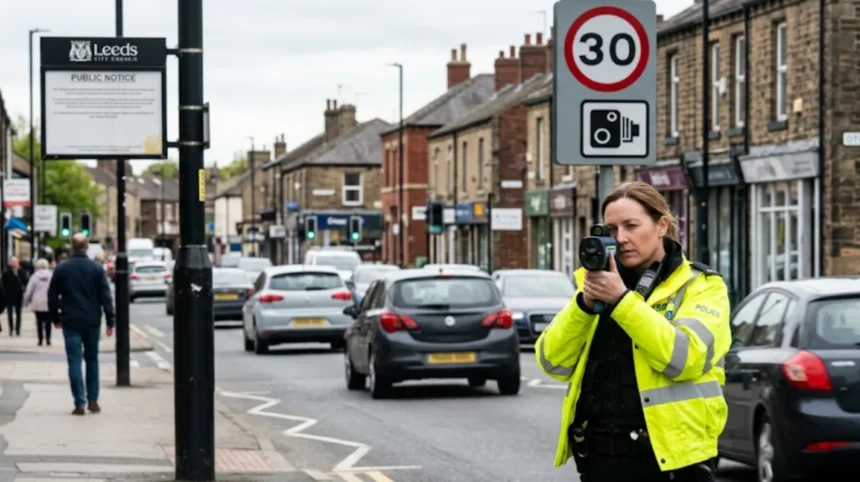
If drivers are speeding on Guiseley main roads, report the site to Leeds City Council for a speed monitoring assessment and contact West Yorkshire Police for dangerous or antisocial driving. The council uses location evidence, speed data, and collision records before deciding on action.
- What counts as speeding on Guiseley roads?
- How do you report speeding in Guiseley?
- What happens after you report it?
- Which roads in Guiseley matter most?
- What should you include in a report?
- When should you contact police instead?
- Why do councils use speed monitoring?
- What evidence makes a report stronger?
- How does this fit Leeds road safety?
- What should residents do first?
What counts as speeding on Guiseley roads?
Speeding on Guiseley roads means driving above the posted limit on roads such as main routes through the town. Leeds City Council reviews complaints using speed data and injury-collision records before any enforcement decision.
Guiseley is part of Leeds, so complaints about speeding there follow the city council’s road-safety process. The council first checks whether the issue is supported by evidence.
Not every complaint leads to a camera visit. The council uses evidence-based thresholds before it asks for enforcement assessment.
Speeding becomes a road-safety concern when it puts pedestrians, cyclists, school children, bus passengers, and other drivers at risk. If the evidence does not support camera enforcement, the council can still pass the issue to the local neighbourhood policing team.
How do you report speeding in Guiseley?
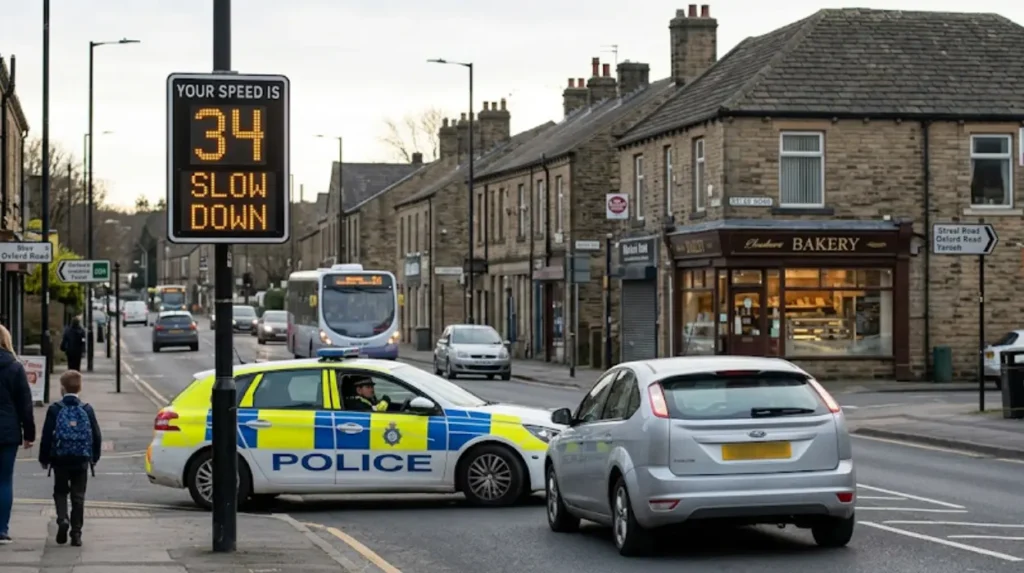
Report speeding in Guiseley to Leeds City Council through its customer contact portal, by email, or by phone. For dangerous driving, contact West Yorkshire Police by 101, Live Chat, or 999 in an emergency.
Leeds City Council asks residents to report problem sites for speed monitoring assessment. A good report includes the road name, the exact stretch, the time of day, and the pattern of speeding.
West Yorkshire Police handles reports of dangerous driving and antisocial driving. Use 999 if there is immediate danger, and use 101 or online contact for non-emergency reports.
A clear report is easier to act on when it includes the direction of travel, repeated times, and the type of behaviour seen.
What happens after you report it?
After a report is made, Leeds City Council reviews speed data and collision records, then decides whether the site meets the criteria for further assessment. If it does, the location can be reviewed for enforcement; if it does not, the information can still be shared with police.
The process is evidence-led. Officers check existing data first, then decide whether the location needs monitoring.
If the site meets the partnership criteria, it can be considered for enforcement visits. The location remains under review by the highway authority and the safety camera partnership.
If the road does not meet the enforcement threshold, the complaint still matters. The council can forward the details to the neighbourhood policing team.
Which roads in Guiseley matter most?
The main roads most likely to attract speeding complaints in Guiseley are the busy through-routes used by commuters and local traffic. These roads carry heavier flows and faster speeds than residential streets.
Main roads in Guiseley include the key routes that move traffic through the town and into nearby parts of Leeds and Bradford. These stretches generate more concern because they carry both local and through-traffic.
Reports are strongest when they name the exact stretch of road. For example, a complaint is more useful when it identifies a section between two junctions or near a school crossing.
That detail helps officers compare the complaint with traffic data and collision records.
What should you include in a report?
Include the road name, exact location, direction of traffic, time of day, type of speeding, and any safety risk you saw. A strong report is specific enough to verify and repeat.
A useful report tells the council where the issue happens and when it happens. If it occurs during school runs, rush hour, or late at night, that pattern should be noted.
If the problem involves motorbikes, quad bikes, or aggressive group driving, that should also be stated clearly. Those cases can fall under antisocial or dangerous driving rather than simple speeding.
If possible, describe what made the behaviour dangerous, such as harsh acceleration, close passes, racing, or repeated speeding past homes.
When should you contact police instead?
Contact West Yorkshire Police when speeding is part of dangerous driving, racing, threatening behaviour, or an immediate safety risk. Use 999 for emergencies and 101 or online contact for non-emergency reports.
Leeds City Council deals with site-based speeding concerns, while police deal with crime and urgent danger. The difference matters because the correct report route improves the response.
A simple speed complaint belongs with the council. A report of a driver posing a direct threat belongs with police.
Clear information helps police decide how serious the incident is and what response is needed.
Why do councils use speed monitoring?
Councils use speed monitoring to decide whether a road needs enforcement, traffic calming, or police referral. Leeds City Council uses data because enforcement depends on evidence of speeding and collision risk.
This approach is used to target resources where risk is greatest. The council checks both speed data and collision data before moving forward.
That means local complaints matter most when they are backed by repeated observations or other evidence. A single report can start the process, but consistent evidence strengthens it.
The wider West Yorkshire system also shows that community reports can lead to enforcement where non-compliance is proven.
What evidence makes a report stronger?
A strong report includes repeated observations, dates, times, exact locations, and any available video or witness detail. Multiple reports about the same stretch of road create a stronger case for action.
Repeated timing details matter because speeding often happens in patterns. School times, commuter peaks, and evening periods can all show different levels of risk.
Collision history also matters because councils review injury-collision records before deciding on assessment. A location with both complaints and collision evidence has a stronger case.
If the issue involves dangerous driving, footage and witness detail are especially useful.
Explore More Help & Resources
How to get free food at a Garforth community pantry
How to get free school meals for your child in Yeadon
How does this fit Leeds road safety?
Reporting speeding in Guiseley supports Leeds’ wider road-safety strategy by identifying locations that need monitoring or enforcement. Leeds follows a Vision Zero approach focused on reducing serious road harm.
That wider strategy treats speed as a major factor in road casualties. The goal is not just to react after crashes happen.
Resident reports help build a record of risk on specific roads. Over time, those reports can support camera enforcement, police action, or road design changes.
For Guiseley residents, that means a precise speeding report is part of the city’s wider safety system.
What should residents do first?
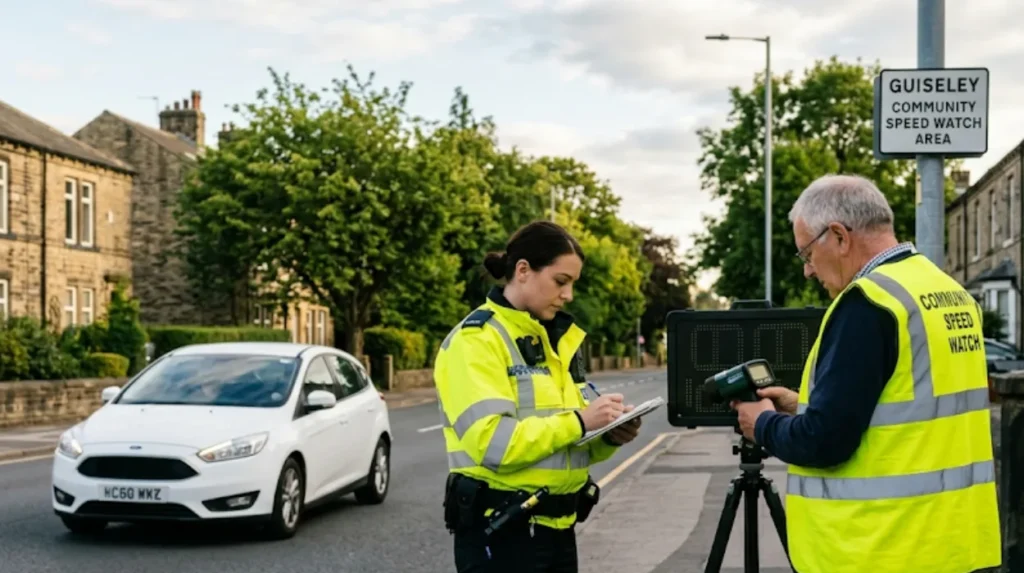
Start with Leeds City Council for the speeding report, then contact West Yorkshire Police if the behaviour is dangerous or immediate. Keep the road name, times, and evidence ready before reporting.
The council route is the right starting point for ordinary speeding concerns on main roads. Police are the right route when the problem is antisocial, aggressive, or dangerous.
A precise report is more likely to lead to action because it gives officers a location, a time, and a pattern to check.
That is the most effective way to report speeding on Guiseley’s main roads.
Who do I report speeding drivers to in Guiseley?
Report general speeding concerns to Leeds City Council, which assesses locations using speed and collision data. If the driving is dangerous, aggressive, or poses an immediate risk, report it to West Yorkshire Police using 101 for non-emergencies or 999 in an emergency.