Key Points
- Further Schedule Setback: The multimillion-pound redevelopment of the New Station Street entrance at Leeds railway station has suffered a new completion delay following multiple previous extensions.
- Technical Impasse Identified: A technical issue involving a lift connecting Bishopgate Street and New Station Street has stalled mandatory safety testing, preventing full site opening.
- Project Scope & Budget: The £46.1m scheme, named the Leeds Station Sustainable Travel Gateway, encompasses pedesterianised zones, an updated taxi rank, and enhanced cycle storage facilities.
- Council Response: Representatives from Leeds City Council have stated work is actively ongoing to rectify the issue and enable the opening of final zones imminently.
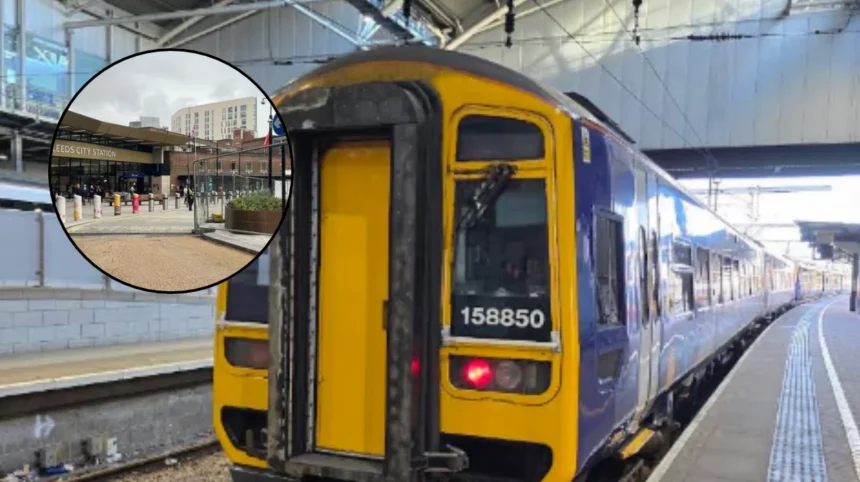
LEEDS (The Leeds Times) November 3, 2026 – The completion of a £46.1m project designed to transform the primary entrance to Leeds railway station has encountered a fresh delay, local authority officials have confirmed. Construction work surrounding the revamp of the New Station Street gateway originally began in 2022, with an original target set for completion in the autumn of last year. Following subsequent delays that shifted the expected delivery date first to the summer of this year and subsequently to September, the final sign-off for full opening remains pending due to mechanical issues affecting essential accessibility infrastructure.
As reported by local reporting sources covering the Leeds area, public access to pedestrian walkways along Bishopgate Street and selected segments of New Station Street has already been restored to facilitate general foot traffic. However, an operational fault identified within one of the key lifts connecting Bishopgate Street directly to New Station Street has prevented the execution of mandatory safety testing across the full footprint of the new gateway.
As reported by a spokesperson for Leeds City Council, local authority teams are attempting to rectify the lift mechanism swiftly to secure the required regulatory approvals. The spokesperson stated that
“We are working to resolve this as soon as possible so we can open the final parts of the scheme imminently,”
noting that final clearances depend upon passing all mandatory safety evaluations across the entire multi-level infrastructure site.
Why Has the Leeds Station Sustainable Travel Gateway Been Delayed Again?
The £46.1m infrastructure initiative, officially designated as the Leeds Station Sustainable Travel Gateway, was commissioned to overhaul the primary pedestrian approach to the station into a modernized, sustainable transport hub.
The strategic scope of the physical works includes removing heavy vehicular traffic from specific access corridors, constructing a relocated, streamlined taxi rank, expanding dedicated bicycle storage facilities, and building public space environments surrounding the terminal.
The project timeline has experienced repeated adjustments since initial ground-breaking operations commenced in 2022. The initial schedule established by project managers aimed for an autumn completion during the preceding year.
That milestone was subsequently missed, leading to a revised operational target set for the summer of this year. When structural works continued past the summer window, project leaders revised the target completion milestone to September.
The current operational halt stems directly from vertical transport infrastructure compliance requirements. Under UK safety standards for public access spaces, step-free access routes—including public passenger lifts—must undergo complete operational certification before surrounding high-volume pedestrian corridors can be formally handed over for public use.
Explore More Local Leeds News
Leeds-York Railway Reopens After Nine-Day TRU Upgrades in Church Fenton 2026
£148m Royal Armouries Transformation Moves Forward in Leeds 2026
Background of the Leeds Station Development
The Leeds Station Sustainable Travel Gateway represents a core element of broader regional transport upgrades designed to modernize West Yorkshire’s busiest rail interchange. Leeds station handles tens of millions of passenger journeys annually, acting as a principal gateway for northern rail services, cross-country routes, and trans-Pennine connections.
Historically, New Station Street functioned as a heavily congested access route where private vehicles, buses, taxis, and high-density pedestrian streams competed for limited road space. The configuration frequently caused localized traffic bottlenecks and raised pedestrian safety concerns during peak commuting hours.
To address these physical constraints, regional transport authorities and Leeds City Council formulated the £46.1m redevelopment plan. Funding was secured through regional infrastructure grant frameworks aimed at facilitating active travel, reducing urban carbon emissions, and encouraging public transport adoption.
The project design prioritized the complete pedestrianisation of portions of New Station Street, creating a dedicated active-travel gateway supported by new surface paving, upgraded lighting, and integrated bike storage facilities, alongside relocating taxi operations to optimized boarding zones on Bishopgate Street.
The execution phase has faced physical engineering challenges associated with modifying complex, multi-tiered urban infrastructure directly adjacent to an active rail terminus.
Integrating modern step-free features and structural lifts between varying terrain elevations between Bishopgate Street and New Station Street required deep structural work alongside existing victorian-era retaining structures and underground utility networks.
Prediction: How Will This Further Delay Impact Commuters, Local Businesses, and Regional Transport Operations?
The prolonged delivery timeline for the Leeds Station Sustainable Travel Gateway carries direct implications for several distinct user groups across the Leeds city center area and the wider West Yorkshire region.
For daily rail passengers and urban pedestrians, the delay prolongs navigating temporary pedestrian diversions around New Station Street and Bishopgate Street. While primary pavement sections have been reopened, the absence of fully certified step-free access via the newly installed lift creates ongoing accessibility hurdles for passengers with reduced mobility, individuals carrying heavy luggage, and parents with pushchairs. Until safety testing is successfully completed and passed, these users must rely on alternative step-free access routes around the perimeter of the station complex.
The delayed final handover postpones the full operational integration of the new taxi rank and expanded cycle hub. Taxi drivers operating within Leeds city center must continue utilizing temporary drop-off points, which can increase dwell times and complicate vehicle queuing during peak evening commute hours.
Similarly, cyclists awaiting the opening of the upgraded storage facilities face continued reliance on standard perimeter cycle parking, delaying the intended benefits of secure, centralized active-travel amenities.
Local retail and hospitality venues surrounding New Station Street, Boar Lane, and Bishopgate Street rely heavily on footfall generated by station arrivals.
Ongoing construction hoardings, temporary fencing, and maintenance activity can disrupt natural foot traffic flow into adjacent commercial zones. However, once the safety testing impasse is resolved and the council grants final operational approval, the expanded pedestrian plaza is anticipated to deliver increased footfall and improved urban connectivity across the southern quarter of Leeds city centre.