
Key Points
- Comprehensive Deployment Across Major Routes: Mobile speed enforcement units operate across multiple 30 mph, 40 mph, and 50 mph zones in Leeds to curb dangerous driving and enforce compliance.
- Dual-Site Strategy: Locations are categorized into core camera sites, chosen for high collision and casualty records, and community concern sites, selected based on feedback and requests from local residents.
- Advanced Enforcement Technology: Operations are conducted by the West Yorkshire Police Camera Enforcement Unit using Home Office-approved, highly accurate laser equipment.
- Continuous Operational Hours: Vehicles operate seven days a week in highly visible marked units, with enforcement active day and night without requiring statutory warning signs.
Leeds (The Leeds Times) August 17, 2026 – Mobile speed enforcement cameras have been deployed across key transport corridors in Leeds as part of a targeted weekly safety operation aimed at tackling excessive speeds and reducing severe road collisions.
- Key Points
- Where Are the Mobile Speed Cameras Located in Leeds This Week?
- How Are Speed Camera Enforcement Sites Selected in West Yorkshire?
- What Technology and Operational Rules Govern Mobile Speed Vans?
- Are Warning Signs Legally Required Before Speed Enforcement Vans?
- Background of Speed Enforcement Strategy in Leeds
- Future Impact: How Will Continuous Enforcement Affect Local Road Users?
The enforcement push is managed by the West Yorkshire Police Camera Enforcement Unit operating on behalf of the West Yorkshire Safety Camera Partnership. Mobile units are actively deployed at both core enforcement sites—locations identified through historical casualty data—and community concern sites brought forward directly by local residents concerned about anti-social driving.
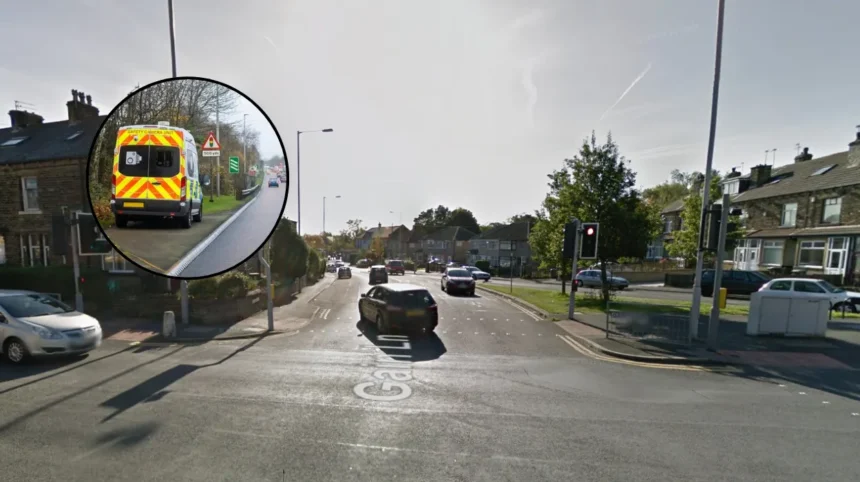
Safety officials emphasize that these highly visible mobile camera vans operate continuously across seven-day shifts. Driver compliance is enforced across key arterial routes, residential zones, and major dual carriageways throughout the city.
Where Are the Mobile Speed Cameras Located in Leeds This Week?
Speed enforcement units are actively monitoring several major 30 mph zones across Leeds to ensure driver compliance in high-density residential and commercial areas. The locations include:
- A61 Wakefield Road / Leeds Road, Rothwell: Enforcing speed limits on the busy stretch situated between Middleton Lane and Leadwell Lane.
- A65 Otley Road, Guiseley: Operations positioned between the A6038 Bradford Road junction and the B6153 Park Road.
- Broad Lane, Sandford: Monitoring traffic between Whitecote Hill and Waterloo Lane.
- Otley Old Road: Mobile units operating alongside existing static cameras between Holtdale Approach and Spen Lane.
- A58 Whitehall Road, Drighlington: Stationed in the section spanning from 40 metres east of King Street to 75 metres east of Old Lane.
- King Lane, Leeds: Targeted deployment between 200 metres north of Alwoodley Lane down to 50 metres north of the Ring Road.
- Queenswood Drive, Leeds: Active enforcement between Queenswood Gardens and 229 Queenswood Drive.
- Dewsbury Road, Leeds: Vans stationed along the urban segment running between Victoria Road and Holmes Street.
- Harewood Road, Collingham: Strategic monitoring ongoing through the main arterial length of the village.
- Tong Road: Enforcement active along the section between Pipe and Nook Lane and Whingate.
- A635 Penistone Road: Monitoring drivers between Huddersfield Road and 300 metres north-east of Sude Hill Terrace.
Higher-speed urban corridors designated with 40 mph speed limits are under active surveillance to mitigate the severity of potential impacts. Key routes under enforcement include:
- A653 Dewsbury Road, Woodkirk: Coverage extending from Lowry Road to the Quarry Lane junction.
- A58 Easterly Road, Leeds: Active monitoring between Easterly Grove and Boggart Hill Drive.
- A61 Harrogate Road, Alwoodley: Surveillance focused on the corridor between Fir Tree Lane and Alwoodley Lane.
- A639 Leeds Road, Rothwell: Active deployment running from Rothwell Lane / Calverley Road down to Junction 44 of the M1 motorway.
- A639, Methley: Focused speed monitoring situated between the junction of The Hollins and 110 metres east of Green Row.
- Stanningley Road, Bramley: Mobile units deployed between Henconner Lane and Back Christ Church View.
- A660 Leeds Road, Pool: Enforcement active from Cabin Road to 290 metres west of 6 Cragg View.
- A657 Carr Road: Positioned between Clara Drive and 45 metres north-east of Carr Wood Gardens.
- A65 Abbey Road: Monitoring traffic flow between Butlers Wharf and Back De Lacy Mount.
- A647 Bradford Road: Enforcing limits on the busy stretch between Dawson’s Corner and Gain Lane at the Thornbury Gyratory.
Mobile units are also assigned to key 50 mph thoroughfares where higher vehicle speeds significantly elevate road safety risks. The primary sites include:
- A62 Gelderd Road, Gildersome: Active monitoring stationed between 42A Gelderd Road and the nearby Railway Bridge.
- A6120 East Leeds Orbital Road: Comprehensive speed enforcement deployed along designated stretches of the new orbital route.
- A63 Selby Road, Swillington: Targeted surveillance monitoring traffic through the Swillington corridor.
How Are Speed Camera Enforcement Sites Selected in West Yorkshire?
Deployment locations chosen by the West Yorkshire Safety Camera Partnership are divided into two distinct categories based on strict evaluation metrics:
- Core Sites: Selected primarily on the basis of casualty and crash history. Data-led assessments highlight these locations as places where frequent mobile speed enforcement offers the highest statistical potential to reduce collisions and prevent deaths or serious injuries.
- Community Concern Sites: Established to address specific locations that do not meet the strict casualty thresholds of core sites but suffer from widespread speed limit non-compliance. Identified through local authority speed assessments following complaints from residents, these deployments target anti-social driving that threatens local quality of life.
What Technology and Operational Rules Govern Mobile Speed Vans?
The enforcement vans utilized by the West Yorkshire Police Camera Enforcement Unit feature Home Office type-approved laser technology operated by specially trained police personnel.
The precision equipment measures vehicle speeds accurately across wide dynamic ranges, functioning seamlessly in varied weather and ambient lighting conditions day or night.
All enforcement hardware undergoes rigorous calibration schedules adhering to strict manufacturer and Home Office specifications. Operators conduct mandatory pre-use system diagnostic checks prior to beginning any monitoring session.
Are Warning Signs Legally Required Before Speed Enforcement Vans?
Under UK traffic enforcement regulations, the presence of physical warning signs is not a legal prerequisite for issuing speeding citations.
While marked police enforcement vehicles are designed to be highly visible and do not operate covertly, the absence of nearby camera warning signs does not provide legal grounds for appeal or mitigation against detected offences.
Explore More Local Leeds News
Armed Paedophile Prompts Police Stand-off Over Gang Retribution Fear: Leeds 2026
Ironman Leeds Cancels Swim Over Waterloo Lake Algae Concerns, Leeds 2026
Background of Speed Enforcement Strategy in Leeds
The systematic deployment of mobile safety camera units across West Yorkshire follows updated operational guidelines introduced under the partnership’s deployment strategy. Developed in coordination with local authorities and West Yorkshire Police, the framework prioritizes evidence-led interventions to manage urban road speeds effectively.
Historically, fixed speed camera installations were the primary static defense against excessive speeding. However, police authorities have increasingly transitioned toward versatile mobile units.
Mobile enforcement allows police forces to adapt quickly to emerging traffic hazards, roadworks, and direct resident feedback, providing flexible deterrence across sprawling road networks rather than remaining restricted to single fixed locations.
Future Impact: How Will Continuous Enforcement Affect Local Road Users?
The sustained presence of mobile camera enforcement throughout Leeds is expected to directly influence driver behavior and broader urban transport trends.
- Impact on Local Motorists: Commuters and regular road users will face heightened accountability on major arterial routes. Increased surveillance significantly lowers the margin for accidental speeding, encouraging drivers to maintain steady compliance to avoid mandatory fines, penalty points, or driver awareness courses.
- Impact on Local Communities: Residents living near community concern sites are likely to experience immediate reductions in excessive speeds, cutting down on noise pollution and lowering risk levels for pedestrians, cyclists, and school children near residential intersections.
- Long-Term Road Safety Outcomes: Over time, consistent mobile deployments are projected to lower overall collision severity scores across Leeds, reducing emergency service burdens and fostering safer, more manageable traffic flows on West Yorkshire’s busiest highways.