

Key Points
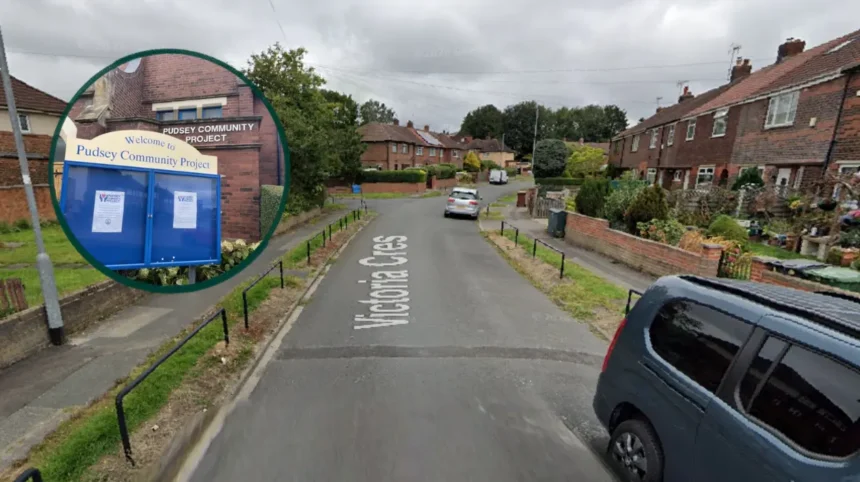
- A public screening of the “People’s Emergency Briefing” took place at the Pudsey Community Project earlier this week as part of a nationwide initiative spanning over 3,000 showings.
- The original National Emergency Briefing was held late last year at Westminster Hall, bringing together 1,200 leaders across politics, business, culture, faith, sport, and media.
- The event was introduced by Chris Packham CBE, chaired by Professor Mike Berners-Lee, and featured ten leading independent UK experts outlining the compounding threats of climate change and biodiversity loss.
- The campaign calls for a government-led, televised emergency briefing to inform the public and catalyse wartime-scale emergency action.
- Richard Dimery chaired the Pudsey screening, which was followed by a community discussion on environmental protection efforts.
- The next local screening is scheduled at Bramley Baths on October 24.
- Ten distinct expert presentations detailed severe risks and practical solutions across weather extremes, climate dynamics, tipping points, biodiversity, food security, public health, economic policy, national security, and the energy transition.
Pudsey (The Leeds Times) October 7, 2026 —A public viewing of the “People’s Emergency Briefing” was hosted at the Pudsey Community Project earlier this week, marking one of more than 3,000 showings held across the country with many more planned. Late last year, an event hosted at Westminster Hall saw 1,200 invited leaders across politics, business, culture, faith, sport, and the media gather for the National Emergency Briefing. Introduced by Chris Packham CBE and chaired by Professor Mike Berners-Lee, that historic event brought together ten of the United Kingdom’s foremost independent experts to detail the compounding threats of climate change and biodiversity loss while presenting immediate, actionable solutions.
- Key Points
- What Did the Experts Reveal About Weather Extremes and Climate Dynamics?
- What Are the Risks Concerning Climate Tipping Points and Biodiversity Loss?
- How Do Food Security and Public Health Relate to the Climate Crisis?
- What Solutions Were Proposed for Economic Policy, National Security, and Energy?
- Background
- Prediction
The initiative has since been adapted into a public film, the People’s Emergency Briefing, which seeks to reset the national conversation and demand a government-led, televised emergency briefing to inform the public and catalyse wartime-scale emergency action. At the Pudsey showing, Richard Dimery of the Pudsey Community Project chaired the evening, explaining the context of the film and facilitating a post-screening discussion about local issues.
The film featured experts speaking in turn about their respective fields, interspersed with interviews capturing audience reflections. Following the film, attendees examined existing local environmental protections and discussed further steps. The next local screening will take place at Bramley Baths on 24 October.
What Did the Experts Reveal About Weather Extremes and Climate Dynamics?
Detailing the threat of weather extremes, Professor Hayley Fowler of Newcastle University warned that by 2050, one in four properties—equating to eight million homes in England—will be at risk of flooding. UK winter rainfall has already increased by 10% since 1980 due to fossil fuel emissions, while heatwaves, prolonged wildfire seasons, and slow-moving storms pose imminent risks of national crises, including potential mega-floods dumping 35 cm of rain over London.
To mitigate these risks, she outlined solutions involving rapidly upgrading flood defences, retrofitting homes against extreme heat and cold, planting flood-absorbing parks, and stress-testing critical infrastructure.
Addressing climate dynamics, Professor Kevin Anderson of the Universities of Manchester and Uppsala noted that global temperatures have risen approximately 1.5°C above pre-industrial levels, with current trajectories risking 3°C to 4°C warming by 2100. Staying within 2°C requires global emissions to drop 8% annually, while the UK’s fair share of the remaining carbon budget corresponds to just seven years of current emissions.
He advocated for a Marshall Plan-scale programme focusing on rapid home retrofitting, zero-carbon new builds, expanded public transport, and renewable electrification while rejecting carbon capture delays.
What Are the Risks Concerning Climate Tipping Points and Biodiversity Loss?
Professor Tim Lenton OBE of the University of Exeter explained that crossing 1.5°C of warming risks triggering cascading global tipping points, including Amazon rainforest dieback and the collapse of the Atlantic Meridional Overturning Circulation (AMOC).
An AMOC shutdown could drop London winter temperatures to -20°C and Edinburgh to -30°C, collapsing UK agricultural viability. Solutions require accelerating radical reductions toward zero emissions and implementing policy mandates to phase out fossil fuel technologies in transport and heating.
On nature and biodiversity, Professor Nathalie Seddon of the University of Oxford stated that the UK ranks in the bottom 10% globally for biodiversity intactness, with monitored wildlife populations down 19% since the 1970s and one in six species facing extinction. Only 14% of English rivers and 7% of woodlands are currently in good health.
She urged treating nature as critical infrastructure by redirecting finance away from ecological destruction and toward habitat restoration such as wetlands, peatlands, and hedgerows, while requiring the Bank of England to stress-test nature-related financial risks.
How Do Food Security and Public Health Relate to the Climate Crisis?
Discussing food security, Professor Paul Behrens of the University of Oxford warned that climate impacts threaten global and domestic food supplies, with extreme weather driving one-third of 2023 UK food price inflation. Britain has suffered three of its five worst cereal harvests on record this decade, and overall land suitable for food production could shrink by one-third by the end of the century. He called for a systemic food transformation centered on shifting toward plant-rich diets, cutting food waste, improving production efficiency, and building climate resilience.
Regarding public health, Professor Hugh Montgomery OBE of University College London cautioned that unchecked warming above 3°C by 2050 could result in over four billion deaths worldwide, while surging extreme weather events overload healthcare systems and incur global losses of $10,000 per second.
Solutions include eliminating particulate air pollution through active transport and adopting plant-rich diets to prevent chronic illness, generate massive public cost savings, and lower national healthcare burdens.
What Solutions Were Proposed for Economic Policy, National Security, and Energy?
Angela Francis, Director of Policy Solutions at WWF-UK, highlighted that market failures penalize sustainable businesses while subsidizing high-emission practices, noting that delaying the energy transition directly exacerbated national inflation during recent geopolitical shocks. She advocated realigning market rules, taxes, and procurement to reward low-carbon innovation, pointing out that a rapid clean transition is projected to save $12 trillion globally compared to continued fossil fuel reliance.
Lieutenant General Richard Nugee CBE, representing the Defence Safety and Environmental Committee, framed climate change as a primary threat multiplier that exacerbates resource competition for water, food, and land, drives forced migration, and threatens to overwhelm state governance.
He recommended enhancing national resilience by establishing energy independence through decentralized renewable microgrids and battery storage, which are vastly less vulnerable to physical or military disruption.
Tessa Khan, Executive Director of Uplift, pointed out that fossil fuel price volatility has driven half of all UK recessions since 1970, leaving over 12 million UK households experiencing fuel poverty due to high gas dependency in heating and power generation. She called for a rapid shift to offshore wind, solar, and battery storage—whose costs have fallen by 50% to 80% over the past decade—alongside decoupling electricity pricing from gas, insulating drafty housing, and expanding clean energy jobs.
Concluding the briefings, Professor Mike Berners-Lee of Lancaster University issued a call to action, stressing that decades of international summits have failed to curb global fossil fuel emission rates and that overcoming this existential threat requires World War II-level leadership, emergency legislation, dedicated public investment, and a nationwide information campaign.
Explore More Pudsey News
Leeds Semi-Demolition Neighbour Dispute in Pudsey 2026
Leeds Semi-Detached Demolition Dispute in Pudsey 2026
Background
The screening of the “People’s Emergency Briefing” at the Pudsey Community Project is part of an escalating grassroots response to mounting scientific warnings regarding environmental degradation.
Over recent years, independent scientific assessments from organizations such as the Intergovernmental Panel on Climate Change (IPCC) and various UK academic institutions have highlighted the acceleration of global warming, weather volatility, and ecological decline.
Despite formal international commitments made under frameworks like the Paris Agreement, public campaigns have increasingly emphasized a perceived disconnect between government policy speed and the scale of required mitigation. Initiatives like the National Emergency Briefing and its subsequent community-level film adaptations emerged to bypass traditional political stalemates, seeking to inform local populations directly and mobilize public demand for statutory, emergency-level legislative measures across the United Kingdom.
Prediction
As these grassroots screenings expand to venues such as Bramley Baths and communities nationwide, local residents and regional civic groups are likely to experience a heightened awareness of climate vulnerabilities, ranging from local flood risks to rising food and energy costs.
For everyday citizens and community project participants, this increased mobilization can foster greater local participation in environmental mitigation projects, such as home energy efficiency retrofits, community renewable energy initiatives, and local biodiversity preservation. Furthermore, the systematic framing of climate change as an immediate public health, economic, and security emergency is expected to increase pressure on local authorities and parliamentary representatives from constituents demanding tangible, accelerated regional adaptation policies and national emergency planning.