Key Points
- Approved Redevelopment: Leeds City Council has approved plans to demolish part of the former Mount St Joseph’s care home in Headingley and replace it with 37 residential apartments.
- Safety Concerns Identified: The order of nuns running the facility, The Little Sisters of the Poor, requested the redevelopment after reinforced autoclaved aerated concrete (RAAC) was discovered in the building’s roof, rendering it structurally unsafe.
- Historical and Local Context: Mount St Joseph’s served the Headingley community as a Catholic residential care facility for decades before structural assessments necessitated its closure and proposed overhaul.
- Housing Impact: The scheme will replace an unsalvageable structure with modern residential accommodation, adding new flats to the local Headingley area.
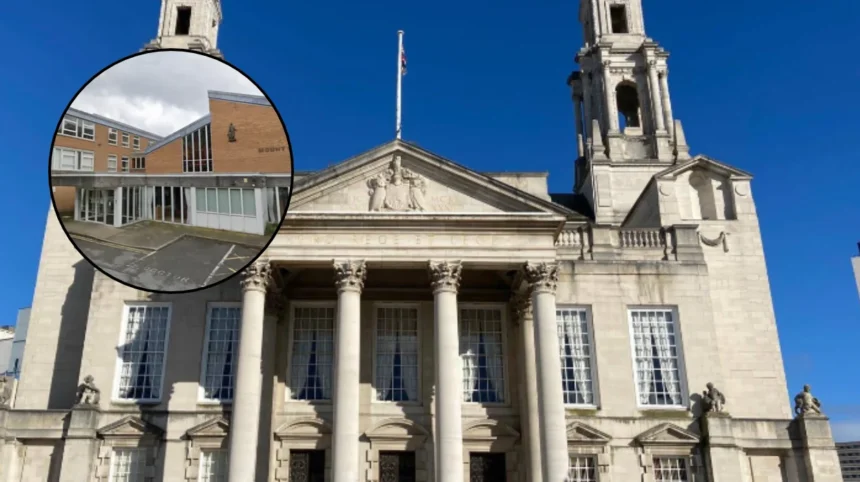
HEADINGLEY (The Leeds Times) October 31, 2026 — A former Catholic care home in Headingley is set to be demolished and redeveloped into 37 modern apartments following approval from Leeds City Council, after safety inspections revealed the presence of unsafe reinforced autoclaved aerated concrete (RAAC) in the building’s roof structure.
- Key Points
- Why is the former Mount St Joseph’s care home in Leeds being demolished?
- What is the history and significance of Mount St Joseph’s in Headingley?
- How will the site be redeveloped into new residential flats?
- What is the background of this particular development?
- Prediction: How will this development affect local residents and the Headingley community?
Why is the former Mount St Joseph’s care home in Leeds being demolished?
The decision to grant planning approval for the demolition follows comprehensive structural assessments conducted on the former Mount St Joseph’s site, located in the Headingley area of Leeds. The Little Sisters of the Poor, the Catholic order of nuns that previously operated the facility, submitted formal planning applications to Leeds City Council to redevelop a significant portion of the premises.
The application was prompted by the discovery of reinforced autoclaved aerated concrete (RAAC) within the building’s roof construction. RAAC is a lightweight form of precast concrete used widely in construction from the mid-1950s to the mid-1990s.
Over time, particularly when exposed to moisture or structural fatigue, the material is prone to sudden deterioration and potential failure. Following thorough engineering surveys that determined the roof was fundamentally unsafe and economically unviable to repair, the applicant concluded that full demolition of the affected section was the only safe and practical solution.
Under the approved redevelopment plans, the unsafe structure will be replaced by 37 self-contained residential flats, providing new housing units on the historical site while permanently addressing the significant safety hazard posed by the degraded concrete.
What is the history and significance of Mount St Joseph’s in Headingley?
Mount St Joseph’s has long held a prominent place within the social and charitable landscape of Headingley and the wider Leeds area. Managed for decades by The Little Sisters of the Poor, an international religious congregation dedicated to serving the elderly poor, the site functioned as a dedicated care home providing residential accommodation, nursing support, and spiritual comfort to elderly residents regardless of their financial background.
The institution operated with a mission centered on offering compassionate care to vulnerable older individuals in a community environment. However, like many buildings constructed or extended during the mid-to-late 20th century, the physical infrastructure of Mount St Joseph’s began to show signs of age and technical decay.
The recent nationwide focus on structural defects associated with RAAC prompted formal inspections across educational, healthcare, and residential facilities throughout the United Kingdom. When those inspections identified widespread RAAC in the roof decking at Mount St Joseph’s, the order was forced to evaluate the long-term feasibility of maintaining the facility in its current physical form.
The structural risks associated with the material eventually led to the cessation of care services at the specific unsafe block, setting the stage for the formal planning application submitted to the local authority.
How will the site be redeveloped into new residential flats?
The approved planning application outlines a comprehensive scheme to clear the unsafe elements of the site and construct a modern residential development. As detailed in the planning documentation submitted to Leeds City Council, the redevelopment project will feature 37 self-contained apartments designed to fit within the existing residential character of Headingley.
The project involves the complete demolition of the affected wing and associated structures that contain the compromised concrete panels. Following site clearance, contractors will erect new residential blocks engineered using contemporary construction standards that comply fully with current structural, thermal, and fire safety regulations.
The scheme aims to repurpose a brownfield site that would otherwise remain derelict or pose ongoing structural hazards to the public and surrounding property. By introducing 37 new homes, the project contributes to local housing provision within a popular suburb of Leeds, replacing an obsolete and dangerous building with functional residential space.
Explore More Local Leeds News
Man’s Body Found Following Safety Concern Report in Leeds 2026
£200m Leeds Station Boost Raises Harrogate Gateway Questions in Leeds 2026
What is the background of this particular development?
The approval of the Mount St Joseph’s application comes amidst a broader nationwide crisis involving reinforced autoclaved aerated concrete (RAAC) across public and private sector buildings in the United Kingdom. First brought to prominent public attention following structural failures in educational institutions, RAAC has since been identified in hundreds of schools, hospitals, council facilities, and residential properties across the country.
RAAC was popular among architects and builders between the 1950s and 1990s due to its lightweight nature, thermal insulation properties, and lower cost compared to traditional dense concrete.
However, structural engineers have identified that the material has a limited design life—typically around 30 years—and is exceptionally vulnerable to water ingress and structural cracking. When water penetrates RAAC, the internal steel reinforcement corrodes rapidly, leading to sudden structural collapse without significant prior warning.
The Institution of Structural Engineers and government bodies issued revised guidance in recent years urging building owners to inspect, monitor, and remediate structures containing RAAC panels.
For many older buildings, including Mount St Joseph’s, the cost and technical complexity of retrofitting, propping, or replacing individual RAAC roof planks far outweigh the financial cost of demolition and rebuilding.
For religious orders and charitable trusts like The Little Sisters of the Poor, managing aging property portfolios while maintaining compliance with rigorous modern safety standards presents severe logistical and financial challenges.
The transition from operating care facilities to redeveloping land assets has become a common pathway for charitable organisations seeking to responsibly address unsafe structural assets while facilitating new community or residential uses.
Prediction: How will this development affect local residents and the Headingley community?
The demolition of part of Mount St Joseph’s and its subsequent transformation into 37 residential flats will impact the local community in Headingley, prospective buyers or tenants, and the broader urban landscape of Leeds in several key ways.
During the initial phase of the project, residents living near the Headingley site will experience the typical localized impacts of major redevelopment, including demolition noise, construction traffic, and short-term disruptions. However, the removal of an inherently unsafe structure eliminates a long-term safety hazard in the neighbourhood, removing the risk associated with a deteriorating building.
The introduction of 37 new apartments will add to the local housing supply in Headingley, a district characterised by high demand from young professionals, families, and academic staff due to its proximity to Leeds universities and the city centre. While the site previously served elderly care needs, its conversion into general residential flats shifts the site’s primary function toward mainstream suburban housing, subtly altering the local demographic profile on that specific plot.
From an urban planning perspective, the redevelopment prevents a substantial piece of local land from turning into an abandoned, hazardous eyesore. By facilitating private or third-party investment in a brownfield site, the council’s approval ensures the productive reuse of urban land, generating local council tax revenue and supporting local retail and service businesses through an increased resident population in Headingley.