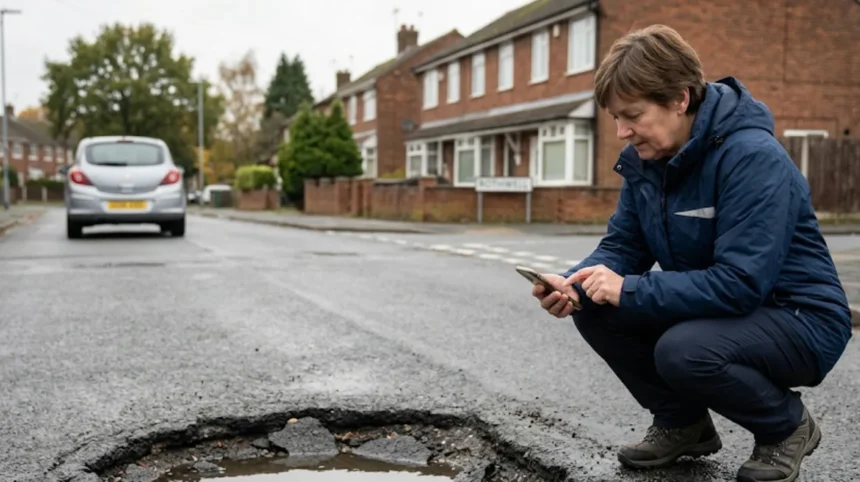
The fastest way to report a pothole on Rothwell roads is to use Leeds City Council’s online road reporting form for local roads, or call the highways emergency line if the defect is dangerous. For roads that are managed by a different authority, use the correct road owner’s reporting route first.
- What counts as a pothole in Rothwell?
- Which route reports it fastest?
- How do you check who owns the road?
- How do you report it online?
- When should you call instead?
- How fast are repairs usually handled?
- What details make a report stronger?
- What if the road is a major route?
- Why does reporting quickly matter?
- What should Rothwell residents do first?
What counts as a pothole in Rothwell?
A pothole is a break or hole in the road surface that can damage vehicles and create a safety risk for cyclists and pedestrians. In Rothwell, the right reporting route depends on whether the road is a Leeds City Council road or part of a major road network.
Rothwell sits within Leeds, so many local streets and residential roads are usually handled by the city council. Major roads follow a separate reporting route. The key first step is to identify which authority maintains the road before you submit the report.
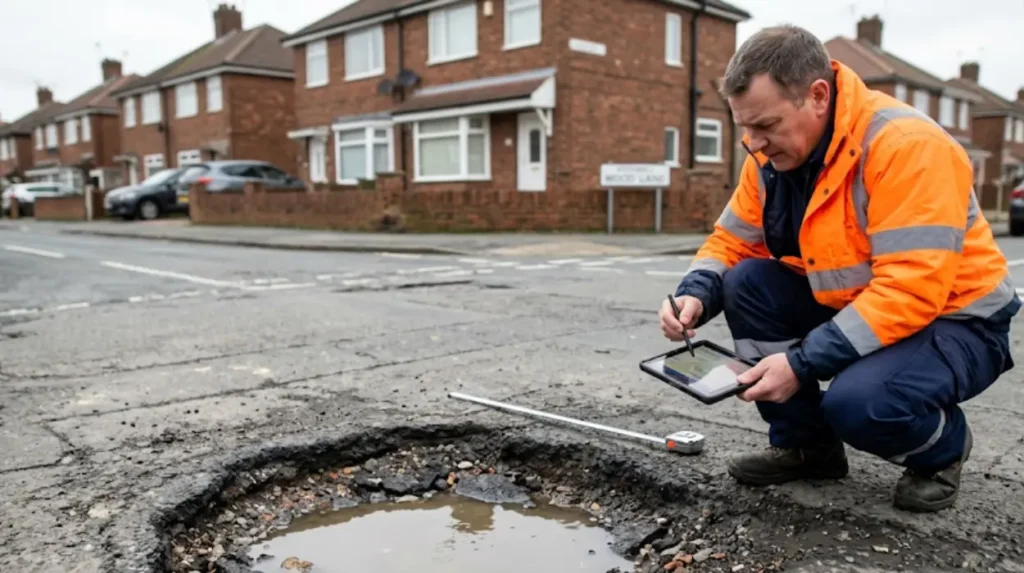
A useful report includes the road name, postcode, nearest property, and a clear description of the defect. That makes it easier for the highways team to place the pothole in the right repair category.
Which route reports it fastest?
For a council-maintained road in Rothwell, the fastest route is Leeds City Council’s online pothole reporting form. If the pothole is an immediate danger, phone the highways emergency number instead of waiting to submit an online form.
This direct route sends the defect straight into the highways system and creates a record for inspection. If the problem sits on a motorway or a major road managed by a national road authority, it needs to be reported there instead of to the council.
Reporting to the wrong authority slows the process. A local road defect sent to the wrong service does not enter the correct repair queue.
How do you check who owns the road?
Check the road owner before reporting. Local residential streets in Rothwell are often Leeds City Council roads, while motorways and some major routes sit under a national road authority.
Start with the road name and postcode. If the street is a local access road, estate road, or residential road, it is usually a council responsibility. If it is a major route, use the appropriate national reporting channel.
If the road seems private, it may not be maintained by the council. In that case, confirm ownership before submitting a pothole report.
How do you report it online?
Open the Leeds City Council road reporting form, choose the pothole or damaged road surface option, and enter the exact location details. Add a photo if you can.
The strongest report includes the road name, postcode, nearest house number, and a short explanation of the damage. A photo helps show the size and severity of the pothole, especially near junctions, bends, or parking areas.
Reporting from your phone while you are beside the pothole reduces location errors. That gives the council a better chance of logging it correctly the first time.
When should you call instead?
Call the highways emergency line when the pothole creates immediate danger to people or property. That route is for urgent hazards, not routine defects.
Use phone reporting for large holes, collapsed edges, missing covers, or defects that create a serious risk to traffic. On busy Rothwell roads, emergency reporting is the best option when the hazard needs quick attention.
For ordinary potholes, the online form is the normal route. The issue still gets logged, but it enters the standard repair process rather than emergency response.
How fast are repairs usually handled?
Leeds City Council classifies pothole reports into urgent, non-urgent, and planned repairs. Urgent defects are attended by the end of the next working day, non-urgent defects within 28 days, and planned works go into a later schedule.
That priority system is how a report moves from submission to repair. A clear and accurate report helps the highways team decide how serious the defect is and where it should sit in the queue.
Weather and traffic affect repair demand, especially after wet or cold periods. That means the number of potholes reported across Leeds can rise quickly in bad conditions.
What details make a report stronger?
A strong report includes the exact road name, postcode, nearest landmark, a photo, and a short description of the damage. Clear location data is what speeds up the response.
The best photo shows the pothole in context, not just close up. The highways team needs to see whether the defect is in a lane, near a curb, by a junction, or next to drainage features.
If there are several potholes nearby, identify each one clearly. That prevents one defect from being missed during inspection.
What if the road is a major route?
If the pothole is on a motorway or a major road managed by the national road authority, use that authority’s reporting service or emergency line. Do not send it to the council.
Major roads follow a different maintenance system from local Leeds streets. A defect on the wrong network will not be fixed quickly if it is reported to the wrong body.
If the road is dangerous, phone reporting is the fastest option. For non-emergency major-road defects, use the online reporting route for that road owner.
Explore More Help & Resources
How to get school support for your child in Pudsey
How to get free carer support near Otley
Why does reporting quickly matter?
Fast reporting matters because potholes worsen when traffic and water break the surface further. Reporting early helps prevent more damage to the road and more risk to road users.
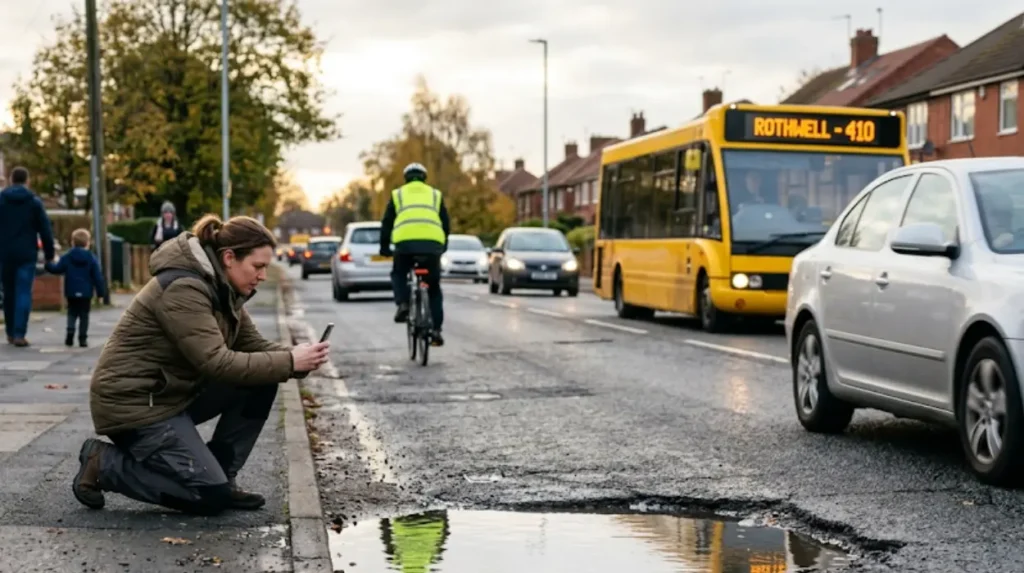
A pothole can damage tyres, wheels, suspension, and bikes. It also increases risk for cyclists and motorcyclists, who are more exposed to sudden surface defects.
In Rothwell, this matters on roads used by school traffic, deliveries, buses, and commuters. The sooner a defect is reported, the sooner it enters the repair system.
What should Rothwell residents do first?
First, identify the road type, then report it to the right authority, then add exact location details and a photo. If it is an immediate hazard, use the emergency phone line.
That is the quickest and most reliable way to get a pothole logged properly. If you are unsure about road ownership, check it before reporting so the defect goes to the correct service.
The main goal is simple: give the highways team enough information to find the pothole fast and classify it correctly. That improves the chance of a quicker repair.
What counts as a pothole in Rothwell?
A pothole is a hole or break in the road surface that can damage vehicles or create a safety hazard for cyclists, pedestrians, and motorists. In Rothwell, local residential roads are generally maintained by Leeds City Council, while some major roads and motorways are managed by a different highway authority.