
Horsforth is a historic suburb and town parish in Leeds, West Yorkshire, with a strong village identity, several established drinking establishments and a long connection with inns, taverns and beer houses. Its pub culture is closely connected with Town Street, The Green, Long Row, New Road Side and surrounding residential streets.
- What makes Horsforth a good place to explore traditional pubs?
- How important are pubs and inns to Horsforth’s history?
- Which Horsforth pub best represents the area’s historic character?
- Where should visitors explore pubs around Town Street and The Green?
- Which Horsforth pubs offer a more modern interpretation of the traditional pub?
- Where can visitors find local beer and independent drinking experiences in Horsforth?
- How can visitors explore Horsforth pubs as a walking route?
- What historical sights should you combine with a Horsforth pub visit?
- How does Horsforth’s pub culture fit into modern Leeds?
- What should visitors know before exploring Horsforth pubs?
- Why is Horsforth’s combination of pubs and heritage worth exploring?
Horsforth’s history stretches back to the Anglo-Saxon period. The settlement appears in the Domesday Survey of 1086, while its medieval development was influenced by Kirkstall Abbey. Later growth came through the wool trade, transport improvements, industry and suburban expansion. Leeds City Council describes Horsforth as a historic settlement whose surviving buildings and street pattern retain a distinctive village character.
For visitors, this creates a useful combination of heritage and contemporary hospitality. A pub visit in Horsforth is not simply an evening activity. It provides an opportunity to explore historic streets, local architecture, traditional public-house names and modern independent venues within a compact part of Leeds.
The area also has strong transport connections. Horsforth Town Council identifies bus and rail connections serving Leeds, Bradford, Harrogate and Ilkley, alongside three railway stations associated with the wider area.
What makes Horsforth a good place to explore traditional pubs?
Horsforth combines historic streets, surviving village architecture and a varied pub scene within a compact Leeds suburb. Visitors can explore traditional pubs, modern gastropubs, beer-focused venues and independent bars while remaining close to historic landmarks and local transport connections.
The strongest reason to explore Horsforth’s pubs is its physical character. Town Street and The Green preserve elements of an older settlement, while later commercial streets show how Horsforth developed into a busy suburb.
Leeds City Council’s conservation appraisal identifies Horsforth’s historic core around Town Street and describes a long chain of historic structures extending towards the railway station. The council also records the area’s Anglo-Saxon links and medieval street pattern around The Green and the southern section of Town Street.
Horsforth Town Council describes the settlement as an ancient town listed in Domesday and notes its distinctly village-like character. It also identifies three busy high streets supporting local shops, cafés, bars and restaurants.
This setting gives pub exploration a clear geographical structure. A visitor can begin around The Green, continue along Town Street, move towards Long Row and New Road Side, and then explore the surrounding streets.
The current pub selection also covers different styles. Traditional pubs sit alongside gastropubs, beer houses, micro-pubs and brewery taprooms. Examples include The Old Kings Arms, The Brownlee Arms, The Three Swords – Horsforth and Horsforth Brewery and Taproom.
That variety makes Horsforth suitable for visitors who want heritage, food, local beer or a more contemporary social setting.
How important are pubs and inns to Horsforth’s history?
Pubs and inns formed an important part of Horsforth’s historic community infrastructure, providing places for drinking, meetings, accommodation and local administration. Historical records identify numerous inns, taverns and beer houses, showing that licensed premises were embedded in everyday village life.
The historical importance of Horsforth’s pubs is unusually well documented. Leeds Libraries’ Heritage Blog highlights a dedicated Horsforth history guide covering inns, taverns and public houses, with information and photographs documenting many establishments across different periods.
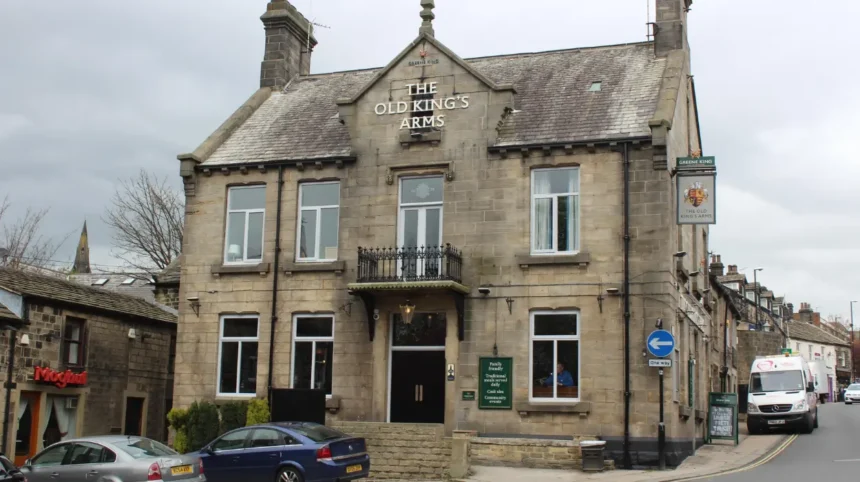
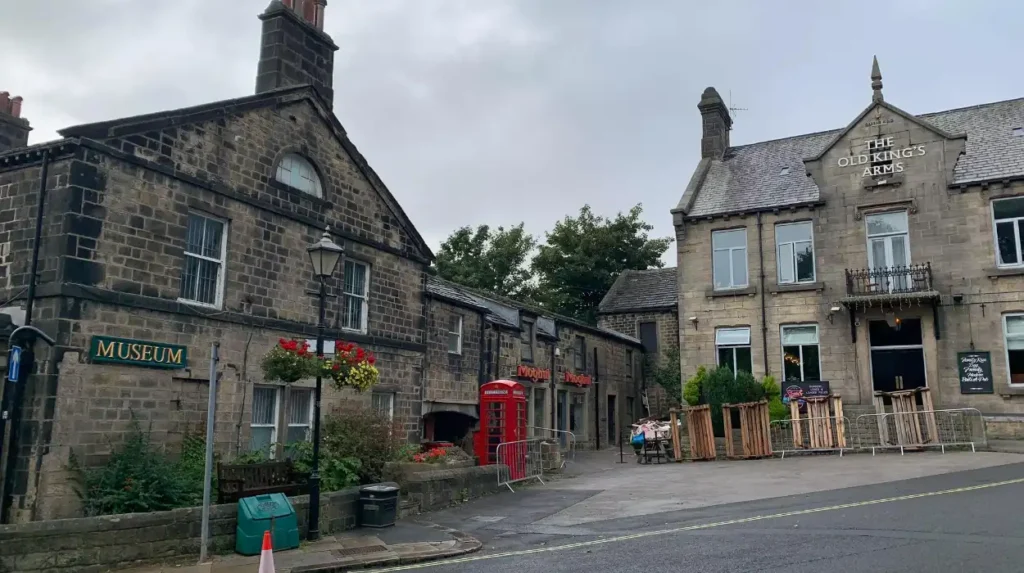
One of the clearest examples is the Old King’s Arms on The Green. Leeds Libraries records its opening as a pub in 1749, making its licensed history considerably older than the Victorian façade visible today. The date stone above its entrance reads 1879, but that date relates to the later building work rather than the beginning of its pub history.
The building’s position also demonstrates how pubs operated within historic communities. The area in front of the Old King’s Arms included village stocks, while justice sessions were held at the pub by 1822. The stocks were recorded on an 1839 town map and had disappeared by 1878.
Another historical example is the former Star and Garter on Town Street. Leeds Libraries records that the premises brewed its own beer and obtained brewing water from a village pump located near the building. The pub closed in 1927 and later had several different uses.
These records demonstrate that the traditional inn was more than a place for alcoholic drinks. Such premises served social, commercial and civic functions.
The development of Horsforth itself also explains the strength of this tradition. The settlement expanded rapidly during the wool industry period. Leeds City Council records that around 1796 almost half of Horsforth’s adult population was involved in cloth weaving. Later industrial activity included tanning, corn grinding, soap making, silk spinning and other textile-related processes.
As industrial and transport activity increased, pubs became part of the commercial landscape that served workers, travellers and residents.
Which Horsforth pub best represents the area’s historic character?
The Old King’s Arms is the clearest historic reference point for Horsforth pub culture because its licensed history dates to 1749 and its location beside The Green connects it with historic civic activity. Its later Victorian façade also demonstrates how older premises evolved.
The The Old Kings Arms stands at The Green at the bottom of Town Street. Its location is significant because The Green forms part of Horsforth’s historic core.
The building demonstrates a common pattern in British pub architecture: an older structure adapted and enlarged over time. Leeds Libraries records that the original section began as a farmhouse before the imposing Victorian frontage was added. The 1879 date stone therefore refers to the later façade rather than the establishment’s opening.
The Old King’s Arms is particularly useful for visitors interested in understanding how traditional inns developed. Its history covers several distinct functions associated with historic public houses, including hospitality and community administration.
The building’s proximity to the former village stocks adds another layer of historical context. The stocks were a public punishment structure, while the inn itself became a location for justice sessions. This places the pub within the wider administrative landscape of historic Horsforth rather than treating it as an isolated commercial building.
The current establishment remains a functioning pub, making it possible to connect historic evidence with a present-day venue. For a heritage-focused pub walk, The Green is therefore a logical starting point.
Visitors should also examine the surrounding buildings rather than focusing exclusively on the pub. Horsforth Town Council identifies several historic properties around The Green, including 3 and 5 The Green, which have served different community purposes over time. Number 5 currently houses the Horsforth Museum.
This makes The Green particularly valuable for combining pub exploration with local heritage.
Where should visitors explore pubs around Town Street and The Green?
Town Street and The Green form one of the strongest areas for combining Horsforth’s historic environment with modern hospitality. Visitors can explore the Old King’s Arms, Town Street Tavern and nearby venues while examining historic buildings and the area’s traditional street pattern.
Town Street provides a useful starting point because it represents the historic commercial spine of Horsforth. The conservation appraisal identifies the southern part of Town Street and The Green as important elements of the area’s medieval street pattern.
The The Old Kings Arms anchors the southern end of this experience. From there, visitors can continue through the commercial centre and encounter establishments serving different purposes.
Town Street Tavern is positioned directly on Town Street and represents the area’s contemporary pub offer. Its location makes it practical for visitors following a walking route through the central shopping and hospitality area.
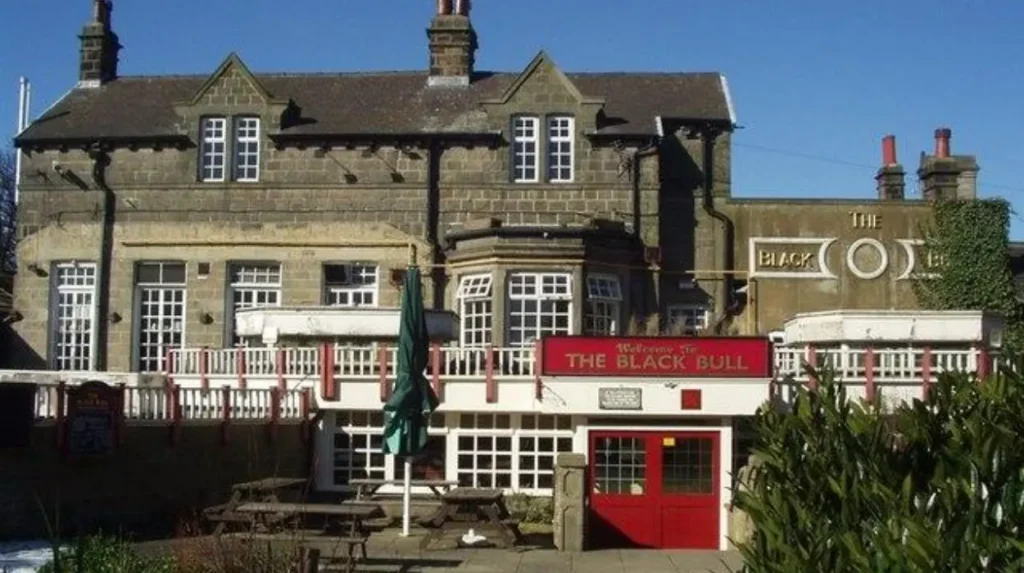
Another nearby establishment is The Black Bull at The Green. Its position reinforces the concentration of hospitality around this historic part of Horsforth.
The central area also demonstrates how modern businesses occupy an older urban framework. Independent businesses, restaurants, cafés, bars and pubs operate alongside older stone buildings and established residential streets.
Visitors interested in heritage should look beyond façades. Building materials, rooflines, boundary walls, street widths and the relationship between older properties provide evidence of Horsforth’s development.
Leeds City Council’s conservation appraisal notes that local vernacular building materials contribute significantly to the area’s character. It also identifies the historic core as an environment that retains independence from surrounding urban development.
This combination makes a Town Street pub walk suitable during the daytime as well as the evening. Visitors can examine the historic setting first and then experience the hospitality businesses after shops and heritage attractions have been explored.
As you explore the modern pub scene, you are crossing land with a deep heritage. Read about the full] to understand its origins.
Which Horsforth pubs offer a more modern interpretation of the traditional pub?
Modern Horsforth pubs combine familiar public-house functions with gastropub dining, specialist drinks, contemporary interiors and broader opening patterns. The Brownlee Arms, The Three Swords and Granvilles Beer & Gin House demonstrate how the area’s hospitality scene extends beyond conventional historic inns.
The traditional pub format has changed substantially across Britain. Contemporary venues often combine drinking, dining, social events and specialist drinks rather than operating solely as drinking houses.
Horsforth reflects this wider change.
The Brownlee Arms on Long Row is categorised as a gastropub. This format combines pub hospitality with a stronger food offer and a more restaurant-oriented service model.
The Three Swords – Horsforth on New Road Side provides another contemporary pub option. Its location on one of Horsforth’s principal commercial routes makes it suitable for visitors exploring the area beyond Town Street.
On Long Row, Granvilles Beer & Gin House represents a drinks-focused interpretation of modern pub culture. Its emphasis on beer and gin reflects the expansion of specialist beverage categories within British hospitality.
The important distinction is between historical character and historical age. A modern pub does not need to occupy an eighteenth- or nineteenth-century building to contribute to the current identity of Horsforth.
Visitors can therefore use two criteria when selecting venues. The first is architectural and historical interest. The second is the type of hospitality experience provided.
This distinction helps prevent confusion between a traditional inn, a modern gastropub and a specialist drinks venue. Each represents a different stage in the development of British drinking culture.
Where can visitors find local beer and independent drinking experiences in Horsforth?
Horsforth offers independent beer-focused venues alongside conventional pubs, giving visitors access to contemporary local drinking culture. The Horsforth Brewery and Taproom and Woodside Micro Pub provide smaller-scale experiences centred on beer, community atmosphere and specialist drinks.
The growth of brewery taprooms and micro-pubs represents one of the most visible changes in Britain’s modern pub landscape.
Horsforth Brewery and Taproom operates on New Road Side and provides a brewery-focused alternative to the conventional pub model. A brewery taproom is a hospitality venue connected directly with a brewery, allowing customers to experience beer production and consumption within the same local business environment.
The model is particularly relevant to visitors interested in local food and drink because it places production closer to the customer.
Another independent-style venue is Woodside Micro Pub on Low Lane. A micro-pub is a small drinking establishment that typically focuses on beer, conversation and a limited physical footprint rather than the large entertainment format associated with some modern bars.
These establishments provide a useful contrast with larger pubs and gastropubs.
Visitors exploring Horsforth should therefore distinguish between three broad venue types: traditional pubs, modern gastropubs and independent specialist venues. Examples include The Old King’s Arms for historical pub heritage, The Brownlee Arms for gastropub dining, and Horsforth Brewery and Taproom for brewery-focused drinking.
This range reflects the continuing evolution of local hospitality.
Horsforth’s transport history also provides context for this diversity. Leeds City Council records that the Leeds-to-Harrogate railway reached Horsforth in 1849, while trams arrived at The Fleece in 1906.
Transport increased accessibility and supported the transformation of Horsforth from an independent settlement into a Leeds suburb.
How can visitors explore Horsforth pubs as a walking route?
A Horsforth pub walk works best when it follows the area’s historic and commercial geography rather than treating venues as isolated destinations. Start around The Green, continue along Town Street, then move towards Long Row, New Road Side and Low Lane.
A structured walking route allows visitors to combine hospitality with local history.
Begin at The Green, where the Old King’s Arms provides the strongest historical connection. Examine the surrounding buildings before moving north along Town Street.
Continue towards Town Street Tavern. This section demonstrates the transition from historic village architecture to contemporary commercial activity.
From Town Street, continue towards Long Row. The route brings visitors close to The Brownlee Arms and Granvilles Beer & Gin House.
The next stage can follow New Road Side, where visitors can find The Three Swords – Horsforth and Horsforth Brewery and Taproom.
For a wider exploration, continue towards Low Lane and Woodside Micro Pub.
This route should be treated as a geographical framework rather than a fixed pub crawl. Visitors can select venues according to opening times, food requirements and transport arrangements.
Horsforth’s wider transport connections make this approach practical. Horsforth Town Council identifies links towards Leeds, Bradford, Harrogate and Ilkley, while the area’s rail infrastructure has played a major role in its development.
Visitors should check current opening hours before travelling because hospitality schedules change. Current business listings show different opening patterns across Horsforth’s pubs, with some opening from late morning and others concentrating activity later in the day.
A walking route also reduces unnecessary travel between venues and creates opportunities to examine Horsforth’s architecture.
What historical sights should you combine with a Horsforth pub visit?
The best heritage additions include The Green, Town Street, St Margaret’s Church, Horsforth Museum and historic buildings along the village centre. These locations explain how Horsforth developed from an ancient settlement into an industrial community and eventually a Leeds suburb.
Pub exploration becomes more informative when combined with the physical evidence of Horsforth’s history.
The Green is central to this experience. The conservation appraisal identifies it as part of the medieval street pattern, while Horsforth Town Council records the area’s continuing village character.
St Margaret’s Church is another important landmark. Leeds City Council’s historical documentation connects the present church with the development of the settlement after the Dissolution of Kirkstall Abbey.
Horsforth Museum, located at 5 The Green, provides a more direct route into local history. The building itself has a changing history and was previously connected with local government functions before becoming a museum.
Horsforth’s industrial heritage is visible through surviving structures and historic routes. Leeds City Council records industrial activity associated with wool, tanning, corn grinding, soap making and silk spinning.
The railway connection is also important. Horsforth’s railway development in the nineteenth century changed the settlement’s relationship with neighbouring towns and cities. The Leeds-to-Harrogate line opened with a station at Troy, now associated with Horsforth, in 1849.
These landmarks help explain why pubs became important. Inns historically served communities shaped by agriculture, trade, industry and transport.
The modern pub scene sits within that same geographical framework. A visitor who understands the area’s historical development can distinguish between an old building, an old pub name and a modern venue occupying a traditional commercial setting.
How does Horsforth’s pub culture fit into modern Leeds?
Horsforth’s modern pub culture reflects its position as a distinctive Leeds suburb with an established community, strong transport links and multiple commercial centres. Traditional pubs now operate alongside gastropubs, specialist drinks venues, cafés and restaurants serving residents and visitors.
Horsforth was formally incorporated into the City of Leeds in 1974. Before that change, it retained its status as an urban district and had developed a strong suburban identity. Leeds City Council records the 1974 amalgamation as a major point in its twentieth-century history.
The area has retained a separate local identity despite its incorporation into Leeds. Horsforth Town Council describes it as the biggest town parish within the City of Leeds and emphasises its village character.
That identity influences the current hospitality landscape.
Traditional venues continue to operate alongside newer formats. Current establishments include the historic The Old Kings Arms, the gastropub The Brownlee Arms, The Malt Brewhouse, The Fleece Horsforth and the independent Horsforth Brewery and Taproom.
The result is a pub landscape that serves several audiences.
Residents use venues for everyday socialising and dining. Leisure visitors use them alongside heritage walks and local exploration. Business travellers can use the area for evening meals and informal meetings. Students and younger residents are also part of the local customer base, particularly because Leeds Trinity University is based in Horsforth.
The future relevance of Horsforth’s pub culture therefore depends on the continued relationship between heritage, independent businesses, transport accessibility and local demand.
Its historic identity gives the area a strong geographical context, while its contemporary hospitality businesses keep that environment commercially active.
Explore More Area Guide
Best Early Evening Strolls in Horsforth Leeds 2026
Horsforth Libraries and Cultural Spaces Guide 2026
What should visitors know before exploring Horsforth pubs?
Visitors should plan around current opening hours, transport connections, venue type and walking distances. They should also respect local licensing requirements and responsible-drinking guidance while treating historic buildings and residential streets as part of Horsforth’s living community.
Pub exploration requires practical planning.
Opening hours differ between venues. Current listings show that some Horsforth pubs open from late morning, while specialist venues often open later. Visitors should confirm hours directly with each business before travelling, particularly on Sundays, bank holidays and during seasonal periods.
Transport planning is also important. Horsforth is served by established bus and rail connections, with links towards Leeds and neighbouring West Yorkshire and North Yorkshire destinations.
Visitors should avoid treating a pub route as an opportunity to consume excessive alcohol. Responsible drinking keeps the activity compatible with walking, public transport and residential areas.
The historical environment also deserves attention. Horsforth’s conservation area contains buildings and streets that contribute to the area’s special character. Leeds City Council states that retaining historic features and using appropriate materials are important elements of conservation.
This matters because many pubs operate within older commercial streets. Their façades, entrances, windows and surrounding buildings contribute to the visual identity of Horsforth.
Visitors should therefore approach a pub visit as part of a broader local experience. Explore the architecture, understand the history, support independent businesses and use public transport or a designated driver where appropriate.
Horsforth provides a particularly strong setting for this type of exploration because its pub culture remains connected to the physical structure of the historic settlement.
Why is Horsforth’s combination of pubs and heritage worth exploring?
Horsforth stands out because its contemporary pub scene remains closely connected to an identifiable historic landscape. Visitors can experience an eighteenth-century pub legacy, nineteenth-century industrial and transport development, and modern independent hospitality within one established Leeds community.
The defining feature of Horsforth is continuity.
The settlement’s documented history begins at least with the Domesday Survey of 1086. Its medieval development was influenced by Kirkstall Abbey. Its eighteenth- and nineteenth-century economy was shaped by weaving and industry. Railway and tram connections later accelerated suburban development. Horsforth joined Leeds in 1974 while retaining a distinctive local identity.
The pub scene reflects each stage of this development.
The Old King’s Arms provides a direct connection with eighteenth-century licensed hospitality. Former venues such as the Star and Garter demonstrate how drinking establishments changed use as the local economy evolved. Modern venues such as the Horsforth Brewery and Taproom demonstrate the continuing transformation of drinking culture.
This makes Horsforth particularly useful for visitors interested in traditional pubs in Leeds, historic inns in West Yorkshire, Horsforth heritage, local beer, Leeds pub walks and village history.
The experience does not depend on visiting every venue. The stronger approach is to understand the relationship between location, architecture, history and hospitality.
Start at The Green. Follow Town Street. Examine the historic buildings. Continue towards Long Row and New Road Side. Select venues according to the experience required, whether that is traditional pub character, gastropub dining, specialist beer or independent hospitality.
Horsforth’s pub culture is therefore best understood as part of the area’s wider heritage rather than as a standalone nightlife attraction.
What are the best traditional pubs in Horsforth?
The Old King’s Arms is one of Horsforth’s most historically significant pubs. Its licensed history dates to 1749 and its location on The Green places it within Horsforth’s historic village centre.