
Key Points
- Historical Closure: The 616-yard Victorian Greenside Tunnel, situated between Tyersal and Pudsey, was closed in the 1960s during sweeping nationwide reforms to Britain’s rail infrastructure.
- Rare Public Access: Organised by the Greenside Greenway community group, the structure opens its gates to the public for self-guided walks on Saturday, September 12th, and Sunday, September 13th, marking the first time in 20 years visitors can enter.
- Greenway Ambitions: Local campaigners have long advocated for transforming the disused rail corridor and tunnel into a public greenway connecting Pudsey, Bradford, and the Spen Valley Greenway.
- Mass Transit Potential: The historic corridor has emerged as a potential route option for the upcoming West Yorkshire mass transit tram system linking Bradford with Leeds.
- Structural Integrity: Unlike many abandoned rail assets, the tunnel remains in remarkably sound structural condition, though visitors have been advised to wear stout footwear and bring torches due to damp and dark conditions.
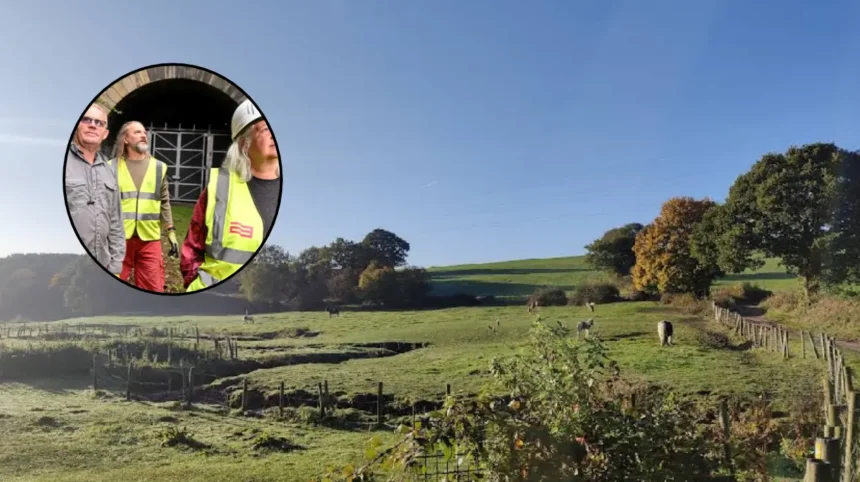
Pudsey (The Leeds Times) September 12, 2026 — A disused 616-yard Victorian railway tunnel nestled between Tyersal and Pudsey has opened its gates to the public for the first time in two decades. As reported by local democracy reporters Tom Kershaw and Chris Young of YorkshireLive and The Telegraph & Argus, the structure was shut down in the 1960s as part of sweeping structural changes to the country’s rail network. However, the historic infrastructure has re-entered public discourse as a possible route for a planned mass transit tram system connecting Bradford with Leeds.
Why is the Greenside Tunnel Opening to the Public Now?
The rare opening is taking place on Saturday, September 12th, and Sunday, September 13th, between 2:00 PM and 4:00 PM each day, as part of the national Heritage Open Day celebrations. The event is coordinated by the Greenside Greenway group, a local community organization working to repurpose the defunct rail line. Gary Lemal of Greenside Greenway explained the background of public interaction with the site, stating to local journalists that
“It has been over 20 years since gates were put up on the tunnel”.
Mr Lemal further noted,
“The rail line closed in 1964, but since then people used it as a route on the way to the woods”.
Gates were originally installed following a national policy to seal off historic rail estates. Despite decades of closure, Mr Lemal highlighted that the tunnel remains in remarkably sound condition for a Victorian structure.
Could the Disused Railway Become a Public Greenway?
Local campaigners have pushed for years to convert the former railway line and tunnel into a public greenway that would establish an active travel corridor. Discussing the group’s long-term vision, Gary Lemal stated,
“We’d like the tunnel and the old rail line to be re-opened as a greenway”.
He added,
“It could be upgraded so people can travel the whole route and connect with the Spen Valley Greenway and the Leeds Bradford Supercycle highway. We’d love people to be using it again”.
If realized, the greenway would create a continuous walking and cycling route linking Pudsey, Bradford, and surrounding networks. Access for the open weekend is managed via the footpath adjacent to the Fox & Grapes pub on Smalewell Road. Due to uneven terrain, damp patches, and total darkness inside, organizers have strongly advised attendees to wear stout footwear and bring torches.
What Role Might the Tunnel Play in the West Yorkshire Mass Transit System?
While community campaigners champion a greenway, the corridor faces competing interest from regional transport planners. The former railway line has been touted as one potential route for the upcoming West Yorkshire mass transit system, which is anticipated to feature a modern tram network linking Bradford and Leeds. The West Yorkshire Combined Authority is expected to put forward a Strategic Outline Case for the mass transit project later this year.
Because the Greenside Tunnel and its approaches offer a direct alignment through difficult topography, its inclusion in transit plans could heavily influence engineering feasibility studies. Consequently, heritage open days offer residents a fleeting chance to inspect the interior before any major industrial or transport redevelopment decisions are finalized.
Explore More Pudsey News
Lost Pubs of Pudsey and Stanningley, Leeds 2026
Pudsey Market Launching Weekend Specialist Events In Pudsey 2026
Background of the Greenside Tunnel Development
The infrastructure now under public scrutiny dates back to the late 19th century, constructed during an era of intense railway expansion in West Yorkshire. The Pudsey Loop and its associated engineering works—including the Greenside Tunnel and a massive embankment across the Tyersal Beck valley—were built following agreements between the Great Northern Railway and the Lancashire & Yorkshire Railway. Engineering responsibilities were held by William Myers-Beswick, with construction carried out by contractor Charles Barker & Sons. Navvies began excavation work in January 1890, and the tunnel was officially completed on January 16th, 1892.
The single-track branch and its looping connections served local communities for decades until the Beeching Axe era and subsequent modernizations led to formal closure on July 6th, 1964. Three years later, New Pudsey station opened nearby to replace older local services. For over half a century, the tunnel sat forgotten, blocked by security gates erected in the early 2000s.
The recent formation of community groups like Greenside Greenway has catalyzed renewed public interest in reclaiming these industrial heritage assets for modern public use, balancing active travel against strategic regional transit demands.
Predicted Impact on Local Communities and Commuters
The potential integration of the Greenside Tunnel into the upcoming West Yorkshire mass transit tram system or a dedicated greenway stands to reshape regional connectivity for residents across Pudsey, Bradford, and Leeds.
For local commuters, a tram route utilizing this disused alignment could drastically reduce journey times between major West Yorkshire economic hubs, alleviating chronic congestion on parallel road corridors like the A647. Alternatively, a fully realized greenway would provide a carbon-free active travel artery, promoting public health and non-motorized recreation while seamlessly plugging into the Spen Valley Greenway and the wider Leeds-Bradford cycle network.
However, these dual aspirations create a distinct planning tension. Should the West Yorkshire Combined Authority select the corridor for heavy mass transit engineering, public access for walking and cycling could be permanently altered, restricted, or entirely superseded by light rail infrastructure.
Conversely, prioritizing a community greenway might permanently preclude heavy rail or tram engineering options along this specific geographic line, forcing planners to seek alternative, potentially more disruptive routes through densely built-up urban areas. For local residents, the weekend’s open event is not merely a nostalgic peek into Victorian engineering, but an intimate look at a localized bottleneck that will heavily influence how West Yorkshire travels for generations to come.