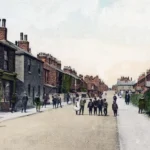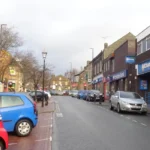

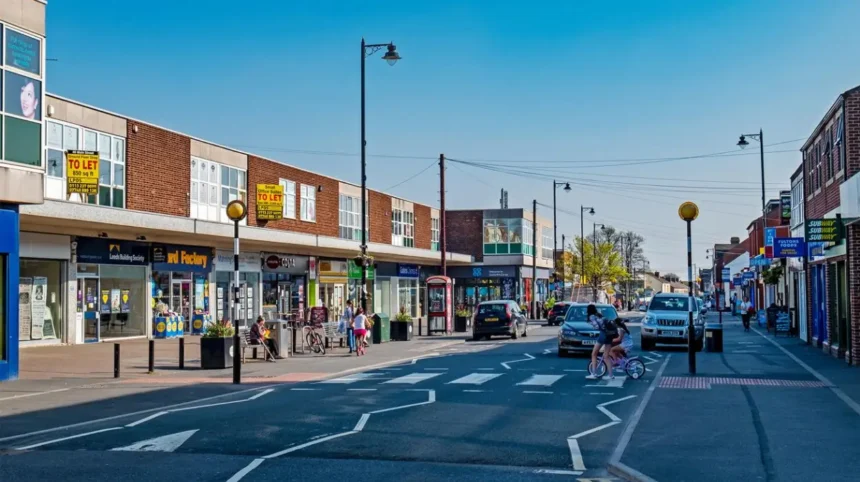
Garforth is a compact town in the eastern Leeds district with a strong combination of independent cafés, historic streets, walking routes, green corridors, community spaces and rail connections. Its position around six miles east of Leeds city centre makes it suitable for a flexible independent day trip without requiring a tightly scheduled itinerary.
- What makes Garforth a good destination for an independent day trip?
- How should an independent traveller start a day in Garforth?
- What are the best places to explore Garforth’s local history?
- Where can independent travellers find green space and walking routes in Garforth?
- How can visitors use the Linesway during a flexible Garforth day?
- What independent cafés and food venues fit a Garforth day trip?
- Can digital nomads work during an independent Garforth day trip?
- How does Garforth railway station support an independent day trip?
- What nearby destination can extend a Garforth day trip?
- What is the best way to structure a full independent day in Garforth?
- Why is Garforth suitable for a low-stress independent day trip from Leeds?
- What should independent travellers know before visiting Garforth?
- Why should Garforth be included in a Leeds day-trip itinerary?
The best Garforth day trips work around personal interests rather than a fixed attraction list. Visitors can combine a café breakfast, a Main Street walk, local heritage, the Linesway, countryside paths and an independent evening meal. The town also connects directly with wider destinations through Garforth railway station.
For independent travellers, Garforth offers an important advantage: activities can be combined according to available time. A visitor with three hours can concentrate on the centre and a short walk. Someone with a full day can extend the visit towards the Linesway, surrounding countryside or nearby Lotherton.
What makes Garforth a good destination for an independent day trip?
Garforth works well for independent day trips because its centre, railway station, cafés, heritage sites and walking routes fit into a flexible local area. Visitors can build short, medium or full-day plans without depending on organised tours or fixed itineraries.
Garforth is part of the City of Leeds and sits in West Yorkshire. Its location provides straightforward access from Leeds while retaining a distinct town-centre environment.
The town is particularly useful for travellers who prefer self-directed exploration. The railway station provides a clear arrival point, while Main Street and surrounding streets provide access to cafés, shops and community facilities.
Garforth also has a strong network of public rights of way. Leeds City Council identifies the Linesway as a three-mile disused railway route between Garforth and Allerton Bywater. The route forms part of the wider recreational walking network around Leeds.
The combination of urban and rural environments is central to an independent visit. A traveller can move from a café to a historic church, then continue towards a railway path or countryside route without turning the day into a conventional attraction-to-attraction itinerary.
How should an independent traveller start a day in Garforth?
An independent day in Garforth starts most efficiently around the town centre, where visitors can combine breakfast, coffee, local streets and community facilities before choosing a longer walk or nearby attraction according to available time and personal interests.
Starting in the centre reduces unnecessary travel. Garforth Main Street provides a useful base for exploring the town before moving towards surrounding green spaces.
Independent cafés are particularly useful at the beginning of the day. Huddle Coffee is associated with the local café scene, while Freshly Made Cafe provides another option around Aberford Road. The availability and opening times of individual businesses should be checked before travelling because independent venues operate their own schedules.
The Garforth Library and One Stop Centre on Lidgett Lane provides another practical base. Leeds Libraries lists free Wi-Fi, public computers, internet access, public toilets and accessible facilities. The building also has a café operating on selected weekdays.
This makes the centre relevant beyond sightseeing. Digital nomads and business travellers can use the library as a practical daytime facility before continuing their independent exploration.
A morning visit can therefore follow a simple sequence: arrive in central Garforth, have breakfast or coffee, explore the surrounding streets, then choose either heritage or countryside as the main activity.
What are the best places to explore Garforth’s local history?
Garforth’s local history is best explored through St Mary the Blessed Virgin, historic buildings, the former mining landscape, the town centre and surviving community landmarks. These sites connect present-day Garforth with its agricultural, industrial, railway and coal-mining development.
St Mary the Blessed Virgin on Church Lane is one of the most important historic buildings in Garforth. Historic England records the church as a Grade II listed building. The present building dates from 1844 and was designed by George Fowler Jones in an Early English style.
The church provides a clear physical connection between the modern town and its historic development. Its Magnesian limestone construction and architectural details distinguish it from ordinary modern buildings.
Garforth’s industrial heritage is also important. Coal mining played a major role in the town’s development, with the local landscape shaped by mining activity and the communities associated with it.
The Garforth Neighbourhood Plan identifies historic features connected with the mining past. One example is the gravestone of John Backhouse in St Mary’s churchyard. Backhouse was a 15-year-old employee at Garforth Colliery who died in a mine explosion in 1856.
The same local heritage material identifies the Miners’ Welfare Hall on Main Street. Built in 1924, it was associated with the Garforth Miners’ Welfare Institute and the town’s mining community.
As you explore the modern town, you are crossing land with a deep heritage. Read the full to understand its origins.
This historical layer makes a self-guided walk particularly effective. Visitors do not need a formal tour to recognise how religious buildings, community facilities, former industrial activity and transport infrastructure shaped Garforth.
Where can independent travellers find green space and walking routes in Garforth?
The Linesway is the key walking route for an independent Garforth day trip, while the Leeds Country Way and surrounding public rights of way provide additional countryside options. These routes allow visitors to extend a town-centre visit into quieter landscapes.
The Linesway is a three-mile disused railway route running between Garforth and Allerton Bywater. Leeds City Council lists it among the city’s shorter recreational routes.
Its railway heritage gives the route a distinctive character. Former railway corridors often provide relatively direct walking connections because their original engineering followed a defined linear route.
The Leeds Country Way provides a larger walking framework. The route is a 62-mile circular footpath around Leeds, divided into sections of roughly five miles for shorter walks. The official Leeds City Council route description includes a section from Barwick-in-Elmet to Garforth and another from Garforth towards the River Aire.
The Garforth section of the Leeds Country Way demonstrates how the town connects with the wider countryside. The route approaches Garforth from Barwick-in-Elmet and continues from Garforth towards the River Aire.
Garforth’s neighbourhood planning documents also identify green corridors and footpaths as important local infrastructure. They describe several significant routes starting, passing through or running around Garforth, including routes forming part of the Leeds Country Way.
Independent travellers should select the walking distance before leaving the town centre. A short Linesway section suits visitors with limited time. A longer Country Way section suits walkers planning several hours outdoors.
How can visitors use the Linesway during a flexible Garforth day?
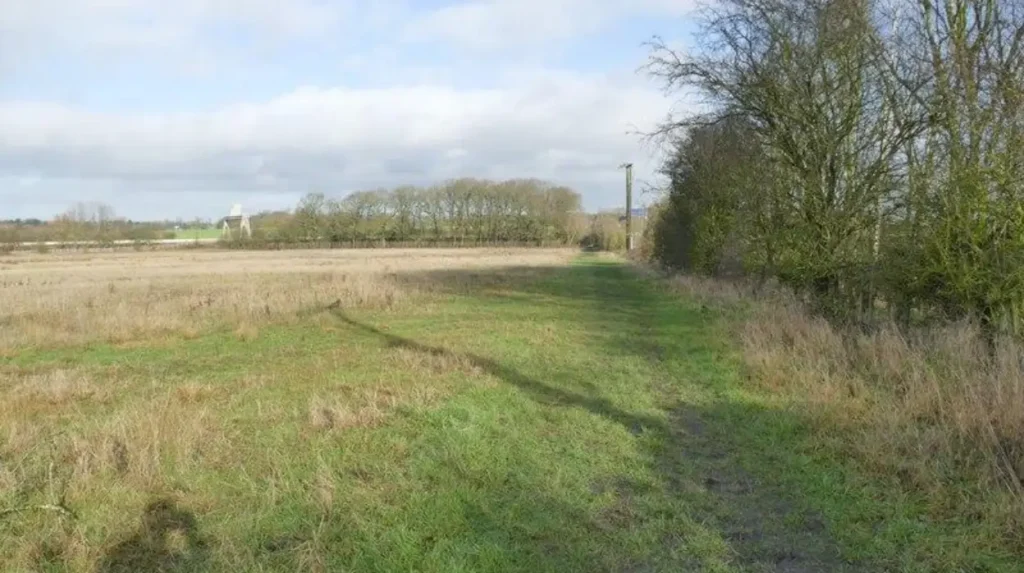
The Linesway works as a flexible middle section of a Garforth day because it provides a three-mile former railway route that can be incorporated after exploring the town centre. Visitors can walk part of the route or use it as a longer countryside activity.
The route begins around Garforth and extends towards Allerton Bywater. Leeds City Council classifies it as a three-mile disused railway route.
The route also connects with other paths. The Leeds Country Way description identifies the old railway line as the Linesway and describes its continuation from Garforth towards the River Aire.
This makes the Linesway useful for independent planning because it does not require a circular itinerary. Travellers can decide how far to walk based on weather, daylight, energy levels and their remaining schedule.
The Garforth Plan identifies the area around the A63 road bridge and Lines Way as a green space and wildlife corridor. It also records connections between the Lines Way, Leeds Country Way and other local footpaths.
The route therefore serves more than recreation. It contributes to local green infrastructure and active travel connections.
Walkers should use suitable footwear and follow current wayfinding information. Public paths cross different environments, and conditions vary between seasons.
What independent cafés and food venues fit a Garforth day trip?
Garforth’s independent food scene gives day visitors practical places for breakfast, coffee, lunch and an evening meal. Huddle Coffee, Freshly Made Cafe and 450 Degrees provide examples of locally focused venues across the town’s café and dining landscape.
A food-led Garforth visit works particularly well because independent travellers can use cafés as flexible stopping points rather than fixed itinerary destinations.
Huddle Coffee is located on Main Street and forms part of Garforth’s independent café offer. Freshly Made Cafe on Aberford Road provides another local option.
450 Degrees provides a different evening option. The business describes itself as a small family-run wood-fired pizza café and bar at 11A Main Street. Its pizzas are cooked in a wood-fired oven and the business is operated by local owners Danny and Lindsay.
Its current published opening pattern is focused on Wednesday through Saturday evenings, with Monday and Tuesday closed and Sunday currently closed. Travellers should check the business directly before planning an evening around it.
This food structure supports several types of independent visitor. A leisure traveller can use a café as a morning stop. A remote worker can use a suitable café or library facility during the day. A business traveller can combine an afternoon walk with an evening meal.
The important distinction is that Garforth’s food scene works as part of the day rather than requiring the entire trip to revolve around dining.
Can digital nomads work during an independent Garforth day trip?
Digital nomads can combine sightseeing with practical work facilities in Garforth by using local cafés where appropriate and the Garforth Library and One Stop Centre, which provides free Wi-Fi, computers, internet access, accessible facilities and a central community location.
Garforth is relevant to remote workers because an independent day trip does not have to be exclusively recreational.
The Garforth Library and One Stop Centre provides free Wi-Fi and free computer access to the internet. Leeds Libraries also lists accessible toilets, lift access and other facilities.
The community hub provides a practical alternative when a visitor requires reliable public facilities rather than relying entirely on mobile connectivity.
The café environment adds another option, particularly for short periods of laptop work. Visitors should follow individual venue policies and avoid assuming that every café provides dedicated workspaces.
A productive day can therefore combine two distinct purposes. The first is focused work in an appropriate indoor facility. The second is independent exploration through the town and nearby walking routes.
This makes Garforth relevant to travellers staying elsewhere in Leeds who want a change of environment without committing to a full inter-city excursion.
How does Garforth railway station support an independent day trip?
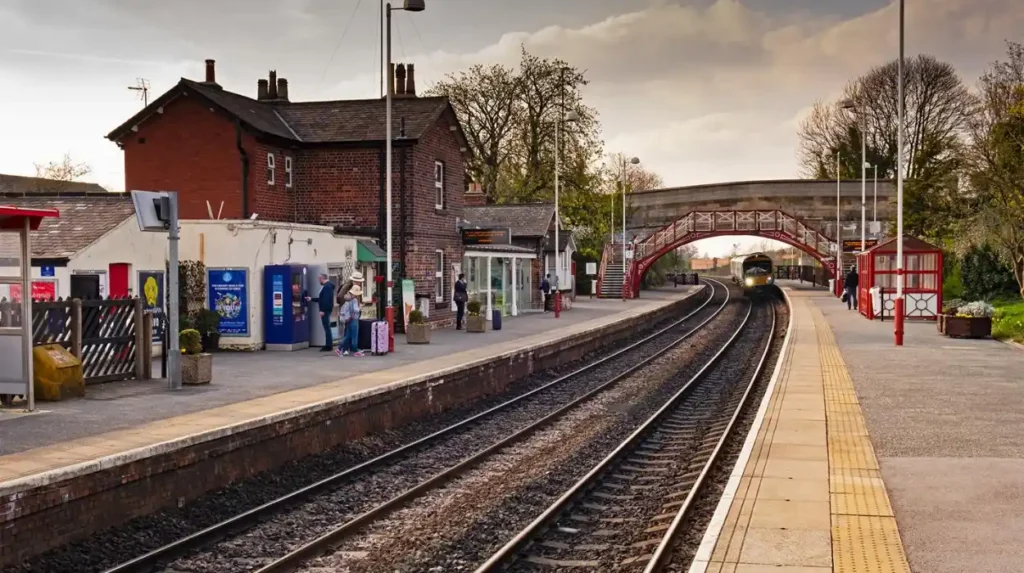
Garforth railway station provides a practical arrival point for independent visitors, with rail services, parking, bicycle storage, step-free access in parts of the station, lifts, accessible facilities and passenger assistance listed by National Rail.
Garforth station is on Station Road and is managed by Northern. National Rail identifies the station code as GRF.
The station has 250 parking spaces, including 15 accessible spaces. Bicycle storage is also available. National Rail lists lifts, toilets, accessible toilets and baby-changing facilities.
Accessibility information is important for independent travellers because it allows visitors to assess the station before departure. National Rail categorises the station as step-free category B3, meaning step-free access is available in some directions rather than universally across every platform movement.
The station also has passenger assistance, help points and customer information screens. Staff assistance is listed from Monday to Saturday during specified hours.
Rail arrival also reduces the need to organise parking before beginning a town-centre itinerary. Visitors can arrive, explore locally and decide whether to walk further into the surrounding area.
What nearby destination can extend a Garforth day trip?
Lotherton is the strongest nearby extension for travellers with extra time, providing a historic estate, hall, Wildlife World, café and gardens around four miles from Garforth railway station. Its location makes it a separate add-on rather than a core town-centre stop.
Lotherton is operated by Leeds Museums and Galleries and is located at Lotherton Lane, Aberford. The estate is approximately 12 miles from Leeds city centre and four miles from Garforth railway station.
The site includes Lotherton Hall, Wildlife World, gardens, a café and shop. Leeds Museums and Galleries lists the estate, hall, Wildlife World, café and shop as open daily, with seasonal opening times.
Public transport planning requires more attention. Bus services 64 and 64A connect Leeds city centre with Aberford, followed by an approximately 20–30 minute walk along a public highway with limited footpaths. Garforth railway station is four miles away, with taxis available from the station.
Lotherton therefore suits travellers who have planned additional transport time. It is less suitable as a spontaneous walking extension from central Garforth.
Visitors who want a simple independent Garforth day should prioritise the town and Linesway first. Lotherton works as an additional destination when the day’s schedule allows for travel between the two locations.
What is the best way to structure a full independent day in Garforth?
A full independent day works best when visitors divide Garforth into flexible sections: arrival and breakfast, central exploration, local history, an outdoor walking route, an afternoon café break and an evening meal or optional nearby attraction.
The first section should focus on arrival and orientation. Travellers using the railway can start at Garforth station and walk towards the central area.
The second section should cover Main Street and nearby streets. This provides access to independent businesses and local buildings without requiring additional transport.
The third section should focus on heritage. St Mary the Blessed Virgin provides an important architectural landmark, while the wider town contains evidence of its mining and community history.
The fourth section is outdoor activity. A short Linesway walk keeps the itinerary compact. A longer section of the Leeds Country Way provides a more substantial countryside experience.
The fifth section is an afternoon refreshment stop. Local cafés provide an opportunity to pause before deciding whether to continue walking or finish the day.
The final section depends on the traveller. A visitor can have an evening meal in Garforth, return by train, or extend the day towards a nearby attraction such as Lotherton where transport arrangements are suitable.
This structure protects the main benefit of independent travel: flexibility.
Why is Garforth suitable for a low-stress independent day trip from Leeds?
Garforth suits low-stress independent travel because its railway station, central services, cafés, historic sites and walking routes create a compact framework. Visitors can shorten or extend activities without rebuilding the entire itinerary or depending on organised transport between attractions.
Garforth’s transport and local infrastructure support this flexibility. The railway station provides a clear arrival and departure point, while the town centre provides food, community facilities and services.
Walking routes then provide an easy way to add outdoor activity without booking a separate excursion.
The Linesway is particularly useful because it is three miles long and directly associated with Garforth. The Leeds Country Way provides longer-distance options for visitors who want a more substantial walk.
The town’s green infrastructure also has wider planning importance. Garforth’s neighbourhood planning documents identify green corridors as valuable for recreation, active travel, wildlife and local environmental functions.
For domestic business travellers, this creates a practical downtime option. For residents, it creates an accessible local day-out framework. For tourists, it provides a way to experience an eastern Leeds community without spending the entire day in the city centre.
Explore More Area Guide
Garforth Guide: Creative Places, Heritage and Walks
Garforth Places to Explore on a Clear Summer Day
What should independent travellers know before visiting Garforth?
Independent travellers should check transport, venue opening times, walking conditions and accessibility before departure. Garforth supports flexible exploration, but individual businesses and attractions operate separate schedules, while countryside routes require appropriate footwear and current route information.
The most important preparation is checking opening times. Independent cafés and restaurants control their own schedules. The published hours for 450 Degrees, for example, differ substantially between weekdays and weekends.
Transport should also be checked before travelling. National Rail provides current station information for Garforth, including accessibility, parking and passenger facilities.
Walking plans require similar preparation. The Leeds Country Way includes field paths, bridleways, roads and countryside sections. Its official route information provides detailed directions and route stages.
Visitors should also distinguish between a local walk and a full countryside route. The Linesway is suitable for a shorter outdoor section, while the Leeds Country Way offers longer walking possibilities.
The result is a day trip that remains independent without becoming unplanned. Checking essential details before leaving allows the rest of the day to remain flexible.
Why should Garforth be included in a Leeds day-trip itinerary?
Garforth deserves consideration in a Leeds day-trip itinerary because it combines local heritage, independent food, railway access, green corridors and walking routes within one eastern Leeds community. Its compact structure supports flexible visits ranging from a few hours to a complete day.
The town’s strongest feature is the relationship between its different components. The railway station provides access. The centre provides food and services. Historic buildings provide cultural context. The Linesway provides outdoor recreation. The Leeds Country Way connects Garforth with the wider countryside.
This combination gives independent travellers control over the pace of the visit.
A short visit can focus on coffee, Main Street and local heritage. A half-day visit can add the Linesway. A full-day itinerary can incorporate longer countryside walking or a separate nearby destination such as Lotherton.
Garforth also demonstrates how a destination outside a major city centre can support several travel purposes simultaneously. Leisure visitors can explore independently. Residents can build a local day out. Digital nomads can combine work and recreation. Business travellers can use the town for structured downtime.
For The Leeds, Garforth therefore works as an important local destination rather than simply a residential area east of Leeds. Its transport connections, heritage, independent businesses and green infrastructure provide the components required for a genuinely flexible independent day trip.
Is Garforth a good place for an independent day trip?
Yes. Garforth is well suited to independent day trips because visitors can combine cafés, local heritage, walking routes, green spaces and community facilities without following a fixed itinerary.