Key Points
- Milestone Achieved: Leeds City Council’s Council Housing Growth Programme (CHGP) has successfully passed a major milestone, building or acquiring more than 1,000 homes for people on the city’s housing register.
- Total Delivery Figures: The total number of homes delivered through the programme currently stands at 1,116, with over 200 delivered in the 12 months leading up to the end of March.
- Thirty-Year Record: When incorporating schemes brought forward by registered providers and Section 106 developer contributions, total affordable housing delivery in Leeds reached 943 homes during 2025/26—marking the highest figure in three decades.
- Strategic Acquisitions: The council acquired properties from private developers, including 41 homes at Persimmon’s Morwick Green development, alongside additional homes at Laneside Farm and Wellington Mount.
- Future Investment: The executive board of Leeds City Council has committed an extra £200 million for the second phase of the CHGP, spanning 2026 to 2031, to sustain ongoing housing growth.
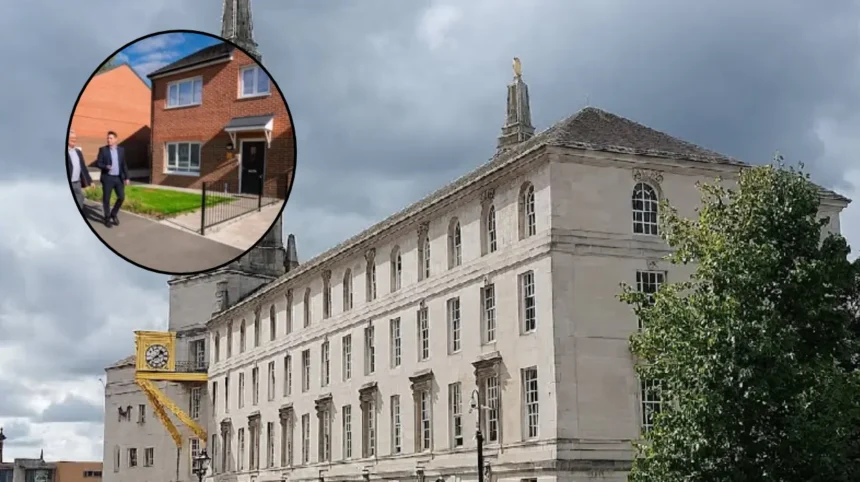
Leeds (The Leeds Times) September 23, 2026 –Work to deliver new council housing in communities across Leeds has officially passed a significant milestone, with more than 1,000 homes now built or acquired through Leeds City Council’s Council Housing Growth Programme (CHGP). These properties are designated for rent by individuals listed on the Leeds housing register, addressing pressing local demand for secure accommodation.
- Key Points
- How many homes have been built or acquired through the Leeds Council Housing Growth Programme?
- Where are the new developments and recent acquisitions located across Leeds?
- Which private developers are partnering with Leeds City Council?
- How is the Council Housing Growth Programme funded?
- What have local leaders stated about the milestone?
- Background of the Development
- Prediction on How This Development Can Affect Local Residents and Housing Applicants
How many homes have been built or acquired through the Leeds Council Housing Growth Programme?
The total number of homes built or acquired via the initiative for use as council housing currently stands at 1,116. Out of this total, more than 200 properties were delivered during the 12 months leading up to the end of March. Council new-builds account for 43 per cent of the homes delivered through the programme to date, while the remaining proportion has been acquired from private developers and individual owners.
When wider schemes brought forward by registered providers—such as housing associations or those facilitated via Section 106 developer contributions—are factored into the equation, the total number of affordable homes delivered across Leeds during the 2025/26 period climbs to 943. According to local authority data, this figure represents the highest volume of affordable housing delivered in the city for three decades.
Where are the new developments and recent acquisitions located across Leeds?
The local authority’s expansion strategy spans multiple wards and communities. Recent planning applications have been formally submitted for affordable CHGP developments at Richmond Road in Farsley, Wood Lane in Rothwell, and the former site of the Kingsdale Court flats located in the Boggart Hill area of Seacroft.
Other completed and ongoing flagship projects include a development in Middleton featuring 100 family homes, 16 wheelchair-accessible bungalows, and the 60-apartment Gascoigne House extra care facility situated on land formerly occupied by Throstle Recreation Ground and Middleton Skills Centre. Additionally, a 55-home scheme is progressing across multiple sites in Gipton, including Amberton Terrace, Amberton Crescent, Amberton Street, and Montagu Avenue.
Projects currently under active construction include a 65-apartment extra care facility in Armley on the former Middlecross Day Centre site, alongside an 82-home scheme located at Hough Top in Swinnow, near Pudsey.
Which private developers are partnering with Leeds City Council?
As part of its acquisition strategy, the local council has secured properties from major private housebuilders. Recent acquisitions feature 41 homes purchased at Yorkshire-based housebuilder Persimmon’s wider Morwick Green development, which is developing off York Road on land split across the Cross Gates & Whinmoor and Harewood council wards.
A further 42 homes have been acquired by the local authority at Persimmon development sites situated at Laneside Farm in the Morley North ward, and Wellington Mount in the Cross Gates & Whinmoor ward. Financial backing and support from Homes England through its Social and Affordable Homes Programme ensure that these purchased properties can be allocated specifically for social rent, which is classified as the most affordable tenure option.
How is the Council Housing Growth Programme funded?
The majority of the financial backing for the building and purchasing activities during the first five-year phase of the CHGP was supplied directly by the council’s housing service through Right to Buy receipts and borrowing. Looking ahead, the executive board of Leeds City Council has committed a further £200 million toward the second phase of the programme, which covers the period from 2026 to 2031.
Local leadership anticipates that this financial injection will secure the continuation of affordable housing growth across the city over the next five years. Despite persistent local housing demands, officials noted that these committed funds leave the council well-positioned to maintain its positive momentum.
What have local leaders stated about the milestone?
Commenting on the achievement, Councillor James Lewis, leader of Leeds City Council, stated:
“We are determined, as a council, to reduce inequality, build thriving communities and provide opportunities that benefit people living in every part of Leeds.”
Councillor James Lewis further added that
“By delivering good quality, energy efficient and affordable homes, our Council Housing Growth Programme has a vital role to play in helping us achieve that goal. We know there is still much to do, but can assure local residents that we are focused on delivering more of the kind of council housing that can change lives and communities for the better.”
Echoing these remarks, Cllr Tom Hinchcliffe, Leeds City Council’s executive member for transport and planning, stated:
“The Leeds Council Housing Growth Programme has shown what can be achieved with bold, ambitious thinking allied to a carefully planned and strategic way of working.”
Cllr Tom Hinchcliffe also noted:
“Building houses alone isn’t enough. We are also ensuring new homes in Leeds meet a range of needs and, crucially, are in suitable and sustainable locations. Collaboration is vital. Our work alongside registered providers and other partners in the last year has driven affordable housing delivery in the city to its highest level in 30 years.”
Explore More Leeds City Council News
Former Leeds City Council Leader Keith Wakefield Dies at 78 in Leeds 2026
Tributes Paid to Former Leeds Council Leader Keith Wakefield Leeds 2026
Background of the Development
The Council Housing Growth Programme (CHGP) was established by Leeds City Council to directly combat mounting local housing pressures, reduce reliance on temporary or private rented accommodations, and supply energy-efficient homes for individuals and families on the municipal housing register.
Historically, local authorities across the United Kingdom faced prolonged periods where council house building stalled due to national policy changes, strict borrowing caps, and the heavy loss of housing stock through the Right to Buy scheme introduced in the 1980s.
In response to these systemic shortages, metropolitan authorities like Leeds sought innovative funding mechanisms—leveraging capital receipts, prudential borrowing, and strategic partnerships with private housing developers via Section 106 planning agreements.
Over the past decade, national initiatives such as Homes England’s Social and Affordable Homes Programme have further bolstered municipal efforts, enabling local councils to acquire Section 106 properties directly from developers and designate them for deep-subsidy tenures like social rent.
The recent milestone of surpassing 1,000 homes reflects a broader national shift toward municipal housebuilding revival, wherein local governments reclaim an active development role to stabilize regional property markets and address socio-economic inequalities.
Prediction on How This Development Can Affect Local Residents and Housing Applicants
The continued expansion and capital commitment of £200 million toward the second phase (2026–2031) of the Council Housing Growth Programme will have profound practical implications for individuals on the Leeds housing register.
By systematically increasing the supply of council-owned and socially rented properties, the local authority is expected to incrementally alleviate the severe waiting times that applicants encounter when seeking secure, long-term accommodation. Because these newly delivered properties adhere to modern, energy-efficient building standards, incoming tenants will likely experience lower utility and heating bills—a crucial economic buffer amid fluctuating energy costs.
Furthermore, the integration of affordable housing across diverse geographic wards, ranging from Seacroft and Farsley to Middleton and Cross Gates, helps prevent socio-economic ghettoisation, fostering socially mixed communities with improved access to local employment nodes, transport links, and public amenities. For local residents, the strategic planning underpinning these developments means that neighborhood growth will be accompanied by targeted investments in local infrastructure, ensuring that community services expand proportionately alongside rising residential populations.