
Students considering Headingley have several accommodation alternatives beyond traditional university halls. The area forms part of Leeds’s established student housing market and provides access to the University of Leeds, Leeds Beckett University and the wider city.
- What alternatives to university halls are available in Headingley?
- Why do students choose private rented houses instead of university accommodation?
- How does purpose-built student accommodation differ from shared student housing?
- What should students know about living with a resident landlord or host?
- Is it better to live in Headingley or another student area in Leeds?
- How should students compare accommodation costs beyond the advertised rent?
- What tenancy and contract checks should students complete before signing?
- How can students choose suitable housemates and shared living arrangements?
- What alternatives suit students who need short-term or flexible accommodation?
- How does accommodation choice affect student life in Headingley?
- What is the best process for choosing a university accommodation alternative?
University accommodation remains an important starting point for many first-year students. However, private rented houses, purpose-built student accommodation, homestays, short-term lets and accommodation outside Headingley provide additional arrangements for different budgets and living requirements.
Headingley is located approximately two miles north-west of Leeds city centre. Its position, transport connections, shops and concentration of student housing have made it a major residential area for students attending Leeds universities. Accommodation decisions therefore involve location, tenancy structure, cost, travel and household arrangements.
Students should compare the full cost of each option rather than focusing only on weekly rent. Accommodation costs can include utility bills, internet access, deposits, insurance, travel and food. Contract length and responsibility for household management also vary between arrangements.
What alternatives to university halls are available in Headingley?
Students considering Headingley can choose private shared houses, purpose-built student accommodation, studio flats, homestays, private lodgings and accommodation in neighbouring Leeds areas. Each arrangement differs in cost, contract terms, facilities, privacy, location and responsibility for household bills and daily management.
The most common alternative to university-managed halls is a privately rented shared house. These properties are usually occupied by groups of students who share a kitchen, bathroom or living space. Headingley contains a large supply of student-oriented shared housing because of its long-standing relationship with higher education in Leeds.
Purpose-built student accommodation, often called PBSA, provides another option. PBSA consists of residential buildings designed specifically for students. Rooms are commonly arranged around shared kitchens, while studios provide private cooking facilities. Many developments include managed reception areas, communal study spaces, laundry facilities and security systems.
Private studio flats provide greater independence. A studio generally combines sleeping and living space with a private bathroom and kitchen or kitchenette. This arrangement reduces the need to coordinate household responsibilities with other tenants, although rent per person is often higher than in a shared house.
Homestays and private lodgings involve living in a household with a resident landlord or host. These arrangements suit some international students and students seeking a more structured domestic environment. The legal arrangements differ from a standard assured tenancy, so students should understand their occupancy agreement before committing.
Students can also live outside Headingley and travel to campus. Areas closer to Leeds city centre, Woodhouse, Hyde Park, Burley, Kirkstall and other parts of the city provide different housing markets and transport patterns. The most suitable area depends on the student’s institution, campus location and daily routine.
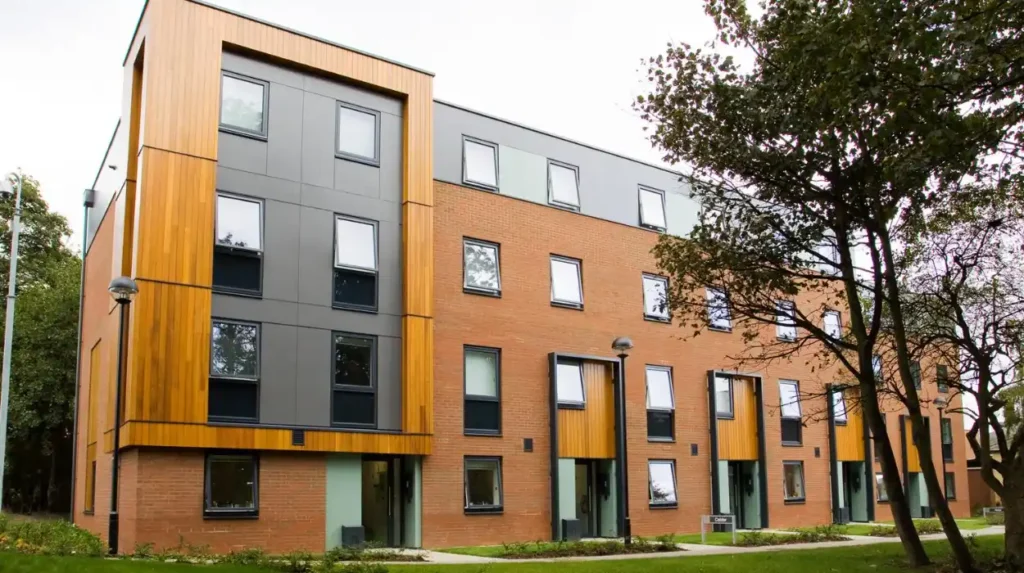
Why do students choose private rented houses instead of university accommodation?
Private rented houses give students greater choice over housemates, property location and household routines. They are particularly common after the first year, when friendship groups form and students seek longer tenancies, more independent living arrangements and access to Headingley’s established local services.
Private renting generally involves signing a tenancy agreement with a landlord or letting agent. A tenancy agreement sets out the rent, contract period and responsibilities of the tenants and landlord.
Many student households use a fixed-term tenancy lasting for an academic year or longer. Students should check the exact start and end dates because rental liability can continue during holiday periods. A property advertised to students does not automatically provide a contract that follows university teaching dates.
Shared houses often divide costs among several residents. The household structure also creates shared responsibilities. Tenants organise cleaning, food, utility payments and communication with landlords or property managers.
The number of occupants affects both the property arrangement and legal requirements. A house in multiple occupation, known as an HMO, is a property occupied by several people who form more than one household and share facilities. Certain HMOs require a licence under housing legislation. Leeds City Council provides information on property standards and licensing requirements within its area.
Students should inspect the property before signing. Important checks include heating, ventilation, fire safety, locks, appliance condition and the general state of shared facilities. A written inventory records the condition and contents of a property at the beginning of a tenancy and supports later deposit discussions.
Private renting provides flexibility in property choice, but it also requires active household management. Students who prefer an accommodation provider to manage maintenance, security and communal facilities often consider purpose-built student accommodation.
How does purpose-built student accommodation differ from shared student housing?
Purpose-built student accommodation provides professionally managed housing designed specifically for students, while shared houses operate as conventional private rentals. PBSA often includes furnished rooms and communal facilities, whereas house tenants usually manage household organisation, utilities and maintenance communication more directly themselves.
Purpose-built student accommodation offers several room formats. En-suite rooms provide a private bedroom and bathroom while sharing a kitchen. Studios provide more private facilities. Shared apartments group several residents around common kitchens and living spaces.
The management structure is a defining feature. A PBSA operator normally manages the building, communal areas and maintenance systems. Students still have contractual responsibilities, but they generally do not organise structural repairs or building-wide services.
Contract structures vary between providers. Some contracts are aligned with academic terms, while others cover a longer period. Students should confirm the payment schedule, instalment dates and rules covering early departure before booking.
The total price also requires careful comparison. A higher advertised weekly rent can include bills, internet access and building facilities. A lower rent for a shared house can involve separate payments for gas, electricity, water and broadband.
Location remains important. PBSA in central Leeds can reduce travel time to city-centre campuses, while Headingley accommodation provides access to local shops and established student communities. Students should compare door-to-door journey times rather than measuring distance alone.
Purpose-built accommodation also varies in its social structure. Large developments contain many students but do not guarantee placement with friends. Shared houses provide a smaller household environment and allow groups to choose their own housemates before signing a tenancy.

What should students know about living with a resident landlord or host?
Living with a resident landlord or host provides furnished accommodation within an occupied household and follows different occupancy arrangements from many standard private tenancies. Students should confirm privacy rules, included meals, household expectations, notice arrangements and the legal status of their agreement.
A resident landlord arrangement occurs when a student rents a room in the home of a landlord who also lives there. The student often has access to shared facilities such as a kitchen, bathroom and living room.
This arrangement can simplify household organisation. Bills and furnishings are frequently included in the agreed price. Some hosts also provide meals or other services, although these arrangements differ between properties.
The legal position requires particular attention. An occupier living with a resident landlord often has a licence rather than an assured shorthold tenancy. A licence is a permission to occupy accommodation under agreed conditions and provides a different set of rights and responsibilities.
Students should obtain written confirmation of the agreement. The document should identify the rent, payment schedule, included services, deposit arrangements and notice requirements. International students should also ensure that the accommodation arrangement provides a suitable level of certainty for their study plans.
A homestay arrangement follows a similar principle but often has a stronger host-based structure. It can provide an established domestic environment for students new to Leeds. Students should still assess travel time, privacy and household compatibility before committing.
Is it better to live in Headingley or another student area in Leeds?
Headingley offers extensive student housing and local amenities, while other Leeds areas provide different rental prices, campus distances and neighbourhood characteristics. The best location depends on the student’s university, transport route, budget, preferred household arrangement and requirements for daily services.
Headingley is one part of a wider Leeds student accommodation geography. Students attending the University of Leeds often consider Headingley alongside Hyde Park, Woodhouse, Burley and city-centre locations. Leeds Beckett University students also need to consider which campus they attend because journey patterns differ.
Hyde Park and Woodhouse provide housing closer to the main University of Leeds campus. Burley and Kirkstall offer further alternatives along transport corridors and near local rail connections. Central Leeds provides access to city-centre services and some major student accommodation developments.
Students should assess four practical factors: rent, travel, services and lifestyle. Rent should include all predictable costs. Travel should be measured at the times students actually attend lectures or work. Services include supermarkets, healthcare access and everyday shops. Lifestyle includes the desired level of activity and household environment.
Headingley’s transport connections are an important part of its appeal. Local bus services link the area with university campuses and Leeds city centre. Headingley railway station also provides rail connections on the local network.
The area’s modern student identity developed over decades of urban growth, changing housing patterns and the expansion of higher education in Leeds. As you explore the modern neighbourhood, you are also moving through an area with a long local heritage. Read the full [Insert Anchor Text for History Article Here] to understand its origins.
Students should visit potential areas where possible. A daytime viewing and an evening walk provide different information about noise, transport and the surrounding environment.
How should students compare accommodation costs beyond the advertised rent?
Students should calculate the complete cost of accommodation by combining rent with utilities, deposits, internet, travel, food and household expenses. Comparing total annual costs produces a more accurate picture than comparing weekly rent figures from different accommodation arrangements alone.
Weekly rent is the most visible accommodation cost, but it does not represent the full financial commitment. A shared house with a lower advertised rent can require separate payments for utilities and broadband.
Utilities generally include gas, electricity and water. The cost depends on the property, consumption and tariff arrangements. Students sharing a house should agree how bills will be divided and whose name will appear on each account.
Broadband is another common household expense. Some purpose-built student accommodation includes internet in the accommodation charge. Private houses often require tenants to arrange a separate service.
A tenancy deposit is money paid as security against unpaid rent or damage. In England, deposits for most assured shorthold tenancies must be protected in a government-approved tenancy deposit protection scheme. Students should receive information about the protection arrangements.
Council tax is another area requiring attention. Full-time students are generally exempt from council tax when all adult residents meet the relevant student status requirements. Households containing people who are not full-time students can have different council tax liabilities. Leeds City Council provides guidance on local council tax administration.
Travel costs should also be included. A cheaper property further from campus can create higher annual transport spending. Students who walk or cycle to campus face different costs from students who rely on buses or trains.
A complete budget should also account for food, contents insurance and moving expenses. The Office for National Statistics publishes data on household spending and prices that provides wider context for changes in living costs, although individual student budgets vary according to lifestyle and accommodation.
What tenancy and contract checks should students complete before signing?
Students should read every contract term before signing, confirm the rent and tenancy dates, check deposit protection arrangements and understand individual or joint liability. They should also inspect the property, document its condition and verify the landlord or agent’s identity and contact details.
A tenancy agreement is a legally binding contract. Students should not rely solely on advertisements, verbal statements or informal messages when assessing their responsibilities.
One important distinction concerns joint and several liability. Under a joint tenancy, tenants can share responsibility for obligations under the agreement. The precise legal effect depends on the contract, so students should understand what they are accepting before signing.
Guarantor requirements are also common in student housing. A guarantor is a person who agrees to meet certain financial obligations if the tenant fails to do so. Students should provide prospective guarantors with the full agreement before it is signed.
Students should check the tenancy start date and end date. They should also identify the circumstances in which the contract allows a replacement tenant or early release. A change in academic plans does not automatically end a fixed-term housing contract.
Property safety is essential. Landlords have legal responsibilities covering matters such as gas safety, electrical safety and smoke alarms. Students should report concerns through appropriate channels and retain written records of significant communications.
Universities often provide student advice services covering private accommodation. Independent organisations, including Citizens Advice and Shelter, also publish information about renting rights and responsibilities in England.
How can students choose suitable housemates and shared living arrangements?
Successful shared living depends on compatible expectations about costs, cleaning, noise, guests and daily routines. Students should discuss these issues before choosing a property because a tenancy creates financial responsibilities that continue even when household relationships change during the contract.
Friendship and housing compatibility are separate issues. A group can have strong social relationships but different expectations about household organisation.
Students should discuss rent limits before searching. The group should also agree whether bills are shared equally or allocated according to room size and use. These decisions should be recorded in a simple household agreement even when the tenancy itself remains the formal legal contract.
Cleaning arrangements require early discussion. Shared kitchens and bathrooms can become sources of conflict when responsibilities are unclear. A regular cleaning rota provides a basic structure for shared areas.
Noise and guests are also relevant. Students have different study schedules, employment hours and social routines. Establishing expectations before moving in reduces later uncertainty.
Room selection should be agreed before signing wherever possible. Differences in room size, storage and private facilities affect the perceived value of each room. A group should address these differences when deciding how rent is allocated internally.
A shared house works best when all tenants understand that the accommodation contract creates responsibilities beyond personal preferences. Rent deadlines and property care remain important throughout the tenancy.
What alternatives suit students who need short-term or flexible accommodation?
Students needing shorter or more flexible stays can consider short-term lets, private lodgings, serviced accommodation and temporary rooms, although availability and legal terms vary. These arrangements suit transition periods but require careful checks on cost, minimum stays and booking conditions.
Short-term accommodation is useful during several stages of student life. Examples include arriving in Leeds before a long-term tenancy begins, completing a short academic placement or searching for permanent accommodation after moving to the city.
Serviced accommodation generally provides furnished rooms or apartments for shorter stays. Prices often include utilities and basic services. The weekly cost can exceed the cost of a longer private tenancy.
Private lodgings can offer another temporary solution. Students should establish the exact occupancy period and notice arrangements. A room advertised informally should still be supported by clear written terms.
University accommodation offices sometimes provide information for students facing gaps between tenancies. Students should contact their institution early because temporary options become more limited during busy periods.
Short-term arrangements are not substitutes for checking safety and legitimacy. Students should verify the provider, avoid sending money without appropriate documentation and keep records of payments and agreements.
Explore More Area Guide
Headingley Guide to Student Budget Planning and Everyday Expenses
Headingley University Open Days and Campus Visits Guide
How does accommodation choice affect student life in Headingley?
Accommodation location shapes daily travel, spending, study routines and access to local services. A suitable arrangement reduces unnecessary travel and clarifies household responsibilities, while the wrong contract or location can create financial pressure and practical difficulties throughout the academic year.
Accommodation forms part of a student’s wider daily infrastructure. The distance to campus affects travel time. The distance to supermarkets and other services affects routine costs and convenience.
Headingley contains a concentration of shops, cafés, food businesses and transport services. This local infrastructure supports students living in private houses and other accommodation types.
Students should also consider study conditions. A room with adequate space, heating and internet access supports regular academic work. Shared accommodation requires a household approach to noise and communal space.
Personal security is another consideration. Students should understand building access arrangements and local travel routes. A property inspection should include external doors, windows and lighting around entrances.
For students new to Leeds, the choice of accommodation also affects how quickly they become familiar with the city. Headingley provides an established student environment, while other areas offer different connections with central Leeds and local communities.
The long-term significance of accommodation choice extends beyond the first booking. Students gain experience of tenancy agreements, household budgeting and independent living. Understanding these processes helps students make stronger decisions when moving between accommodation types during their studies.
What is the best process for choosing a university accommodation alternative?
The strongest process combines budget planning, location research, property inspections and contract checks. Students should identify their priorities, compare total costs, verify accommodation providers and avoid signing until they understand the legal and financial responsibilities attached to their chosen arrangement.
The first stage is setting a realistic budget. Students should establish a maximum total accommodation cost rather than a maximum weekly rent alone. The budget should include predictable household and travel expenses.
The second stage is identifying location priorities. Students should map their regular destinations, including campus, work and essential services. This creates a practical basis for comparing Headingley with other parts of Leeds.
The third stage is comparing accommodation types. Students should assess private shared housing, PBSA, studios, lodgings and short-term arrangements against the same criteria. These criteria include price, privacy, contract length, travel and included facilities.
The fourth stage is viewing the accommodation. Photographs and listings do not replace an inspection. Students should check the room, shared facilities, building access and general property condition.
The final stage is reviewing the agreement before signing. Students should understand the rent, deposit, contract period and liability structure. Independent advice is valuable when a term is unclear.
Headingley provides a broad range of university accommodation alternatives because it operates within one of the United Kingdom’s major higher education cities. Students who compare arrangements systematically can select accommodation that matches their budget, location and preferred level of independence.
The key decision is not simply whether to live in university halls or private housing. Students should compare the complete arrangement. Rent, travel, household structure, legal obligations and everyday services all influence the real experience and cost of student accommodation in Headingley.
What alternatives are available to university halls in Headingley?
Students can choose private shared houses, purpose-built student accommodation, studio flats, private lodgings, homestays and accommodation in nearby Leeds neighbourhoods.