Leeds is a modern city built across a landscape with evidence of human activity stretching back thousands of years. Archaeological discoveries from prehistoric, Roman, Anglo-Saxon and medieval periods provide important evidence about how people lived, travelled, worked and shaped the land around the River Aire and the wider Yorkshire region.
- What makes Leeds important for archaeological discoveries?
- What prehistoric evidence has been discovered around Leeds?
- How did the Romans influence the archaeological landscape near Leeds?
- What do Anglo-Saxon discoveries reveal about early Leeds?
- Why is Kirkstall Abbey important to Leeds archaeology?
- How has archaeology changed understanding of medieval Leeds?
- How do industrial discoveries help explain the growth of Leeds?
- How do archaeologists investigate discoveries in Leeds?
- Where can visitors learn about archaeological discoveries around Leeds?
- Why do archaeological discoveries matter for the future of Leeds?
- What does Leeds archaeology reveal about the city’s identity?
For visitors based in Headingley, the archaeology of Leeds offers a broader way to understand the area. Headingley sits within a city whose historic landscape includes ancient settlements, Roman roads, medieval religious institutions, industrial sites and buried remains identified through modern development and archaeological investigation.
Archaeology is the study of the human past through physical evidence. This evidence includes buildings, pottery, tools, human remains, environmental deposits and changes to the landscape. Archaeologists examine where objects and structures are found, how they relate to each other and what they reveal about past communities.
The archaeological record around Leeds is spread across museums, historic sites, archives and locations where much of the evidence remains below ground. Some discoveries are visible to visitors. Others survive only as excavated records, preserved artefacts or documented features.
Understanding these discoveries provides essential context for anyone exploring Leeds and Headingley. The city’s streets and neighbourhoods occupy land shaped by successive generations over many centuries.
What makes Leeds important for archaeological discoveries?
Leeds contains archaeological evidence from prehistoric, Roman, Anglo-Saxon, medieval and industrial periods. Its position within the Aire valley connected settlements, transport routes and economic activity, creating a long and varied archaeological record across the modern city and surrounding landscape.
The geographical setting of Leeds explains much of its archaeological importance. The River Aire created a natural corridor through West Yorkshire. People used river valleys for movement, settlement, agriculture and trade long before the modern city developed.
The wider Leeds area also contains different types of landscape. These include river valleys, higher ground, woodland, agricultural land and former industrial areas. Each landscape preserves different forms of archaeological evidence.
Prehistoric archaeology records the lives of communities before written history. Roman archaeology documents the period following the Roman conquest of Britain from AD 43. Anglo-Saxon archaeology covers the centuries after Roman rule ended in the early fifth century. Medieval archaeology records the growth of settlements, churches, estates and religious institutions.
Later industrial archaeology documents the transformation of Leeds into a major manufacturing and commercial centre. Mills, transport infrastructure and former industrial sites provide physical evidence of this period.
Archaeology therefore provides a continuous framework for understanding the development of the modern city. Individual discoveries become more useful when examined alongside the wider landscape and historical record.
As you explore the modern area, you are crossing land with a deep heritage. Read about the full [Insert Anchor Text for History Article Here] to understand its origins.
Headingley itself forms part of this wider historic landscape. Visitors can use the neighbourhood as a starting point for exploring archaeological collections and historic places across Leeds.
What prehistoric evidence has been discovered around Leeds?
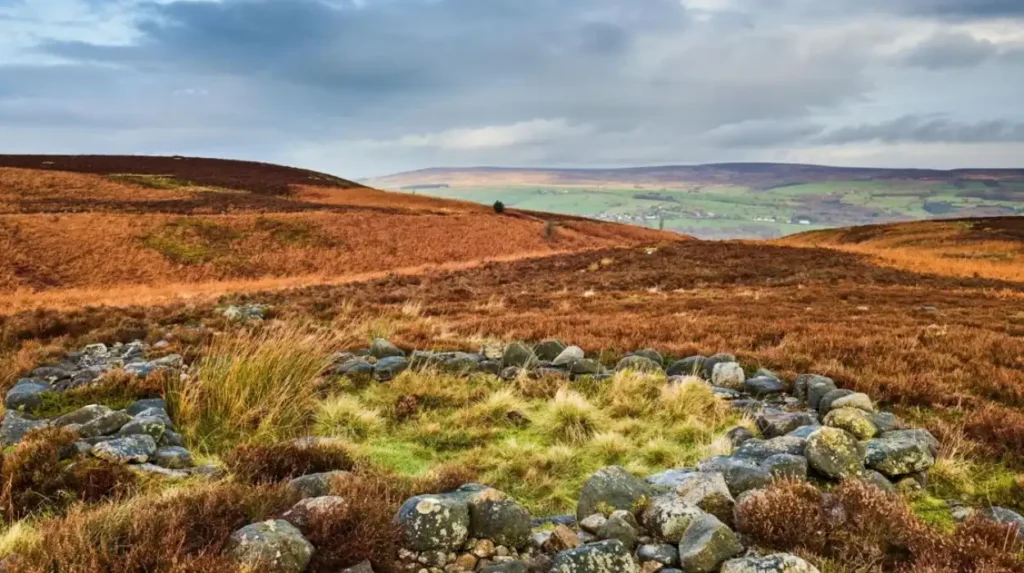
Prehistoric discoveries around Leeds show that people used the wider landscape for thousands of years before Roman rule. Archaeological evidence includes tools, monuments, burial sites and environmental remains that document changing patterns of settlement, farming and movement.
Prehistory covers the period before written records provide direct historical evidence. In Britain, this period includes the Stone Age, Bronze Age and Iron Age.
Stone tools provide some of the earliest physical evidence for human activity. Archaeologists study the material used to make these tools, their form and the locations where they were found. Flint objects, for example, can reveal where people worked, hunted or processed materials.
The Bronze Age introduced widespread metalworking and produced distinctive burial and ceremonial monuments. Burial mounds, known as barrows, survive in parts of the wider Yorkshire landscape. These monuments provide evidence about burial practices and the organisation of prehistoric communities.
Iron Age communities increasingly occupied settled agricultural landscapes. Archaeological evidence from this period includes enclosed settlements, storage features and objects associated with everyday life.
The evidence is not always visible above ground. Modern buildings, roads and farmland often cover earlier archaeological deposits. Excavation allows archaeologists to record features such as pits, ditches and postholes before development changes the site.
Environmental archaeology also contributes to knowledge of prehistoric Leeds. Pollen, seeds, animal bones and soil deposits provide evidence about vegetation, farming and diet. These materials show how people interacted with the natural environment.
Prehistoric discoveries are important because they demonstrate that the Leeds landscape had a long human history before the development of towns and cities. They also show that the region formed part of wider networks of movement and exchange across Yorkshire.
How did the Romans influence the archaeological landscape near Leeds?
Roman archaeological evidence around Leeds demonstrates the region’s connection to the Roman road network and wider systems of settlement, trade and administration. Roads, artefacts and nearby military and civilian sites help archaeologists place Leeds within Roman Britain.
Roman Britain began after the Roman invasion of AD 43 and continued until Roman administration ended in the early fifth century. The Roman presence changed transport, urban development, trade and military organisation across much of Britain.
The modern Leeds area did not develop as a major Roman city on the scale of York. However, the region formed part of an important wider network.
Roman roads connected military centres, settlements and economic areas. Archaeological investigation of former routeways helps researchers understand how people and goods moved through West Yorkshire.
Roman artefacts also provide evidence of contact and activity. Pottery is particularly valuable because archaeologists can identify different manufacturing traditions and establish approximate dates. Coins, metal objects and building materials provide further evidence of trade and occupation.
Roman sites across Yorkshire demonstrate the importance of the wider regional context. The Roman city of York, known as Eboracum, became a major military and administrative centre. Routes connecting different parts of northern Britain passed through landscapes that included the modern Leeds district.
Archaeological collections in Leeds preserve objects from the Roman period and help visitors understand this regional history. A museum object is most useful when its discovery location and archaeological context are recorded. Context identifies the relationship between an object and the soil layers, structures or other materials surrounding it.
Roman archaeology therefore contributes to a larger understanding of Leeds. It shows that the region was connected to national systems of movement and exchange even though the modern city had not yet emerged.
What do Anglo-Saxon discoveries reveal about early Leeds?
Anglo-Saxon archaeology reveals how communities reorganised the landscape after Roman rule ended. Settlements, cemeteries, carved stones and place-name evidence help researchers investigate political change, Christianity and the development of local communities across Yorkshire.
The Anglo-Saxon period began after the end of Roman administration in Britain. It lasted until the Norman Conquest of 1066.
Archaeological evidence from this period is especially important because written records are limited for many local communities. Physical remains help historians and archaeologists reconstruct patterns of settlement and belief.
Cemeteries provide evidence about burial practices and population history. Grave location, orientation and associated objects can show changes in religious customs and social identity.
Stone sculpture also provides important evidence. Cross fragments and carved architectural stones document the development of Christianity and the importance of religious centres. Archaeologists and historians examine the style, material and original location of these objects.
Place names add another source of evidence. They preserve linguistic information about settlements and landscapes, although place-name evidence requires comparison with archaeological and documentary records.
The early medieval landscape around Leeds developed gradually through the establishment and growth of settlements. These communities created the foundations for many later villages and neighbourhoods.
For visitors, the Anglo-Saxon period explains an important transition between Roman Britain and medieval Yorkshire. It documents the creation of new political and religious structures that influenced the landscape for centuries.
Why is Kirkstall Abbey important to Leeds archaeology?
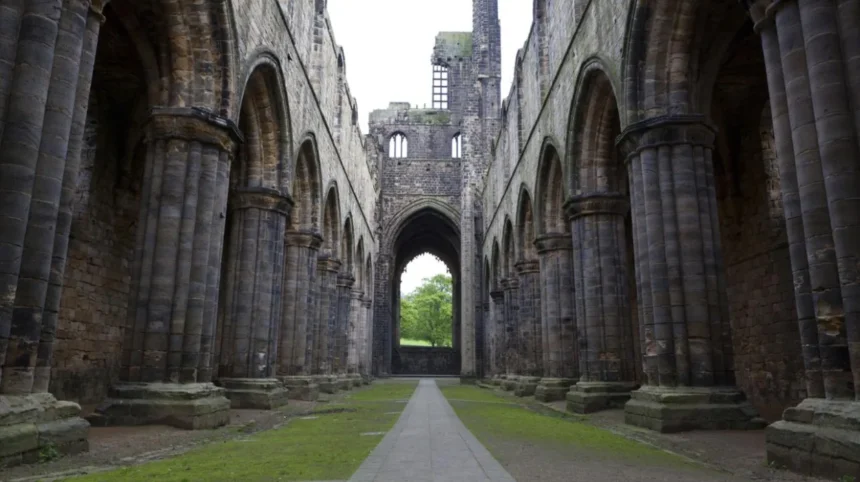
Kirkstall Abbey is one of the most significant surviving medieval archaeological sites in Leeds. Its standing ruins, excavated evidence and surrounding landscape document the organisation of a Cistercian monastery from its foundation in the twelfth century through its later dissolution.
Kirkstall Abbey was founded in 1152 by Cistercian monks. The Cistercians were a Roman Catholic religious order known for establishing monasteries that combined religious life with organised estates and agricultural activity.
The abbey occupies a site beside the River Aire. Its location reflects the importance of water, land and transport to medieval monastic communities.
The surviving ruins provide visible archaeological evidence of the abbey’s main buildings. These include the church and structures associated with communal monastic life. Archaeological investigation supplements what visitors can see above ground by recording buried features and evidence of changing building use.
A monastery was more than a religious building. It operated within an economic landscape of land, farming and managed resources. Archaeological evidence helps researchers understand how the community used its surrounding estate.
The dissolution of the monasteries under King Henry VIII transformed the site in the sixteenth century. Religious institutions were suppressed and their property was transferred or sold. The physical remains of Kirkstall Abbey therefore document both medieval religious life and a major change in English history.
Kirkstall Abbey is particularly valuable for visitors because archaeology and visible heritage exist in the same location. The site provides a direct connection between excavated evidence, standing structures and the wider Leeds landscape.
From Headingley, Kirkstall also demonstrates how closely historic places are connected across the modern city. A short journey can move visitors from a busy urban neighbourhood into a medieval archaeological environment.
How has archaeology changed understanding of medieval Leeds?
Medieval archaeology shows how Leeds developed from a settlement into an increasingly important market and regional centre. Excavations, building remains, pottery and documentary evidence reveal changing patterns of trade, religion, housing and economic activity between the eleventh and fifteenth centuries.
The medieval period transformed the Leeds landscape. After the Norman Conquest, landholding and administration were reorganised across England.
Settlements expanded around routes, river crossings, markets and religious institutions. Archaeological evidence helps identify where buildings stood and how urban spaces changed.
Pottery is one of the most common materials recovered during excavation. Different pottery types help archaeologists date deposits and identify patterns of production and trade. Imported objects demonstrate connections between local communities and wider markets.
Building archaeology provides evidence about construction methods and domestic life. Foundations, floors, hearths and rubbish deposits reveal how spaces were organised and used.
The development of Leeds as a market centre also created a more complex economic landscape. Trade depended on routes connecting the settlement with agricultural areas and other towns.
Archaeology is particularly important where later construction has replaced earlier buildings. Modern streets do not always preserve the visible appearance of medieval Leeds, but buried deposits can retain evidence from earlier phases of occupation.
The combination of archaeology and documentary history produces a more complete account. Documents identify institutions and individuals. Archaeological evidence records the material lives of people who often left no written record.
How do industrial discoveries help explain the growth of Leeds?
Industrial archaeology records the physical transformation of Leeds into a major manufacturing and commercial centre. Mills, warehouses, transport routes, engineering works and workers’ housing provide evidence of production, trade and urban expansion from the eighteenth century onwards.
Leeds experienced major economic growth during the Industrial Revolution. Textile production, engineering, transport and commerce reshaped the city and surrounding communities.
Industrial archaeology studies the structures and objects associated with this transformation. A former mill, for example, can provide evidence about power systems, machinery layouts and patterns of labour.
Waterways became particularly important. The River Aire and associated navigation infrastructure supported the movement of raw materials and finished goods. Later railway development further changed the economic geography of Leeds.
Industrial sites also document the lives of workers. Housing, public buildings and neighbourhood layouts show how rapid urban growth affected daily life.
Archaeological recording has become increasingly important as former industrial land is redeveloped. Buildings and structures can disappear quickly when sites change use. Archaeological surveys and historic building recording preserve information before alteration or demolition.
Industrial archaeology also connects Leeds with Headingley. The modern urban landscape consists of neighbourhoods shaped by wider changes in employment, transport and population.
Understanding former industrial sites gives visitors a fuller view of Leeds. The city’s heritage is not limited to ancient monuments or medieval ruins. Factories, canals and infrastructure form part of the archaeological record and explain how Leeds became a major modern city.
How do archaeologists investigate discoveries in Leeds?
Archaeologists investigate Leeds through surveys, excavations, historical research and scientific analysis. Each method records evidence systematically, allowing discoveries to be dated, interpreted and preserved as part of a wider understanding of the city’s changing landscape.
Archaeological investigation usually begins with research. Historic maps, aerial photographs, documents and previous archaeological reports can identify areas where buried evidence is likely to survive.
A field survey records visible features and changes in the landscape. Geophysical survey uses instruments to identify differences below the ground without extensive excavation. These differences can indicate ditches, walls or other buried structures.
Excavation investigates selected areas directly. Archaeologists remove deposits in a controlled sequence and record each layer. This process is essential because excavation permanently changes the site.
Stratigraphy is a central archaeological principle. Stratigraphy examines the sequence of soil layers and deposits. In general, an undisturbed lower layer is older than the material above it. Archaeologists combine stratigraphy with other dating methods.
Radiocarbon dating provides dates for suitable organic materials. Pottery typology compares the form and manufacture of pottery with objects from known periods. Coins and documentary evidence also assist chronological analysis.
Archaeologists record discoveries through written descriptions, photographs, drawings and digital data. Finds are catalogued and examined by specialists.
Development-led archaeology plays an important role in modern cities. Planning processes identify sites with archaeological potential, and investigations can take place before construction begins. This system helps ensure that important evidence is recorded and considered during land-use change.
The final result is not simply a collection of objects. Archaeological work produces a structured record that explains where evidence was found and what it reveals about past activity.
Where can visitors learn about archaeological discoveries around Leeds?
Visitors can learn about Leeds archaeology through museums, historic sites, archives and public heritage organisations. These resources connect excavated objects with historical interpretation and provide accessible starting points for exploring the region’s prehistoric, Roman, medieval and industrial past.
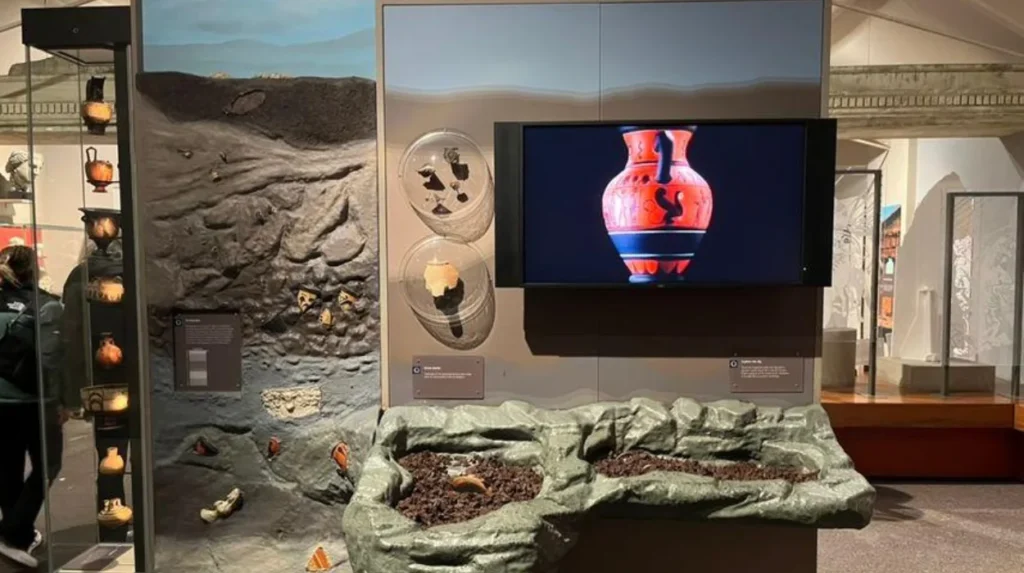
Leeds City Museum provides an important starting point for understanding the history of the city and wider region. Museum collections preserve archaeological objects that would otherwise remain inaccessible to the public.
An archaeological artefact gains greater meaning when displayed with information about its date, location and use. Museums provide this context through collections research and interpretation.
Kirkstall Abbey offers a major opportunity to see medieval archaeology within its original landscape. Visitors can examine the surviving structure while learning about the monastic community that occupied the site.
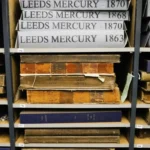
The Leeds Libraries and archives system also supports historical research. Historic maps, photographs and documentary records help researchers connect archaeological evidence with changing places.
Universities and professional archaeological organisations contribute through research, excavation and specialist analysis. Academic archaeology produces new evidence and reviews earlier interpretations as methods improve.
For tourists and leisure travellers, combining a museum visit with a historic site creates a useful archaeological itinerary. Headingley provides access to transport connections across Leeds, making it practical to explore several aspects of the city’s heritage during a longer visit.
Digital nomads and business travellers can also use museums, libraries and heritage spaces to understand the city beyond their immediate work location. Archaeological heritage provides structured cultural activities that fit into short periods of available time.
Explore More Area Guide
Headingley Cemeteries and Memorial Heritage Guide
Headingley Public Art and Sculptures Guide
Why do archaeological discoveries matter for the future of Leeds?
Archaeological discoveries matter because they preserve evidence that cannot be replaced once it is destroyed. Recording and protecting historic remains helps Leeds manage development, strengthen public understanding of local history and retain physical evidence of the communities that shaped the city.
Modern development continually changes urban landscapes. New housing, roads and commercial buildings can affect buried archaeological remains.
Planning and heritage management provide a framework for identifying significant evidence before it is damaged. Archaeological investigation records sites and informs decisions about preservation.
The value of archaeology extends beyond individual objects. A fragment of pottery has limited meaning without its location and context. A complete archaeological record preserves relationships between evidence, places and periods.
Archaeology also improves public understanding of history. Written records often focus on institutions and prominent individuals. Excavated evidence provides information about ordinary homes, food, work and material culture.
Scientific techniques continue to expand the information available from archaeological sites. Environmental analysis, digital mapping and improved dating methods support more detailed research.
The future relevance of Leeds archaeology therefore depends on continued recording, research and public access. Historic evidence provides a long-term record of how the landscape changed from prehistoric communities to the modern city.
What does Leeds archaeology reveal about the city’s identity?
Leeds archaeology reveals a city shaped by continuous human activity rather than a single historical period. Prehistoric communities, Roman networks, Anglo-Saxon settlements, medieval institutions and industrial expansion each contributed evidence to the landscape occupied by modern Leeds.
The archaeological record provides a long chronological framework. It begins with evidence of early human use of the wider landscape and continues through the development of modern neighbourhoods.
Each period added new structures and patterns of activity. Prehistoric communities shaped and used the natural environment. Roman networks connected the region with a wider imperial system. Anglo-Saxon communities established new settlements and religious traditions. Medieval institutions reorganised land and urban life. Industrial development transformed Leeds into a major city.
For visitors staying in Headingley, this wider context adds depth to local exploration. Streets, parks and buildings exist within a landscape that has changed repeatedly over thousands of years.
The most important lesson from archaeological discoveries is that the past is often physically present beneath the modern city. Some evidence survives as ruins or museum objects. Other evidence remains buried, awaiting protection, investigation or future research.
Exploring the archaeological discoveries around Leeds therefore provides more than a list of ancient objects and sites. It explains how the region developed through successive periods of settlement, movement, religion, trade and industry.
Leeds continues to change, but archaeology ensures that evidence from earlier communities remains part of the city’s public knowledge. For tourists, residents and other visitors, this record provides a factual and accessible way to understand the deeper history of the landscape surrounding Headingley and the wider city.
What are the most important archaeological discoveries around Leeds?
Leeds has archaeological evidence from prehistoric, Roman, Anglo-Saxon, medieval and industrial periods. Important sites and discoveries include Kirkstall Abbey, prehistoric tools and monuments, Roman artefacts and roads, early medieval settlements, and remains connected with Leeds’s industrial development.