Headingley is one of Leeds’s most recognisable neighbourhoods, known for its Victorian streets, independent businesses, university connections and major sporting venues. Its public environment also contains visual art, architectural sculpture, memorial features and creative details that help explain how the area developed.
- What counts as public art in Headingley?
- Where can visitors find public art around Headingley?
- What is the historical context behind Headingley’s public visual landscape?
- Which types of sculptures and artworks should visitors look for?
- How does Headingley Stadium contribute to the neighbourhood’s public culture?
- How do universities and educational institutions shape public art nearby?
- How does public art connect Headingley with Leeds’s wider cultural landscape?
- How can visitors plan a responsible public art walk in Headingley?
- How are public artworks preserved and protected?
- What future role will public art play in Headingley?
- Why is Headingley worth exploring for public art and sculpture?
Public art in Headingley does not exist only as large, standalone monuments. Artworks are found in streetscapes, public buildings, parks, transport routes and sports-related spaces. Some works were commissioned specifically as artworks, while others form part of the architecture and heritage of the neighbourhood.
For visitors, public art provides a practical way to explore Headingley beyond its main shopping streets. For residents, it offers visible connections to local history and changing community identity. For digital nomads and business travellers, public spaces and walking routes provide accessible cultural activity during breaks from work or meetings.
Understanding public art also requires an understanding of place. Headingley’s buildings, institutions and public spaces developed over different historical periods. Victorian expansion, educational growth, sporting development and modern regeneration all influenced the visual character of the neighbourhood.
What counts as public art in Headingley?
Public art in Headingley includes freely visible sculptures, memorials, murals, decorative architectural features and commissioned artworks in publicly accessible places. These works communicate local history, community identity and cultural activity while forming part of everyday streets, parks, institutions and shared neighbourhood spaces.
Public art is artwork intended for a public setting or visible within a publicly accessible environment. It includes permanent sculptures, temporary installations, murals and artistic features incorporated into buildings or landscapes.
In Headingley, the definition extends beyond objects labelled as public sculptures. Architectural decoration also contributes to the area’s public visual culture. Stone carvings, decorative façades, commemorative plaques and historic building details are visible from streets and footpaths.
This wider approach is important because Headingley’s cultural landscape developed over more than one period. The neighbourhood contains Victorian and Edwardian buildings alongside later sports, education and commercial development. Each period introduced different approaches to public decoration and commemoration.
Public art also has a practical geographic dimension. Some artworks are located on land managed by public bodies, while others are visible in spaces associated with universities, cultural institutions or sporting organisations. Public accessibility does not always mean unrestricted access at every hour.
Visitors should therefore distinguish between three forms of access. Fully public spaces include streets and many parks. Publicly accessible institutional spaces include areas with opening hours or site rules. Privately owned sites can also contain artworks visible from the public highway.
This distinction helps create a realistic walking route. The most accessible artworks are those visible from established pedestrian routes through Headingley and the wider north-west Leeds area.
How does public art differ from architectural decoration?
A standalone sculpture is normally designed as an independent artwork. Architectural decoration is designed as part of a building’s structure or appearance.
Both are important when examining Headingley’s visual heritage. Decorative stonework, carved entrances and ornamental façades provide evidence of the period in which buildings were constructed and the values represented by their original owners or institutions.
Historic England, the public body responsible for protecting England’s historic environment, records significant buildings and heritage assets through the National Heritage List for England. Listed structures are protected because of their architectural or historic interest, and visible decorative features often form part of that significance.
Where can visitors find public art around Headingley?
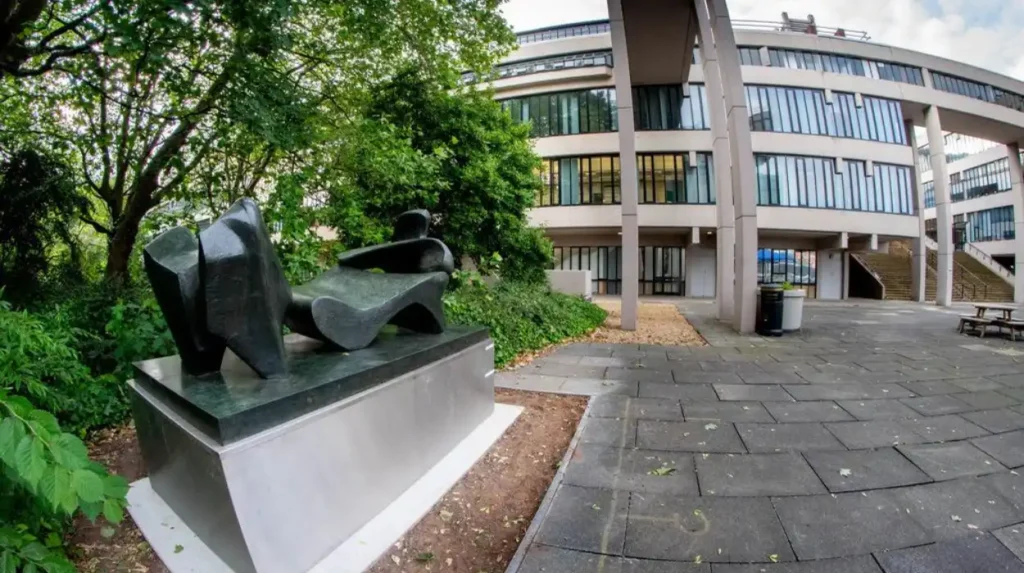
Visitors can find Headingley’s public art by exploring major walking routes, green spaces, historic buildings, university areas and sporting landmarks. The neighbourhood’s visual culture is dispersed rather than concentrated in one sculpture park, making a walking-based approach the most effective method.
Headingley is compact enough for visitors to combine public art with local architecture, independent cafés and historic landmarks. The main commercial area around Headingley Lane, North Lane and Otley Road provides a useful starting point.
From the central neighbourhood, walking routes extend towards university buildings and public green spaces. These routes reveal changing architectural styles and different forms of public commemoration.
The wider Leeds area also provides important context. Leeds has developed a substantial public art collection through civic projects, regeneration schemes and cultural institutions. Headingley forms part of this broader urban cultural landscape rather than operating as an isolated art district.
Visitors should use publicly maintained routes and respect access arrangements around institutional and sporting sites. Artworks and heritage features located within managed grounds can have different opening hours from the surrounding streets.
A useful exploration method is to divide the neighbourhood into three connected zones. The first is the historic commercial centre, including traditional buildings and streetscape features. The second is the university-facing area, where education and research institutions shape the built environment. The third is the sporting and green-space landscape, where public identity is linked to recreation and major events.
Why is walking the best way to explore Headingley’s public art?
Walking allows visitors to see artworks in their physical context. A sculpture, memorial or decorative feature has a relationship with nearby buildings, streets, trees and public activity.
This context is particularly important in Headingley because many visual features are not isolated attractions. A carved façade has meaning within the architecture of its building. A memorial has meaning within the history of the person, organisation or event it commemorates.
Walking also makes it easier to identify smaller details that are missed during travel by car or bus. Visitors can combine an art-focused route with local cafés, shops and other cultural activities.
What is the historical context behind Headingley’s public visual landscape?
Headingley’s public visual landscape reflects centuries of settlement and major nineteenth- and twentieth-century growth. Victorian housing, institutional development, university expansion and sporting infrastructure created the buildings, spaces and commemorative traditions that shape the neighbourhood’s visible cultural identity today.
Headingley developed from a historic settlement into a major suburb of Leeds. Its expansion accelerated as Leeds grew during the nineteenth century.
Victorian urban development introduced substantial houses, commercial premises and public institutions. Architecture from this period often used stone, decorative entrances and detailed façades. These buildings remain important components of Headingley’s streetscape.
The twentieth century brought further change through higher education, organised sport and transport development. The University of Leeds expanded northwards, strengthening the connection between Headingley and the city’s academic community.
Sport also became central to the area’s identity. Headingley Stadium is associated with international cricket and rugby league. The wider sporting environment includes commemorative traditions, signs, structures and visual references that connect the neighbourhood with national and international events.
As you explore the modern neighbourhood, you are crossing land with a deep heritage. Read about the full [Headingley Guide to Historic Maps and How the Area Has Changed] to understand its origins.
Historical context is essential when interpreting public art. A monument or decorative feature is not only an object. It is also evidence of the period in which it was created and the people or institutions that shaped its surroundings.
How did Victorian architecture influence the area’s public appearance?
Victorian architecture introduced a high level of visible craftsmanship to expanding urban neighbourhoods. Stone construction was particularly significant in Yorkshire because local building materials and skilled trades supported detailed architectural work.
Examples include carved stone features, decorative window surrounds and elaborate entranceways. These elements were not always created as independent public artworks, but they contribute to the visual experience of public streets.
The survival of historic architecture also gives Headingley a layered appearance. Older buildings remain alongside later developments, allowing visitors to identify changes in construction methods and design priorities.
Which types of sculptures and artworks should visitors look for?
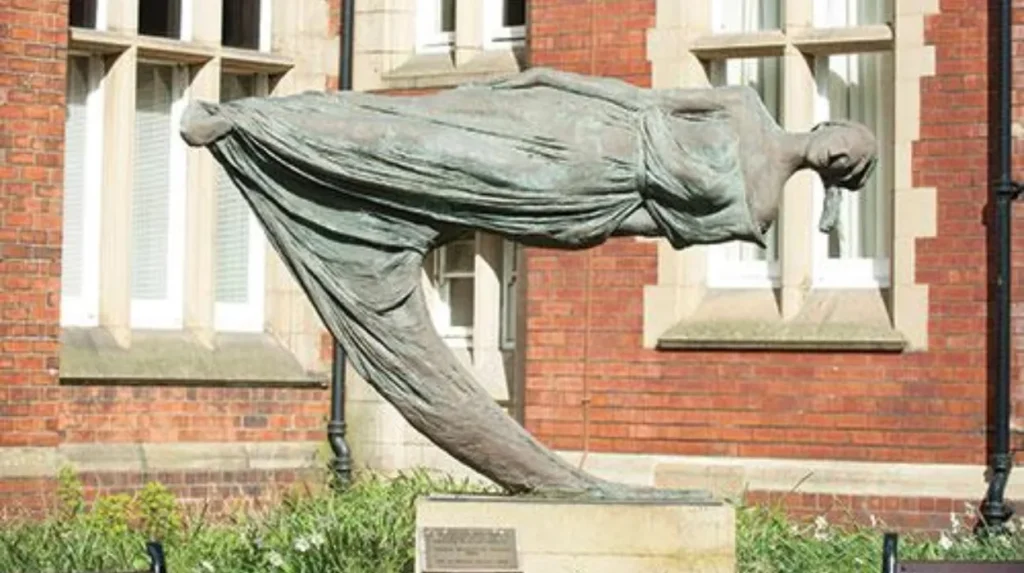
Visitors should look for three main forms of public visual art: standalone sculptures, commemorative artworks and integrated architectural features. Examples include sculptural objects, memorial plaques and decorative stonework, each providing different evidence about Headingley’s cultural and historical development.
Standalone sculptures are the most immediately recognisable form of public art. These works are designed as three-dimensional artistic objects and are usually positioned to be viewed from several angles.
Commemorative artworks record people, events, organisations or historical achievements. Examples include memorials, plaques and named structures. Their primary purpose is remembrance, although design and artistic presentation remain important.
Integrated architectural features are part of a building or landscape. Examples include carved stonework, relief panels and ornamental entrances. These features require visitors to look closely at the built environment rather than searching only for freestanding objects.
Temporary public art forms a fourth category within the wider Leeds cultural scene. Examples include short-term installations, community displays and festival projects. These works change over time and should be checked through current cultural programmes.
Why should visitors include memorials in a public art walk?
Memorials are designed to preserve public memory. They connect physical places with individuals, organisations and events.
A memorial also provides a direct research starting point. Names, dates and inscriptions can identify subjects for further investigation through local archives, historical societies and heritage records.
In Headingley, memorial culture is closely connected with institutional, sporting and community history. Visitors should read inscriptions carefully and consider the date of installation as well as the event or person being commemorated.
How does Headingley Stadium contribute to the neighbourhood’s public culture?
Headingley Stadium contributes to public culture through its internationally recognised sporting history, distinctive built environment and strong role in neighbourhood identity. Cricket and rugby league have made the area a significant location for sporting memory, commemoration and public gathering.
Headingley Stadium is one of the defining landmarks of the neighbourhood. The site is associated with Yorkshire County Cricket Club and Leeds Rhinos Rugby League Club.
Cricket has been played at Headingley since the nineteenth century, and the ground has hosted international matches. Rugby league has also created a long-standing visual and cultural presence in the area.
Sporting venues generate forms of public visual culture beyond conventional sculpture. Stadium architecture, commemorative features, statues, memorial displays and public naming practices all contribute to the identity of a place.
For visitors interested in public art, the stadium area demonstrates how collective identity can be expressed through physical space. Sporting history is visible in the names and structures associated with the site.
The surrounding streets also experience major changes on match days. Public spaces become gathering points, and the relationship between neighbourhood identity and sport becomes particularly visible.
How should visitors view sporting commemoration as part of public art?
Sporting commemoration combines history, identity and public recognition. It records achievements that have significance for local communities and wider audiences.
A commemorative artwork can therefore be assessed through two questions. The first concerns its artistic form. The second concerns the history it represents.
This approach is useful in Headingley because sport is an important part of the neighbourhood’s public identity. Visitors gain a fuller understanding by connecting visual features with the development of cricket and rugby league in Leeds.
How do universities and educational institutions shape public art nearby?
Universities and educational institutions shape public art through architecture, commissioned works, exhibitions and research. The University of Leeds and the wider academic environment have expanded cultural activity around Headingley, connecting the neighbourhood with significant collections and public-facing creative programmes.
Headingley is closely connected to the University of Leeds and Leeds Beckett University through student communities, transport routes and nearby campuses.
Higher education institutions influence public art in several ways. They commission artworks, maintain historic buildings, support exhibitions and provide research on art and cultural heritage.
The University of Leeds also contributes to the city’s wider cultural infrastructure through collections and academic departments. Its presence has strengthened the connection between north-west Leeds and cultural research.
Visitors should understand that campus-based art can have different access arrangements from municipal public spaces. Outdoor features visible from public routes are generally easier to include in a neighbourhood walk than artworks located inside controlled buildings.
Educational institutions also support temporary projects. Examples include exhibitions, student installations and research-led public engagement programmes. These works change regularly and represent the evolving part of the local art scene.
What role does research play in understanding public art?
Research provides historical and cultural context. It identifies artists, commissioning bodies, dates and original purposes.
Art history also examines materials and conservation. Outdoor sculptures are exposed to weather, pollution and physical contact. Stone, metal and other materials require different forms of maintenance.
Academic and heritage research helps distinguish between original artistic intent and later changes to an artwork or its setting.
How does public art connect Headingley with Leeds’s wider cultural landscape?
Headingley’s public art connects with Leeds’s wider cultural landscape through shared walking routes, institutions, heritage records and civic cultural programmes. The neighbourhood acts as part of a larger city network containing museums, galleries, commissioned artworks and historic public spaces.
Leeds has a broad cultural infrastructure that includes Leeds Art Gallery, Leeds City Museum, public libraries, theatres and independent creative organisations.
Public art extends beyond central Leeds into neighbourhoods. This distribution means that visitors can encounter cultural material while exploring residential areas and local commercial centres.
Headingley’s position in north-west Leeds also makes it possible to combine neighbourhood exploration with visits to larger cultural institutions. Public transport and established walking routes link the area with other parts of the city.
This wider context prevents an overly narrow definition of local art. An artwork in Headingley can be connected with city-wide policies, artists and cultural institutions.
The relationship also works in the opposite direction. Headingley’s sporting, educational and architectural identity contributes to Leeds’s overall cultural character.
Why is neighbourhood public art important to local identity?
Neighbourhood public art places culture within everyday environments. It does not require a gallery ticket or a planned museum visit when the work is visible from a public route.
It also creates local reference points. Residents use landmarks to identify places, while visitors use them to understand the character of an unfamiliar area.
Public artworks can preserve historical information, celebrate achievements and support cultural participation. Their location is therefore as important as their physical form.
How can visitors plan a responsible public art walk in Headingley?
Visitors can plan a responsible public art walk by using public routes, checking access conditions, researching artworks before arrival and allowing time to examine architectural details. A flexible route combining streets, green spaces and cultural landmarks provides the strongest understanding of local context.
Start with a clear geographic area. Headingley’s commercial centre provides access to cafés, shops and public transport, making it a practical base for a walking route.
Continue along established pavements and public rights of way. Do not enter private grounds solely to view an artwork unless public access is clearly permitted.
Check opening times for institutional spaces before visiting. University sites, sports venues and cultural buildings can operate different schedules during weekends, holidays and major events.
Allow time for observation. Public art is often affected by its setting. Viewing distance, natural light and nearby architecture influence how a work is experienced.
Photography should also respect site rules and the privacy of other visitors. Public visibility does not remove restrictions that apply within managed venues.
What should digital nomads and business travellers consider?
Digital nomads and business travellers often have limited time. A short walking route through Headingley can provide cultural activity between work commitments.
The neighbourhood contains cafés and public-facing businesses where visitors can combine local exploration with breaks. Work requirements should be checked directly with individual venues, particularly regarding Wi-Fi, seating policies and opening hours.
Public art exploration also works well as a low-cost activity. Many streetscape features, memorials and outdoor artworks can be viewed without admission charges.
How are public artworks preserved and protected?
Public artworks are preserved through maintenance, conservation planning, heritage protection and responsible public use. Different materials require different treatments, while historically significant buildings and structures can receive legal protection through England’s established heritage designation system.
Conservation is the process of managing and protecting cultural objects and historic features. Outdoor art faces continuous environmental exposure.
Stone can be affected by weathering and biological growth. Metal can corrode. Painted surfaces can fade or deteriorate. Professional conservation assesses the condition of each material before treatment.
Historic buildings receive additional protection when they are listed. Listing recognises architectural or historic interest and helps control changes that could damage significant features.
Local authorities also influence the public environment through planning and conservation policies. Leeds City Council has responsibilities relating to planning, public spaces and local heritage.
Public participation is also important. Damage, deterioration or vandalism can be reported to the relevant site owner or authority.
Why does context matter in conservation?
An artwork can lose historical meaning when its surroundings change. A sculpture designed for a particular square, building or landscape has a relationship with that location.
Conservation therefore considers the setting as well as the object. Changes to nearby buildings, trees, signage and public access can alter how an artwork is understood.
This principle is especially relevant in established neighbourhoods such as Headingley, where modern development exists alongside historic architecture.
Explore More Area Guide
Headingley Historic Gardens and Designed Landscapes Guide
Headingley Traditional Building Materials and Historic Architecture Guide
What future role will public art play in Headingley?
Public art will continue to support Headingley’s cultural identity by connecting heritage, community activity and changing urban spaces. Future projects will operate alongside historic architecture and sporting landmarks, making careful commissioning, accessibility and long-term maintenance essential for lasting public value.
Neighbourhoods change as populations, businesses and institutions change. Public art records these changes and creates new cultural reference points.
Future projects will need to consider accessibility. An artwork in a public setting should be understandable and physically reachable by a wide range of users where site conditions allow.
Long-term maintenance is equally important. Commissioning a new artwork creates an ongoing responsibility for inspection, cleaning and conservation.
Digital information also has a growing role. Online heritage records, mapping tools and cultural databases help visitors identify artworks and understand their background before visiting.
For Headingley, the strongest future approach combines new creative work with protection of existing heritage. The neighbourhood already contains a distinctive mix of historic buildings, education, sport and community activity.
Public art can make these connections more visible when it is accurately documented and responsibly maintained.
Why is Headingley worth exploring for public art and sculpture?
Headingley is worth exploring because its public visual culture combines artworks, memorials, sporting identity, historic architecture and accessible streetscapes. Visitors gain the clearest understanding by examining individual features within the wider historical, institutional and physical context of the neighbourhood.
Headingley does not function as a conventional outdoor sculpture park. Its public art is dispersed across a lived-in neighbourhood.
That distribution is part of its significance. Visitors encounter visual culture while walking through streets, approaching historic buildings and exploring spaces shaped by education and sport.
The most useful approach is to look beyond large monuments. A memorial inscription, carved architectural feature or carefully designed public space can provide as much historical information as a standalone sculpture.
Public art also creates a connection between different periods. Victorian architectural craftsmanship sits within a neighbourhood shaped by modern universities and internationally recognised sport.
This combination gives Headingley a distinctive cultural landscape within Leeds. Visitors who understand the context behind visible artworks gain a more complete view of the neighbourhood.
A public art walk therefore becomes more than a search for sculptures. It becomes a structured way to examine local history, architecture, institutions and community identity through the physical environment.
For tourists and leisure travellers, this provides an accessible cultural activity. For residents, it offers a framework for rediscovering familiar streets. For digital nomads and business travellers, it creates a practical way to use limited free time while learning about one of Leeds’s best-known neighbourhoods.
Headingley’s public art and sculptural heritage remains part of a wider cultural landscape. The strongest visits combine careful observation with reliable research, respect for access arrangements and an understanding that every visible feature belongs to a particular historical and physical setting.
Where can I find public art in Headingley?
Public art in Headingley can be found along public streets, around historic buildings, near sporting landmarks and in nearby university spaces. Visitors can also explore architectural sculptures, memorials, plaques and decorative stonework that contribute to the neighbourhood’s visual character.