Composting and household food waste reduction are practical ways to make homes in Headingley more sustainable. Residents can reduce the amount of rubbish sent for disposal, save money on groceries, improve garden soil and manage biodegradable materials more responsibly.
- Why Is Composting and Food Waste Reduction Important in Headingley?
- What Composting Methods Are Suitable for Headingley Households?
- 1. Traditional garden composting
- 2. Enclosed food waste composters
- 3. Worm composting
- 4. Bokashi composting
- Which composting method should Headingley residents choose?
- How Do You Start Composting at Home in Headingley?
- Step 1: Select an appropriate location
- Step 2: Prepare the composting materials
- Step 3: Balance green and brown materials
- Step 4: Maintain moisture and airflow
- Step 5: Check when compost is ready
- What Food Waste Can and Cannot Be Composted at Home?
- Materials suitable for traditional compost bins
- Materials requiring specialised food waste composters
- Materials to keep out of ordinary compost bins
- What about tea bags and compostable packaging?
- How Can Headingley Households Reduce Food Waste Before Composting?
- Plan meals before shopping
- Store food correctly
- Understand food date labels
- Use leftovers creatively
- Freeze food before it spoils
- Buy appropriate quantities
- What Food Waste Collection and Composting Services Are Available in Leeds?
- Leeds City Council’s food waste collection plans
- What happens to collected food waste?
- What should residents do with garden waste?
- How Can Students and Flat Residents Compost Without a Garden?
- Use a compact kitchen caddy
- Introduce a shared household composting routine
- Choose a wormery for small outdoor spaces
- Consider bokashi for mixed food scraps
- Make food sharing part of the household routine
- How Does Composting Support Headingley’s Gardens and Local Environment?
- Improve garden soil structure
- Support container gardening
- Reduce demand for purchased soil improvers
- Connect modern sustainability with Headingley’s heritage
- How Can Headingley Households Maintain Compost Bins Throughout the Year?
- What Are the Long-Term Benefits of Reducing Household Food Waste?
- Building a Sustainable Composting Routine in Headingley
Headingley is a residential and student neighbourhood in north-west Leeds, West Yorkshire. Its housing includes traditional Victorian terraces, shared student accommodation, flats, family homes and properties with private gardens. These different living arrangements influence how residents store food waste, choose composting equipment and manage household recycling.
Food waste management is particularly relevant in areas with students, shared households and busy working residents. Meal planning, appropriate food storage, portion control and home composting help prevent unnecessary waste. Residents without gardens also have practical options, including compact composters, wormeries and bokashi systems.
Leeds City Council promotes home composting and provides guidance on suitable composting equipment. The council also has a combined garden and food waste collection trial operating in selected Wetherby-area communities during 2026. Its stated ambition is to establish weekly food waste recycling across Leeds by 2029/30. This distinction is important because the arrangements are not yet universal across the city.
Why Is Composting and Food Waste Reduction Important in Headingley?
Composting reduces biodegradable household rubbish by converting suitable organic materials into useful soil conditioner. Food waste prevention also saves money, conserves resources and reduces greenhouse gas emissions associated with producing, transporting and disposing of unused food.
Household food waste is an environmental and economic issue across the United Kingdom. It includes edible food that households purchase but never consume, as well as unavoidable materials such as eggshells, bones and certain fruit peelings.
WRAP, the Waste and Resources Action Programme, reported that UK households wasted approximately 6 million tonnes of food and drink in 2022. This represented around 210kg per household or 88kg per person annually. Approximately 4.4 million tonnes, equivalent to 73% of the total, consisted of edible food. The Waste and Resources Action Programme
These figures demonstrate why prevention is more important than simply finding alternative ways to dispose of waste. Buying unnecessary food uses agricultural land, water, energy, packaging and transportation resources. When edible food is discarded, the resources used throughout its production are also wasted.
In Headingley, common household situations include:
- Student accommodation where several people share food storage and cooking facilities.
- Family homes where food shopping and meal preparation involve different household members.
- Flats where limited storage space encourages frequent smaller shopping trips.
- Rental properties where residents have limited access to private gardens.
- Shared houses where unclear responsibility for leftover food leads to unnecessary disposal.
Composting addresses the disposal stage, while food waste prevention tackles the problem earlier. A household that purchases appropriate quantities, stores ingredients correctly and uses leftovers efficiently has less material to manage.
The environmental benefits also extend to soil improvement. Finished compost adds organic matter, supports soil structure and helps retain moisture. Residents with gardens, allotments and suitable containers for growing plants can use it to support healthier growing conditions.
What Composting Methods Are Suitable for Headingley Households?
Headingley households can choose traditional garden composting, enclosed food waste composters, wormeries or bokashi systems. The most suitable method depends on available outdoor space, household size, food types, maintenance requirements and whether residents need finished compost for plants.
Home composting is the natural decomposition of biodegradable materials into a stable, nutrient-rich substance. Microorganisms, including bacteria and fungi, break down organic matter under suitable conditions. Different composting systems manage this process in different ways.
1. Traditional garden composting
Traditional composting suits Headingley households with private gardens or accessible outdoor spaces. A compost bin or heap receives garden materials and suitable kitchen waste.
The process requires a balance between green and brown materials.
Green materials provide nitrogen and include:
- Vegetable and fruit peelings.
- Fresh grass cuttings.
- Coffee grounds.
- Tea leaves.
- Soft green plant material.
Brown materials provide carbon and include:
- Dry fallen leaves.
- Torn cardboard.
- Egg boxes.
- Untreated paper.
- Small quantities of dry plant stems.
The mixture needs moisture and oxygen. Turning the contents periodically introduces air and supports aerobic decomposition. A properly managed compost bin produces usable compost over time.
Leeds City Council explains that standard garden composting generally takes six to twelve months to produce good-quality compost. leeds.gov.uk
2. Enclosed food waste composters
Enclosed food waste composters suit households that want to process a wider range of kitchen waste. Systems such as the Green Johanna and Green Cone are identified in Leeds City Council’s composting guidance.
These systems offer a contained alternative to an open compost heap. Their designs support the management of food materials that standard garden composters do not accept.
Leeds City Council states that food waste composters can process materials including cooked food, meat and fish. Its guidance gives approximately three months as a possible production period for good-quality compost, depending on the system and conditions.
Residents must follow the manufacturer’s instructions regarding accepted materials, installation and maintenance. Enclosed systems are particularly relevant where households want to reduce food waste without maintaining a conventional compost heap.
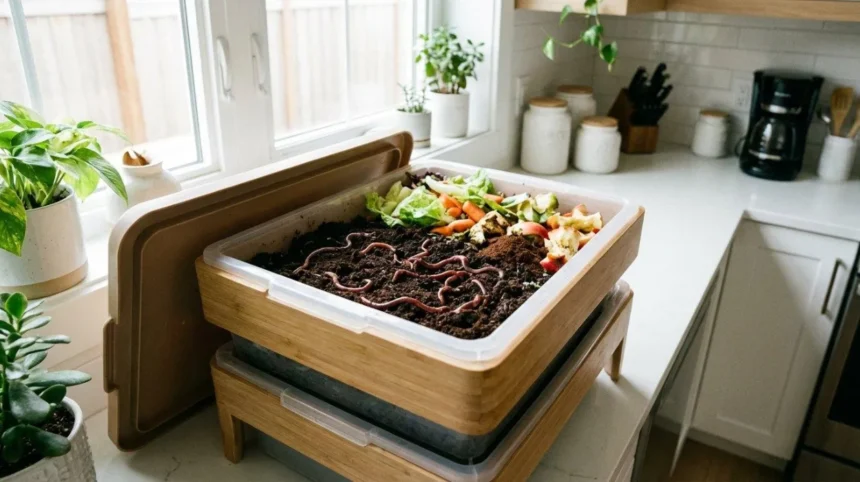
3. Worm composting
Worm composting, also called vermicomposting, uses composting worms to process suitable organic materials. It is suitable for households with limited outdoor space and residents who want to produce compost for houseplants.
A wormery usually contains bedding, moisture and composting worms. Residents add small quantities of suitable food scraps to the surface. Worms and microorganisms gradually break down the organic material.
Suitable additions include vegetable peelings, fruit scraps, coffee grounds, tea leaves and crushed eggshells. Small quantities of stale bread and selected leftovers are also suitable for some systems.
Meat, dairy products, oily food and large quantities of cooked leftovers are unsuitable for conventional wormeries. Excessive feeding creates odours and attracts unwanted pests.
A wormery requires protection from extreme temperatures, appropriate moisture and regular monitoring. It is a practical option for flats and smaller Headingley properties with a sheltered balcony or outdoor corner.
4. Bokashi composting
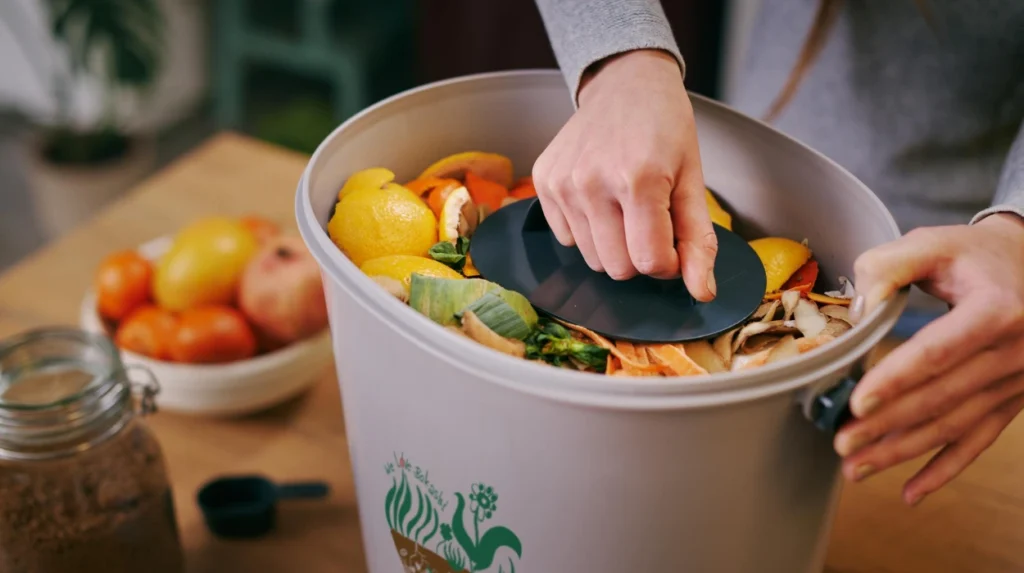
Bokashi is a fermentation-based food waste treatment system. It uses an airtight container and an inoculated bran containing microorganisms to ferment food scraps.
Residents add food waste in layers, sprinkle the appropriate bran between layers and press the contents down to remove excess air. The container remains sealed during fermentation.
Unlike conventional aerobic composting, bokashi fermentation does not immediately produce finished soil compost. It produces fermented material that requires further decomposition, usually in soil or a suitable composting system.
Some bokashi systems accept cooked food, meat, fish and dairy products. This makes them useful for households that produce food scraps unsuitable for traditional garden composting.
The liquid collected from a bokashi container also requires appropriate handling. Residents should follow the manufacturer’s dilution and disposal instructions rather than pouring concentrated liquid directly onto plants.
Which composting method should Headingley residents choose?
The choice depends on the property and the type of waste produced.
- A family home with a garden benefits from a traditional compost bin or enclosed food waste composter.
- A student flat benefits from a small wormery or bokashi container.
- A shared rental property benefits from an agreed household food waste system.
- A home with several houseplants benefits from a compact wormery.
- A household producing varied cooked food waste benefits from an appropriate enclosed food waste composter.
Residents should check the available space, maintenance requirements and accepted materials before purchasing equipment.
How Do You Start Composting at Home in Headingley?
Starting home composting requires choosing an appropriate system, preparing its location, separating suitable organic materials and maintaining balanced moisture and airflow. Residents should follow equipment instructions and monitor the compost regularly to prevent odours, pests and poor decomposition.
A successful composting routine starts with a clear understanding of the materials entering the system. Households should separate compostable materials from general rubbish and unsuitable packaging.
Step 1: Select an appropriate location
A traditional compost bin should stand on level, well-drained ground. Direct contact with soil encourages access for beneficial organisms, including earthworms.
A sheltered position helps prevent excessive drying and waterlogging. A sunny location also helps increase temperatures and support decomposition.
Residents using a wormery should choose a protected location away from extreme heat and cold.
For flats, a compact indoor bokashi system provides an alternative where outdoor composting space is unavailable.
Step 2: Prepare the composting materials
Collect suitable kitchen and garden materials separately. Keep cardboard, fallen leaves and dry plant matter available as brown materials.
A kitchen caddy helps residents collect peelings, tea leaves and other suitable scraps before transferring them to the compost bin.
Step 3: Balance green and brown materials
Composting depends on the correct combination of carbon-rich and nitrogen-rich materials.
Green materials generally break down quickly and supply nitrogen. Brown materials add carbon and help maintain airflow.
Too much green material creates a wet, compacted mixture. Too much dry brown material slows decomposition.
Adding shredded cardboard or dry leaves helps correct a wet compost mixture. Adding suitable fresh green materials helps improve a mixture that becomes excessively dry.
Step 4: Maintain moisture and airflow
Compost should feel damp rather than waterlogged. Excessive water reduces airflow and encourages unpleasant smells.
Turning the compost introduces oxygen. Residents using traditional compost bins should mix the materials periodically, particularly when the contents become compacted.
Enclosed composters, wormeries and bokashi containers have different maintenance requirements. Follow the instructions for each system rather than applying one method to every type of composter.
Step 5: Check when compost is ready
Finished compost generally has a dark, crumbly texture and an earthy smell. The original food and garden materials should no longer be easily recognisable.
Allow unfinished material to decompose further before applying it to plants. Screening removes larger pieces that need additional processing.
Finished compost works as a soil improver rather than a complete replacement for every type of growing medium or fertiliser.
What Food Waste Can and Cannot Be Composted at Home?
Suitable composting materials include vegetable peelings, fruit scraps, eggshells, coffee grounds, tea leaves, leaves and untreated cardboard. Meat, fish and cooked foods require a suitable food waste composter or alternative collection service.
Understanding accepted materials prevents contamination and helps composting systems operate effectively. The correct rules depend on the type of composter.
Materials suitable for traditional compost bins
Standard garden compost bins generally accept:
- Raw fruit and vegetable peelings.
- Crushed eggshells.
- Tea leaves and suitable tea bags.
- Coffee grounds.
- Fallen leaves.
- Grass cuttings.
- Soft garden prunings.
- Torn cardboard.
- Egg boxes.
- Untreated paper.
These materials decompose through aerobic biological activity. Cutting larger materials into smaller pieces helps them break down more easily.
Materials requiring specialised food waste composters
Leeds City Council identifies cooked food, meat and fish as acceptable materials for suitable food waste composters. leeds.gov.uk
Examples include:
- Cooked vegetables.
- Meat leftovers.
- Fish scraps.
- Bones.
- Dairy products.
- Leftover prepared meals.
These materials are not appropriate for every traditional garden compost bin. Residents should use a system specifically designed to handle them or an authorised food waste collection service.
Materials to keep out of ordinary compost bins
Leeds City Council advises residents not to place the following materials in standard compost bins:
- Cat litter.
- Nappies.
- Weeds and noxious plants that should not enter the compost.
- Plastic packaging.
- Non-compostable bags.
- General household rubbish.
Plastic contamination reduces compost quality and introduces unwanted materials into the soil.
Residents should also avoid adding chemical cleaners, synthetic materials and contaminated waste. Composting equipment is designed for biodegradable organic material, not mixed household rubbish.
What about tea bags and compostable packaging?
Tea bags require particular attention because some contain plastic components. Residents should check the manufacturer’s information before adding them to compost.
Compostable packaging also requires care. Industrially compostable products do not automatically break down in domestic compost bins. Packaging labelled compostable should only enter a home system when its manufacturer confirms suitability for that specific process.
Leeds City Council also distinguishes between home composting and its brown garden waste collection. Its standard brown garden waste bin does not accept food waste, fruit peelings or vegetable peelings.
How Can Headingley Households Reduce Food Waste Before Composting?
Households reduce food waste most effectively by preventing unnecessary purchases, planning meals, storing ingredients correctly, understanding food date labels and using leftovers. Composting manages unavoidable scraps, but preventing edible food waste delivers greater resource savings.
Food waste prevention should come before composting in every household waste reduction plan. Edible food requires land, water, energy, labour, packaging and transportation before reaching a kitchen.
WRAP’s 2022 research found that fresh produce represented the largest category of edible household food waste by weight. Meals, bakery products, dairy products and eggs also contributed significantly. The Waste and Resources Action Programme
Plan meals before shopping
A weekly meal plan helps households purchase food according to actual requirements.
Residents should check cupboards, refrigerators and freezers before preparing a shopping list. Planning meals around ingredients already available prevents duplicate purchases.
For example, a household purchasing vegetables for several meals can plan to use the same ingredients across different recipes. Leftover carrots can become soup, while surplus vegetables can be added to pasta dishes.
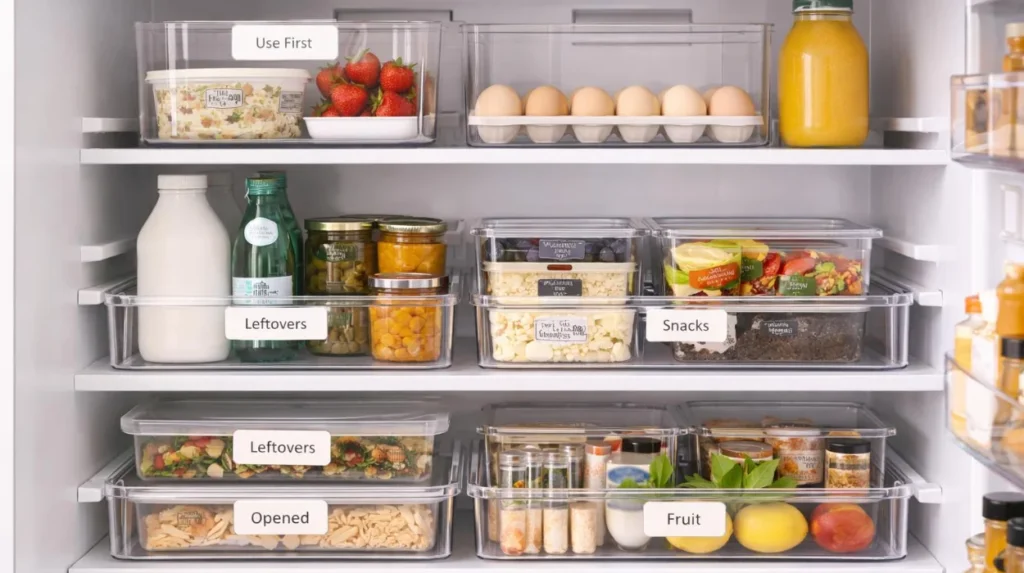
Store food correctly
Correct storage increases the time food remains suitable for consumption.
Refrigerators should operate at 5°C or below. Raw meat should remain sealed and stored separately from ready-to-eat foods. Cooked leftovers should be cooled promptly, refrigerated and consumed within safe storage periods.
Different ingredients require different storage conditions:
- Potatoes should be kept in a cool, dark and dry place.
- Bread should be stored appropriately or frozen for longer storage.
- Bananas should be stored according to ripeness and household use.
- Fresh herbs can be stored in suitable containers to preserve freshness.
- Opened dairy products should follow their packaging instructions.
Households should follow food safety guidance when storing and reheating leftovers.
Understand food date labels
Food labels provide important information about safety and quality.
Use-by dates relate to food safety. Residents should not consume food after its use-by date, even when it appears and smells normal.
Best-before dates relate to quality. Food can remain suitable after this date when stored correctly and assessed appropriately.
Understanding the difference helps prevent unnecessary disposal of food that remains safe to eat.
Use leftovers creatively
Leftovers can become ingredients for subsequent meals.
Cooked vegetables can be incorporated into soups, curries and pasta dishes. Rice and pasta leftovers can be used in suitable recipes when handled and stored safely. Fruit approaching the end of its usable life can become smoothies or cooked desserts.
Residents should refrigerate leftovers promptly and follow food safety recommendations. Food should not be left at room temperature for extended periods.
Freeze food before it spoils
Freezing provides an effective way to extend the storage life of many foods.
Bread, suitable vegetables, cooked meals and selected dairy products can be frozen according to food safety guidance. Dividing meals into individual portions makes defrosting and reheating easier.
Clearly labelled containers help residents identify the contents and freezing dates. This is especially useful in shared student accommodation where several people use the same freezer.
Buy appropriate quantities
Large multipacks and discounted products do not always represent good value when households cannot consume them before they spoil.
Residents should compare unit prices, consider portion requirements and avoid purchasing unnecessary quantities.
Small changes to shopping habits reduce food costs and the volume of organic waste produced.
What Food Waste Collection and Composting Services Are Available in Leeds?
Leeds City Council provides home composting guidance and is developing wider food waste recycling arrangements. During 2026, a combined food and garden waste collection trial operates in selected Wetherby-area communities, rather than throughout Headingley.
Understanding local waste collection arrangements is essential for Headingley residents. Having a brown garden waste bin does not automatically mean that household food waste can be placed inside it.
Leeds City Council’s food waste collection plans
Leeds City Council is working towards introducing food waste recycling across the city under the Government’s simpler recycling requirements.
During 2026, its combined organic waste trial covers selected households in:
- Wetherby.
- Collingham.
- Boston Spa.
- Thorp Arch.
- Clifford.
- Bramham.
- Walton.
Participating households receive a kitchen caddy and collection instructions. Food waste is transferred into the brown outdoor bin alongside garden waste.
The council aims to introduce weekly food waste recycling across Leeds by 2029/30, through a phased approach. This means Headingley residents should check their own collection arrangements rather than assume that the Wetherby trial applies to their property.
What happens to collected food waste?
The council explains that organic waste from its trial is processed through an in-vessel composting facility in Yorkshire.
In-vessel composting takes place inside a controlled enclosed environment. Temperature, moisture and airflow support the decomposition process.
The resulting compost contains organic matter and nutrients that improve soil conditions. The council identifies its use in agriculture as part of the resource recovery process. leeds.gov.uk
What should residents do with garden waste?
Leeds operates a separate brown garden waste collection service. Accepted materials include:
- Grass cuttings.
- Fallen leaves.
- Flowers and plants.
- Hedge clippings.
- Small twigs and branches.
- Windfall fruit.
Food waste, vegetable peelings and fruit peelings are not accepted in the standard brown garden waste bin.
Residents should consult the council’s current collection guidance before placing unfamiliar materials in their bins.
How Can Students and Flat Residents Compost Without a Garden?
Residents living in Headingley flats and shared student accommodation can reduce food waste through compact wormeries, bokashi containers, kitchen separation and careful meal planning. These approaches require limited space and provide practical alternatives to traditional garden composting.
Headingley has a substantial student population and a mixture of shared accommodation and rented flats. Many properties have limited private outdoor space, making traditional compost heaps impractical.
However, a lack of garden space does not prevent residents from reducing food waste.
Use a compact kitchen caddy
A small kitchen caddy separates food scraps from general household rubbish.
Residents can collect vegetable peelings, fruit scraps and suitable organic materials before transferring them to an appropriate composting system or authorised collection point.
A washable container with a secure lid helps maintain cleanliness. Emptying it regularly reduces odours and prevents food from accumulating.
Introduce a shared household composting routine
Shared student accommodation benefits from clearly agreed responsibilities.
Residents should establish a consistent system for separating food waste, emptying containers and cleaning equipment.
A simple household arrangement includes:
- One clearly labelled food waste container.
- Agreed rules about accepted materials.
- A regular emptying schedule.
- Shared responsibility for cleaning.
- A designated person to monitor the system.
This arrangement reduces confusion and prevents contamination.
Choose a wormery for small outdoor spaces
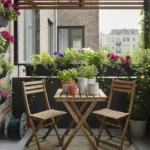
A compact wormery suits residents with access to a sheltered balcony, courtyard or suitable communal garden.
It processes selected food scraps and produces worm compost that can support houseplants and container gardening.
Residents should obtain permission before placing equipment in communal areas or modifying rented properties.
Consider bokashi for mixed food scraps
Bokashi provides an alternative for residents who produce cooked leftovers and other materials unsuitable for ordinary wormeries.
Its sealed container reduces the need for outdoor space. The fermented material still requires further processing, so households should identify an appropriate destination before purchasing the equipment.
Make food sharing part of the household routine
Shared households frequently purchase similar ingredients independently. Coordinating shopping and meal preparation reduces duplicate purchases.
For example, residents can agree to use an existing packet of vegetables before buying another. Unopened food that remains suitable for consumption can also be shared responsibly.
Food sharing should respect use-by dates, storage requirements and food safety.
How Does Composting Support Headingley’s Gardens and Local Environment?
Home composting supports Headingley’s green spaces by returning organic matter to soil, improving moisture retention and reducing reliance on purchased soil improvers. Responsible compost management also limits unnecessary waste disposal and supports more sustainable household gardening practices.
Composting provides benefits beyond waste reduction. It returns biodegradable materials to the soil and supports healthier growing conditions.
Headingley includes residential gardens, planted outdoor spaces and community growing environments. Compost offers a useful resource for maintaining these areas.
Improve garden soil structure
Finished compost adds organic matter to soil.
Organic matter helps improve soil structure by supporting aggregation, aeration and moisture retention. It also supports the biological activity of soil organisms.
These properties benefit flowerbeds, vegetable plots and ornamental gardens.
Compost is particularly useful when preparing growing areas before planting. It can also be applied as a surface mulch around established plants.
Support container gardening
Residents without gardens can still use finished compost in suitable growing arrangements.
Plant pots, window boxes and raised containers provide opportunities to grow herbs, flowers and selected vegetables.
Homemade compost works as a soil improver, but it should not automatically replace a complete potting medium. Plants have different growing requirements, and compost should be incorporated appropriately.
Reduce demand for purchased soil improvers
Producing compost at home allows households to reuse suitable organic materials instead of discarding them.
It also reduces the need to purchase some soil conditioners and organic materials.
Residents should apply mature compost rather than unfinished food waste. Fresh, undecomposed material can create problems for plant growth and attract pests.
Connect modern sustainability with Headingley’s heritage
Headingley’s residential landscape developed through several periods of urban expansion, including Victorian housing growth and the development of local educational and commercial facilities.
The neighbourhood’s older buildings, residential streets and changing community infrastructure provide important context for understanding how household living arrangements have evolved.
As you explore modern sustainable living in the neighbourhood, you are also engaging with its built heritage. Read the full [Headingley Historical Development and Victorian Heritage Guide] to understand the area’s origins and changing residential character.
How Can Headingley Households Maintain Compost Bins Throughout the Year?
Successful composting requires regular attention to moisture, temperature, airflow and material balance. Seasonal adjustments help residents maintain decomposition, prevent unpleasant smells and protect composting equipment from excessive rainfall, drying and temperature fluctuations.
Composting continues throughout the year, although decomposition rates change with weather conditions and the type of equipment used.
Leeds City Council explains that composting can start at any time, but warmer summer conditions generally support faster decomposition. leeds.gov.uk
Spring composting
Spring is suitable for restarting or refreshing garden composting routines.
Residents can add suitable garden materials, including soft prunings, fallen leaves and grass cuttings.
Older compost should be checked for moisture and texture. Dry material requires suitable moisture, while wet and compacted material benefits from additional brown materials.
Summer composting
Warm weather supports biological activity and decomposition.
However, excessive heat and direct sunlight can dry compost. Residents should monitor moisture levels and add water when necessary.
Food scraps should be transferred regularly to avoid attracting flies and other pests.
Autumn composting
Autumn produces useful brown composting materials, particularly fallen leaves and dry plant matter.
Residents can collect leaves and store them separately for future compost mixtures.
Combining suitable dry leaves with fresh vegetable peelings helps maintain the balance between carbon-rich and nitrogen-rich materials.
Winter composting
Cold weather slows microbial activity, particularly in exposed compost heaps.
Residents should protect composting equipment from excessive rainfall and maintain suitable moisture levels.
Turning a compost heap during suitable weather helps maintain airflow. Smaller additions of kitchen materials also make the system easier to manage.
Explore More Area Guide
Balcony Gardening in Headingley: Small Outdoor Space Guide
Seasonal Gardening in Headingley: Urban Home Growing Guide
What Are the Long-Term Benefits of Reducing Household Food Waste?
Reducing household food waste creates long-term environmental and financial benefits by conserving food production resources, lowering disposal requirements and improving household purchasing habits. Combining prevention, reuse, recycling and composting supports more sustainable communities throughout Headingley and Leeds.
Food waste reduction is an important part of the wider transition towards a circular economy. A circular economy is a system that keeps resources in use for as long as possible instead of discarding materials after one use.
Financial benefits for residents
Reducing unnecessary food purchases helps households manage grocery budgets.
WRAP’s Leeds City Council guidance states that an average UK family can save approximately £83 each month, or around £1,000 annually, by saving food from the bin. Actual savings depend on household size, shopping habits and the quantity of food currently wasted. leeds.gov.uk
Students and shared households can benefit from:
- Coordinated grocery shopping.
- Shared meal preparation.
- Better storage practices.
- Portion control.
- Freezing suitable surplus food.
These practices reduce unnecessary spending and improve household food management.
Environmental benefits
Food waste prevention reduces the resources used to produce food that is never consumed.
WRAP’s 2022 household food waste research estimated that wasted food and drink generated approximately 16 million tonnes of carbon dioxide equivalent emissions across the UK. The Waste and Resources Action Programme
Composting also provides a beneficial alternative for suitable unavoidable organic waste. It returns organic matter to soil and reduces the quantity of biodegradable material requiring other disposal routes.
Relevance of future recycling policies
England’s simpler recycling framework requires local authorities to provide weekly household food waste collections, with implementation requirements applying from 2026.
The Government also recommends promoting home composting while maintaining separate food waste collections because not every type of food waste is suitable for home composting. GOV.UK
For Headingley, the expansion of food waste collection arrangements will form an important part of the neighbourhood’s future waste management infrastructure.
WRAP’s 2025 Household Food Management Survey, published in March 2026, also identifies continuing gaps in household awareness of food waste prevention and recycling services. Its findings reinforce the importance of clear guidance and consistent household practices. The Waste and Resources Action Programme
Residents can contribute to these improvements by adopting practical food management habits now rather than waiting for changes to local collection arrangements.
Building a Sustainable Composting Routine in Headingley
Composting and food waste reduction offer practical ways for Headingley households to manage organic waste responsibly. Traditional compost bins, enclosed food waste composters, wormeries and bokashi systems provide different solutions for properties with varying amounts of space.
Preventing edible food waste remains the most effective starting point. Meal planning, appropriate food storage, understanding date labels and using leftovers reduce unnecessary disposal and household expenditure.
Residents should also understand Leeds City Council’s current collection arrangements. The combined food and garden waste trial operating in selected Wetherby-area communities during 2026 does not represent a citywide service. Headingley households should continue following their own applicable waste collection guidance.
By combining responsible shopping, food waste separation and suitable composting methods, residents can support cleaner neighbourhoods, healthier soil and more sustainable household routines.
What is the best composting method for Headingley households?
Traditional garden composting is suitable for houses with outdoor space. Wormeries and bokashi systems are practical alternatives for flats, student accommodation and smaller households.