


A school exclusion appeal in Otley follows the same national rules that apply across England, because Otley schools operate within the Leeds area and school exclusion decisions are governed by statutory guidance and the school’s own procedures. The process starts with the exclusion letter, moves through a governing-board review in serious cases, and can then reach an independent review panel for permanent exclusions.
- What is a school exclusion decision?
- How does exclusion law work in England?
- What should parents do first after an exclusion?
- How do you challenge a permanent exclusion?
- What evidence helps an exclusion appeal?
- What happens at the appeal hearing?
- What deadlines apply in Otley cases?
- How can parents prepare a strong case?
- What support exists in Leeds and Otley?
- What happens after the appeal?
- What is the most practical route for Otley parents?
What is a school exclusion decision?
A school exclusion decision is a formal ruling by a headteacher to remove a pupil from school for disciplinary reasons. In England, exclusions are either fixed-period exclusions or permanent exclusions, and the school must explain the reason in writing and set out the next steps for parents.
A fixed-period exclusion suspends a pupil for a set number of school days. A permanent exclusion ends the pupil’s place at the school unless a review or appeal process changes the outcome. The legal framework comes from national school admission and exclusion rules, plus the school’s behaviour policy and the exclusion guidance used by the local authority and academy trust.
For families in Otley, the practical route depends on the type of school. Community schools, academies, voluntary-aided schools, and free schools can each have different administrative arrangements, but the exclusion law and the review rights stay rooted in national guidance. Leeds City Council also provides school-related appeal information for schools in its area.

How does exclusion law work in England?
Exclusion law in England sets out when a school can exclude, how it must notify parents, and what review rights follow. The school must act fairly, keep records, and follow statutory guidance so that parents can challenge the decision on process and evidence.
A headteacher can exclude a pupil only for disciplinary reasons. The decision must not be used as a substitute for support, timetabling problems, attendance pressure, or informal removal from roll. Schools must consider the circumstances of the incident, the pupil’s history, and any special educational needs or disability factors before choosing exclusion. These principles come from the statutory exclusion framework and the national appeals process.
The most important document is the exclusion letter. It should explain the reason for the exclusion, its length, the parent’s rights, and the deadline for any review or appeal. Parents should keep every letter, email, report, witness statement, behaviour log, and medical or pastoral evidence linked to the incident.
What should parents do first after an exclusion?
Parents should read the exclusion letter, request all evidence, and check the deadline immediately. They should also arrange childcare, collect schoolwork, and ask for support from the local authority or the school if the exclusion affects attendance, meals, transport, or special educational needs.
The first step is not to argue casually by phone alone. The parent needs the written decision and the school’s evidence. If the school has excluded the pupil permanently, the parent should ask whether the governing board will review the decision and how that review will be arranged. If the exclusion is fixed-period, the parent should ask about reintegration support and the right to challenge the length or pattern of exclusions.
Parents should also ask for any documents that the school will rely on at a review hearing. That includes incident logs, witness statements, CCTV references if relevant, SEND support plans, pastoral records, and any risk assessments. Written evidence matters because review panels and governing boards rely on a clear paper trail when deciding whether the school followed the correct process.
How do you challenge a permanent exclusion?
A permanent exclusion is challenged through a governing-board review, followed by an independent review panel if the governing board upholds the exclusion. The parent must act quickly because statutory deadlines apply, and written evidence matters at every stage.
The first stage is usually a review by the governing board of the school. The board examines whether the exclusion was lawful, reasonable, and procedurally fair. Parents can present their case in writing and, in many cases, at a hearing. The board then decides whether to reinstate the pupil or confirm the exclusion.
If the governing board confirms the permanent exclusion, the parent can ask for an independent review panel. This is a separate body from the school. The panel checks whether the exclusion decision was justified and whether the correct procedure was followed. Leeds City Council’s published appeals information shows that school appeal bodies in Leeds use independent panels and formal procedures, which reflects the wider principle of independent review in education decisions.
The parent’s focus should be on three issues: the facts of the incident, the fairness of the process, and whether exclusion was proportionate. Strong cases often show missing evidence, inconsistent school records, failure to consider special educational needs, or a sanction that was harsher than the behaviour policy allowed.
What evidence helps an exclusion appeal?
The strongest evidence is objective, dated, and directly linked to the exclusion incident. Useful material includes school correspondence, behaviour records, SEND support documents, medical evidence, witness statements, and any chronology showing earlier interventions or unresolved support needs.
A good appeal file should show the whole story, not only the final incident. Parents should include earlier sanctions, attendance patterns, pastoral meetings, learning plans, child protection issues if relevant, and any evidence that the school had not used earlier support measures. That matters because exclusion decisions are easier to challenge when the school skipped staged intervention or failed to record a proper risk assessment.
Examples of useful evidence include a teacher email describing a misunderstanding, a report from an educational psychologist, a SEN support plan, a GP letter about a health condition that affected behaviour, and a timeline showing that the school did not contact parents before the exclusion. A clear chronology often helps the panel see whether the decision was rushed or properly considered.
If the child has SEND, the parent should include the EHCP, SEN Support records, annual review notes, and any advice from specialists. If bullying, trauma, bereavement, or family disruption played a role, the parent should document it carefully. The aim is to show context, not excuse misconduct, because review bodies weigh context against school safety and discipline.
What happens at the appeal hearing?
The hearing is a formal meeting where the school explains its decision and the parent explains why the exclusion should be overturned. An independent panel or review body considers the evidence, asks questions, and issues a written decision after the hearing.
In a Leeds-area school appeal process, the hearing is typically private, chaired by an independent panel, and supported by a clerk. The parent can attend, bring someone for support, and present written or oral evidence. The school provides its case first, then the parent responds. That structure helps the panel test whether the exclusion was justified and whether the procedure followed the rules.
Parents should speak in a factual way. The best submissions name the incident, identify the evidence, and explain exactly why the exclusion was wrong, unfair, or disproportionate. A strong hearing response answers the school’s points one by one and stays focused on the exclusion threshold rather than on general dissatisfaction with the school.
The panel usually sends a written decision shortly after the hearing. If the panel finds a procedural flaw or decides the exclusion was not justified, it can direct reinstatement in some circumstances. If the exclusion is upheld, parents can still ask whether any further complaint route exists if the process was flawed.
What deadlines apply in Otley cases?
Deadlines are strict. Parents normally have at least 20 school days to request an appeal against a school decision, and hearings are normally arranged within a fixed statutory timetable once the request is lodged. Late evidence can delay the process or be left out entirely.
The exact timetable depends on the decision type and the school’s governing category. For school admissions, GOV.UK states that parents must receive at least 20 school days to appeal and at least 10 school days’ notice of the hearing. Although exclusion review timetables are separate from admissions appeals, the same principle applies: parents must act quickly and keep every deadline.
For Otley families, the safest approach is to treat the date on the exclusion letter as day one. The parent should immediately request the paperwork, note any appeal deadline, and prepare evidence in the first few days. Waiting until the final week often leads to weaker evidence and less time to correct mistakes.
If the child is waiting for another school place, parents should not assume the appeal automatically secures admission elsewhere. School place allocation and exclusion challenge are different processes. Leeds City Council says appeal and admissions routes are separate, so families need to manage both if a child is out of school or at risk of losing a place.
How can parents prepare a strong case?
A strong case is short, chronological, and evidence-led. It explains what happened, what the school did, what support was available, and why exclusion was not the lawful or proportionate response.
Parents should start with a one-page chronology. That chronology should list the incident, the school’s immediate response, the exclusion letter date, any previous behaviour issues, and any support already offered. Then the parent should attach supporting evidence in date order so the panel can follow the story without guessing.
The written statement should focus on legal and factual issues. Examples include whether the child was given a fair hearing, whether the school applied its behaviour policy consistently, whether the child’s SEND needs were considered, and whether exclusion was the last resort. Emotional language weakens the submission because review bodies decide cases on records and rules.
If there are multiple issues, the parent should separate them clearly. One section should address the incident itself. Another should address process and evidence. Another should explain the impact on the child’s education, health, or safeguarding. Clear structure helps the panel extract the main points quickly and accurately.
What support exists in Leeds and Otley?
Leeds families can use the council’s school appeal information, while individual schools may have their own procedures for formal challenge. Local authority guidance also explains that some schools handle appeals directly, so parents must identify the correct admissions authority or governing body first.
Leeds City Council publishes guidance showing that most school appeals can be made through an online form, although some schools require direct contact. That matters because the same principle applies to exclusion challenges: the parent must contact the right body, not just the nearest office or the class teacher.
Families in Otley should also ask the school for the named lead person handling the exclusion paperwork. If the child has SEND, the parent should contact the school’s SENCO and ask for records that show what support was in place before exclusion. Local authority education teams, school welfare staff, and special educational needs services can help if the exclusion creates immediate access problems.
If the matter reaches a review panel, the parent can also ask whether the hearing will be in person or remote, what format the evidence should take, and whether witnesses can attend. Good preparation reduces the risk of delay and helps the panel see the full context.
Explore More Help & Resources
How to find free kids’ clubs and sports in Garforth
How to get free debt advice near Yeadon this week
What happens after the appeal?
After the appeal, the panel sends a written decision. If the exclusion is overturned, the school must follow the outcome. If the exclusion is upheld, the parent can still pursue any remaining complaint route about process, but the decision itself usually stands.
When a child is reinstated, the school should plan a return carefully. That may include a reintegration meeting, a behaviour support plan, timetable adjustments, and pastoral monitoring. The purpose is to return the pupil safely and reduce the risk of repeat conflict.
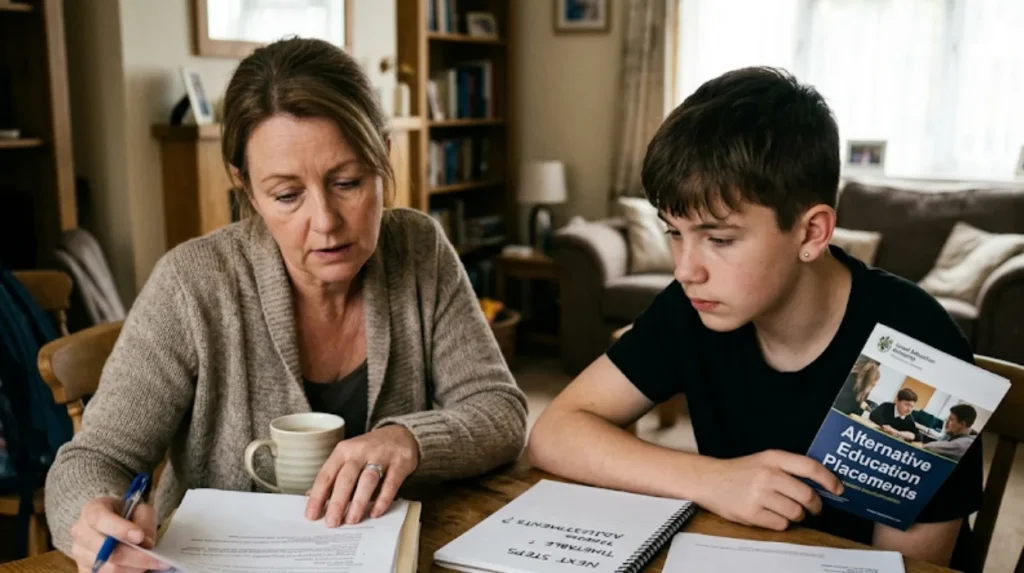
When the exclusion remains in place, parents should secure the next educational step immediately. That can include a place at another school, alternative provision, or home education if chosen and lawful. The key point is continuity of education, because long gaps out of school create wider learning and safeguarding issues.
Parents should also keep the decision letter and all papers. They are needed if the school records are later checked, if a complaint is made about the process, or if the child’s education history needs to be explained to another school. Written records often matter months later when a family applies for a new place or support service.
What is the most practical route for Otley parents?
The most practical route is simple: collect the papers, identify the exclusion type, meet the deadline, and build a factual written case. For a permanent exclusion, the route runs from the governing board to an independent review panel, with Leeds-area school guidance showing how formal appeal processes operate locally.
Parents should not rely on informal conversations with staff alone. They should ask for the exclusion letter, the behaviour evidence, the school policy, and the hearing timetable. They should then prepare a clear chronology and attach any SEND, medical, safeguarding, or witness evidence that explains the child’s situation.
For Otley families, the strongest approach is to treat the appeal like a formal case file. The case file should answer four questions: what happened, what the school did, what support existed, and why exclusion was not the right outcome. That method matches how review bodies assess evidence and keeps the submission focused on the legal test.